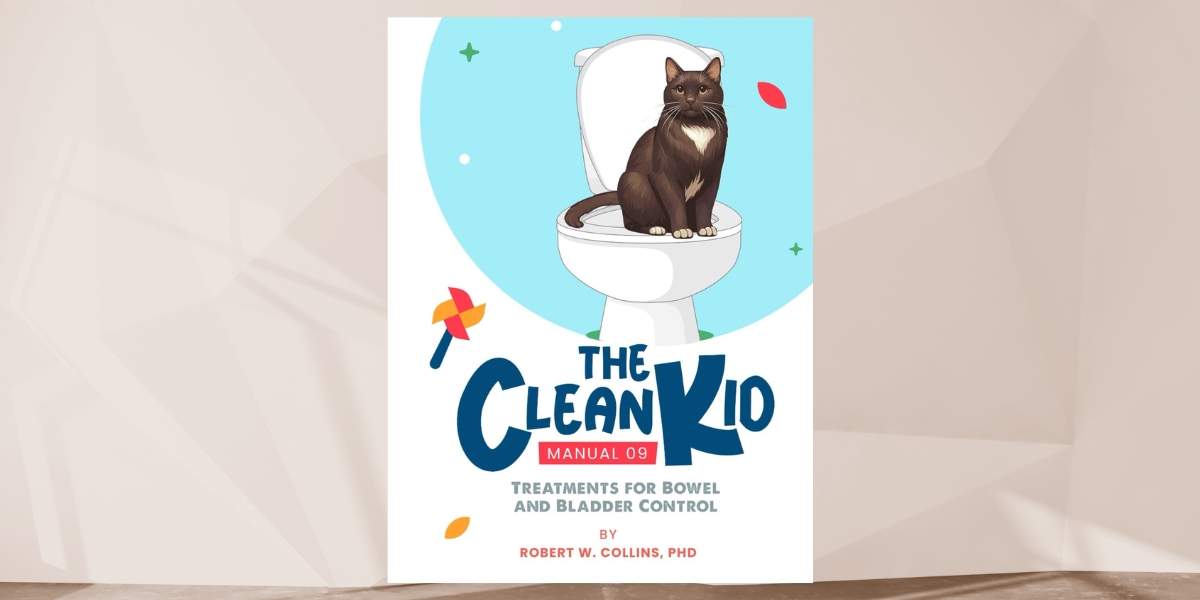


For many parents, raising a child who cannot control their bladder or bowels becomes one of the most isolating challenges they will face. They visit doctor after doctor and are often sent home with a stool softener and a vague reassurance that the child will grow out of it. For a significant portion of families, that reassurance never becomes reality. It is precisely for these parents that Dr. Robert W. Collins, a clinical psychologist with decades of research and clinical experience, wrote The Clean Kid Manual. It is not a book of theories. It is a practical, step-by-step treatment guide that addresses a problem conventional medicine has struggled to resolve for many children.
The Problem No One Wants to Talk About
The manual addresses two childhood disorders. Encopresis refers to fecal soiling in children aged four and older that persists for at least three consecutive months once physical causes have been ruled out. Enuresis refers to bladder incontinence, both during the day and at night, in children five and older. Together, these conditions affect a significant number of children worldwide, yet they remain among the least openly discussed challenges in parenting.
What makes them especially difficult is what happens when they turn chronic. Once a condition crosses the three-month mark, entrenched habits, physical changes in the colon, and deep-rooted anxiety take over. The child is no longer simply not trying. The body has developed patterns that are, in a genuine neurological sense, very difficult to break without the right intervention. Particularly, fecal soiling carries a social stigma that isolates children from peers and puts enormous strain on the whole family.
Why Standard Treatment Leaves Families Behind
The dominant medical approach relies on oral stool softeners and laxatives combined with scheduled toilet sits. Dr. Collins does not dismiss this approach entirely, but he is direct about its limitations. Research suggests that roughly half of children with constipation-related encopresis achieve remission within a year of standard treatment, and the process can extend over many months or years for others.
For the remaining children, the protocol is not just insufficient; it can actually reinforce holding behaviors by producing stool that the brain has difficulty recognizing as a clear signal to go. The more complicated problem, explained through his framework of behavioral medicine, is a broken stimulus-response connection. A child with encopresis has lost the automatic neurological link between feeling an urge and responding to it successfully on the toilet. That link cannot be repaired through explanation or willpower alone. It must be rebuilt through direct, repeated experience. The oral route also introduces a six-to-ten-hour delay between medication and response, which makes meaningful learning nearly impossible.
What the Power Hour Protocol Looks Like in Practice
The heart of The Clean Kid Manual is what parents in the Soiling Solutions community have come to call the Power Hour. Once a day, parents guide their child through four short toilet sits of two to three minutes each. This practice includes suppositories or enemas to reliably trigger a bowel movement. The goal is not pressure or punishment but consistency. Each successful sit is intended to help the child’s brain relearn what the process is supposed to feel like, with the aim of building toward independent toileting over time.
The manual also addresses the common fear about using rectal medications at home. Dr. Collins confronts this honestly, drawing on his expertise in anxiety treatment to explain that avoidance only deepens the problem. He notes that many children begin to adapt to the routine and become more comfortable with the process as familiarity builds.
A Career Built Around Childhood Incontinence

Photo Courtesy: Robert W. Collins
Dr. Collins holds degrees from the University of Michigan (BS), Kent State University (MA), and Indiana University (PhD in Clinical Psychology). A licensed psychologist in Michigan since 1970, he also served on the faculty of Grand Valley State University from 1969 to 1981 and was a Distinguished Visiting Professor at the University of Western Australia (1975–1976). He presented research at major conferences, including the 1995 National Conference of the Association for Applied Psychophysiology and Biofeedback and the Michigan State Medical Society. His publications include work on encopresis in the Handbook of Mind-Body Medicine in Primary Care (2003) and Digestive Health Matters (2009). Apart from that, Dr. Collins is a scientifically oriented therapist dedicated to helping families address enuresis and encopresis.
What Parents Can Expect
The manual is organized with care, moving from understanding the disorder through the full treatment protocol, troubleshooting, relapse prevention, and bladder control. Dr. Collins does not talk down to parents. He explains the science in plain terms, uses relatable analogies, and speaks to the emotional weight of the experience with genuine compassion. At the same time, he is clear that compassion alone is not enough.
The final chapters provide guidance on preventing setbacks, adjusting the protocol when progress stalls, and supporting the child through each stage of the process. For parents who have spent months or years searching for answers, The Clean Kid Manual offers a structured, evidence-informed approach grounded in decades of clinical experience.
Disclaimer: This article is for informational purposes only and does not constitute medical advice, a diagnosis, or a treatment recommendation. Always consult a qualified healthcare provider before beginning any new treatment protocol for your child.