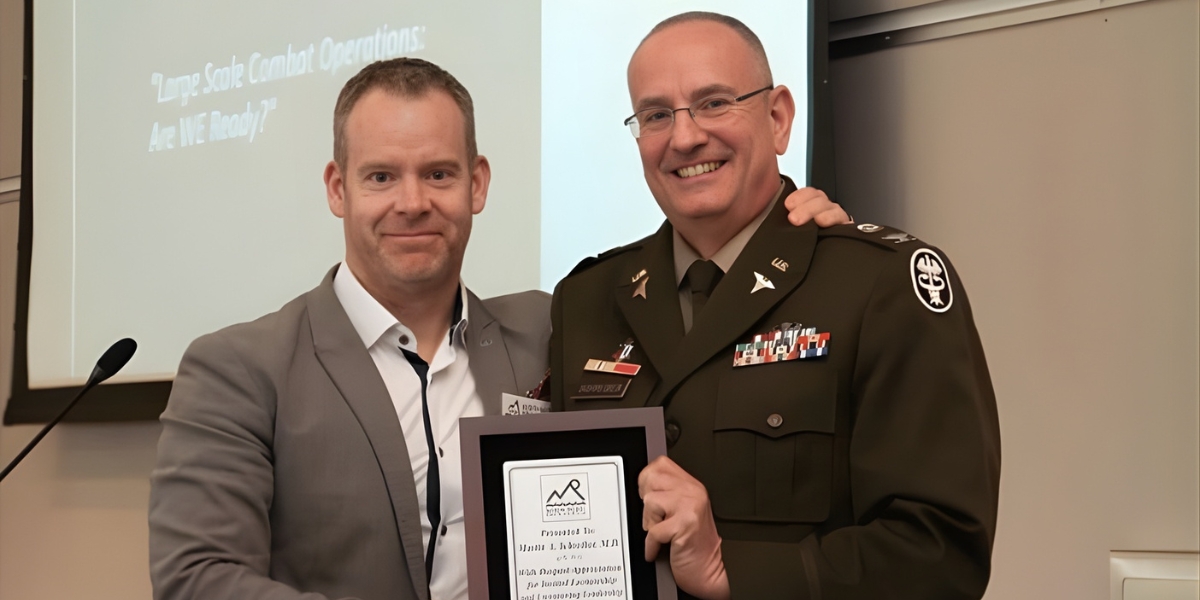


The North Pacific Surgical Association held its annual meeting here in late November, focusing on military and civilian collaborations. The setting, the Banff Centre for Arts and Creativity, offered striking views of the Canadian Rockies. Inside, the discussion centered on how future conflicts may challenge even the most advanced trauma systems.
About 150 surgeons attended from Oregon, Washington, Idaho, British Columbia, and Alberta. The keynote address was delivered by Dr. Martin A. Schreiber, Adjunct Professor of Surgery at the Uniformed Services University and a leading Portland trauma surgeon whose work has reshaped modern emergency care. His lecture, titled Large Scale Combat Operation: Are We Ready, examined how well prepared medical systems are to manage casualties in an era of evolving global threats.
Dr. Schreiber has spent his career working between military medicine and civilian trauma care. He earned his undergraduate degree from the University of Chicago and his medical degree from Case Western Reserve University in 1988. He serves as a Colonel in the U.S. Army Reserve and has deployed to Iraq and Afghanistan, where medical teams must stabilize the severely injured with limited time and resources. Colleagues say those experiences helped frame his focus on interventions that can save lives long before a patient reaches the operating room.
For more than a decade, Dr. Schreiber led the Division of Trauma, Critical Care, and Acute Surgery at Oregon Health & Science University in Portland. The program became a national leader in trauma research and care during his tenure. He has authored hundreds of scientific papers, many of which focus on improving survival for the most critically injured patients.
In his presentation, Dr. Schreiber reviewed advances from recent conflicts that have significantly improved civilian outcomes. Tourniquets, once discouraged in non-military settings, are now widely used to prevent fatal blood loss. Whole blood transfusion has returned to hospitals as an effective treatment for hemorrhagic shock. Damage control resuscitation prioritizes rapid control of bleeding to avoid complications. The early use of tranexamic acid has changed protocols for traumatic brain injury.
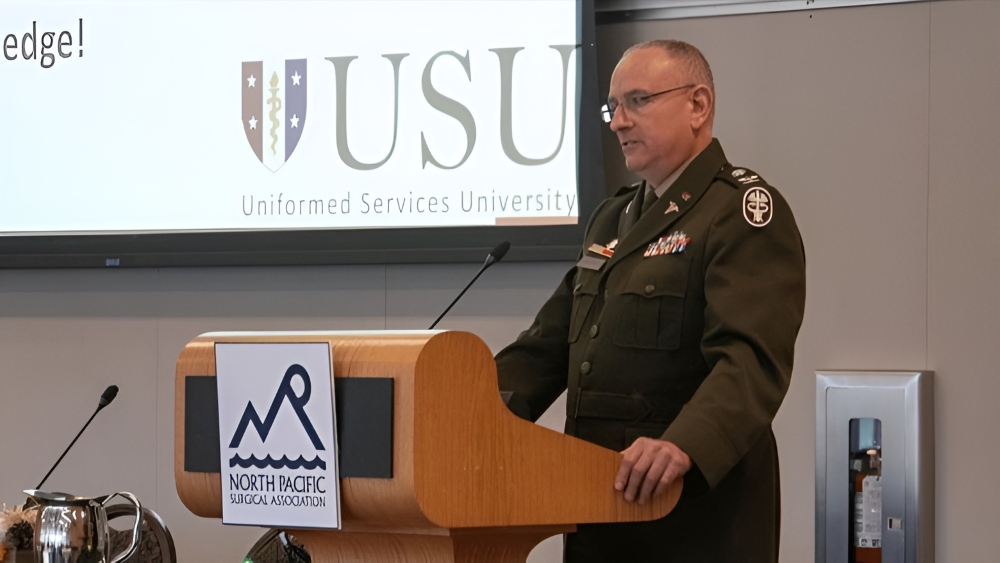
Photo Courtesy: Tedfuel
These changes, he noted, grew from wartime necessity but now benefit civilians injured in crashes, industrial incidents, and violent events. Yet he warned that future conflicts may not resemble the wars that produced recent progress. Prolonged casualty care, limited evacuation options, disrupted supply chains, and unprecedented patient volumes could stress trauma systems beyond current expectations.
Dr. Schreiber pointed to the need for stronger coordination between military and civilian networks. Community hospitals, particularly in rural regions, may be the first to receive patients if an attack or conflict occurs. Larger trauma centers must prepare to expand capacity quickly. Planning for these scenarios, he said, should not wait until a crisis begins.
During the question period, attendees asked about logistics, training requirements, and the readiness of blood products. Several surgeons said afterward that the keynote highlighted practical challenges that deserve more attention. Official meeting minutes and video recordings have not yet been released, but early responses suggest that the address prompted ongoing discussion throughout the weekend.
The United States has made substantial gains in trauma care. Dr. Schreiber emphasized that those gains do not resolve the issue of readiness. Progress without preparation, he suggested, leaves systems vulnerable to events that arrive without warning.
As the meeting concluded, Dr. Schreiber returned to a simple idea. Trauma systems must be built with the next emergency in mind, not the last one. Whether that emergency takes the form of conflict or catastrophe, the ability to respond will depend on planning already in place.
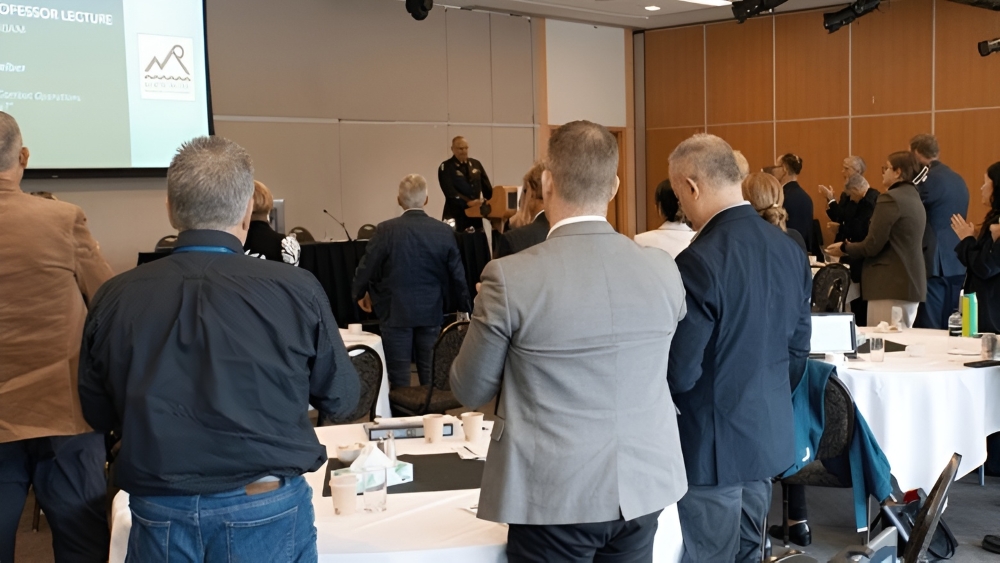
Photo Courtesy: Tedfuel
About Dr. Martin A. Schreiber
Dr. Schreiber is a Portland trauma surgeon and a Colonel in the United States Army Reserve. He serves as Adjunct Professor of Surgery at the Uniformed Services University and previously led Trauma, Critical Care, and Acute Care Surgery at Oregon Health & Science University for more than ten years. He is internationally recognized for advancing trauma resuscitation and hemorrhage control. His work has helped bring military medical innovations, including whole blood transfusion and modern tourniquet use, into civilian trauma care. He continues to lead national trauma research initiatives and train the next generation of trauma surgeons.
Disclaimer: While Dr. Schreiber’s work has influenced significant advances in trauma care, the content provided is intended for general informational purposes only and does not constitute medical advice or guarantee specific outcomes. Readers should consult with qualified healthcare professionals or relevant authorities for advice regarding specific medical concerns or situations.