

By: Ethan Rogers
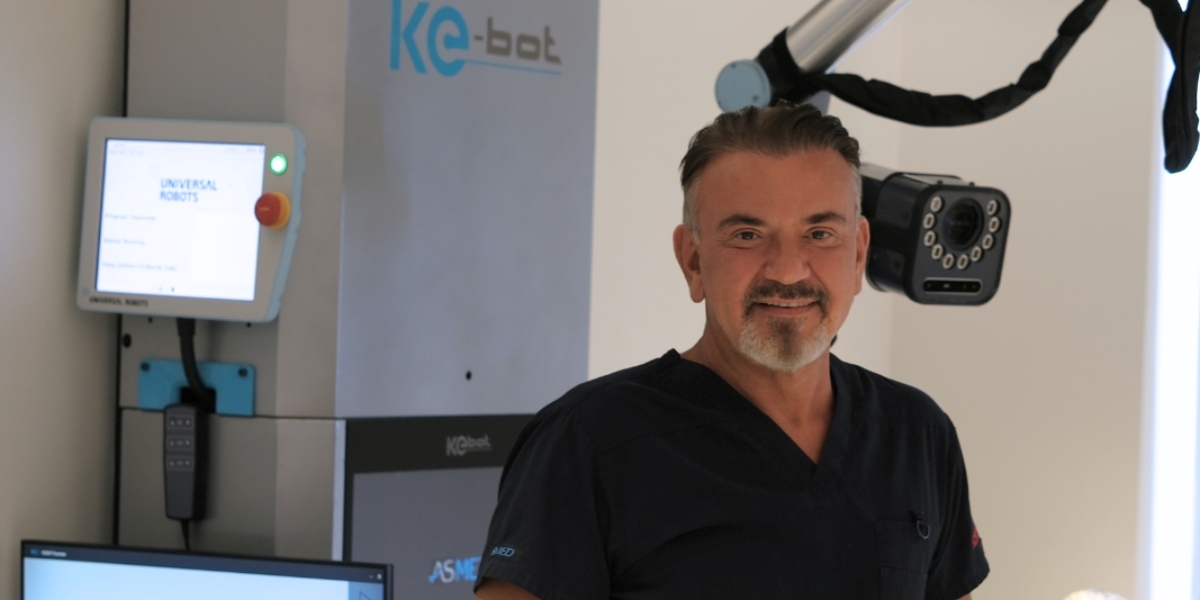
Dr. Koray Erdoğan, a highly regarded expert in the global hair restoration field, continues to lead the way in innovation and precision. His latest breakthrough, announced by his team at ASMED Medical Center, has received widespread recognition. The proprietary AI-powered robotic diagnostic system, KE-BOT, has been granted a patent by the United States Patent and Trademark Office (USPTO), marking a significant achievement not only for Dr. Erdoğan and his team but also for the future of hair restoration and clinical diagnostics.
The development of KE-BOT is the result of nine years of collaborative effort between ASMED Medical Center and Kocaeli University, with support from TÜBİTAK, Turkey’s leading scientific agency. This collaboration has led to the creation of an advanced system that performs a comprehensive 360-degree scalp mapping. It captures ultra-high-resolution data on hair shaft thickness, follicular density, and spatial distribution. What sets KE-BOT apart is its integration of artificial intelligence, enabling the system to transform visual scalp images into quantifiable, objective metrics. This represents a significant departure from traditional hair restoration assessments, which have typically relied on subjective visual analysis and estimations. By minimizing human error and introducing more precise data, KE-BOT is poised to revolutionize hair restoration.
Dr. Erdoğan, who serves as both the founder and medical director of ASMED, shared his vision for the technology: “We built KE-BOT to bring standardization, objectivity, and data transparency into a field that has long relied on visual estimations.” He went on to explain that the successful patenting of KE-BOT by the USPTO is a monumental milestone for his team, and its broader implications for the integration of AI into clinical diagnostics are clear. KE-BOT stands as a prime example of how AI can enhance medical practices, offering not just technological advancement but also improved patient care through precision and objectivity.
In clinical practice, KE-BOT is intended for use both before and after hair transplant procedures. The system is linked to a dedicated mobile app, KE-BOT Mobile, that allows both clinicians and patients to access real-time data on their scalp condition. Through the app, doctors and patients can view detailed scalp maps, follicle density readings, and implantation metrics, providing a clearer picture of the patient’s needs and progress. This real-time data is crucial for informed surgical planning, helping clinicians tailor their approach to each patient’s unique characteristics. By leveraging data-driven insights, hair transplant clinics can move toward highly personalized, evidence-based surgical planning—a central tenet of modern personalized medicine.
KE-BOT is an exciting innovation for several reasons. Firstly, it positions Turkey, already recognized as a global hub for hair restoration, as a leader in producing world-class health-tech tools that are scientifically validated on an international scale. This speaks to the growing strength of Turkey’s healthcare and technological capabilities. The invention of KE-BOT underscores the country’s ability to innovate and make valuable contributions to the global medical community.
Dr. Erdoğan views KE-BOT not merely as a robotic device but as a pivotal tool in raising global standards in the medical field. “It’s about building tools that raise global standards of precision, transparency, and planning through verified data,” he said, emphasizing the broader mission of his work. By prioritizing data accuracy and objective analysis, KE-BOT aims to improve the hair restoration industry by providing a more transparent, consistent approach to diagnostics and treatment.
The introduction of KE-BOT builds on the success of an earlier AI-powered diagnostic system also developed by Dr. Erdoğan and his team in collaboration with Prof. Dr. Oğuzhan Urhan. This previous system, also known as KE-BOT, was designed to perform detailed follicle analysis, and, like its successor, it received patents and design awards for its innovative approach. Both systems highlight Dr. Erdoğan’s and his team’s continued commitment to pushing the boundaries of what is possible in hair restoration and medical technology.
Ultimately, the introduction of KE-BOT marks a transformative shift in the way hair transplant diagnoses are conducted. By moving away from traditional estimation-based methods to evidence-based, data-driven planning, Dr. Erdoğan and his team are not only enhancing the effectiveness of hair restoration treatments but also improving patient outcomes. The use of AI in this space signifies a significant leap forward, offering the potential for higher success rates, more accurate diagnostics, and ultimately, better results for patients undergoing hair restoration procedures.
Disclaimer: The claims and statements made in this article regarding Dr. Koray Erdoğan’s AI-driven scalp-analysis robot, KE-BOT, are based on publicly available information and announcements made by Dr. Erdoğan and his team at ASMED Medical Center. While the information regarding the granted U.S. patent is accurate as per available sources, readers should note that the results and effectiveness of the technology may vary for individual patients. The use of KE-BOT in clinical practice is subject to professional judgment, and results should not be interpreted as guarantees. The information provided should not be construed as medical advice, and individuals interested in hair restoration treatments should consult a qualified healthcare provider to assess their specific needs.