

By: Natalie Johnson
The recent mass casualty incident at a Pennsylvania nursing home, which involved a catastrophic explosion, has placed a renewed focus on the safety and emergency plans at elder care facilities across New York. This tragic event has understandably raised critical questions for families with loved ones in care. Many are now asking: Is my family member safe? What plans are in place to prevent a similar tragedy from happening here?
These are not just questions of comfort, but of life and death. This guide will outline the mandatory safety protocols that New York facilities must legally maintain. More importantly, it will show you how to review a facility’s records yourself, enabling you to assess its commitment to safety before a crisis occurs.
What Exactly Are New York’s Nursing Home Safety Protocols?
Safety protocols are not merely suggestions or best practices; they are legally mandated requirements. Understanding what these entail is the first step for any family in evaluating the quality and safety of a long-term care facility.
Defining the Mandate in New York
Every nursing home in New York is required by state and federal law to create and maintain a comprehensive emergency preparedness plan. This plan must address specific vulnerabilities and risks that are unique to the facility, its location, and its resident population. Despite these rules, advocates point out that state oversight has been described as historically weak, making it even more important for families to be vigilant.
Recognizing existing gaps, regulations are actively evolving. New York recently passed Senate Bill S5294A, which now requires nursing homes to develop and implement detailed workplace violence prevention plans by 2026. This reflects a clear legislative push to address safety concerns that have long affected residents and staff alike.
The Core Components of a Safety Plan
A robust safety plan is multi-faceted, covering everything from natural disasters to internal medical emergencies. While each facility’s plan is tailored, they must all contain several core components to be considered compliant and effective.
- Fire Safety and Evacuation: Detailed procedures for responding to fires, including staff training, regular drills, and clearly marked evacuation routes.
- Infection Control: Protocols for preventing the spread of diseases, a critical area where a 2023 report revealed that over 70% of New York nursing homes have shown deficiencies.
- Fall Prevention Programs: Strategies and interventions to minimize the risk of resident falls, a common cause of serious injury.
- Emergency Communications: A clear plan for how the facility will communicate with residents, families, and emergency responders during a crisis.
- Violence Prevention: New state-mandated plans to assess and mitigate the risk of violence from staff or other residents, a direct response to the growing issue of resident-to-resident assaults, which have harmed hundreds of residents across the U.S. since 2019.
Breaking Down the Most Critical Safety Protocols
While all components of a safety plan are important, several areas demand closer scrutiny due to their immediate impact on resident well-being. These protocols often represent the difference between a minor incident and a full-blown catastrophe.
Fire Safety and Emergency Evacuation
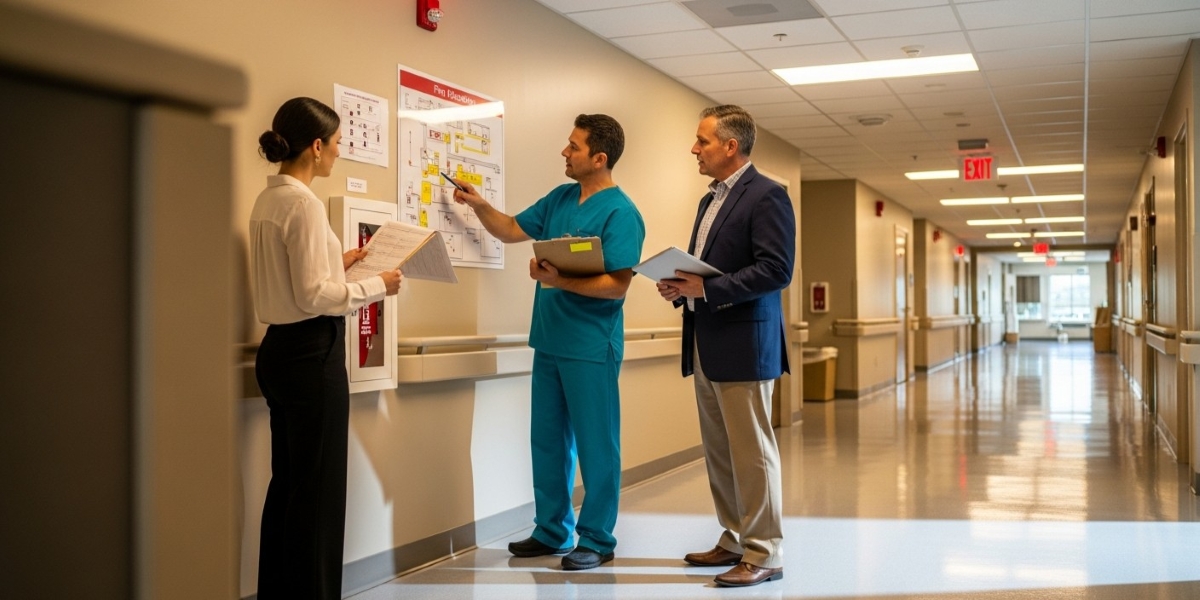
This is arguably one of the most critical parts of any facility’s emergency plan. The Pennsylvania nursing home explosion is a stark reminder of what is at stake when fire or structural safety fails. A proper plan is not just a document; it is a system of functional alarms and sprinklers, unobstructed exits, and, most importantly, staff who are thoroughly trained to evacuate residents with varying levels of mobility under extreme pressure.
Infection Control and Staffing Standards
Even the best-written plans will fail if there are not enough trained staff members to implement them. New York currently ranks in the bottom 10 U.S. states for average nurse staffing hours per resident, a statistic that has a direct and devastating impact on care quality. Understaffing is a primary driver of failures in infection control, which can lead to outbreaks of preventable diseases.
This lack of personnel also contributes to a rise in bedsores, a key indicator of neglect. According to the CDC, more than 1 in 10 nursing home residents have had a pressure ulcer. In 2022 alone, the NYS Department of Health received 13,862 complaints, with over a quarter involving abuse or neglect, issues often rooted in inadequate staffing.
Preventing Violence and Abuse
True safety is not just about protecting residents from external emergencies but also from internal threats. A government report found that hundreds of U.S. nursing home residents have been assaulted by other residents, highlighting a severe and often overlooked danger. New York’s new workplace violence prevention law is a direct attempt to force facilities to address these risks.
The law mandates that facilities conduct comprehensive hazard assessments and update their safety frameworks to protect both residents and staff. This requirement, which must be implemented by September 2026, signals a proactive—though some argue delayed—response to a well-documented problem within long-term care settings.
How to Vet a Nursing Home’s Safety History Yourself
Families are not powerless. There are concrete, actionable steps you can take to research a facility’s safety record and hold them accountable for the care they provide.
Where to Find Official Reports and Data
As a consumer, you have the right to request and review a facility’s emergency preparedness plan and its complete inspection history. For federally regulated data, the official Care Compare tool from the Centers for Medicare & Medicaid Services (CMS) is an invaluable resource for looking up official inspection reports, staffing levels, and quality measures.
Additionally, the New York State Department of Health website maintains a database of complaint data and facility ratings specific to the state. Cross-referencing these federal and state resources can provide a comprehensive picture of a facility’s performance and safety history.
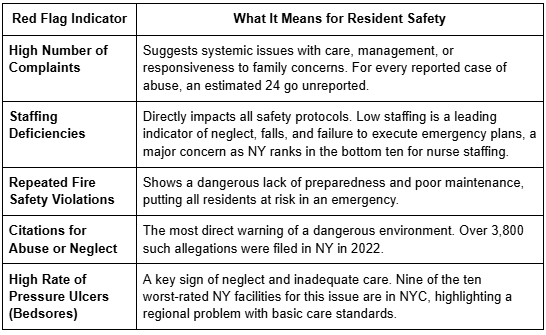
Red Flags to Watch For in a Safety Report
Reading these reports can be overwhelming, as they are often filled with clinical language and bureaucratic codes. However, you do not need to be an expert to spot patterns that serve as clear warning signs of a dangerous or neglectful environment.
When safety protocols fail, and the red flags in facility reports become a reality, families in the Bronx need steadfast advocates. For over 30 years, the attorneys at Dalli & Marino, LLP have been holding negligent nursing homes accountable for failures that lead to resident harm. They understand that a violation isn’t just a mark on a report; it’s a direct threat to a loved one’s well-being.
The team at Dalli & Marino specializes in investigating the very issues highlighted in these safety reports. They dig deep to uncover evidence of systemic failures, from inadequate staffing and poor training to ignored safety procedures that result in falls, abuse, or neglect. If you suspect Bronx nursing home abuse, their expertise is crucial for proving that a facility’s negligence caused your family member’s suffering.
Securing accountability is about more than just filing a complaint. Dalli & Marino fight to secure the compensation families deserve to cover medical expenses, relocation costs, and the pain and suffering endured. They are committed to ensuring that negligent facilities face consequences, forcing them to improve care and preventing future families from experiencing the same tragedy.
Your Family’s Safety is Non-Negotiable
The key takeaways are clear: nursing home safety protocols are a legal requirement, not a courtesy. Recent events and new laws demonstrate that this is a critical, ongoing issue that demands attention from both regulators and families. You have the right and the tools to research a facility’s safety history before entrusting it with a loved one’s care.
Ultimately, the best defense is a proactive offense. Ask to see the safety plans during your tour. Visit the facility at different times of day to observe staffing levels and resident interactions. Trust your instincts, and if you see signs of neglect or feel your concerns are being ignored, do not hesitate to report the facility and seek legal guidance.
Disclaimer: The information provided here is purely for informational purposes and should not be interpreted as legal counsel. It is advised to seek guidance from Consumer Attorneys for further clarification on your rights.