


By: Amie Lee
“They are the same,” said Tiger, when asked about the difference between designing an app and designing a board game.
Tiger Zhao is a product designer with experience spanning various industries and media. His pre-college years in Uganda, the East African country far from the United States, shaped him with a peaceful heart through the local idiom Hakuna Matata — meaning “be not worried” in Swahili. The idea of “making things easy” has stayed with him ever since. As a product designer, his work has crossed high-fidelity interface design, user-centric experience design, collaborative user research, and more. This mentality has helped him succeed in delivering enjoyable products across domains from electric vehicles to home internet, and now into impactful e-commerce platforms.
One notable example of Tiger’s work is Sundial, a stealth-startup project focused on helping sub-healthy individuals build better habits through generative, reactive, and hybrid AI. As project manager and design lead, Tiger’s intention to elevate the positive impact of artificial intelligence for underserved user groups is evident in the warm visual interface and thoughtful features, including Smart Calendar Integration, AI-assisted planning, an encouraging badge system, and more. The branding of Sundial conveys a sense of warmth and reliability, leaving a lasting impression on users seeking a healthier lifestyle. The user-centric attention, crafted execution, and steady leadership highlight Tiger’s ability to bring meaningful ideas to life through design.
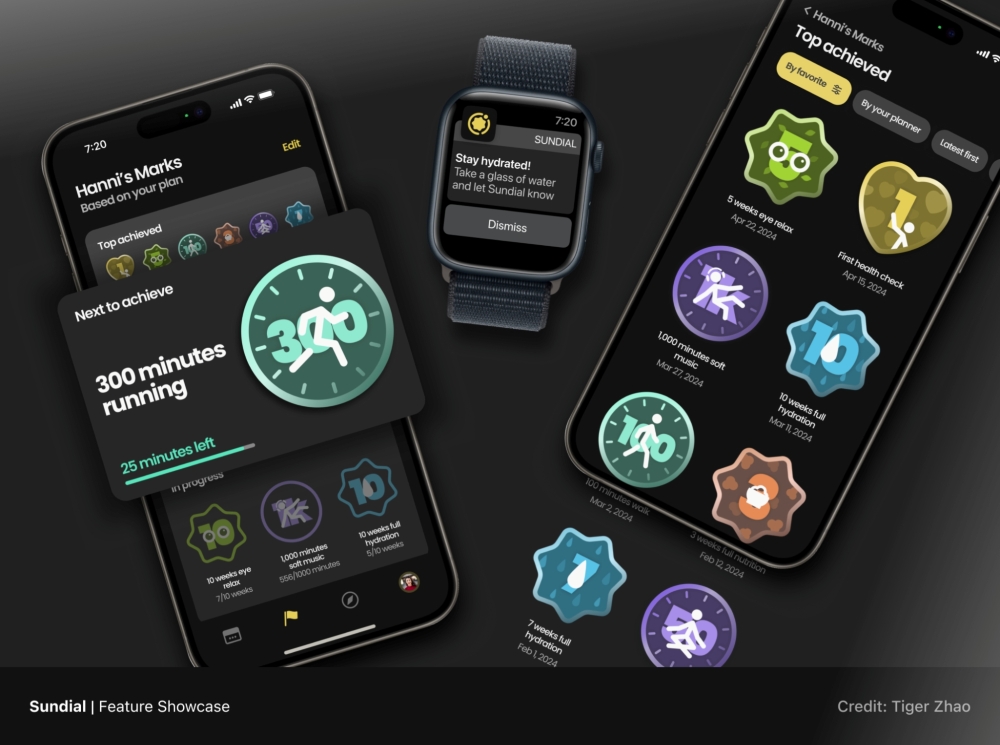
Photo Courtesy: Tiger Zhao
Beyond shipping scalable products, Tiger is also known for his passion for board game design. Curious, I asked him how he connects these two areas. His answer was simple: they are essentially the same to him, echoing back to the first line of this article. Tiger sees the process of designing a board game as a “discovery of analog amazement.” With similar steps as creating an app — research, prototyping, iteration, testing, and consistent branding, all wrapped in a unifying system — Tiger finds the complexity of board games just as fun and intriguing as creating a corporate app for an entirely different audience.
Tiger’s history-based educational board game Forty Scenes: Routes Beyond shows exactly how he approaches complexity. Centered on Beijing’s Yuanmingyuan Park, the game isn’t a history lesson disguised as play. It’s an experiential journey. Players travel routes inspired by real pathways, uncover artifacts, and follow micro-stories tied to the park’s cultural past. Tiger blends classical Chinese aesthetics with modern clarity, creating a board that feels both historical and alive. Not only does the visual presentation reflect consistency and accuracy, but the game pieces also demonstrate his thoughtful development. I particularly love how he uses traditional six-sided dice as player indicators instead of single-purpose tokens, which fits the game’s unique mechanism where players can convert an opponent’s piece to their own. This choice encourages dynamic gameplay while avoiding unnecessary overproduction of game pieces — a subtle nod to sustainable thinking.
Packed with more than a map and a few dice, the game includes a beautifully designed, historically referenced deck of cards. Matching the forty scenes of the park, there are forty scenic cards with illustrations inspired by the painting series Forty Scenes of the Yuanmingyuan, commissioned by the Qianlong Emperor in the Qing Dynasty. Each scenic card features its illustration, name, park location, and a short description. Alongside these are Ability Cards, which reference Chinese idioms, allowing players to perform tactical plays. A remarkable detail on these Ability Cards lies in the annotations of ancient poems describing the idioms, making them not only enjoyable to play with but also rewarding to read and learn from.
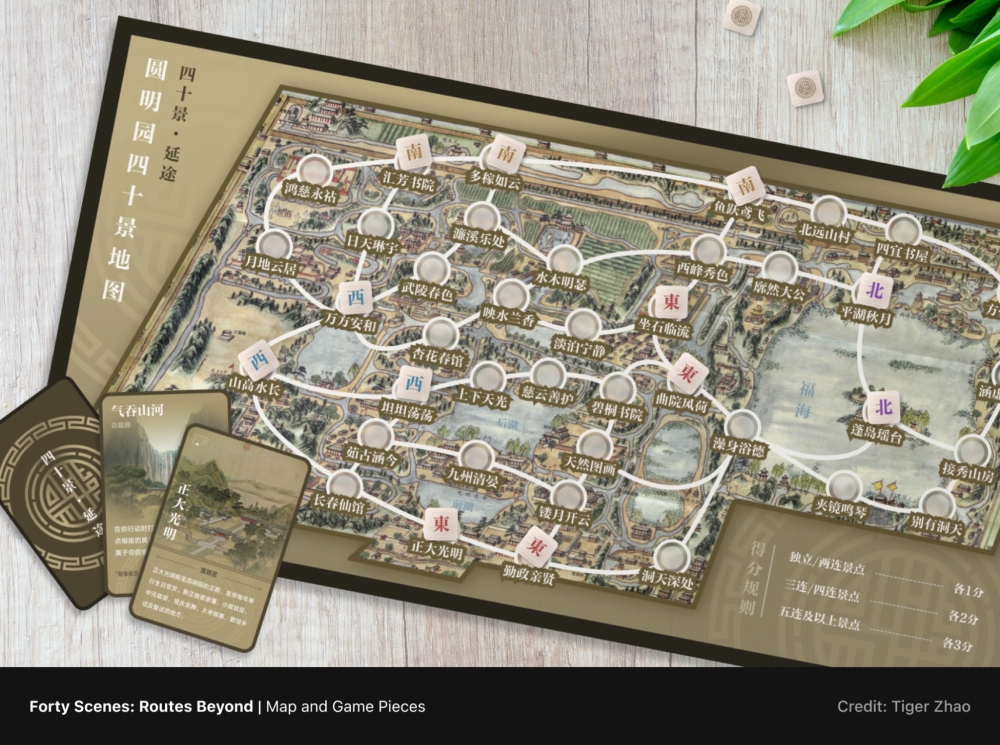
Photo Courtesy: Tiger Zhao
In speaking with Tiger, I’m refreshed by the work he shared. With apps that are intricate yet carefully crafted and games that are cohesive and thoughtful, Tiger shows the essential mindset of shaping design across mediums — from bold branding and clear interfaces to ceaseless prototyping, system thinking, balancing function and fun, and most importantly, caring enough to deliver a flow that feels easy and enjoyable. Very Hakuna Matata.
“There is more to come very soon — stay tuned!” Tiger said when asked about future releases. With the excitement of his current works, I’m eager to see what comes next from the designer.