

By: Johnson mclin | New York City
An exclusive interview exploring how Chinese design wins global applause via sustainable and emotive concepts
“Architecture is a dialogue between imagination and precision.” This is how Hangzhou-based architect Yichao Jin describes his craft. Over the past year, Jin has emerged as a prominent figure on the global stage, securing a series of prestigious honors including the MUSE Design Awards (Platinum, 2024), the China Design Intelligence Award (DIA), and the Architecture MasterPrize (AMP).
His work, which seamlessly blends culture, technology, and nature, reflects a profound exploration of sustainability and humanistic care in contemporary Chinese architecture. To Jin, a building is more than an artistic space; it is a vessel connecting technology, culture, and emotion.
Origins: From Urban Evolution to Systematic Design
Growing up in a rapidly transforming urban landscape, Yichao was inspired early on to contemplate the relationship between space and daily life. He earned his degree in Architecture from Zhejiang University of Technology before attending the University of Pennsylvania (UPenn), where he graduated with a Master’s in Advanced Architectural Design with a near-perfect GPA.
“At UPenn, I realized that architecture isn’t just about form, it’s about the integration of empathy, systems, and performance.”
Today, as a Project Architect at the AIR-CO LAB (PowerChina Huadong Engineering Corporation), Yichao is active across China and the Middle East, focusing on cultural, public, and educational spaces that balance conceptual clarity with technical rigor.
International Recognition: A Multidimensional Interpretation of Excellence
2024 proved to be a landmark year for Jin. His MUSE Platinum Award—often dubbed the “Oscars of the Design World”—recognized his excellence in spatial aesthetics and sustainable form. The DIA highlighted the social and public value of his projects, while the AMP emphasized his international standards in innovation and execution.
“Each award validates a different facet of architecture’s diverse value,” Yichao notes. “When technical implementation, human experience, and cultural expression exist in harmony, architecture transcends form and truly touches people.”
Featured Project: Conghua Smart Agriculture Exhibition Hall
A Paradigm of Innovation in Rural Revitalization
Located in Conghua, Guangzhou, the Smart Agriculture Exhibition Hall is Yichao’s most representative recent work. As a national-level rural revitalization pilot, the project redefines the possibilities of agricultural display spaces.
As the lead architect, Yichao managed the project from initial concept to completion. During an eight-month compressed cycle, he coordinated multidisciplinary teams and maintained regular communication with local government, agricultural experts, and the community.
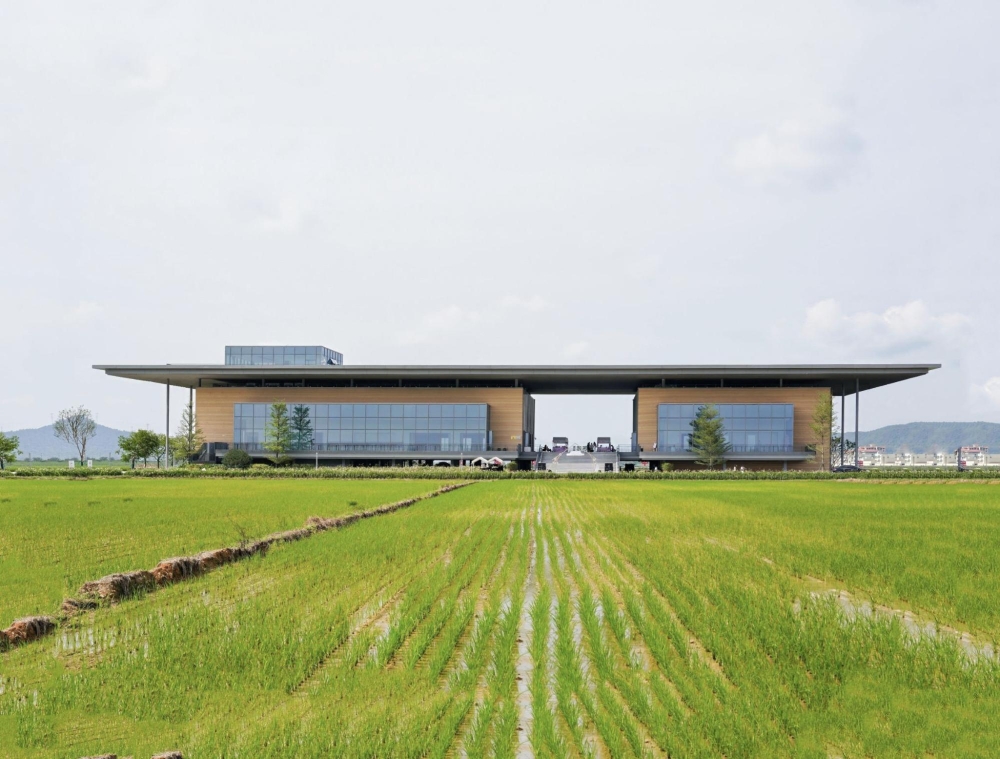
Photo Courtesy: Yichao Jin / AIR-CO LAB (Image: Smart Agriculture Exhibition Hall)
Design Highlights:
- Architectural Language: The design abstracts the textures of the surrounding farmland. A transparent glass facade symbolizes the openness of modern agriculture, while lightweight cantilevered roofs echo the traditional “Lingnan” sloped rooflines.
- A “Vitality Hub”: Beyond a showroom, the hall integrates tech training, cultural events, and community space, acting as a bridge between urban resources and rural development.
- Green Technology: The project features rainwater harvesting for irrigation, building-integrated photovoltaics (BIPV) for clean energy, and passive design strategies to minimize energy consumption through natural light and ventilation.
Since its completion, the project has become a benchmark for rural revitalization, garnering coverage from major outlets such as Xinhua News Agency and Nanfang Daily and significantly boosting local agricultural tourism.
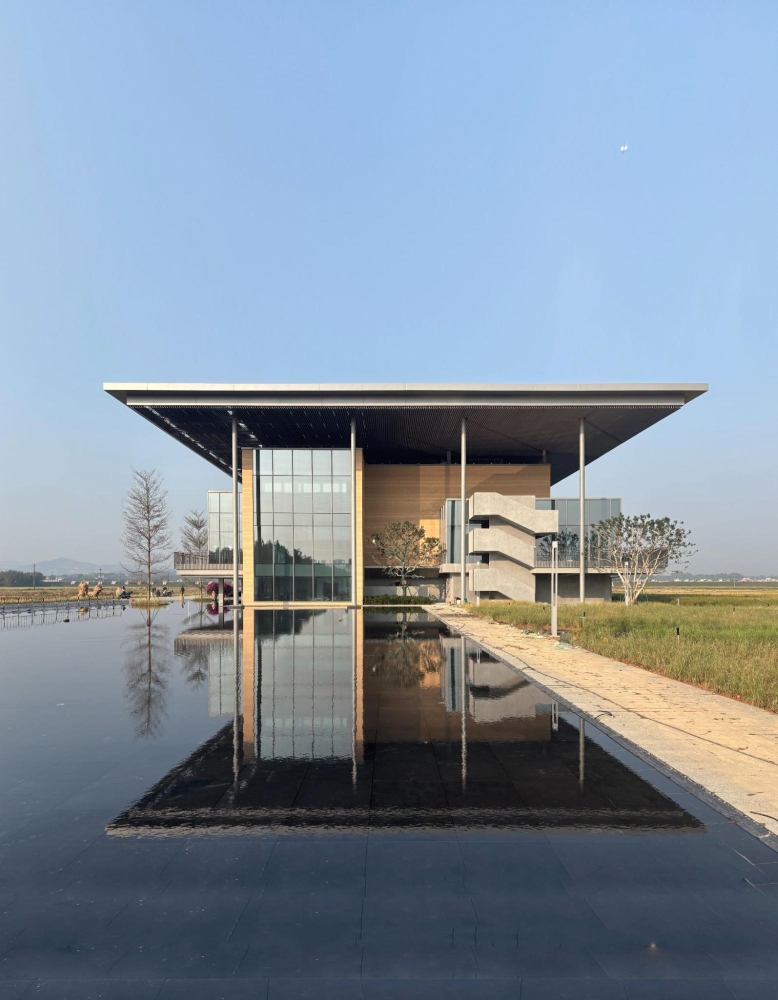
Photo Courtesy: Yichao Jin / AIR-CO LAB (Image: Dongyang Culture and Art Center)
Diverse Practice and Systems Thinking
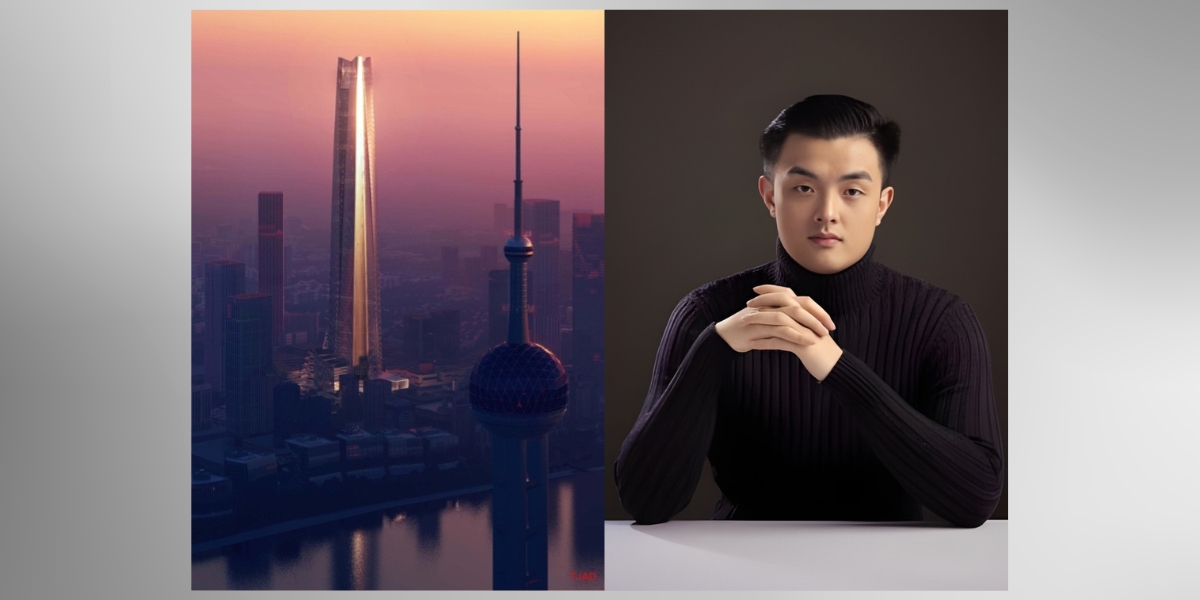
Yichao’s portfolio extends beyond rural projects to include the Shanghai North Bund Supertall Tower, the Mianyang Opera House, and the Dongyang Culture and Art Center (another MUSE Platinum winner). These diverse experiences have forged a unique philosophy centered on “Scale” and “Perception.”
- Emotional Sustainability: Jin believes buildings should do more than save energy; they must nourish a sense of belonging and identity.
- Digital Integration: He uses BIM, Revit, and parametric modeling to manage complexity, but insists that the true architectural experience comes from how light moves across a facade or how a space guides human behavior.
Looking Ahead: Deepening Roots in Sustainability
Yichao continues to focus on the evolving landscape of rural China. He is currently advancing several public spaces and industrial upgrade projects, exploring how architecture can serve as an engine for social change.
“Rural revitalization offers an unprecedented stage for architects. It requires us to understand social structures and industrial ecosystems as much as aesthetics.”
A Message to Young Architects
“Stay curious, and stay rooted,” Yichao advises the next generation. “In complex, human-centric projects like rural revitalization, you need both systems thinking and local perception. True design wisdom comes from understanding the land and caring for the people.”