

By: Anne Schulze
In the fast-paced world of tech and entrepreneurship, “disruption” is usually a term reserved for Silicon Valley startups. But in the realm of humanitarian aid, disruption is a matter of life and death. As climate change-driven disasters and regional conflicts left nearly 300 million people facing acute food insecurity in 2024, the old guard of famine relief reached its breaking point.
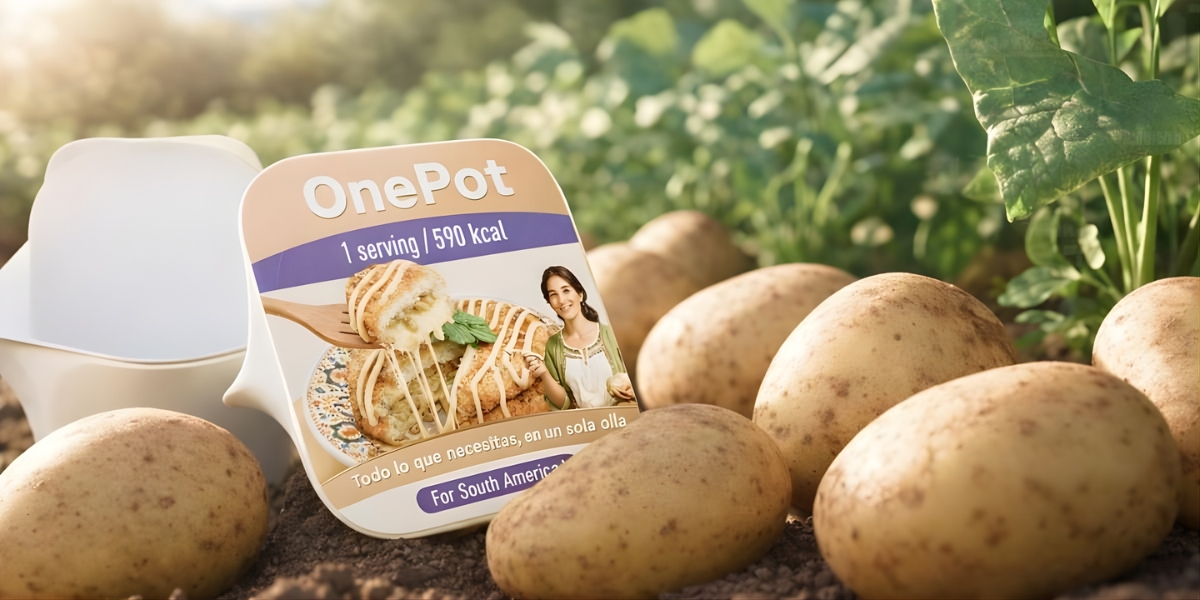
Enter Yang Ziqing, a design researcher at the China Academy of Art. Her project, “OnePot,” is not just a food item—it is a strategic overhaul of the global humanitarian supply chain. By merging a cost-effective potato-based nutritional formula with high-level mathematical “soft cell” geometry, Yang is proposing a solution that could double the efficiency of global aid logistics while slashing the price of survival.
The Trillion-Dollar Efficiency Gap
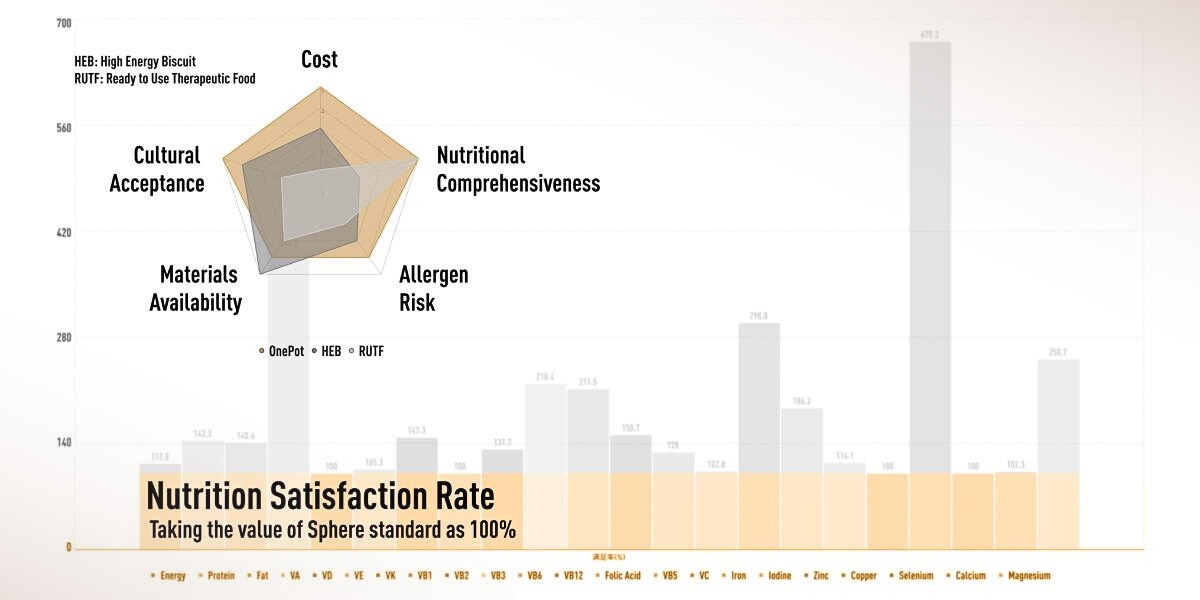
Photo Courtesy: YANG Ziqing (Comparison between OnePot and UN Emergency Food Rations)
For decades, the standard for severe acute malnutrition (SAM) has been peanut-based Ready-to-Use Therapeutic Food (RUTF). While effective, it is an economic and logistical bottleneck. Traditional RUTF products are bulky and require more transport and storage space than many other humanitarian supplies, increasing overall logistics and distribution costs. Packaging and imported dairy ingredients contribute materially to the final price of RUTF.
Yang identified these failures through deep-dive research into global aid documents and interviews with emergency food specialists. “Current aid is often tied to expensive international procurement and fragile supply chains,” Yang notes. Her goal was to create a formula that is globally accessible and a packaging system that is geometrically optimized for the “last mile” of disaster zones.
The Tuber Revolution: Science Meets Narratives
Yang’s inspiration for OnePot came from an unlikely source: the documentary Freaky Eaters, which featured an individual surviving for 26 years on nothing but French fries. While a nutritional extreme, it pointed to a scientific truth—the potato is one of the most complete and adaptable nutritional sources on the planet.
OnePot utilizes a base of 80% potato powder, supplemented by soybean flour and chicken liver powder. This combination creates a nutrient-to-price ratio that outperforms grain-based alternatives. “The inclusion of chicken liver powder is critical,” explains Yang. “It provides heme iron, which is absorbed far more effectively than plant-based iron, addressing the widespread issue of anemia in post-disaster regions”. Additionally, the resistant starch in potatoes offers a low-glycemic index (GI), making OnePot safe for elderly and diabetic populations, often overlooked in emergency settings.
“Soft Cell” Geometry: The High-Tech Edge
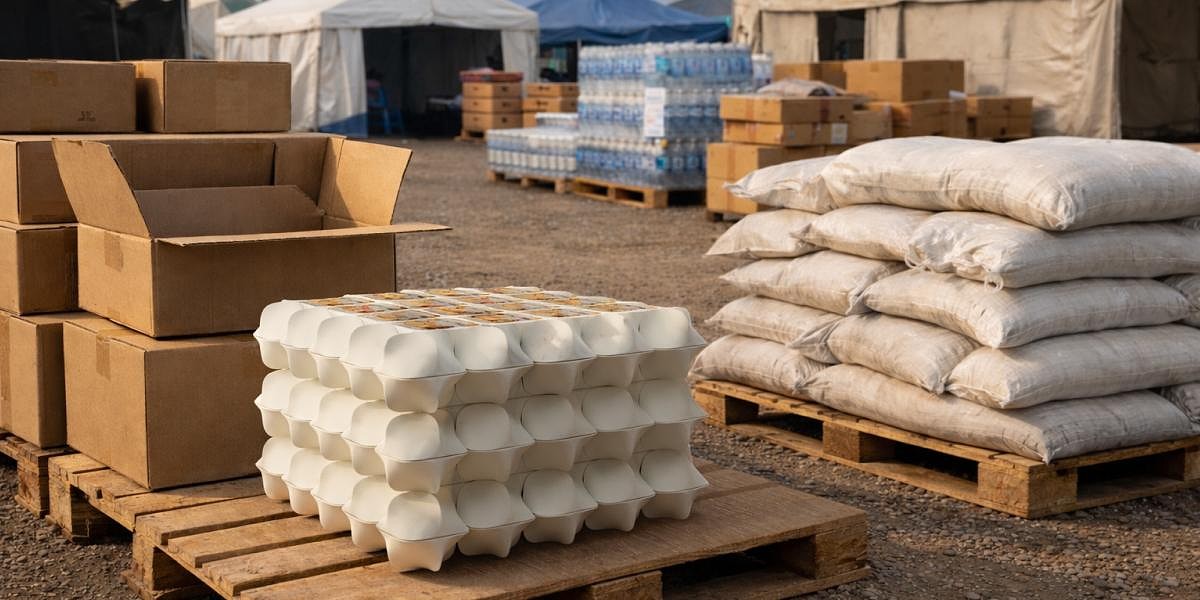
Photo Courtesy: YANG Ziqing
The most radical aspect of OnePot is its packaging, which leverages a mathematical breakthrough recently published in PNAS Nexus: the “soft cell”.
Traditional rectangular aid boxes rely on sharp corners that create structural weak points and inefficient stacking. Yang applied the module from the soft cell research—a geometry that tiles space without gaps or sharp vertices. By rounding the edges and creating a modular, interlocking form, OnePot achieves near-perfect “dense tiling”.
In comparative logistics tests, this geometric shift nearly doubled the spatial utilization efficiency. For relief agencies, this means one cargo plane can now carry twice as much food as with standard RUTF packaging. Furthermore, the soft cells’ ability to rotate between 0 to 15 degrees while remaining interlocked allows the packaging to withstand physical stresses better during low-altitude airdrops.
A Sustainable, Cultural Play
OnePot is as much about human dignity as it is about calories. Recognizing that “taste fatigue” can hinder recovery, the project offers five distinct flavor profiles that align with cultural norms across Asia, the Middle East, Africa, and the Americas. Modular packaging also allows for customizable additive components to meet specific allergy or cultural requirements.
Sustainability is woven into the product’s DNA. The packaging is made from combustible bio-based materials. In a disaster zone where fuel is as scarce as food, the empty OnePot boxes can be repurposed as high-energy-density fuel for cooking or heating. This energy-recovery loop transforms what would be waste into a vital resource for survival.
The Road Ahead: From Prototyping to the Frontlines
At present, OnePot has completed prototype verification and has won multiple awards, including the European Product Design Award, London Design Award, and International Cultural Innovation Art & Design Award. The product is still being continuously improved. Currently, it is undergoing shelf-life stability tests to reach the 18-to-24-month international standard required by the WHO and UNICEF. Yang is also collaborating with food production specialists to visit production lines and ensure that the formula can be manufactured globally with low barriers to entry.
The vision for OnePot is localized production. Because potatoes and soy are grown abundantly worldwide, disaster-prone nations can stockpile OnePot without the massive financial losses associated with importing dairy-heavy products.
By bridging the gap between cutting-edge mathematical geometry and grassroots humanitarian needs, Yang Ziqing and the OnePot project represent a new wave of innovation—one in which design doesn’t just make products; it re-engineers the possibility of global survival.
Disclaimer: This article is for informational purposes only. The concepts described are based on research, prototype development, and statements from the project’s creator. Any references to efficiency, nutritional value, durability, or logistical performance reflect preliminary findings or design intentions and have not been independently verified. The product discussed is not presented as a medical treatment or guaranteed solution for food insecurity. Readers should rely on qualified professionals and official humanitarian agencies for guidance on famine relief practices and nutritional standards.