

By: Bai Xue
From leathercraft studios in India to public art screens across New York City, Priya Gupta’s creative path bridges design, memory, and cultural narrative.
Indian-born designer and illustrator Priya Gupta has been gaining growing attention in New York’s creative circles for her vibrant, culturally rooted visual storytelling. Before moving to the U.S., she spent more than a decade designing leather goods and accessories, collaborating with global brands and eventually launching her own label, a trajectory that significantly shaped the structured, design-driven mindset she carries into her illustration practice today.
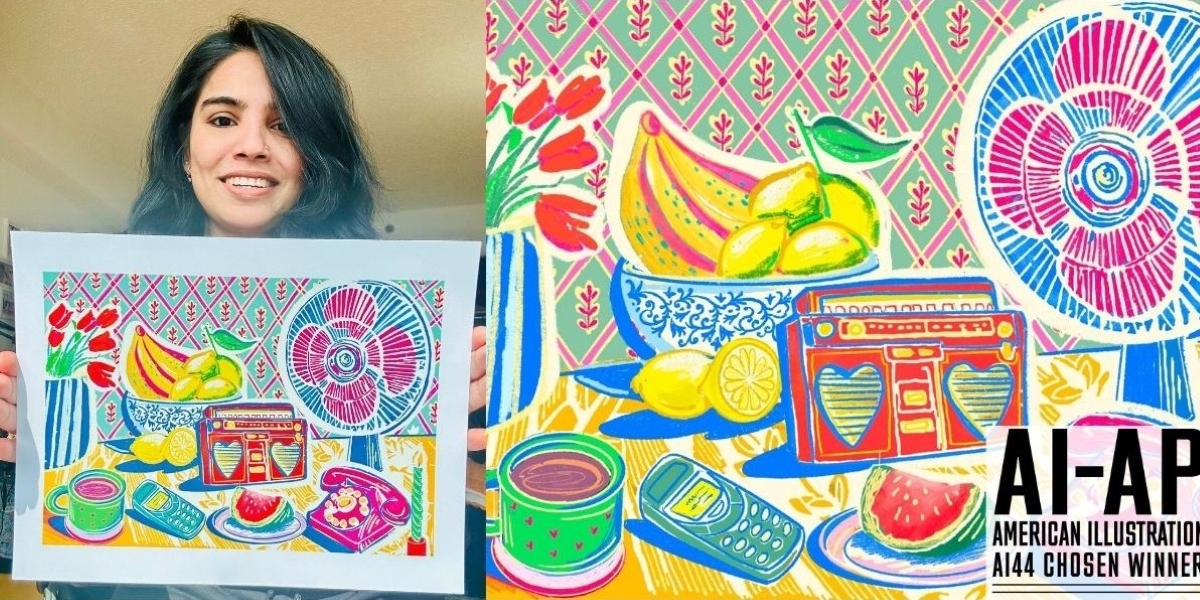
With more than a decade of professional experience across design and illustration, Priya translates Indian cultural memory into a contemporary visual language that feels both personal and broadly relatable. Her work has recently been recognized in the United States, including selection for the American Illustration–American Photography AI44 Competition and a public art feature with ArtOnLink, which showcases curated artwork across digital kiosks throughout New York City.

Photo Courtesy: LinkNYC
Now based in New York, she speaks to New York Weekly about the inspirations behind her work, the cultural stories she carries, and her life in the city.
Q: You began your career in accessory and leathercraft design. How has that influenced your current illustration practice?

Photo Courtesy: Priya Gupta
“This blend of structured design thinking and expressive storytelling is what largely defines my work today.”
My foundation in accessory and leathercraft design has greatly shaped how I approach illustration today. As an accessory designer, I was trained to constantly balance function, aesthetics, and storytelling, and that mindset has carried seamlessly into my illustration practice.
For me, the creative process in both fields is quite similar. It always begins with a brief, followed by research, ideation, sketching, color exploration, and finally refining the work into a finished outcome that communicates clearly and connects with people. In design, that journey ends with a product reaching consumers; in illustration, it ends with a visual narrative that sparks emotion or conversation.
Having worked extensively in corporate and commercial design environments, I bring a strong sense of discipline, organization, and planning into my illustration practice. I approach illustration with the same strategic thinking I used in design, understanding audiences, studying market and cultural trends, and forecasting what resonates visually at a given moment.
Having established a distinct illustrative voice, I now focus on strategically shaping visual narratives that reflect cultural insight, audience awareness, and long-term relevance. My work is driven by an understanding of how visual language functions in public, commercial, and cultural spaces, rather than by short-term trends. This blend of structured design thinking and expressive storytelling is what defines my work today.
Q: What themes and ideas are you most drawn to in your illustration work today?
“Much of my work is personal and autobiographical; it draws largely from lived experiences, family memories, and the stories I grew up listening to.”
My illustration work today is deeply rooted in culture, memory, and storytelling. Growing up in India in a large joint family meant that tradition was part of everyday life; almost every day involved a festival, ritual, or celebration. That environment naturally immersed me in stories, mythology, and oral storytelling from a very young age, and it continues to shape how I create.
I’m instinctively drawn to bright colors, layered details, and intricate patterns, which reflect the visual richness of Indian culture. My illustration practice centers on cultural documentation and reinterpretation, translating traditional narratives and visual histories into contemporary forms for global audiences.
Q: Your work was recently recognized by the AI-AP AI44 Competition and featured through ArtOnLink across New York. What do these recognitions mean for your practice?
“It has reassured me that my visual language and storytelling resonate beyond cultural and geographic boundaries.”
These recognitions reflect the established position of my work within the illustration industry and its relevance in a global context. They affirm that my visual language resonates with professional peers and diverse audiences alike, demonstrating that the work is not only artistically driven but also commercially viable.
Being selected for the AI-AP AI44 Competition was especially affirming, as it placed my work alongside illustrators whose practices I deeply admire. It reassured me that my visual language and storytelling resonate beyond cultural and geographic boundaries.
The ArtOnLink exhibition in New York was equally powerful in a different way. Seeing my work displayed across the city’s digital kiosks and reaching thousands of people every day was a transformative experience that changed how I think about audience and access. It allowed my illustrations to live in public space, encountered by people in their daily routines, which aligns closely with my belief that art should be visible, inclusive, and part of everyday life.
Together, these experiences have strengthened my confidence as an illustrator and encouraged me to continue pushing my practice forward, bridging culture, design, and storytelling while engaging with broader, more diverse audiences.
Q: How has living and working in New York shaped your artistic thinking?
“New York has sharpened my artistic thinking by reminding me that creativity doesn’t live in isolation.”
Living and working in New York has profoundly shaped my artistic practice and expanded the reach of my work. The city’s dynamic creative energy and diverse cultural landscape provide a platform for engagement, collaboration, and public-facing projects across multiple disciplines- live sketch nights, gallery exhibitions, musicals, and Broadway performances.
What inspires me most is the diversity of people and practices here. In New York, it’s common to meet artists who are fearlessly pursuing their passions while balancing multiple creative paths, and that mindset has encouraged me to think more expansively about my own work. The city invites curiosity; it pushes me to show up, attend events, engage in conversations, and keep learning.
New York has sharpened my artistic thinking by reminding me that creativity doesn’t live in isolation. It grows through community, exposure, and shared experiences, and this city offers that in abundance.
Q: What are you currently working on, and where do you see your practice evolving next?
“I’m excited by the idea of art moving fluidly across formats while remaining rooted in strong storytelling.”
I’m currently working on writing and illustrating a Hindu mythology book that revisits the stories I’ve loved since childhood. This project is especially meaningful to me because it allows me to merge personal memory with cultural history, presenting ancient narratives in a way that feels vibrant, accessible, and relevant to contemporary audiences.
Alongside this, I’m also developing a brand that translates these narratives into thoughtfully designed merchandise, allowing the stories to live beyond the page and become part of everyday life. I’m excited by the idea of art moving fluidly across formats like books, objects, and visual experiences while remaining rooted in strong storytelling.
Looking ahead, I see my practice expanding in multiple directions. I’d love to develop gallery-based work, presenting my illustrations on a larger scale through immersive canvases and installations. At the same time, I’m deeply interested in education and community-building, teaching art to children, and organizing creative workshops or events. Sharing art-making as a tool for storytelling, imagination, and cultural exchange feels like a natural extension of my practice and something I’m excited to grow into.
Q: Any suggestions for South Asian designers who are planning to come to the U.S. market?
“Embrace your cultural identity rather than compromise it.”
My biggest advice to South Asian designers planning to enter the U.S. market is to embrace your cultural identity rather than compromise it. Your background, stories, and visual language are your greatest strengths; those are what make your work distinctive in a global landscape. At the same time, it’s important to understand the market you’re stepping into: study consumer behavior, trends, and pricing, and learn how your work can speak to both heritage and contemporary audiences.
Building a strong network is equally important. New York, in particular, thrives on community, attending exhibitions, talks, workshops, and industry events, and don’t be afraid to start conversations. Collaboration opens doors faster than working in isolation.
Finally, be patient and resilient. The U.S. market values consistency and long-term commitment. Stay open to learning, adapt without losing your voice, and trust that authenticity paired with professionalism should eventually find its place.
Instagram: @illustratewithpriya
Website: www.illustratewithpriya.com