

By: Alva Ree
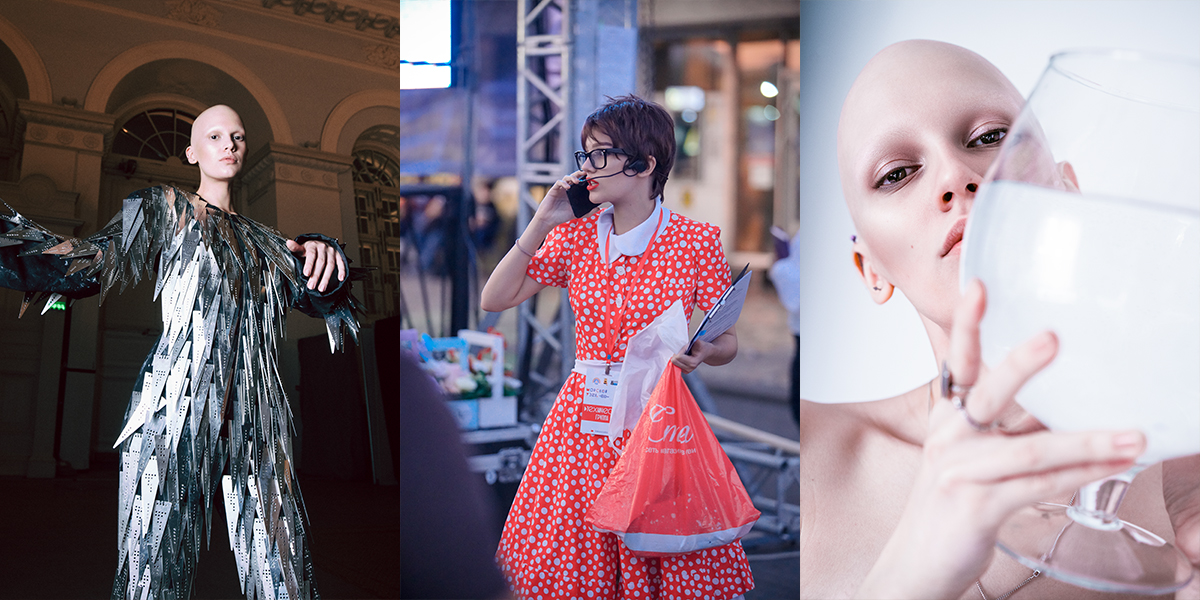
Actress and model Elizaveta Eremenko, also known as Liz Krutish, has built a creative career across theater, film, and performance. In this interview, she reflects on her early path into acting, the lessons different creative environments have taught her, and the kinds of characters that continue to intrigue her.
Do you remember the first moment in your life when you realized that acting wasn’t just something you liked, but something you needed?
I’ve wanted to act for as long as I can remember, probably since I was about seven years old. Back then, I would watch TV series and immediately start repeating the characters’ lines and emotions, almost like a game. At some point, I caught myself thinking, very seriously for a seven-year-old: this is what I want to do for the rest of my life.
I was born and raised in a small city on the west coast of Kazakhstan. At that time, there weren’t any acting classes around. So I tried everything that felt even remotely creative: dancing, singing, playing guitar, writing, and photography. Looking back, that was the beginning of my artistic journey, even if I didn’t have a clear direction yet.
When I was fifteen, my family moved to Russia, and that’s where theater finally appeared in my life. That was the moment things started to shift. Rehearsals stretched late into the evening, and suddenly I was surrounded by people transforming under stage lights.
When you’re young, you don’t call it “craft.” You don’t analyze technique or acting methods. You feel that being inside a story makes sense in a way nothing else quite does.
Standing on stage felt strangely natural, like stepping into a language I had already been speaking for years without realizing it.
You’ve trained and worked in many different creative environments, stand-up, television, film, theater, music videos, and cultural events. How did those experiences shape the way you approach acting today?
Studying acting is a humbling process. At some point, you realize that talent is only the beginning, maybe even the easiest part. The real work starts later. For me, acting slowly became an exercise in listening. Listening to yourself, to your scene partner, to the rhythm of the text, to those quiet emotional truths that hide between the lines and only reveal themselves if you’re patient enough.
Every environment taught me something different. Theater gave me discipline and a sense of presence. Film taught me flexibility, because on set, anything can change in a second: the scene, the light, the mood, sometimes even the entire direction of the moment. Stand-up comedy taught me not to take things too seriously. And working on cultural events taught me something very practical: always have a backup plan. (laughs) But no matter where you perform, a stage, a film set, a tiny comedy club, the most important relationship is always the one you build with the character.

Photo Courtesy: Elizaveta Eremenko
What kind of roles attract you the most, and why do you think those stories resonate with you?
I’m usually drawn to characters who are difficult to understand at first, who feel a little mysterious even to themselves; who are searching, struggling, trying to make sense of their own emotions. Those roles are challenging, but that’s exactly what makes them interesting to play. As an actor, you slowly start uncovering who this person is, layer by layer.
How do you protect yourself emotionally when working with heavy material?
Therapy once a week helps. (laughs) And yoga. It helps me stay connected not only to my mind, but to my body as well.
How do you stay inspired during periods when the industry moves slowly or unpredictably?
Curiosity is what keeps me grounded. There is always another technique to explore, another director whose perspective might challenge the way you think. There is still so much to learn, so many people to collaborate with, and so many stories waiting to be told.