

By: Seraphina Caldwell
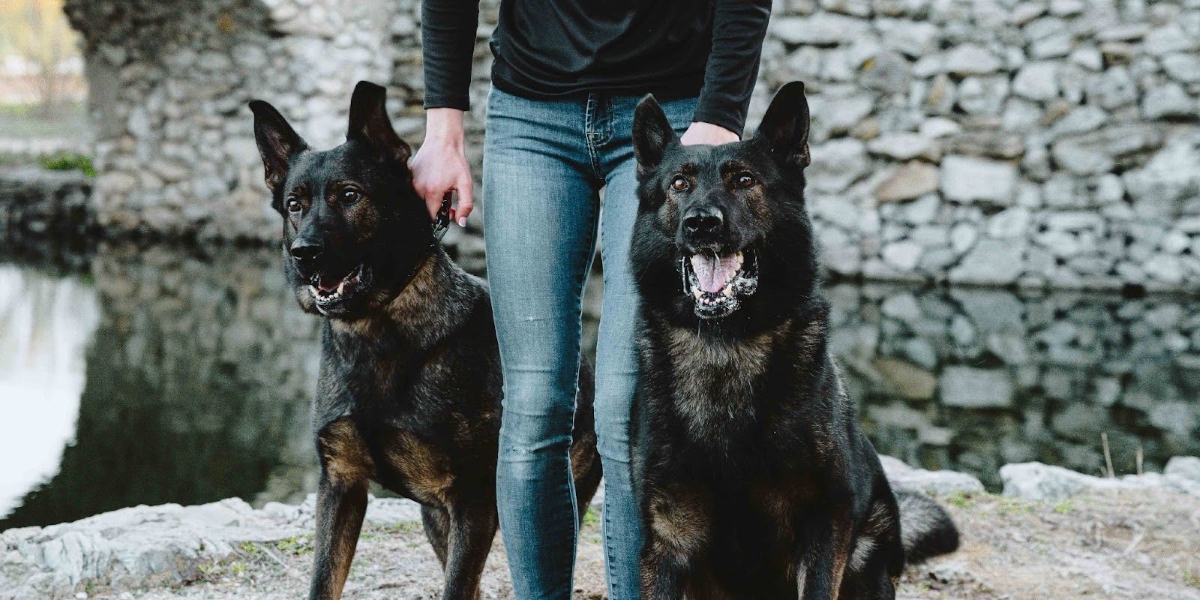
On a sprawling three-acre property just north of Dallas, a German Shepherd named Argo sits calmly beside his handler on a sun-dappled patio. No leash connects them. No treats are visible. The dog’s attentive eyes occasionally scan the horizon before returning to rest on his owner’s face. It’s an ordinary scene of companionship, until a signal, a single quietly spoken command, transforms the placid animal. In less than a second, Argo explodes with an aggressive bark, almost a scream, before launching across the yard toward a man emerging from behind a distant shed, intercepting the potential threat with the kind of precision usually reserved for elite human operatives.
This is no ordinary protection dog demonstration. It’s the culmination of thousands of hours of elite, functional training at Canine Protection International (CPI), where dogs become part of an exclusive, world-class unit—the protection dog team designed to guard families, not perform for show.
Beyond Sport Training: The Science of Functional Protection
The distinction between sport-trained protection dogs and CPI’s Elite Family & Estate Protection Dogs lies in a fundamental philosophical difference that permeates every aspect of the training process.
“Many people think a protection dog is just an aggressive dog, but the reality is more complex,” says Alex Bois, owner of CPI. “These dogs must be completely stable, confident in every scenario we put them in, and neutral to the world moving around them. Should they be called upon, they will go from calm and relaxed to exploding with aggression.”
While most training centers in North America and Europe rely on what CPI calls “dog sport training,” the company has pioneered an approach focused on functional outcomes in real-world scenarios. Industry research suggests that many so-called ‘protection dogs’ fail basic scenario testing because they are conditioned to respond only to specific cues, such as a decoy using predefined threatening gestures that real-world assailants would not replicate.
Instead, CPI’s methodology emphasizes what behavioral scientists call “context-independent response training,” enabling dogs to respond to threats under a handler’s command across varied environments without requiring equipment or artificial signals from a decoy. This requires a complete reconceptualization of traditional protection training.
The Three-Phase Training Protocol
CPI’s training methodology unfolds across three meticulously designed phases, beginning with foundational training that instills core capabilities regardless of a dog’s previous experience. Unlike sport training, which aims for precision in controlled environments, CPI’s approach prioritizes adaptability.
The second phase focuses on teaching specific skills in both obedience and protection. A training expert notes that this phase is where the divergence from sport training becomes most evident: “Sport dogs learn to perform for short durations in predictable environments. CPI dogs learn to perform indefinitely in unpredictable environments. It’s a fundamental difference in neural conditioning.”
Perhaps most distinctive is CPI’s third phase: functionality. During this period, dogs transition from performing in controlled “classroom” environments to demonstrating their capabilities in diverse real-world settings. Exercises include scenarios that would confound conventionally trained animals, such as responding to passive threats without obvious cues of aggression, navigating complex environments, and maintaining protective vigilance despite distractions.
“If you can teach two people a common language, you can accomplish anything,” the CPI training philosophy states, highlighting their approach to creating a communication system between dog and handler that transcends traditional command structures. CPI owners do not become dog trainers. They do not bring treats and a ball for the delivery of their new dog. Instead, they learn how to handle through effective communication, praise, and a bond that strengthens every day, a testament to the thousands of hours spent training every dog and the unique program that separates CPI from the rest.
The Investment: Science Over Sentiment
“Investing in a CPI protection dog isn’t simply a matter of cost. It’s about precision. The investment varies depending on the dog’s level of training, natural ability, and client-specific requirements. CPI’s rigorous selection process evaluates hundreds of European-bred candidates each year and accepts fewer than 2% into the program. It’s not uncommon for CPI to reject dogs later sold to brokers and then to competitors, a fact Bois acknowledges with concern.
“A lot of dogs we fail end up for sale elsewhere as ‘protection dogs, ‘” he says. “Buyer beware. There are no regulations in this industry.”
Rather than choosing dogs for looks or lineage alone, CPI uses a battery of temperament tests, nerve strength assessments, and early socialization screenings. Their aim? Total behavioral reliability in high-stress environments.
“Temperament is everything,” Bois says. “A dog that hesitates under pressure is a liability. We only train dogs that show exceptional composure and judgment.”
The Integration Process: Creating a Family Guardian
CPI’s state-of-the-art 2,400-square-foot facility, located next to the owner’s home, serves as both a training center and a home environment, enabling dogs to transition seamlessly between protection and companionship roles. This dual-context training proves critical for what behavioral scientists term “contextual discrimination”, the ability to determine appropriate responses based on environmental and handler cues.
When clients purchase a dog—investments ranging from $100,000 to $300,000—the relationship is just beginning. CPI’s proprietary three-day integration process includes:
- Instruction in public settings
- Complete Off-leash handling techniques
- Car entry and exit protocols
- Home and public protection exercises
- Integration with family members and existing pets
“Our philosophy of ‘extreme ownership’ permeates every facet of our operations,” CPI materials explain, highlighting their commitment to client satisfaction that extends far beyond the sale.
A Moral Framework for Canine Protection
Critics have raised ethical concerns about conditioning dogs to be aggressive. Bois is candid about the tension but insists CPI’s approach balances protection with animal welfare. These dogs are subjected to extreme challenges and pressure. In the end, the dog always wins, tail wagging and ready for the next fight. “As a human, you can’t learn effective, functional self-defence without being punched in the face a few times and learning to overcome the feeling. The same goes for dogs; a Schutzhund sleeve and a padded stick are a joke to these dogs, they will fight through a drugged-up full-grown man.”
“These dogs aren’t just brutes,” Bois explains. “They’re stable, loving family members with a job to do.”
It’s this balance, perhaps more than anything, that explains CPI’s loyal following. Clients often return for their second, third, or even fourth dog. Bois doesn’t push testimonials. He doesn’t have to.
The Final Return
As Argo circles back from his simulated threat interception, he slides quietly into a down position, resting his head between his paws. There’s no raised voice, no visible tension. Just a glance from his handler, and calm is restored.
For the families who own CPI dogs, that calm isn’t just emotional. It’s strategic. It’s worth every cent. And at up to $300,000 for a pair of dogs, it represents more than luxury; it’s layered, living security.
In a crowded and often unregulated industry, Canine Protection International has carved a niche that’s as refined as it is rare. Their dogs don’t just bark on cue. They act with conviction. Their handlers aren’t taught to control their dogs with treats and toys. They’re taught to trust them with their lives.
And in the process, CPI hasn’t just trained a generation of elite protection dogs. They’ve redefined what it means to be safe.