

By: Madison Cole
From teenage prodigy to founder of NEEDTONE, the fashion creative is building a generation of confident makers, one stitch at a time.
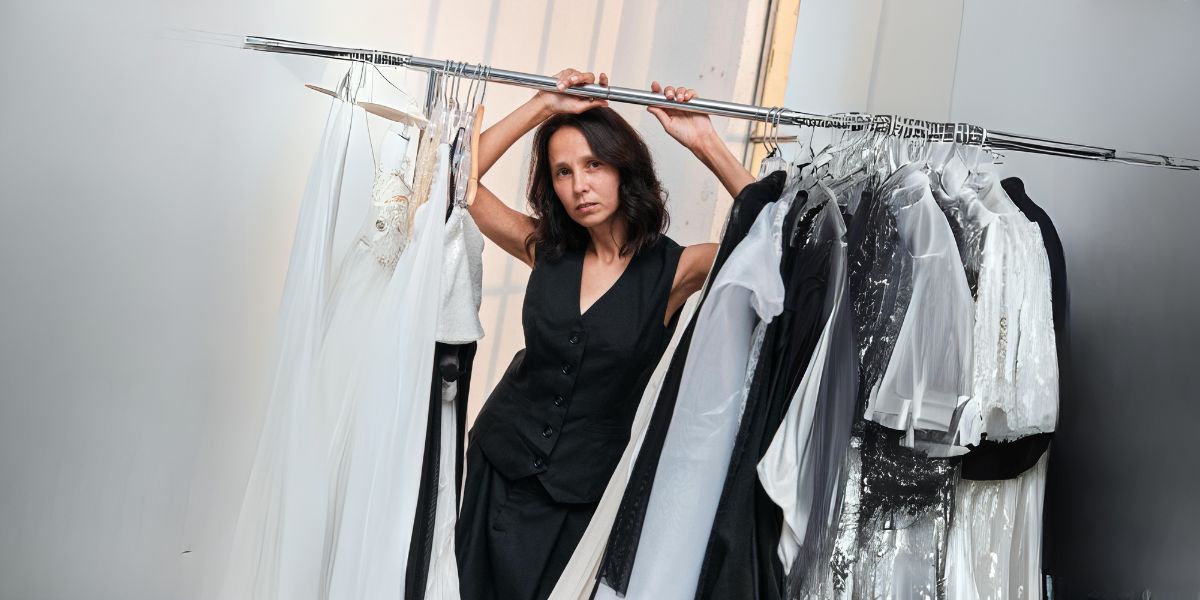
When Tatiana Nikitina talks about fashion, she doesn’t start with trends, seasons, or runways. She starts with children. With tiny hands, learning how to thread a needle, measure a hem, and transform a flat piece of fabric into something they can wear with pride. It’s a deceptively simple focus that reveals a deeper philosophy: fashion is a craft and a potent tool for education, confidence, and community.
Today, Nikitina is known as the founder of NEEDTONE and a go-to collaborator for stylists, photographers, and film teams who need custom, character-driven looks for shoots. But her path has included design competitions as a teenager, leadership roles as an entrepreneur, and years of hands-on teaching in a bustling children’s club that welcomed hundreds of students. The throughline is unwavering: a belief that technical mastery and creative freedom can coexist.
From Competition Kid to Technical Craftsperson
Nikitina’s relationship with fashion began early and publicly. As a teen, she was already winning design contests, placing second in a citywide competition at just fourteen (competing against adults) and taking first place in her final year of school. Alongside the accolades, she pursued the discipline behind the drama, completing vocational training as a tailor with pattern-cutting skills before finishing high school. Those twin strands—recognition and rigor—still define her work.
At university, she didn’t just study; she built. She led a student fashion theater, organized shows, and took the stage at city contests and events. Outside the classroom, she designed for comedy teams and even created campaign uniforms for a candidate for local office. The lesson was clear: fashion’s impact increases when it meets a real-world brief.
She also stepped into professional environments that expanded her perspective – working with a modeling agency and joining a design association created under the patronage of legendary couturier Vyacheslav Zaitsev. Those experiences taught her how to move between art and industry, concept and client, atelier and audience.
A Business Brain Behind the Needle
Nikitina’s résumé includes a law degree and an MBA – credentials that might seem unusual for a designer until you see how she runs projects. From 2007 onward, she held executive roles in her own companies, learning to scale ideas, manage teams, and build sustainable operations around creative work. That fluency shows in the way she structures her classes, her shoots, and her brand: clear processes, measurable outcomes, strong storytelling.
A Creative Playground for 700 Kids
The heart of Nikitina’s story – what makes her stand out in a crowded field of independent designers – is her commitment to education. For five years, she led a children’s club called “Dirizhable,” which welcomed more than 700 young learners and won recognition as a standout startup in preschool education. There, Nikitina built a sewing program that looked nothing like a quiet home-ec corner. It was kinetic and collaborative: mood boards taped to walls, rulers and chalk out on tables, finished pieces hung up like tiny exhibitions.
Her curriculum centered on three pillars:
- Technical Foundations Made Friendly: Students learned the logic of construction, measurements, seam allowances, and simple pattern drafting through age-appropriate projects that they could complete and wear. Mastery came packaged as momentum.
- Creative Authorship: Instead of “copy this,” Nikitina gave structured choices: necklines, closures, trims, and color stories. Kids didn’t just sew; they designed, made decisions, and saw those choices come alive.
- Stage Time and Storytelling: Finished garments became props for micro-shows, photo days, and classroom “lookbooks,” helping students practice presentation skills and celebrate each other’s work.
Parents noticed the spillover. Sewing sharpened fine motor skills, math sense, and patience – and it gave kids a visceral experience of cause-and-effect: if I measure carefully, the sleeve fits; if I change the fabric, the drape changes. Those are lessons you can’t swipe on a screen.
NEEDTONE: A Brand Built on Craft and Character
Parallel to her education work, Nikitina launched NEEDTONE, a brand registered first in her home market and later as an LLC in the United States. The name nods to her approach: garments designed to meet the need of the moment and carry a tonal story – fit, fabric, silhouette – suited to the person and purpose.
Her editorial footprint grew with looks made for stylists and photographers across Europe and the U.S. Appearances in titles such as Solstice Magazine and PURPLEHAZE reinforced what collaborators say in private: Nikitina’s pieces photograph beautifully because they’re engineered to do so. She understands cameras and choreography as well as cloth.
Building Looks That Carry a Narrative
Nikitina’s on-set work is where her technical and educational instincts meet. Whether the brief is a clean, constructed lingerie set, a statement kimono, or a scene-specific dress for a character, she dissects the narrative first. Who is this person? What does the garment need to say before the actor opens their mouth? Then she builds.
Her roster includes collaborations with modeling and creative studios, music artists, actors, and fellow designers. She drafted patterns and executed pieces for American designers, dressed performers for videos and stage, and supported film productions with original costumes. The common thread is specificity: garments that don’t just fit a body, but fit a story.
Why Teaching Kids to Sew Matters Right Now
If you’ve ever watched a child hold up a garment they made themselves, you know why Nikitina keeps returning to the classroom. But there’s a broader cultural reason, too. Sewing brings abstract ideas, geometry, planning, and iteration into tangible form. It’s STEM in soft materials. It’s also a counterweight to fast fashion: when kids know what it takes to make a garment, they value quality, repair what they own, and think differently about consumption.
Nikitina has spent the last four years formalizing her teaching into repeatable lessons and project paths. The aim is not to raise future tailors (though some will surely pursue design), but to give kids a lifelong toolkit: how to start, how to stick with it when it gets hard, and how to finish with pride. Those are creative muscles every industry could benefit from.
The Lingerie Lab and the Kimono Canvas
Two threads in Nikitina’s portfolio deserve special mention because they reveal the depth of her craft: lingerie and kimonos.
Lingerie is the designer’s test of precision. There’s nowhere to hide a mistake. Straps, cups, closures, and linings have to align perfectly, and fabrics demand finesse. Nikitina invested in advanced training in London focused on lingerie construction, and that eye for micro-fit now informs everything she makes – from structured bodices to bias-cut slips meant to move beautifully on camera.
Kimonos, by contrast, are a study in line and drape. Their apparent simplicity – rectangular cuts, clean seams – forces discipline in proportion. Nikitina uses them as a canvas for texture, print, and movement, tailoring each piece to the story it needs to tell, whether that’s ceremonial elegance or contemporary edge.
An Entrepreneurial Teacher in a Cross-Continental Career
Nikitina’s career spans Moscow, London, and now the United States, where she runs NEEDTONE LLC and continues to balance bespoke work with teaching. That dual identity – designer and educator – makes her unusual in the fashion ecosystem. She can prototype quickly, solve production problems, and think in brand systems, but she’s equally at home on the classroom floor guiding a child through their first seam.
Clients and collaborators tend to stick around. A photographer who hires her for one shoot returns for three; a studio brings her into a second campaign; a performer who wears her piece in a video calls back for a tour wardrobe. That loyalty is built on reliability and the subtlety of her fit and finish. On set, clothes need to move, hold, and flatter across lighting scenarios and takes. Nikitina designs for that reality.
What’s Next: Kits, Curricula, and Community
Ask Nikitina about the future, and she points to scale – without sacrificing soul. She’s developing ways to package her children’s sewing curriculum into formats that schools, clubs, and parents could use: project kits with pre-cut patterns and safety instructions, classroom guides with differentiation for age and ability, and digital files for those who want to print and sew at home.
She’s also exploring intellectual property protection for elements of her methodology – the sequences, patterns, and teaching aids that make her approach so engaging for kids. It’s a savvy move for an educator-founder who has already proved she can build communities around craft.
On the editorial and entertainment side, she’s continuing to develop character-specific wardrobes for shoots, including projects in film and music. The goal isn’t volume; it’s impact – fewer pieces, more meaning.
A Designer Who Measures Success in Confidence
Designers often define success in collections, placements, or client lists. Nikitina measures it another way: in the faces of students who realize they can make something from scratch – and in the way an actor relaxes when a costume feels “right” for the role.
That might be the most compelling part of her story. Fashion, for Nikitina, is not only a livelihood. It’s a language – one she teaches to kids and speaks fluently on set. In an industry often split between concept and craft, she is stubbornly, refreshingly committed to both.
Editor’s Note: This profile is based on biographical information and credits provided by the designer and her team.