

By: Charlotte Hayes
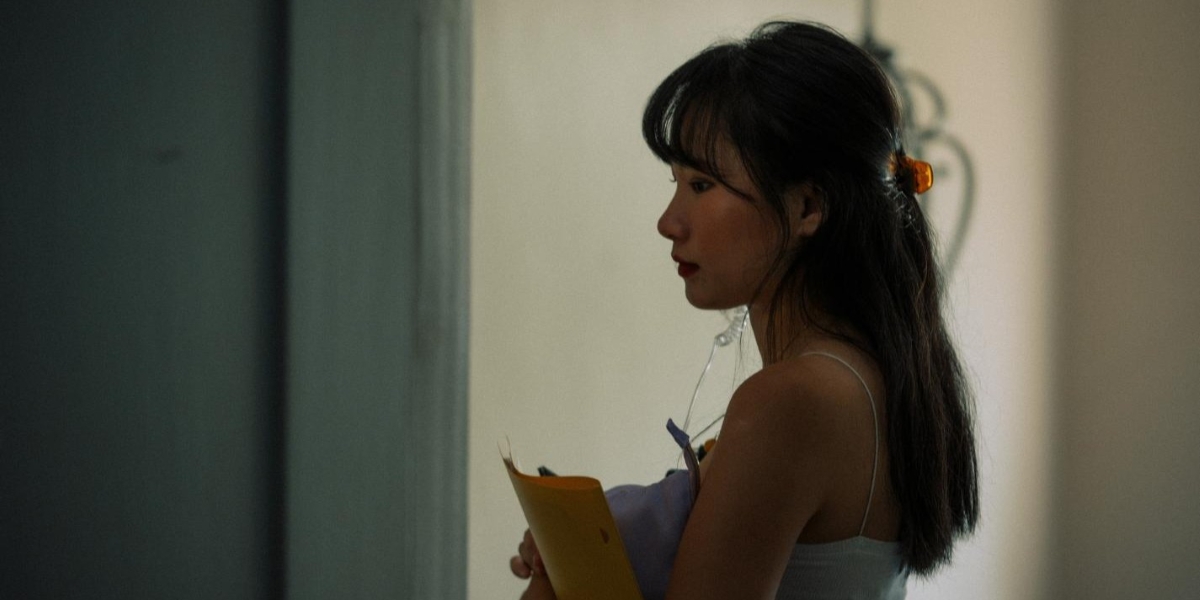
The recent recognition of Resonance at the Marina Del Rey Film Festival, where it won Best Horror Film, is a testament to the artistry and technical skill of editor Xinhui Wang. This award is not just another accolade in her career but a reflection of her ability to create narratives that captivate and resonate with audiences. With additional selections at prestigious festivals such as the Atlanta Horror Film Festival, Cindependent Film Festival, and Picture’s Up Film Festival, Wang’s work is garnering widespread attention. Her distinctive approach to editing—especially in genre filmmaking—has set her apart, with a focus on building suspense and emotion without relying on conventional tools.
The short film Resonance presented Wang with a particularly unique challenge: the film relies almost entirely on visuals and sound, with minimal dialogue. As co-editor, Wang embraced this constraint, using every cut, moment of silence, and subtle sound design to tell the story. “When words are absent, every decision in the edit must carry weight,” Wang explains. Working alongside director Curt Sova, Wang developed a nuanced visual and auditory language that crafted tension and suspense through pacing, sound layering, and revealing moments. Her editing transformed raw footage into a gripping, immersive experience, with the rhythm of the cuts becoming the emotional heartbeat of the film itself.
Wang’s expertise extends beyond horror, as evidenced by her work on Goodbye Stranger, a narrative short that earned a nomination at the Micheaux Film Festival. In this project, she demonstrated her ability to reshape a film’s timeline to enhance emotional depth. Faced with an edit that lacked the intended emotional impact, Wang restructured the film’s chronology, using a non-linear approach to intensify the tragic relationship between a conman father and his daughter. This editorial innovation amplified the film’s emotional core, showcasing Wang’s talent for identifying the heart of a story and enhancing its dramatic power.
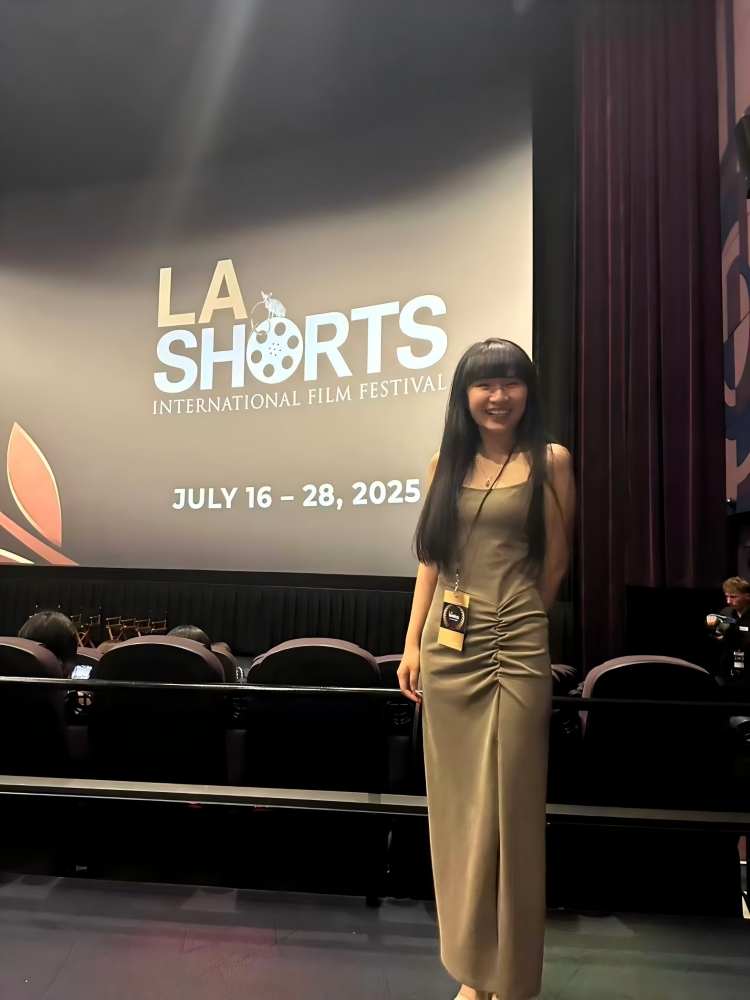
Photo Courtesy: Xinhui Wang
In the fantasy drama Can You Hear Me?, Wang made a critical editorial decision that underlined her commitment to the project’s overall integrity. Despite her personal attachment to a powerfully performed scene, Wang recognized that it disrupted the narrative’s flow. Choosing to remove the scene—what filmmakers often call “killing your darlings”—ultimately strengthened the story, ensuring that the pacing remained tight and impactful. Can You Hear Me? went on to win Best Fantasy Short at the Independent Shorts Awards and earned an official selection at the LA Shorts International Film Festival, affirming Wang’s editorial precision and decision-making skills.
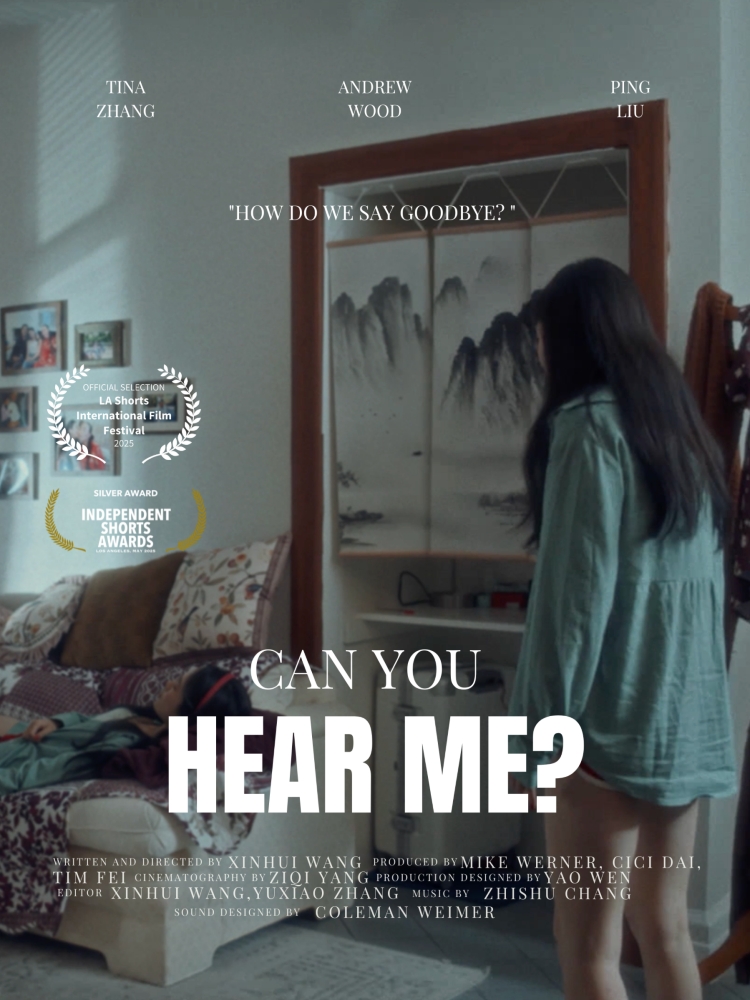
Photo Courtesy: Mike Werner / Cici Dai / Tim Fei
Beyond the festival circuit, Wang has showcased her versatility in the professional world, notably through her work as lead editor on several promotional films for the Chinese National Center for Nanoscience and Technology. These films aimed to simplify complex scientific topics for a wider audience, demonstrating Wang’s ability to translate dense concepts into engaging narratives. This work not only earned praise for its clarity but also exemplified her adaptability, transitioning seamlessly between creative film projects and scientific outreach.
Wang has also made significant contributions as a key member of DramaBox’s editorial team, a web series company that boasts millions of global downloads. In this high-speed environment, Wang’s editorial instincts helped shape engaging narratives that resonated with international audiences, further demonstrating her ability to adapt to different genres and formats, whether in feature films or digital content.
At the core of Wang’s work is an unwavering focus on the emotional throughline of each story. “My job is to find and amplify the heartbeat of the narrative,” she says. Whether it’s the slow, creeping tension in Resonance, the fractured guilt in Goodbye Stranger, or the hopeful connection in a scientific explainer, Wang’s goal is always to make the audience feel the story, not just observe it. Directors and producers often return to Wang because of her skill in solving complex narrative problems while staying true to the project’s emotional intent. As one director put it, “Xinhui doesn’t just assemble scenes; she helps uncover the soul of the film.”
As she continues to develop feature-length projects, Wang remains committed to advancing the recognition of editing as a vital creative discipline. While technology continues to evolve, she believes that the true heart of storytelling lies in the editor’s intuition, empathy, and understanding of human emotion. “Technology can change, but storytelling requires a human touch—an ability to feel what the story is trying to convey,” Wang explains.
As she continues to develop feature-length projects, Wang remains committed to advancing the recognition of editing as a vital creative discipline. While technology continues to evolve, she believes that the true heart of storytelling lies in the editor’s intuition, empathy, and understanding of human emotion. “Technology can change, but storytelling requires a human touch—an ability to feel what the story is trying to convey,” Wang explains.