

New York City’s performing arts scene goes way beyond the glitz of Broadway.
Off-Broadway theaters, experimental venues, and indie performance spaces are scattered all over the five boroughs. There are hundreds of productions every week, yet most folks – tourists and even locals – miss out on these gems.
The easiest way to stay up to date with all these events is to follow aggregated listing platforms that keep everything in one place; otherwise, it can be too easy to miss out on what’s happening.
In this guide, we’ll take you through what actually counts as ‘Non-Broadway’, and show you the tools you can use to stay up to date with performing arts across the city.
Why Non-Broadway Performances Are Harder to Find
Non-Broadway shows just don’t have the budget that Broadway productions do. Big Broadway theaters splash out on ads, billboards, and get tons of media attention, but smaller venues have to make do with way less, which means most people don’t even realise a lot of these events are happening in the first place.
These shows pop up all over the city, not just in the Theater District, and that can lead to several problems in trying to find these performances:
- Information is hard to source – No single platform lists all non-Broadway performances
- Limited advance scheduling – Many shows announce dates only weeks before opening
- Smaller digital presence – Independent companies often lack robust websites or social media
- Locations vary – Performances happen in unexpected locations without theater signage
The term “non-Broadway” covers a bunch of categories, like Off-Broadway, Off-Off-Broadway, experimental theater, and indie productions. Each has its own network and way of spreading the word, which makes tracking them all down pretty tricky.
Ticketing platforms tend to push Broadway shows because, well, that’s where the money is. So the smaller productions end up on niche listing sites, their own websites, or just get passed along by word of mouth.
Venues often host rotating companies and limited runs, so the whole scene shifts constantly. You really have to dig through multiple channels to find these performances – just checking one big entertainment site won’t cut it.
What Counts as Non-Broadway Performing Arts in NYC?
Non-Broadway performing arts in NYC basically mean any show that’s not in the official Broadway theater district. That opens up a huge range of spaces and performance styles around the city.
Off-Broadway covers theaters with 100 to 499 seats. These spots put on professional productions with Actors’ Equity contracts, just on a more intimate scale than Broadway. You’ll find them all over Manhattan and the other boroughs, with everything from musicals to experimental works.
Off-Off Broadway is even cozier – venues with fewer than 100 seats. These places are all about emerging artists and boundary-pushing performances.
There’s more, too. Non-Broadway includes:
- Immersive theater experiences where you’re actually part of the show
- Site-specific performances in oddball spots like warehouses or even parks
- Cabaret and variety shows in clubby, nightlife settings
- Performance art installations in galleries or cultural spaces
- Dance performances from contemporary troupes to classical companies
- Comedy shows at clubs and smaller venues
It’s really about the size and location of the venue, not the quality. Tons of Off-Broadway and Off-Off Broadway shows feature serious talent – actors, directors, creative teams. Some productions even use these stages to test out new work before moving uptown.
Tickets are usually cheaper than Broadway, and the smaller venues make for a much more personal vibe between the performers and the audience. Can’t really beat that.
The Right Way to Discover Non-Broadway Performing Arts This Weekend
Finding good non-Broadway shows comes down to knowing where to look. Online event platforms are by far the fastest way to see what’s playing and compare schedules across lots of venues.
Performatist is one of the best ways to keep track of all the live events happening across New York. You can filter by date, neighborhood, or even genre, which is super handy if you have a vibe in mind.
When you’re hunting for weekend shows, try these steps:
- Check out the theater district sites outside Times Square
- Look for venues in neighborhoods like Greenwich Village, Chelsea, and the East Village
- Scope out show times early in the week so you don’t miss out
- Compare prices across a few different platforms
Ticket availability options include:
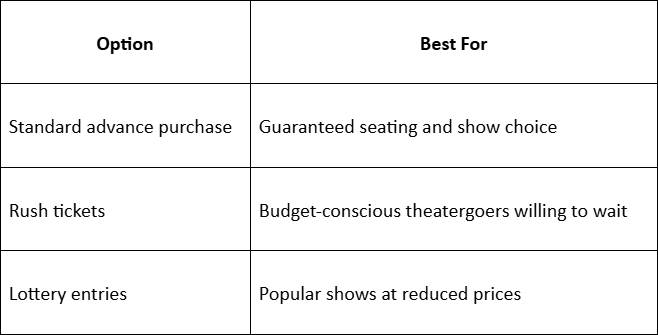
Most venues post their weekend lineups by Tuesday or Wednesday. If you plan ahead, you’ll have the best shot at snagging tickets to the coolest stuff.
Digital guides update listings daily, so they reflect cancellations and new shows as they pop up. You can set up notifications for certain genres or theaters if you want to stay in the loop.
Theater districts outside Manhattan, like Brooklyn or Queens, have some seriously creative companies doing original work. It’s a different energy from Midtown, and more than worth the subway ride.
What to Look for in a High-Quality Performing Arts Calendar
A good performing arts calendar needs to go beyond the big tourist venues. You want to see independent theaters, dance studios, experimental spaces, and local performance halls mixed in with the big names.
Key features to prioritize:
- Detailed event information – show times, ticket prices, venue locations, and what the performance is actually about.
- Advanced filtering options include date, genre, neighborhood, and price range.
- Regular updates for schedule changes, cancellations, and new shows.
- Venue details, including seating, accessibility, and transit directions.
The best calendars tell you why a show might be worth your time, not just the basics. Ideally, they give a bit of background on the artists or the performance without sounding like an ad.
Search matters – a lot more than you might think. You should be able to zero in on exactly what you want, whether that’s contemporary dance, experimental theater, or classical music.
Honestly, mobile compatibility is non-negotiable. You’ll probably be checking listings on your phone, and the calendar needs to load fast and look good, no matter the screen size.
User-friendly navigation makes a big difference. You shouldn’t be hunting through endless pages just to find the basics about a show.
One last thing – see if the calendar lists both ticketed and free events. There are plenty of excellent free shows in NYC, and a solid calendar won’t leave those out.