

By: Marissa Ross
In an era where perception is constantly mediated by screens and algorithms, sculptor Lee Yong Deok offers something radical: an invitation to see how still sculptures can come alive. His new exhibition, Form in Absence, is now on view at Gallery AP Space in Chelsea at 555 West 25th Street through November 17th. The works on display transform the static notion of sculpture into a living dialogue between form, perception, and time itself.
Born in Seoul in 1959, Lee was trained at Seoul National University before studying in Berlin as a Meisterschüler. His early career in the 1980s coincided with a pivotal period in Korean art, when artists sought new ways to reconcile political consciousness with abstraction and experimentation. Lee broke from both, choosing instead to explore the silent territory between the visible and the invisible. His recognition came swiftly: he received the Grand Prize at the Korea Art Exhibition, followed by participation in the landmark Present-Image exhibitions (1986–1991), which helped reframe Korean modernism into a more introspective, phenomenological discourse.
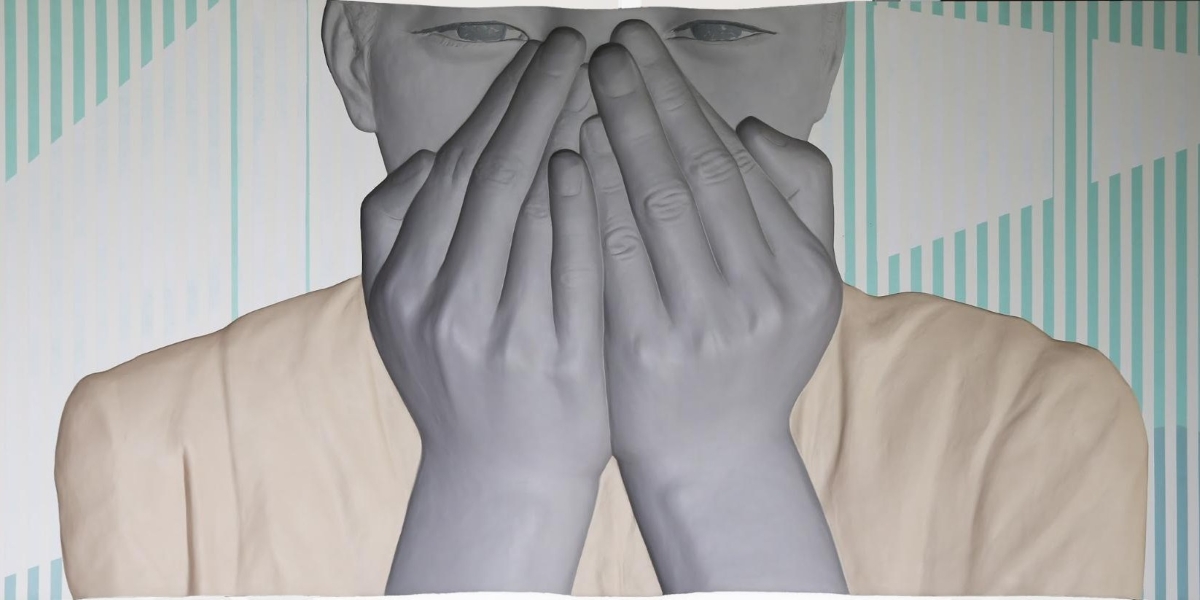
The word “phenomenological” is key to understanding Lee’s approach. His signature concept, Inverted Sculpture, inverts the traditional language of sculpture. Works that appear to project forward are actually carved inward, transforming light, shadow, and surface into moving instruments of illusion. As viewers move around them, concave becomes convex, and what once seemed solid dissolves into absence. This perceptual instability is not a trick; it’s an inquiry. Lee’s sculptures ask not what we see, but how we see, and how time and memory conspire to shape what we believe to be real.
For Lee, sculpture is not confined to physical space. It unfolds through the dimensions of time, viewer motion, shifting light, and revisiting. The artwork is never fixed; it becomes a performance between object and observer. Each encounter is different, and each memory of the work reshapes its meaning. In this sense, Form in Absence operates as both art and philosophy: a meditation on how perception, like memory, is fluid and incomplete.
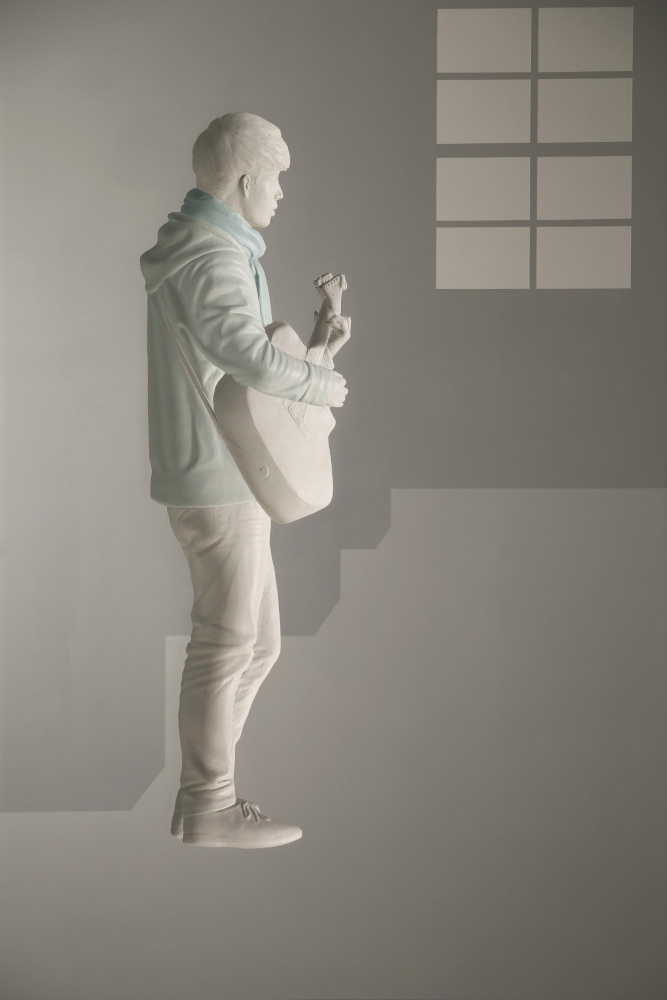
Photo Courtesy: Gallery AP Space (Lee Yong-deok, ‘playing the guitar 250781’)
The exhibition’s title captures this tension excellently. “Form” is what we grasp; “absence” is what we feel. Together, they evoke a state of awareness in which emptiness is not void, but potential. In the hands of Lee Yong Deok, negative space becomes alive, charged with presence, holding the trace of what once was or could be. Bronze, resin, and plaster are elevated beyond materiality; they become vessels of consciousness.
The installation at Gallery AP Space underscores this reflective quality. The works are given ample room to breathe, their shadows sprawling across the white walls like echoes. Viewers are encouraged to circle each piece slowly, to let perception shift, to allow form to reveal and then conceal itself again. The stillness is deceptive; every sculpture feels as if it’s in motion, responding to your gaze, waiting for your next step.
In an art world often dominated by spectacle and instant gratification, Lee’s work demands patience. It resists being photographed, flattened, or consumed in a glance. Instead, it restores to the viewer the forgotten art of contemplation. His Inverted Sculptures remind us that seeing is not a passive act; it is a deeply embodied experience. Through his manipulation of light and depth, Lee transforms vision into touch and memory into a form of sculpture.
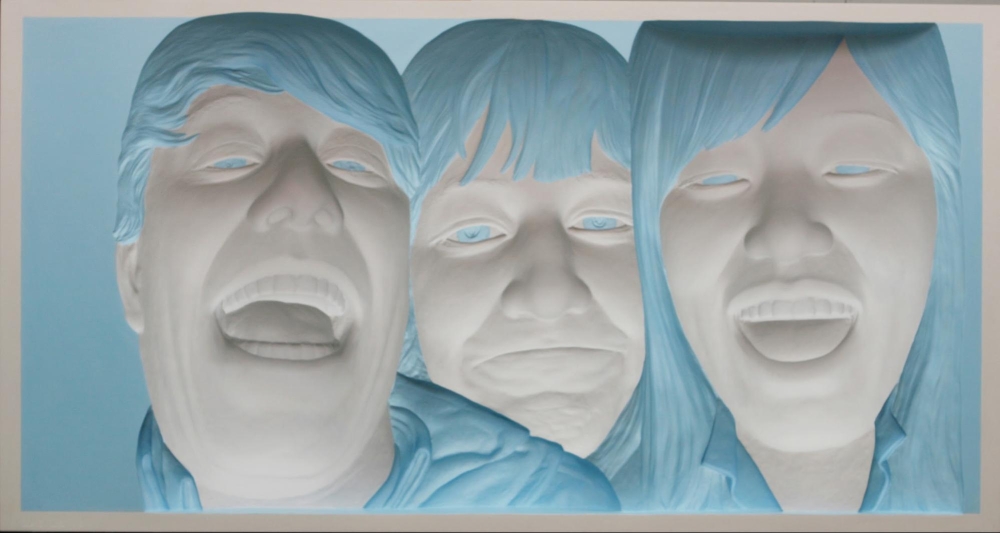
Photo Courtesy: Gallery AP Space (Lee Yong-deok, ‘laugh 055582’)
Ultimately, Form in Absence is not only about what is there, but about what remains unseen: the residue of time, the persistence of perception, and the quiet dialogue between presence and disappearance. In that space, Lee Yong Deok’s art does what few others attempt: it gives form to the invisible.