

By: Mike Infante
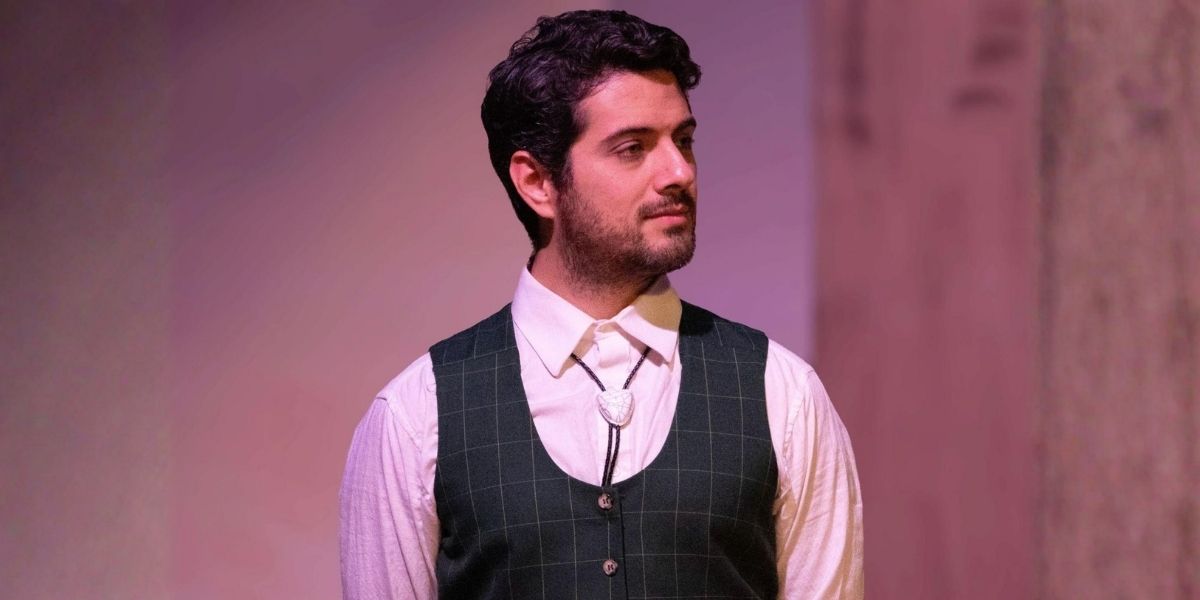
Long before the festival laurels and professional credits, there was a young Salvatore Russildi who felt angry, empty, and trapped, fighting as hard against a life in the arts as he now fights for it. At that time, he couldn’t fathom a path that would lead him to a fulfilling career in the very field that would later become his passion. A deep, inner resistance pushed against the notion of a life defined by acting, yet an undeniable pull kept drawing him back to the idea.
That pull began early. When Russildi was about five or six years old, his mother—an actress herself—needed children for a play she was performing in, and he stepped onto the stage for the first time. The experience left a permanent mark; he describes it as the moment “the bug bit” him, planting a desire to act that never fully went away, even during the years when he tried to keep it at arm’s length.
A Workshop That Changed Everything
The pivotal moment came in a summer acting workshop, a space he initially viewed as an experiment designed to silence the persistent voice inside him. His participation wasn’t born of excitement or inspiration, but rather as a way to prove to himself that he had no place in this world. However, by the end of the first day of the workshop, something unexpected occurred. Instead of silencing that inner calling, the experience allowed him to hear it more clearly. That moment of capitulation—where he finally acknowledged what he “deep down wanted to do”—reset the trajectory of his life. It was as though a fog had lifted, and everything shifted, transforming the turmoil and confusion of his earlier years into a newfound sense of direction. Acting, once seen merely as a family legacy, became a personal mandate, something he had to pursue for himself, not just because it was expected.
Putting Contradictions to Work
Rather than sanding down his contradictions, Russildi has made a practice of putting them to work, blending his raw and multifaceted emotions into his art. Over the years, the physical disciplines he embraced, including Muay Thai, have provided him with a foundation in stage combat and movement. This training has made him as comfortable in highly kinetic sequences as he is in moments of stillness. The ability to command his body in a controlled, purposeful manner enhances his acting, making him an impressive presence on stage and screen alike. This physical mastery feeds into his emotional complexity, allowing him to inhabit a wide range of characters with authenticity. Russildi’s capacity to embrace contradictions has not only shaped his personal growth but has enriched his artistic expression, offering a depth and richness to his performances.
Curiosity as a Guiding Force
Curiosity has always been the driving force behind his journey, pushing him across different forms and genres. From Shakespearean ensembles to contemporary dramas, from the vibrant film sets in Mexico to the fast-paced world of Los Angeles soundstages, he has never limited himself to a singular genre or form. His ever-expanding exploration of the world through different creative mediums has allowed him to grow as an artist, constantly refining his craft and testing his boundaries.
This curiosity extends far beyond his craft and shapes how he moves through the world. Russildi draws inspiration from fellow actors, athletes, friends and anyone fully alive where their work meets their joy. For him, life is about constant engagement and forging connections with people who share that same curiosity and zest. His path has been less of a solitary climb than a series of collaborations with trusted partners, and this collaborative ethos—rooted in mutual support and shared values—has become one of the cornerstones of his success.
Turning Pain Into a Creative Engine
The turning of personal pain into fuel for his art is perhaps most evident in the roles Russildi chooses and the emotional registers he inhabits. His role in “Still Life,” a play saturated with grief and loss, marked a significant turning point in his career. It didn’t offer catharsis in the traditional sense, but instead, it presented an ongoing negotiation with loss. The emotional depth required of him demanded that he access some of his most difficult and vulnerable places while still maintaining the ability to perform night after night. On screen, projects like “Arrebatos,” “Mailbox a la Medida,” “Rolling Tape,” and “This Is Paradise: Rachel in LA” have extended this emotional exploration, tackling stories that cross both literal and psychological borders.
At the heart of his work is a philosophy that treats discipline and curiosity as twin engines driving his success. A relative’s advice about the importance of discipline among those who “make it” became a guiding principle for Russildi. This advice was reinforced by the structured training he received at the Stella Adler Art of Acting Studio and by mentors who challenged him to dig deeper. For Russildi, success is not a static destination but an ongoing process of staying open to new opportunities, saying “no” to those that don’t align with his goals, and allowing himself to be vulnerable even when it feels risky.
Looking at Russildi’s career from the outside, his journey appears to be a case study in creative alchemy: personal turmoil transmuted into a generative force that powers a steadily expanding career across continents and mediums. Yet, for Russildi, the journey remains as it always has been—a personal experiment in living honestly through art. For him, the global stage is not a pedestal but a laboratory, a place where he continues to explore what happens when a relentlessly curious performer refuses to look away from his own life, inviting audiences to do the same.