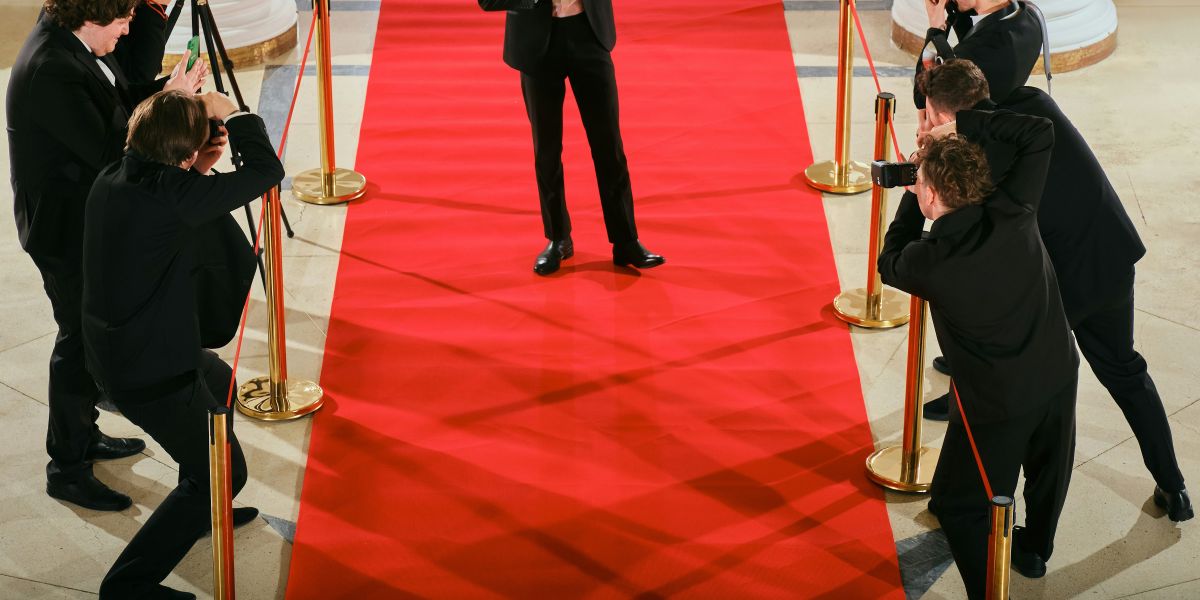


The red carpet was once considered secondary to the event it preceded. Celebrities arrived, posed for photos, answered brief questions about their attire or upcoming projects, and then moved inside. The ceremony, premiere, or screening carried the main significance.
That hierarchy has changed. In 2026, red carpet interviews frequently generate as much, and sometimes more, online engagement than the formal programming that follows. Exchanges are clipped and distributed within minutes. Commentary unfolds in real time. In many cases, the conversation begins outside the venue and continues long after the event concludes.
Entertainment coverage, including reporting from CelebFlare, has increasingly focused on these pre-event moments as primary drivers of post-event discussion. The red carpet is no longer a transitional space. It has become a central platform.
When the Press Tour Becomes the Event
The ongoing Wicked premiere circuit illustrates this shift. Ariana Grande and Cynthia Erivo’s red carpet appearances have repeatedly generated widespread online engagement. Their interviews often highlight visible emotion, shared gestures, and consistent expressions of mutual support.
Clips of the two holding hands during interviews or becoming emotional while discussing their experience filming circulate quickly across platforms. In some instances, those moments generate more immediate digital response than individual scenes from the film itself.
Before audiences debate performances or box office results, they are reacting to the dynamic between the leads. The promotional circuit becomes content in its own right. The interview becomes part of the narrative surrounding the project.
The Interview Format Has Changed
The evolution extends beyond the subjects being interviewed. The format itself has shifted.
Emma Chamberlain’s red carpet coverage at the Met Gala altered the tone of one of fashion’s most formal events. Her rapid delivery, self-aware humor, and occasional awkward pauses contrast sharply with traditional fashion commentary. The result is a style that feels less scripted and more conversational.
That approach has influenced audience expectations. Red carpet interviews are no longer viewed solely as promotional exchanges. They are evaluated as entertainment content. The interviewer’s personality now plays a measurable role in whether a moment circulates.
As CelebFlare has noted in its event coverage, the interaction itself often determines which clips trend, not just the interview subject.
Relationship Dynamics as Cultural Content
Public relations moments have also become central to red carpet visibility. Selena Gomez and Benny Blanco’s recent premiere appearances demonstrate how quickly interpersonal exchanges can dominate discussion.
Their affectionate and, at times, unpredictable interactions have generated sustained online commentary. The reaction varies. Some viewers respond positively. Others are more critical. Regardless of tone, the clips spread.
That circulation expands the event’s audience. Individuals who may not have been closely following the project engage through the lens of relationship dynamics. The red carpet interview becomes a point of entry.
Studios and Publicists Are Adapting
The shift has not gone unnoticed by studios and talent teams. Red carpet strategy is now planned with digital circulation in mind.
Publicists understand that the first widely shared clip from a premiere may reach a larger audience than traditional press coverage. As a result, talking points are often designed to be concise and replayable. Celebrities are encouraged to deliver answers that are clear, emotionally resonant, and easily excerpted.
At major premieres, interview lines are also structured to maximize camera visibility and cross-platform capture. Outlets record vertical and horizontal formats simultaneously. Moments are edited and distributed within minutes.
The red carpet has effectively become part of the launch strategy. It is no longer simply a media checkpoint. It functions as an opening wave of marketing.
Visibility Over Perfection
Not every widely shared moment is polished. Awkward pauses, tonal misalignment, or unexpected responses can draw significant attention. Those exchanges often prompt debate and extended analysis.
In a media environment defined by speed and volume, attention itself has value. A red carpet clip that sparks discussion keeps the associated premiere or award show in circulation across platforms.
This does not suggest that celebrities aim to create controversy. It reflects the current media structure. Red carpet interviews take place under intense scrutiny, and any exchange can be amplified.
Why the Red Carpet Now Leads the Narrative
The red carpet operates at the earliest point of peak attention. Coverage begins before the formal program starts, and distribution is immediate. Interviews are published, clipped, and reposted as the event unfolds.
Because of that timing, initial impressions form quickly. Audience perception develops through short exchanges repeatedly viewed and interpreted. Tone, chemistry, and delivery are assessed in real time.
By the time awards are announced or films are screened, much of the public framing has already been established. The red carpet no longer functions as background coverage. It influences how projects and personalities are received from the outset.
The Stage Outside the Theater
Inside the venue, awards are presented, and films are shown. Outside, perception is shaped.
The red carpet interview has become one of Hollywood’s most immediate stages because it captures celebrities without post-production or delay. Responses are delivered live. Reactions are visible. Context is minimal.
Audiences no longer wait for reviews or official summaries to determine what mattered. They respond to the first clip that appears in their feed.
The ceremony may determine recognition. The red carpet increasingly determines interpretation.
And in a media cycle that moves quickly, interpretation often lasts longer than the event itself.