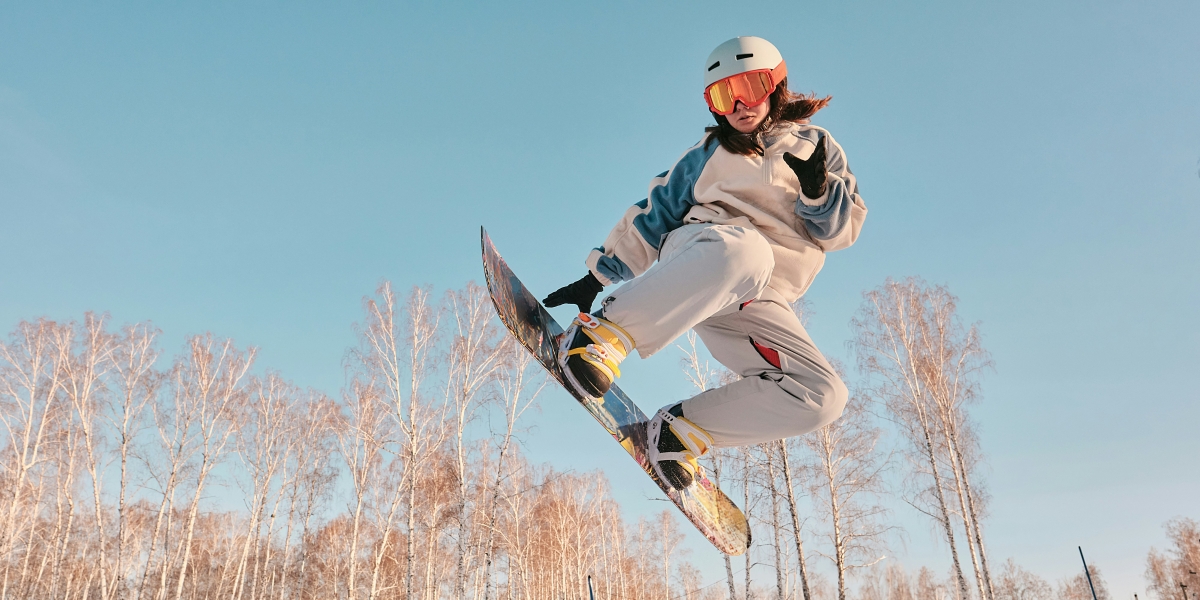

The atmosphere at the Livigno Snow Park on February 12, 2026, was electric. Thousands of fans gathered under the bright floodlights of the Italian Alps to witness what many are calling the greatest night in the history of snowboarding. The Women’s Halfpipe Final was not just a competition; it was a stage for a legendary performance. Chloe Kim, the 25-year-old American superstar, did what no one else—man or woman—has ever done: she secured her third consecutive Olympic gold medal in the halfpipe.
The Road to the “Three-Peat”
Chloe Kim’s journey to the Milano Cortina Games was far from easy. Just weeks before the opening ceremony, she suffered a serious injury—a torn labrum in her left shoulder—during a training session in Switzerland. Many experts wondered if she would even be able to compete, let alone defend her title. However, Kim arrived in Italy with a “very securely taped” shoulder and a mindset focused on the history books.
“I have so much anxiety, but thankfully I have matcha and there’s good vibes here,” Kim told reporters earlier in the week. “Once we’re in there and once we’re focusing on what we want to do… my mind goes completely blank. I’m not thinking about my shoulder. I’m just thinking about what I’m trying to accomplish.”
That focus was evident from her very first run in the final. Dropping in last among the twelve competitors, Kim delivered a masterclass. She executed her signature back-to-back 1080s with perfect amplitude and followed them up with a frontside 1260—a trick she had been practicing specifically for this moment. When her score of 94.50 flashed on the screen, the crowd erupted. It was a score that effectively ended the competition before the second round had even begun.
The Rise of Sara Shimizu
While Kim was the undisputed queen of the night, the silver medal went to a rising star who represents the future of the sport. 16-year-old Sara Shimizu of Japan proved that she is a force to be reckoned with. Shimizu, who had already won the X Games gold earlier this year, pushed Kim to her limits with a technical and stylish second run.
Shimizu landed two 900s and a picture-perfect frontside 1080 tailgrab to earn a score of 91.25. Despite being so young, she appeared remarkably calm on the world’s biggest stage. “I was feeling the least nervous out of any competitions I’ve been in so far,” Shimizu said after the medal ceremony. “I’ve been aiming for this for a long time, and I’m enjoying it more than anyone.” Her silver medal is a testament to the incredible depth of talent in the Japanese snowboarding program.
Maddie Mastro’s Moment of Redemption

Photo Credit: Unsplash.com
The bronze medal provided one of the most emotional storylines of the night. For American Maddie Mastro, this was her third Olympic Games. In PyeongChang 2018 and Beijing 2022, she had come close but ultimately missed the podium. This year, she was determined to change that.
Mastro has been vocal about her struggles with injuries and the mental toll of high-level competition. “Managing my fear has been the hardest part of this setback,” Mastro admitted in a recent interview. “Success in Milan is a lot of different things for me… while the ultimate thing would be walking away with a medal, I think just getting there will be a success.”
She did more than just “get there.” Mastro’s third run was a display of pure grit. She landed a double crippler (a frontside double backflip) to secure a score of 89.75, finally earning the Olympic hardware that had eluded her for nearly a decade. For Mastro, the bronze medal was a validation of her perseverance.
A Legacy Cemented
As the three medalists stood on the podium, it was clear that the sport of snowboarding had reached a new milestone. The technical level of the runs was higher than ever before, with more women landing 1080s and double-cork maneuvers than in any previous Olympics.
Chloe Kim’s “three-peat” puts her in an elite category of athletes. She joins the ranks of legends like Shaun White, but surpasses them by winning three consecutive golds in a single discipline. Her dominance over the last eight years has transformed women’s snowboarding from a niche event into a headline attraction.
As the lights dimmed over Livigno, the conversation quickly turned to the future. With young talents like Sara Shimizu and South Korea’s Choi Gaon (who finished 5th) rising through the ranks, the competition for the 2030 Games is already looking fierce. But for today, the world belongs to Chloe Kim—the undisputed G.O.A.T. of the halfpipe.