

By: Natalie Johnson
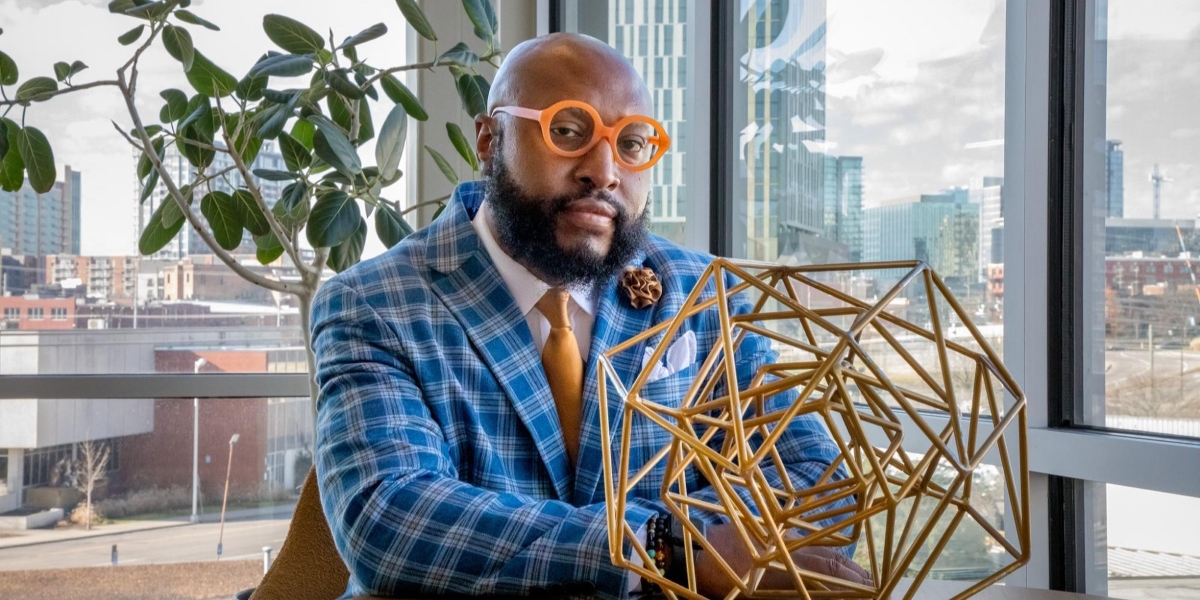
In an era obsessed with shortcuts, frameworks that promise instant mastery, and leadership advice compressed into fifteen-second clips, there is something almost countercultural about the way Dr. Rubin Cockrell approaches his work. He does not lead with slogans. He does not pretend that transformation can be automated. And he is skeptical of anything that claims to scale without first understanding people.
Cockrell’s credibility is not built on a single moment or a viral idea. It is built on repetition. Over decades of practice. On the accumulation of lived experience across borders, industries, and economic realities. Over more than twenty years, Cockrell and his team have trained nearly half a million people across sixty-one countries, working at the intersection of workforce development, entrepreneurship, leadership, and career readiness. His work spans classrooms and boardrooms, public institutions and private equity-backed enterprises, local initiatives and global systems.
A Practitioner’s Framework, Not a Theoretical One
What distinguishes Cockrell is not simply the breadth of that experience, but the way he synthesizes it. His thinking is grounded in a framework he calls I³ = P²™. Impact, Influence, and Income, he argues, should flow directly from Purpose, Principles, and being Mission-driven. It is not a formula designed to sound clever. It is a structure that emerged, slowly and imperfectly, from years of building, losing, rebuilding, and recalibrating.
“I created it as a practitioner,” Cockrell says. “Not from a book, but from life.”
That life includes navigating global business environments, enduring professional setbacks, managing grief and loss, and learning the difference between being busy and being productive. The framework reflects a belief that meaningful outcomes require alignment. Impact without purpose burns out. Income without principles erodes trust. Influence without mission collapses under pressure. Productivity, in Cockrell’s view, is not about motion. It is about return. The ability to evaluate what is working, adjust when it is not, and remain accountable to results.
Learning to Lead Before Learning to Scale
This pragmatic orientation shapes how Cockrell works with people from the street to the elite, from the classroom to the boardroom. Early in his career, he held leadership roles that would intimidate many seasoned executives. At twenty-six, he was a university dean, managing staff, budgets, and institutional expectations while still learning how to lead himself.
Over time, his definition of success changed. Reflection became more intentional. Empathy deepened. Patience grew, shaped by parenthood, loss, and the cumulative awareness that leadership is less about command and more about presence.
That presence is central to Cockrell’s effectiveness. He often says that “people need to know you care before they care what you know”. In practice, that means listening to understand rather than listening to reply. It means reading nonverbal cues. It means finding common ground quickly, even in unfamiliar environments. Cockrell believes that within five minutes of meeting someone, there is always at least one shared point of connection. The discipline is noticing it.
What It Takes to Work With People at Scale
When working with large groups, that same philosophy applies. Cultural norms vary, but human principles repeat. Respect, dignity, and values-driven engagement transcend geography.
Before entering any environment, Cockrell does his due diligence. He studies the context. He clarifies expectations. He prepares structure, then leaves room for flexibility. Leadership, as he sees it, requires both. A plan without adaptability becomes brittle. Adaptability without principles becomes incoherent.
This sensibility also informs his critique of modern leadership culture. Cockrell is careful not to dismiss others’ work, but he is clear about the risks of generalization. Too many leaders, he argues, assume that one approach fits every environment. They speak at people instead of with them. Comfort turns into complacency. Leaders stop noticing changes in multigenerational and multicultural spaces. The result is stagnation disguised as stability.
The challenge, Cockrell believes, is learning to be comfortable being uncomfortable. To anticipate where the puck is going rather than obsessing over where it has been.
Technology Moves Fast, Humanity Moves the Work
That mindset has become even more critical as technology reshapes how people learn, work, and lead. Cockrell does not resist artificial intelligence. He uses it. But he does not romanticize it either.
“You can embrace change or become a victim of change,” he says.
AI, in his view, is inevitable. What remains optional is whether leaders preserve the humanistic approach that makes tools effective. Even the best prompts require human judgment. Even the most advanced systems depend on values, context, and discernment. Technology can accelerate work, but it cannot replace responsibility.
A Broader Vision for 2026 and Beyond
As his work expands, Cockrell’s scope continues to widen. Alongside training, consulting, and advisory services, he is increasingly involved in global private equity projects, helping align leadership, operations, and workforce strategy across complex systems. Books, workshops, and frameworks developed over the years are now being translated and adapted for new markets. What once felt like disparate threads now converges into a coherent body of work.
The throughline remains consistent. Whether advising organizations on career readiness, helping entrepreneurs build sustainable ventures, or supporting institutions navigating workforce transformation, Cockrell returns to the same foundational question: Does this align with purpose, principles, and mission?
If it does, growth is possible. If it does not, scale only amplifies the cracks.
Why Dr. Rubin Cockrell’s Work Resonates Now
As 2026 unfolds, Cockrell’s focus is not on reinvention for its own sake. It is on refinement. On continuing to serve organizations locally, regionally, and internationally with the same disciplined attention that has defined his career.
For leaders seeking clarity in a noisy landscape, his message is both sobering and empowering. There are no shortcuts. There is only the work, done well, with intention.
More about Dr. Rubin Cockrell’s consulting, advisory work, and global initiatives can be found at drrcockrell.com and https://bcs-holdings.com/