Qurtuba’s Transformation: Enhancing UX and Improving User Satisfaction With Phenomenon Studio

By Valeria Varlamova, Project Manager, Phenomenon Studio

Key Takeaways:

  • A web design agency’s redesign significantly improved user satisfaction with key features, addressing past frustrations with progress tracking. 
  • Learning productivity and engagement saw noticeable improvements post-launch. 
  • The technology stack included modern tools like TypeScript, React, Vite, MUI, Redux, Firebase, and Auth0, chosen specifically to meet product needs. 

Qurtuba is an online school platform serving students in Johannesburg, South Africa. The platform’s user interface (UI) had accumulated significant friction over the years, leading to frustration for both students and teachers. Our challenge was to redesign the platform while preserving its functionality and keeping its loyal user base intact, all without taking the platform offline.

The Initial State: A Platform Struggling with UX

Before the redesign, Qurtuba’s platform, although operational, presented various inefficiencies. Students had difficulty accessing their progress data, which was buried under multiple menu layers. Teachers encountered cumbersome workflows that required numerous steps to grade assignments. These issues created friction that affected user engagement and overall effectiveness.

The UX Audit: Identifying Core Problems

During the audit, we found that the primary UX issues weren’t a lack of features but rather the poor design of the existing ones. For example, the progress-tracking feature required navigating through several menu layers, which often led to confusion. Similarly, the grading workflow for teachers was unnecessarily complex, with many steps required to complete a task.

The audit revealed that Qurtuba’s platform wasn’t designed with the users’ needs in mind. Instead, it reflected the perspectives of the developers who built it. This disconnect led to unnecessary friction and hindered the platform’s ability to serve its users effectively.

Choosing the Right Tech Stack

Given the complexity of the project, we carefully selected a technology stack that aligned with Qurtuba’s specific requirements.

  • React with TypeScript: React’s component-based structure was ideal, while TypeScript ensured consistency and minimized errors that could disrupt the user experience. 
  • Vite: Vite accelerated the development cycle, allowing us to test and iterate more quickly. 
  • MUI: MUI’s accessible components helped ensure that the platform was usable by students with varying needs, laying a strong foundation for accessibility. 
  • Firebase & Auth0: Firebase allowed for real-time data synchronization, while Auth0 provided secure, flexible authentication for users with different roles. 

Redesigning the Platform: Streamlining the Experience

The redesign focused on addressing the most significant sources of friction and improving usability.

  • Student Dashboard: The dashboard was simplified, reducing the number of interactions required to view key information and making it easier for students to track their progress. 
  • Teacher Grading Workflow: We streamlined the grading workflow, significantly reducing the time teachers spend entering grades and freeing up more time for teaching. 
  • Teacher-Student Communication: The communication process was made more efficient, with a faster response time and a simpler interface for providing feedback. 

Phased Rollout: Minimizing Disruption

To prevent overwhelming users with too many changes at once, we implemented a phased rollout strategy. Rather than launching the entire platform redesign at once, we introduced new features incrementally. This approach allowed users to adapt to the changes more smoothly and provided an opportunity to gather feedback and make adjustments as needed.

Results and Impact

After the redesign, we saw significant improvements across various aspects of the platform. User satisfaction increased, particularly with features related to progress tracking, and learning productivity improved noticeably. Teachers were able to work more efficiently, and students engaged with the platform more effectively.

Lessons Learned

This project reinforced the importance of a user-centered design approach, particularly for educational platforms. Key lessons included:

  • The Importance of User Research: Taking the time to understand user needs before designing a solution is crucial for effective outcomes. 
  • Phased Rollouts Work Best for Existing Products: Gradual changes help users adjust to new features without feeling overwhelmed. 
  • Streamlining Processes Increases Efficiency: Reducing unnecessary steps can significantly improve both teacher and student productivity. 

Redesigning Qurtuba was a challenging but rewarding experience. By focusing on improving usability and reducing friction, we created a platform that better serves its users. The result wasn’t a dramatic transformation, but rather the result of methodically addressing key issues and making the platform more intuitive and efficient.


How To Delete an Empty Page in Word Without Breaking Your Document

Knowing how to delete an empty page in Word sounds like it should be simple. In reality, it’s one of those small issues that can waste a surprising amount of time. I’ve opened documents that looked finished, ready to send, only to notice an extra blank page at the end. Pressing Delete didn’t help. Backspace didn’t either. Sometimes removing the page caused text to shift or formatting to break. After dealing with this repeatedly, I stopped guessing and started understanding why blank pages appear and which methods tend to work more consistently without unintentionally creating new problems.

Why Blank Pages Appear and Are Difficult to Delete?

Blank pages in Word are often the result of formatting elements that aren’t visible by default. Extra paragraph marks are a common cause. Every time you press Enter, Word inserts a paragraph marker, and too many of them can push content onto a new page.

Manual page breaks and section breaks also create blank pages. These breaks are often added intentionally during formatting, but once the document changes, they can end up sitting alone on an empty page. Tables can also cause trouble. If a table reaches the bottom margin, Word may force a new page even if there’s no visible content there.

Another reason blank pages are hard to remove is Word’s layout behavior. Word tries to protect document structure. When you delete something near the end, Word may keep spacing intact instead of removing the page. That’s why many people ask how can I delete blank page in Word and still feel stuck after trying basic fixes.

Common causes include:

  • Extra paragraph marks created when Enter is pressed repeatedly 
  • Manual page breaks or section breaks left in the document 
  • Tables reaching the bottom margin, which can push content to another page 
  • Word preserving layout spacing, which may prevent the page from disappearing 

How To Remove Blank Page in Word

There isn’t just one solution. I usually start with the simplest option and move to more direct methods if the issue continues.

Method 1: Use UPDF On PC To Remove The Blank Page

When formatting matters or the Word file behaves unpredictably, I convert the document to PDF and handle the issue there. This can help avoid Word’s automatic layout adjustments.

UPDF lets me delete pages directly without affecting text flow or spacing. Once the blank page is gone, the document often stays close to the intended layout.

Here’s how I do it:

  • Open UPDF on the computer. 
  • Convert the Word document into a PDF. 
  • Open the PDF file in UPDF.
  • Open the page organization tool.
  • Select the blank page.
  • Delete the page.
  • Save the document.

This approach can be helpful, especially when the blank page is caused by hidden breaks or tables that Word may not adjust easily.

Method 2: Use UPDF On Mobile

When I’m not at my desk, I use UPDF on my phone.

How To Delete an Empty Page in Word Without Breaking Your Document

Photo Courtesy: UPDF (Open-pdf-in-phone)

  • Open page organization.
  • Select the empty page.
  • Delete and save. 

It’s a convenient option in many situations and avoids reopening Word entirely.

Method 3: Delete Using Backspace Carefully

If I decide to work directly in Word, I start with the simplest method.

  • Place the cursor at the end of the document. 
  • Press Backspace slowly. 
  • Watch whether content moves.

This can sometimes remove the blank page, but it may also affect spacing above. I only use this when the document layout is simple.

Method 4: Show Paragraph Marks

This is often considered one of the more reliable Word-based methods.

  • Press Ctrl + Shift + 8 to show paragraph marks. 
  • Look for extra paragraph symbols on the blank page. 
  • Select and delete them

Paragraph marks reveal what Word is actually responding to. Removing them can resolve the issue in many cases.

Method 5: Use The Navigation Pane

The Navigation Pane helps locate empty pages quickly in longer documents.

  • Open the View tab. 
  • Enable Navigation Pane. 
  • Click through pages to find the blank one. 
  • Click into the page and press Delete.

This is helpful when a document has many sections.

Method 6: Ctrl + Backspace Shortcut

Sometimes the blank page is caused by a large block of empty space.

  • Place the cursor at the start of the blank page. 
  • Press Ctrl + Backspace.

This removes content in larger chunks and may clear the page faster than regular Backspace in some situations.

Method 7: Adjust Line Spacing

Excessive spacing can force Word to create a new page.

  • Select the empty space. 
  • Set line spacing to Single. 
  • Reduce spacing before and after paragraphs.

This can be useful when blank pages appear in the middle of a document.

Method 8: Use Ctrl + G To Select The Page

This method lets Word select the entire page at once.

  • Press Ctrl + G. 
  • Type \page and press Enter. 
  • Close the dialog box. 
  • Press Delete.

If Word allows the page to be selected, this may remove it cleanly.

Method 9: Switch To Outline View

Outline View makes structural elements easier to see.

  • Go to the View tab. 
  • Switch to Outline View. 
  • Look for extra breaks or empty headings. 
  • Remove the cause of the blank page. 
  • Exit Outline View.

This is helpful for reports and structured documents.

Bonus Tip: Continue Editing With UPDF

After deleting blank pages using UPDF, I often continue working in PDF format. This can help avoid Word’s automatic formatting adjustments.

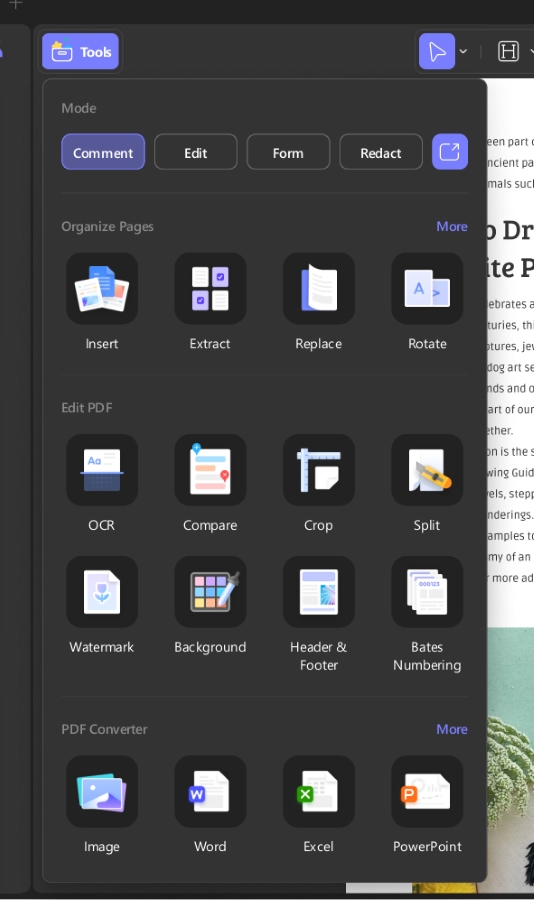
UPDF allows me to edit text, adjust layout, and manage pages directly. I can annotate, reorganize, compress files, or make small text corrections without worrying about content shifting unexpectedly.

How To Delete an Empty Page in Word Without Breaking Your Document

Photo Courtesy: UPDF (updf-other-tools)

For documents that are close to final, working in PDF may help save time and reduce the chance of formatting changes.

Summary

Learning how to delete an empty page in Word isn’t about one trick. It’s about understanding why blank pages appear and choosing the right method for the situation. Word-based fixes work in many cases, but they can be unpredictable. When formatting matters, converting the file to PDF and removing the page with UPDF can sometimes be a cleaner option. Instead of spending too much time troubleshooting Word, I fix the problem and move on.

How Transportation Technology Entrepreneur Sardorjon Urinov Is Using Artificial Intelligence to Transform Fleet Intelligence in the Trucking Industry

New data-driven technologies are helping trucking companies improve safety, compliance, and operational efficiency across modern freight networks.

Transportation technology entrepreneur Sardorjon Urinov, founder and CEO of US Road ELD, has been working on applying artificial intelligence and data-driven systems to improve safety, regulatory compliance, and operational efficiency in commercial fleet management. His work focuses on developing intelligent fleet management technologies that help modern trucking companies make more data-driven operational decisions.

Urinov’s work sits at the intersection of transportation systems, regulatory technology, and data analytics. With experience in logistics operations, economics, and supply chain management, he has focused on developing technology-driven solutions designed to improve safety and efficiency across modern freight transportation networks.

The trucking industry plays a critical role in modern economies and global supply chains. In the United States alone, trucks move more than 70 percent of the nation’s freight, making trucking one of the most important components of the country’s economic infrastructure, according to the American Trucking Associations (ATA). As demand for freight transportation continues to grow, companies are increasingly turning to technology to improve safety, efficiency, and regulatory compliance.

One of the most important developments in recent years has been the adoption of artificial intelligence and intelligent transportation systems in fleet operations. These technologies allow trucking companies to monitor vehicles more effectively, improve driver safety, and prevent costly mechanical failures before they occur.

Through his work in transportation analytics and logistics operations, Urinov has been exploring how AI-driven fleet intelligence platforms can transform the way trucking companies manage vehicles, drivers, and compliance requirements.

Urinov is the founder of US Road ELD, a technology platform that helps trucking companies improve compliance monitoring, driver safety, and vehicle diagnostics through an integrated fleet intelligence system. The platform integrates electronic logging devices (ELDs), GPS tracking, automated hours-of-service monitoring, AI-powered dash camera analytics, and real-time vehicle diagnostics to support more informed operational decision-making for fleet operators.

Before focusing on transportation technology in the United States, Urinov gained operational experience in regional agricultural logistics and supply distribution in Central Asia, where he supervised warehouse coordination, delivery scheduling, and vendor negotiations for agricultural equipment, seeds, and farming inputs distributed across regional markets. The role exposed him to the logistical challenges of large-scale distribution networks and contributed to his interest in improving transportation systems through data-driven technologies.

Urinov also participated in the National Science Foundation (NSF) I-Corps innovation program, where his team received a scholarship to develop and test a technology-driven business model through customer discovery and market validation research. The National Science Foundation is a U.S. government agency that supports scientific research and innovation, and the I-Corps program helps researchers and entrepreneurs translate technological innovations into scalable commercial solutions.

Traditional fleet management systems often rely on manual monitoring and reactive maintenance. However, modern fleet intelligence platforms combine ELD technology, GPS tracking, vehicle diagnostics, and artificial intelligence to provide real-time operational insights.

Artificial intelligence can analyze large volumes of operational data and identify patterns that may indicate safety risks or mechanical issues. For example, AI systems can detect signs of driver fatigue, monitor braking and acceleration patterns, and alert fleet managers to potential maintenance problems before they lead to equipment failure.

These technologies are particularly important in improving road safety. According to data from the Federal Motor Carrier Safety Administration (FMCSA), thousands of crashes involving large commercial trucks occur each year in the United States, highlighting the importance of technologies that improve driver monitoring, predictive maintenance, and operational safety.

“Modern fleet intelligence platforms allow companies to move from reactive management to proactive decision-making,” Urinov explains. “By integrating artificial intelligence, vehicle diagnostics, and real-time monitoring, fleet operators can improve safety, reduce downtime, and operate more efficiently.”

Analysts in the transportation technology sector note that emerging fleet intelligence technologies, such as AI-driven monitoring and predictive maintenance, are becoming increasingly important for improving safety standards and operational efficiency in commercial transportation.

Because freight transportation is a critical component of national supply chains and economic infrastructure, technologies that improve safety, compliance, and operational efficiency can have far-reaching benefits for businesses, consumers, and transportation systems across the United States. Improvements in fleet intelligence technologies can therefore contribute not only to safer transportation systems but also to more resilient and efficient supply chains across the United States.

As digital technologies become more integrated into transportation systems, experts believe that data-driven fleet intelligence and predictive maintenance tools will play an increasingly important role in improving freight reliability and strengthening the resilience of modern supply chains.

As logistics networks continue to expand and supply chains become more complex, the integration of artificial intelligence, predictive maintenance, and intelligent transportation systems is expected to play an increasingly important role in strengthening the reliability and resilience of freight transportation in the years ahead.

About the Expert

Sardorjon Urinov is a transportation technology entrepreneur and the founder of US Road ELD. His work focuses on applying artificial intelligence, data analytics, and intelligent transportation systems to improve safety, regulatory compliance, and operational efficiency in commercial fleet management and freight logistics.

Mengfei Zhang Reportedly to Visionlist Venture as Creative Director for the GenAI Summit Series

By: Eric Sullivan

Industry sources indicate that Mengfei Zhang (Fiona Zhang), a creative director known for her work in international innovation and venture capital programming, is expected to join SustainG Inc. (DBA: Visionlist Venture) as Creative Director for the GenAI Summit series. If confirmed, Zhang will lead the summit’s creative direction from 2026 to 2029, overseeing editions in San Francisco and Los Angeles. Her role will focus on shaping the summit’s narrative framework, founder presentation systems, and experiential design to attract high-potential startups in the global artificial intelligence sector.

The reported appointment follows several years in which Zhang has emerged as a creative strategist in the cross-border innovation ecosystem. Through technology, venture capital, and community initiatives, she has built a reputation for transforming traditional conferences into structured platforms that enable collaboration among founders, investors, and institutions. Her approach centers on “creative-driven connection,” using storytelling, spatial design, and interactive formats to improve communication between startup teams and capital networks.

One of the most recognized platforms under her creative leadership was the SoCal Innovation & Investment Annual Summit in Los Angeles. The event brought together nearly 300 entrepreneurs, venture investors, and technology leaders from the United States and China, including representatives from venture capital firms, startup accelerators, and cross-border innovation networks.

As Creative Director, Zhang redesigned the summit’s interaction structure by introducing immersive communication environments beyond the traditional pitch stage. Through curated founder–investor networking zones, AI-based interactive installations, and structured storytelling formats for startup presentations, she helped transform the summit into a platform that enabled innovation projects to be communicated more clearly to investors.

The summit’s influence was further amplified through a digital storytelling campaign featuring emerging founders, which generated over 2 million views across Chinese and American social media and significantly increased the visibility of participating startups. Observers noted that the event stood out among regional entrepreneurship gatherings for its combination of venture capital networking and experiential innovation programming.

Zhang also played a key role at the GenAI Summit, a technology-focused event exploring the intersection of artificial intelligence, entrepreneurship, and venture capital. The summit brought together founders, AI researchers, and investors for Demo Day presentations, networking sessions, and cross-sector discussions on generative AI applications.

The event gained additional recognition when then–Mayor Farrah Khan and Vice Mayor Tammy Kim of Irvine attended, reflecting growing interest from local government in the development of artificial intelligence innovation ecosystems.

Serving as Creative Director, Zhang oversaw the summit’s overall narrative architecture and program design, coordinating multiple institutional partners while shaping a format that integrated AI demonstrations, investor dialogue, and experiential networking. Participants noted that the structure allowed startups to present their technology and vision in ways that resonated more effectively with venture investors, strengthening the summit’s reputation as a platform for AI-driven entrepreneurship.

Another initiative highlighting Zhang’s cross-cultural innovation work was her involvement in ZLead, a technology and entrepreneurship forum supported by the Shanghai Municipal Government. The event brought together entrepreneurs, technology innovators, and international startup communities to explore global collaboration in emerging industries. As Creative Director for content and stage experience, Zhang helped design the presentation flow and communication structure for founders and speakers. Through structured keynote sessions, startup showcases, and founder–investor dialogue formats, the event demonstrated how creative program design facilitates meaningful discussion among international innovation stakeholders.

Mengfei Zhang Reportedly to Visionlist Venture as Creative Director for the GenAI Summit Series

Photo Courtesy: Mengfei Zhang (Creative Director Zhang Mengfei gave a presentation at zlead)

Beyond venture and technology summits, Zhang has explored creative direction in community-driven innovation environments. The Snowly Los Angeles community event brought together about 150 young professionals from the sports, technology, and creative industries and received support from local representatives and brand partners. Acting as director and lead planner, Zhang coordinated government communication, brand collaboration, and community engagement. The gathering illustrated how social and cultural spaces can function as early-stage innovation networks, while multi-platform dissemination reached tens of thousands of online viewers and gained media coverage in both the United States and China.

Mengfei Zhang Reportedly to Visionlist Venture as Creative Director for the GenAI Summit Series

Photo Courtesy: Mengfei Zhang (Creative Director Zhang Mengfei attends Snowly Ski Club)

Across these initiatives, investors and industry participants have emphasized Zhang’s role not simply as an event organizer but as a creative leader shaping the structural logic of innovation platforms. Her work focuses on how founders are introduced, how investors encounter projects, and how communication unfolds within live innovation environments. This emphasis on narrative architecture, spatial interaction, and cross-institutional coordination has distinguished her approach within the broader field of entrepreneurship programming.

It is within this context that Zhang’s reported appointment with SustainG Inc. (DBA: Visionlist Venture) has drawn attention across the innovation community. According to individuals familiar with the organization’s plans, Mengfei Zhang is expected to lead the GenAI Summit as Creative Director from 2026 to 2029, guiding editions in San Francisco and Los Angeles.

In this role, she would develop the summit’s creative vision, including the structure of Demo Day presentations, founder storytelling frameworks, and international investor engagement strategies. The summit aims to become a distinguished platform for identifying and presenting promising startups within the AI development industry while strengthening collaboration among founders, venture capital firms, and technology institutions.

Industry observers believe Zhang’s anticipated leadership reflects a broader trend in the global innovation landscape, where creative direction increasingly plays a strategic role in shaping entrepreneurship platforms. With San Francisco and Los Angeles serving as major hubs for AI innovation, the upcoming summit series is expected to expand its influence within the international startup ecosystem.

If finalized, Zhang’s role with SustainG Inc. would represent the next phase of a career defined by cross-cultural innovation programming. From the SoCal Innovation & Investment Annual Summit to the GenAI Summit and the ZLead forum, her work has consistently shown how creative structure and narrative design can enhance the visibility of emerging founders and accelerate connections between startups and venture capital.

As preparations for the next generation of GenAI Summit events begin, many in the innovation community see Zhang’s reported appointment as a natural extension of her creative leadership, one that may further strengthen the bridge between AI innovation, venture investment, and international startup collaboration.


Disclaimer: Any audience or engagement metrics referenced in this article are based on reported campaign data and available analytics. Actual results and performance may vary.

Boosting Restaurant Competitiveness with Frymaster Parts from PartsFPS in a Tech-Driven Future

The restaurant industry is evolving rapidly as technology continues to reshape how commercial kitchens operate. Smart appliances, automated cooking systems, and data-driven operations are helping restaurants improve productivity and maintain consistent food quality. In this changing environment, reliable Food service parts are critical to keeping equipment functioning at peak performance. Among the most important components in modern kitchens are Fryer parts, especially those designed for high-performance commercial fryers.

Restaurants that depend on deep-fried menu items rely heavily on efficient fryer systems. This is where Frymaster equipment and replacement parts play a crucial role. By maintaining fryers with high-quality components available through platforms like PartsFPS, restaurant operators can ensure reliability, efficiency, and long-term competitiveness in a technology-driven market.

The Importance of Reliable Fryer Systems in Modern Kitchens

Commercial kitchens are fast-paced environments where equipment downtime can lead to lost revenue and dissatisfied customers. Fryers are one of the most heavily used pieces of equipment in many restaurants, especially in fast-food chains, casual dining establishments, and food trucks.

Modern kitchens require fryers that maintain consistent temperatures, heat oil quickly, and operate safely throughout long service hours. Key components such as thermostats, safety controls, and temperature regulators ensure that fryers maintain optimal cooking conditions. For example, thermostats used in Frymaster fryers regulate oil temperature within specific ranges, helping maintain consistent frying performance and preventing overheating. 

Using reliable Food service parts helps restaurants reduce equipment failures and maintain consistent cooking results. When fryers operate efficiently, kitchens can serve customers faster while maintaining food quality.

Technology and the Evolution of Commercial Fryer Equipment

Technology is transforming commercial kitchen operations. Modern fryers now include digital temperature controls, energy-efficient heating systems, and automated filtration systems that extend oil life and reduce operating costs.

However, even the most advanced kitchen technology relies on durable components. Replacement Fryer parts ensure that these systems continue to operate effectively. Thermostats, hi-limit safety switches, and control knobs all play a role in maintaining proper fryer performance.

Restaurants that regularly maintain their equipment using reliable parts from PartsFPS can ensure their fryers continue to operate smoothly, even as kitchen technology becomes more advanced. By investing in proper maintenance and component replacement, operators protect their equipment investment and maintain consistent kitchen productivity.

Preventing Downtime with Quality Frymaster Parts

In a busy restaurant environment, unexpected equipment failures can slow down service and negatively impact customer satisfaction. Preventative maintenance is essential for keeping kitchens running efficiently. Reliable Frymaster parts not only prevent equipment downtime but also extend the lifespan of commercial fryers. Restaurants that invest in regular maintenance reduce the need for expensive equipment replacements and improve overall operational efficiency.

Supporting Business Growth with Efficient Kitchen Equipment

Restaurants that want to remain competitive must focus on speed, consistency, and efficiency. High-performing kitchen equipment is a major factor in achieving these goals.

When fryers operate efficiently, kitchens can process more orders during peak hours without sacrificing quality. Reliable food-service parts help ensure that fryers heat quickly, maintain stable temperatures, and operate safely throughout the day.

This operational efficiency directly impacts customer satisfaction. Faster service, consistent food quality, and reduced equipment downtime allow restaurants to build stronger brand loyalty and maintain their reputation in a competitive market.

Platforms like PartsFPS provide access to a wide range of replacement components, helping restaurants maintain their kitchen equipment without long delays.

Frymaster Featured Parts Available at PartsFPS

Restaurants looking to maintain their fryer systems can find a variety of essential components through PartsFPS. Here are five important parts commonly used in Frymaster fryer systems:

  1. Thermostat for Frymaster Part #1204
    This thermostat helps regulate fryer oil temperature, maintaining stable cooking conditions for consistent food quality. 
  2. Thermostat for Frymaster Part #8262013
    Designed for several Frymaster fryer models, this component helps maintain proper temperature control for efficient frying performance. 
  3. Thermostat Knob for Frymaster Part #810-2035
    This control knob allows operators to adjust fryer temperature settings easily and maintain precise cooking control. 
  4. Safety Thermostat for Frymaster Part #826-1177
    A high-limit safety thermostat designed to protect fryer systems by shutting off heating when temperatures exceed safe limits. 
  5. Hi-Limit Thermostat for Frymaster Part #807-3680
    This manual-reset safety thermostat helps prevent overheating and protects the fryer from potential damage. 

These components are essential Fryer parts that help maintain fryer efficiency, ensure food safety, and support long-term equipment performance.

Preparing Restaurants for the Future of Food Service

The future of the restaurant industry will be shaped by automation, smart kitchen technology, and improved energy efficiency. While new technologies will continue to transform kitchen operations, the reliability of equipment will always depend on the quality of its components.

Restaurants that prioritize regular maintenance and invest in durable Food service parts are better positioned to adapt to these technological changes. Maintaining fryer systems with trusted components from PartsFPS ensures that kitchens remain productive, efficient, and ready to meet increasing customer demand.

Looking Ahead

By sourcing reliable replacement components through PartsFPS, restaurants can ensure their Frymaster equipment operates at peak efficiency. Investing in proper maintenance today helps food service businesses stay competitive, deliver consistent food quality, and successfully navigate the technology-driven future of the restaurant industry.

How to Choose the Best RTLS Solutions for Your Facility

When a facility director finally gets the budget approved to modernize their floor. They spend millions of dollars buying a massive tracking system, bolting antennas to the ceiling, and slapping tags on every single asset.

A mere 18 months later, a brand-new industry wireless tracking standard drops. Or the hardware manufacturer gets acquired and sunsets that specific product line. Suddenly, those incredibly expensive ceiling sensors are essentially dead weight. The facility is stuck with legacy hardware that cannot integrate with the rest of its modern software stack.

This happens because supply chain leaders often evaluate tracking technology the wrong way. They focus entirely on the physical hardware rather than on the intelligence running it.

If you want to survive the rapid upgrade cycles of industrial tech, you must change how you buy. Here is exactly how to evaluate tracking technology, so you are not forced into a painful “rip and replace” cycle in twenty-four months.

What is the Hardware Vendor Trap

Vendor lock-in is the silent killer of all tech budgets. Many traditional tracking companies operate on a closed-loop business model, forcing you to buy their specific, branded tags to talk to their specific, branded ceiling antennas. The system is intentionally designed so that it cannot communicate with external technology.

This might work perfectly on day one, but if that vendor goes out of business or if their tag prices suddenly skyrocket, you are completely trapped. You cannot just replace a tag with a cheaper one from a different company because the system will not work with it.

Why Hardware-Agnostic Platforms for RTLS are Your Smart Choice

To ensure your investment is safe for the time being, you should stay away from closed ecosystems.

You need an architecture that treats hardware as a disposable commodity. An intelligent platform should be hardware-agnostic. It should be able to ingest spatial data from Ultra-Wideband (UWB) sensors, Bluetooth Low Energy (BLE) beacons, and standard RFID checkpoints, all at the exact same time.

When your software layer is independent of your hardware layer, you are protected. If a newer, cheaper tag hits the market in two years, you just buy it and connect it to your existing platform. Your system grows instead of dying.

Is Just Tracking Your Assets Enough?

A digital map with a blue dot moving across it was an impressive parlor trick in 2018. Today, it is nothing more than basic table stakes.

When evaluating Real-Time Location Systems (RTLS) for asset tracking on a heavy manufacturing floor, you cannot just ask a vendor, “Can your system find my tools?”

That is the wrong question. You have to ask, “What exactly does your system do automatically once it finds them?”

Here’s where digital-twin driven RTLS asset tracking comes in.

Why Real-Time Digital Twin is a Better Option

Raw spatial data is absolutely useless if it doesn’t trigger a business action.

If a calibrated torque wrench leaves its designated, sterile staging zone, a future-proof system does not just passively record the movement. It actively triggers a workflow.

It immediately tells the shift supervisor. It also writes down the compliance issue in the quality control system. It changes the digital twin. If a system can’t change location info into actions, then it’s old news even before you set it up.

Scalability Issue for Current Tracking Systems

Another fast track to obsolescence is buying a narrow point solution.

For example, a logistics manager might realize they have a massive congestion problem on the dock. To fix it, they go out and buy a basic telematics system just to track their forklifts. It solves the immediate problem.

But what will happen next year?

The CFO suddenly wants to track the actual pallets of finished goods. Then, the safety director demands a system to track pedestrian movement to prevent collisions. If your initial forklift tracking software cannot handle those new use cases, you will end up buying three completely different systems.

You will have three different logins, three different dashboards, and three different maintenance contracts. That is an absolute nightmare for your IT department.

Choosing a Unified Intelligence Tracking System

This is why you must seek out highly adaptable, enterprise-grade RTLS solutions that are built to scale.

You need a single pane of glass. The platform must be robust enough to handle high-speed vehicle telemetry, precise tool calibration tracking, and dynamic pedestrian safety zones simultaneously.

A good system is one that knows your needs will change over time. It gives you the ability to make changes and add new features without having to get entirely new software for vehicle telemetry, tool calibration tracking, and pedestrian safety zones.

Ensuring Integration with Existing Solutions

A tracking system that does not work with systems will not last very long, as your new technology has to work with the systems you are already using.

It must be able to share information with your Warehouse Management System, Enterprise Resource Planning software, and Manufacturing Execution System.

It needs to be able to send and receive data with these systems. When a pallet of materials enters the receiving bay, the tracking system should immediately notify the Warehouse Management System to update the stock count.

The tracking system should be able to communicate with the Warehouse Management System, the Enterprise Resource Planning software, and the Manufacturing Execution System without issues. If the systems cannot talk to each other, you are just creating more manual data entry for your staff, which entirely defeats the purpose of the investment.

Build Your Strategy on Location Intelligence, Not Just Hardware

Hardware will always age. Tracking tags will always get smaller, and batteries will inevitably last longer.

But if your execution layer is highly intelligent, hardware-agnostic, and deeply integrated into your business logic, you can seamlessly upgrade the physical sensors over time without missing a single beat.

Hardware vendors are desperate to lock you into their expensive plastic tags. Sensor companies want to charge you for passive maps that do not actually improve your throughput. You need an intelligence layer that actually enforces operational discipline and adapts to your future needs. We do not manufacture the tracking hardware, and our platform itself does not track your assets or monitor your people. Instead, LocaXion delivers a complete execution solution that provides the vital operational insights needed to translate raw spatial data into automated workflows.

Visit our website to future-proof your facility architecture today at https://locaxion.com/

WULCEA’s Innovation in Heated Jackets: Moving Beyond 1980s Technology

By: Natalie Johnson

While the rest of the industry kept threading metal wire through jackets, WULCEA borrowed a material from aerospace engineering and rewrote what a heated jacket can do.

Most people buying a heated jacket today assume they’re buying modern technology. They’re not.

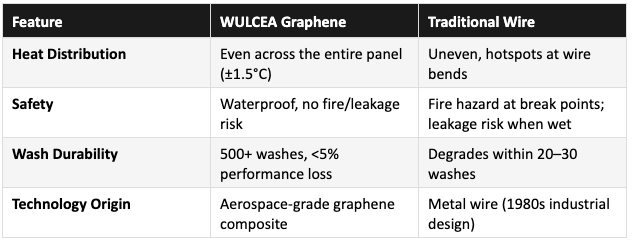
The metal-wire resistance-heating system in most heated jackets on the market today is based on the same fundamental principle used in electric blankets from the 1980s. It heats. But it also creates uneven warmth, fire-risk hotspots, and garments that stop working after 20–30 washes.

WULCEA looked at that track record and decided to start over.

A Material Built for Space, Now Built Into Your Jacket

Founded in 2022, WULCEA set out to fix what traditional WULCEA heated jacket technology had never solved. Their answer came from an unexpected place: aerospace engineering.

The brand’s proprietary Nano-Carbon™ composite, a graphene-carbon nanotube blend, was originally developed for satellites and aircraft components where failure is not an option. WULCEA adapted it for everyday wear, making it the first brand to bring aerospace-grade graphene heating to consumer apparel.

The technology is certified to UL, CE, and GB standards, the same compliance benchmarks applied to industrial electronics.

Wire vs. Graphene: What Actually Changes

Here’s what switching from wire to graphene actually means for the person wearing the jacket:

  • No hotspots, no cold spots. Graphene distributes heat evenly across the entire jacket panel, so there are no burning patches at wire bends and no freezing gaps between them. Temperature stays within ±1.5°C across the full surface.
  • Warmth like sunlight, not a heating pad. Graphene radiates heat gently and uniformly, the way standing in the winter sun feels, not the way pressing against a radiator feels.
  • Cut it? It still heats. Redundant circuitry means even a partial cut to the heating layer doesn’t kill the system or create a fire hazard. Wire jackets fail and burn at the break point.
  • Fully waterproof. No leakage risk in rain or moisture. Wire-based heated jackets carry real electrical hazards when wet.

500 Washes Later, It Still Works

Most wire-based heated jackets degrade within a single season. Metal wires oxidize, fracture at bends, and lose heating performance within 20–30 wash cycles. At that point, the jacket is effectively disposable.

WULCEA’s Nano-Carbon™ graphene composite has been independently validated through 500+ wash-and-bend cycles with less than 5% performance loss.

WULCEA’s Innovation in Heated Jackets: Moving Beyond 1980s Technology

Who WULCEA Is Built For

The WULCEA heated jacket isn’t a niche product for extreme adventurers. It’s designed for anyone who has quietly accepted that heated apparel comes with trade-offs and decided they no longer should.

That includes outdoor professionals who need gear that performs reliably in the cold all day, urban commuters who want warmth on the move without bulk, and older adults who need consistent, gentle heat without the anxiety of a product that might overheat or fail.

Less than four years after its founding, WULCEA is already being recognized as a category innovator, the brand that didn’t upgrade the heated jacket, but replaced the idea of what one could be.

AI Gives Fractional Executives More Arrows in Their Quiver. The Ones Who Win Will Know How to Aim

Most companies are adopting AI. Many companies do not know what to do with it.

A recent National Bureau of Economic Research (NBER) study of nearly 6,000 executives found that over 80% of firms report no meaningful productivity impact from AI, even though 69% are actively using it. The gap between adoption and results is wide and growing. It also remains largely invisible to the people inside it.

If you are a fractional executive, that gap is your opportunity. Whether you can actually close it is a different question.

Here is what it looks like in practice. You are two months into a CFO engagement at a mid-size logistics company. The finance team spends 65 hours a week manually pulling that could be automated in an afternoon.

With an AI partner, you could flag it, scope it, and bring in the right person to build it. The problem was defined and solved with tremendous success. Your client thinks you are a rockstar.

AI fluency for a Fractional C-Suite Executive means recognizing opportunities, articulating them, and guiding clients from frustration to action, not becoming a technical expert. In a market where companies adopt AI but see little value from it, this skill is a rare differentiator.

The fractional market has never been larger. The number of fractional leaders doubled from 60,000 in 2022 to 120,000 in 2024. Gartner forecasts that by 2027, over 30% of midsize enterprises will have at least one fractional executive on retainer.

But the economics remain unforgiving. Vendux found fractional engagements lasted just under 8 months on average. MBO’s 2025 State of Independence research found that 49% of independents cite unpredictable income as their biggest challenge.

Delivering well is not enough. You have to keep creating reasons to stay. In a crowded market, the fractional executives who cannot do that will not last long.

AI creates a more honest answer to that problem than anything that came before it. The “good ending” has always been fractional work’s quiet curse: you do the work well, the trust is strong, the problem is solved, and then the engagement ends because there is nothing left to sell without forcing it.

AI-driven opportunities such as better data flows, faster reporting, smarter decision support, and  workflow automation are not invented add-ons. They are legitimate problem-solving opportunities that were already sitting inside the client’s business, waiting for someone with the right lens to find them.

But spotting the opportunity is only half the job. Being able to say “here is what we should build, here is who will build it, and here is what it will cost” is what turns a good observation into a reason to extend the engagement. The fractional executives who will pull ahead are not the ones who try to become technical themselves; they are the ones who have built the right partnerships.

Executive judgment finds the opportunity. Technical depth, brought in through a firm like Orpical Technology Solutions, delivers it. This unification is what turns a finished project into a reason to stay.

Here is what that NBER number actually means for your business. Most of your clients are using AI but getting nothing from it. They are not failing because the technology does not work. They are failing because no one in the room knows how to direct it, and the fractional executive they brought in (you) to discover areas of improvement is confused. What now?. That is not a technology gap. That is a delivery gap. And it is exactly the kind of gap that ends engagements early.

The future of fractional work will belong to the executive who identifies possibilities, translates them into actionable solutions, and drives results that extend client engagements. AI just makes it true in more rooms, more often, for the ones who have done the work to back it up.

Edward DuCoin is a serial entrepreneur and Co-Founder of Orpical Technology Solutions, with more than four decades of experience building and scaling companies, including a NASDAQ-traded firm that was recognized for three consecutive years on the Inc. 500. He has taught Marketing and Entrepreneurial Management at Temple University, Rowan University, and Montclair State University.

Follow Edward on LinkedIn

If you want to turn AI from an idea into a lasting advantage, partner with Orpical Technology Solutions. Join the top fractional executives using our expertise to deliver tangible results and secure your next engagement.


Enhancing Efficiency in Automotive Parts Manufacturing via CNC Technology

The rapid development of the automotive industry has imposed higher requirements on the production and processing of auto parts. This has driven technological innovation in automotive manufacturing and led to the widespread application of Computer Numerical Control technology in mechanical processing. At the heart of CNC technology is the CNC machine tool; its control and monitoring systems permeate the entire numerical control unit, serving as the “brain” of automated production lines and facilitating the intelligent evolution of the automotive component manufacturing process.

Fundamental Concepts of CNC Technology

Computer Numerical Control (CNC) technology refers to a method that uses digital signals to control the motion trajectories and strokes of machine tools. It enables precise control of computer equipment through CNC commands consisting of numbers, letters, and symbols. A complete CNC technical system comprises three parts: the machine tool body, the CNC system, and peripheral technologies.

  • Machine Tool Body: This is the structural foundation of the CNC machine, encompassing the bed, columns, guideways, worktable, tool post, and other supporting components that form the mechanical assembly.
  • CNC System: The core of CNC technology, consisting of input/output devices, a Computer Numerical Control (CNC) unit, programmable logic controllers (PLCs), and main servo drive units. The CNC unit is primarily responsible for receiving, processing, and storing CNC commands to control the overall motion and operational workflow of the machine.
  • Peripheral Technologies: These mainly refer to various tooling systems (represented by cutting tool systems) and programming management technologies. The synergy of these technologies provides the necessary support and guarantees for the machine tool’s normal operation.

Advantages of CNC Technology in Auto Parts Machining

High Efficiency 

CNC technology significantly reduces machining time and enhances productivity. It enables the streamlined processing of multi-stage machining programs, eliminating the tedious recalibration of machine parameters required after single operations in traditional methods. Furthermore, it boosts the efficiency of processing complex parts, supporting mass production while ensuring consistency and precision.

Intelligence 

The implementation of automotive CNC machining effectively simplifies mechanical processing workflows. In traditional machining, variables such as man-hours are often set imprecisely; however, CNC technology enables the intelligent handling of these variables, optimizing operational sequences. Additionally, it prevents logic conflicts between programming and variables that often occur during manual computer operations, allowing the machine tool to reach its full potential.

High Precision 

Through computer programming, CNC technology precisely controls motion trajectories and cutting parameters, achieving automated and accurate processing. This ensures that the dimensions, shapes, and surface quality of components meet high standards. Modern machine tools often utilize closed-loop control systems paired with high-precision sensors—such as laser rangefinders and grating scales, capable of controlling machining accuracy to the micrometer or even nanometer level, which is critical for automotive components.

Integration and Networking 

CNC technology achieves the integrated processing of complex components by consolidating various machining techniques and processes. This approach not only improves efficiency but also reduces errors and instability. For instance, automotive parts often require a combination of milling, drilling, boring, shearing, and tapping. Traditional methods require multiple setups across several machines, whereas CNC technology integrates these steps into a single setup. Furthermore, through the Industrial Internet and Big Data, manufacturers can achieve remote monitoring of the machining process and real-time tracking of machine tool status.

Challenges in the Application of CNC Technology

Technical Limitations 

First, limitations exist at the design level. Auto parts often feature complex geometries that standard cutting tools cannot accommodate. For parts with intricate internal threads or complex shapes, specialized tooling may be required, increasing manufacturing complexity and cost. Second, there are material limitations; high-temperature alloys or composites, due to their hardness, brittleness, or thermal sensitivity, require higher cutting forces or refined strategies to prevent tool wear and workpiece deformation. Finally, despite high-precision capabilities, extra operations are often needed to guarantee surface quality for micro-features, and quality may fluctuate due to tool wear or machine accuracy variances.

Operation and Maintenance Issues 

The automation and precision of CNC machines require operators to possess complex programming knowledge, operational skills, and equipment maintenance capabilities. Currently, the shortage of qualified operators limits the effective application of this technology. Errors such as irrational tool path planning or unscientific cutting parameter settings can lead to precision loss, workpiece scrapping, or machine damage. Additionally, the integration of numerous electronic and precision mechanical components needs regular maintenance. This is often costly and requires specialized personnel; if maintenance is inadequate, machine performance and accuracy will deteriorate significantly.

Safety and Environmental Concerns 

High-speed rotating tools and moving workpieces pose safety risks to personnel. Failure to strictly follow safety protocols during commissioning and maintenance can lead to injuries. Furthermore, long-term operation may result in electrical or hydraulic failures, which, if not rectified, can cause machine collisions or severe accidents. Environmentally, the use of chemical cutting fluids produces metal chips and waste. Improper discharge can pollute the environment, while chemical substances and metal dust pose respiratory and ocular risks to operators, potentially leading to occupational diseases over time.

Application Paths for CNC Technology in Auto Parts Machining

Design and Programming 

During the design phase, CNC technology uses CAD software for 3D modeling and simulation. CAD provides design tools and computational power that help designers construct precise models reflecting physical and material properties, providing a basis for manufacturing. In the programming phase, CAM software generates CNC code recognizable by the machine tool based on CAD designs, automatically calculating tool paths and cutting parameters. The integration of CAD/CAM facilitates efficient collaboration between designers and programmers, ensuring process consistency and providing optimized tool path strategies.

Inspection and Quality Control 

CNC technology enables real-time monitoring via integrated online inspection systems. Equipped with high-precision sensors and signal processing, these systems collect key quality parameters such as dimensions and surface roughness, and compare them against presets. If errors occur, the system triggers alarms or adjusts parameters automatically to prevent mass non-conformity. Additionally, it provides quality traceability by recording process data for every stage, enhancing overall product quality and customer satisfaction.

Safety and Environmental Protection

By replacing manual labor with automated and intelligent processing, CNC technology inherently reduces the probability of human-related accidents. The CNC machine is fitted with safety guards and monitoring systems that intervene immediately upon detecting anomalies. Regarding the environment, most CNC machining waste consists of metal with high recycling value. Optimizing process parameters also reduces energy consumption and carbon emissions, promoting green production. The high stability of the CNC machine further minimizes waste and loss, supporting sustainable industrial development.

Driving Innovation in Manufacturing Technology 

CNC technology breaks the boundaries of traditional manufacturing, achieving high precision, efficiency, and consistency. It applies to complex engine components, transmission systems, and structural body parts. Ensuring every part meets design specifications and reducing manual intervention, it lowers production costs. Future innovation requires multi-disciplinary collaboration—integrating CNC with materials science, electronics, and automation—while strengthening international exchanges to absorb advanced manufacturing and management experiences.

In Summary

In summary, the application of CNC technology in automotive mechanical processing demonstrates immense potential. Through high-precision, efficient, and intelligent processing, it has significantly improved machining quality and productivity while providing a solid foundation for stable production, safety, and environmental protection. To adapt to intensifying market competition and evolving demands, enterprises must actively embrace CNC technology, strengthen R&D, and continuously enhance their core competitiveness.

Planning the Future of Enterprise Systems Nagaraj Dasari in Detail

By: Ethan Lee

Arizona, United States – March 2026

VA VIENNA The global economic technology landscape is undergoing a paradigm shift driven by cloud-native design, artificial Intelligence, and dependable enterprise automation. Largely leading this change is Nagaraj Dasari, Digital Transformation Architect and Principal Engineer, whose practice serves as the interface between enterprise-wide modernization and state-of-the-art AI security technology.

Having more than 17 years of experience in enterprise engineering, Dasari established his reputation as an expert in PEGA systems, Java/J2EE technologies, cloud-native systems, and AI-powered enterprise systems.

Chairing Next Generation of Financial Applications.

As a Principal Engineer at Navy Federal Credit Union, Dasari is the driving force of architectural change of the Collection Application Suite within the multi-year CACS X modernization program.

The migration to CACS X is a strategic transformation and not just a system upgrade to a fully cloud-native, service-oriented, and AI-enhanced financial platform. Dasari is introducing modular, scalable, and resilient enterprise services to improve operational agility and provide collections counselors with greater data abilities by applying the principles of Service-Oriented Architecture (SOA).

His strategy combines smart automation, high-end analytics, and security at the enterprise level, aligning digital change with the sustainability of long-term institutions.

Creating Enterprise AI Security through the Innovation of Patents.

Beyond the enterprise’s modernization, Dasari has worked in artificial intelligence security, inventing a computer-implemented system with a patent that autonomously detects and blocks instant injection attacks on large language models.

It is a patented architecture system that suggests a layered approach to security, enhancing the reliability and integrity of AI implementations in the enterprise environment. The system includes:

A real-time processing unit that accomplishes source attribution and normalization on the basis of a hierarchical authority model.

An instruction analysis engine that makes use of the categorization of portions of the instruction and the deduction of semantic intent.

A detection engine that is able to detect adversarial manipulation – instruction overrides, semantic manipulation, chaining of indirect instructions, and role confusion – activities.

A risk assessment and reduction module, which produces appropriate mitigation measures through instant sanitization, in an inventory management system that has a real-time risk evaluation.

An execution layer of security and runtime restrictions by an abstraction system of models independent.

Learning and verification of output: responsive learning and recording of telemetry and changing detection policies automatically. The system introduces runtime-enforced, layered security controls that are essential for enhancing the governance of enterprise AI, given the growing adoption of generative AI in production systems by financial institutions.

The presented innovation reflects Dasari’s expertise in enterprise architecture and artificial intelligence security engineering.

An Institutional Excellence Building Career.

High-impact roles at key financial institutions around the world today have made Dasari gain support for high-impact roles in his leadership position:

Wells Fargo (Technical Lead)

He introduced PEGA 7 Case Management features and managed technical requirements for enterprise modernizations. He also developed performance dashboards using AppDynamics and Splunk to ensure application reliability and system observability.

American Express (PEGA Engineer)

He worked under the company Global Corporate Card (GCC) and Global Merchant Services (GMS) and created scalable case management systems based on PEGA 7.1.7. He spearheaded integration programs within REST and SOAP services and relied on Global Institutional Risk Management programs.

AIG (Senior System Architect)

During his work on the One Claim NAM project, he focused on underwriting modules to improve risk assessment and ensure accurate policy pricing, thereby supporting the scalability of the insurance infrastructure.

Nurturing the Industry-Academic Research Gap.

Although he has a strong background in enterprise implementation, Dasari is also a researcher. His research publications cover the combination of Business Process Management (BPM), Generative AI, Big Data, and cloud-native microservices.

His work concerns the practical issues of scalability, compliance, and runtime AI security, which he also addresses in enterprise production systems. This practitioner-researcher blend is a rare attribute that allows him to bring theoretical innovation to deployable enterprise architecture.

The increased number of publications indicate his dedication to the development of secure AI governance and the next generation enterprise systems.

Technical Qualifications and professionalism.

Dasari has a skill quality that is supported by internationally acclaimed qualifications, such as:

  • Certified TOGAF Architect (9.2)
  • PEGA Certified Senior System Architect (CSSA) -v. 6.2, v. 7.1 and v. 8.1
  • CSA Certified Solutions Architect.
  • Certified Scrum Master (CSM)

He has received professional recognition for his work, including awards that highlight his ability to excel in complex environments.

Academic Foundation and International Experience.

Dasari started his educational life in India, where he obtained a Bachelor of Commerce and got a Master of Computer Applications (MCA) degree at Acharya Nagarjuna University. This cross-functional business and computer science skills base saw him head to financial technology architecture.

At the beginning of his career, he was a Java Developer at Venture Softtech in Sweden, where he was involved in clearing and settlement systems, and PEGA Developer at ING in India. It was these overseas experiences that formed his international outlook on the norms of enterprises and teamwork engineering.

The Road Ahead

With the trend of faster financial institution adaptation to AI-driven automation and cloud-native platforms, the need for an architect capable of balancing between innovation and governance is on the rise.

By introducing an innovative AI security system and enterprise modernization leadership that is patented, Nagarajada Dasari is a new breed of technology leaders – a professional able to architect challenging, safe, and scalable systems that will become the digital finance of the future.

Contact Information

To contact the professional inquiries, research cooperation, or to get additional information:

Setting: Arizona, the United States.

LinkedIn:
https://www.linkedin.com/in/nagaraju-dasari-5a91bb24/⁠

GoogleScholar: https://scholar.google.com/citations?user=fcrMXHoAAAAJ&hl=en