Not Another AI Assistant: Juma Aims to Deliver Ready-to-Use Marketing Assets

In a landscape crowded with chatbots and “assistants,” the leap from conversation to meaningful execution is where most solutions stall. Juma was built to cross that line decisively. It operates not as a novelty or a helper that drafts half-finished work, but as a production-grade system for marketers who need to research, strategize, create, and analyze with speed and rigor.

This article will unravel how Juma is not another AI assistant, but rather an engine for delivering ready-to-use marketing assets.

From Team-GPT to Juma

Juma represents the evolution of Team-GPT into a purpose-built platform for modern marketing organizations. What began as a powerful interface for leveraging large language models has matured into an end-to-end environment designed around the realities of campaign planning, content operations, and performance measurement.

The rebrand heralds an expanded mission. Team-GPT evolves into Juma, the ultimate AI workspace designed for marketing teams. Its remit is not merely to answer questions but to move work forward, unify stakeholders, and produce assets that are likely to be immediately deployable across channels.

An AI Workspace That Unites the Marketing Function

Marketing work requires cross-functional collaboration, shared context, and repeatable processes. Juma addresses these needs by uniting teams in one AI-native workspace where research, strategy, content creation, and analytics come together in a coherent flow. Juma is the AI workspace for marketing teams.

Juma unites marketing teams to research, strategize, create content, and analyze. Rather than handing off between disjointed tools and teams, the platform keeps the entire lifecycle in one place, preserving context and potentially accelerating iteration. Research informs strategy inside the same environment where content is developed, versioned, and approved, and where analytics close the loop with measurable outcomes.

The Superagent Difference: From Chat to Completed Work

The distinction that matters most is Juma’s operating model. Juma is a superagent built for modern marketing teams. Unlike traditional AI assistants, Juma executes complete workflows autonomously, such as analyzing data, generating content, and delivering ready-to-use assets. That translates to practical advantages: campaign briefs arrive with audience insights already synthesized; social calendars are generated alongside post copy, visuals, and platform-specific variants; landing pages come with on-brand copy, SEO metadata, and A/B test ideas; performance reports update with clear narratives, not just raw charts. The value is likely to be immediate because the output is ready for immediate use.

Not Another AI Assistant: Juma Aims to Deliver Ready-to-Use Marketing Assets


Photo Courtesy: Juma

Research That Starts Strong and Stays Current

Effective marketing depends on timely insight. Juma’s research capabilities bring structure and speed to market scans, competitive reviews, and audience analysis. It surfaces patterns from both internal documents and external sources, and frames implications in a way strategists can act on.

The system’s memory of prior research helps ensure knowledge compounds over time rather than resetting with each new brief. As a result, campaign ideas are grounded in evidence, not guesswork, and messaging decisions are more likely to be justified with a clear rationale.

Strategy That Is Actionable by Design

A strategy is only as good as its path to execution. Juma translates research into structured plans: positioning statements, messaging architectures, channel guidance, and measurement frameworks that anticipate the work downstream.

Because the same system will create content and analyze performance, strategies are compatible with production from the start. This reduces friction, shortens timelines, and increases the likelihood that plans will survive real-world constraints without losing their intent.

Content That Ships Ready for Deployment

Where most assistants propose ideas or outline drafts, Juma produces finished assets with the fidelity and formatting teams expect. Long-form articles arrive with editorial structure, SEO optimization, and internal linking suggestions. Email campaigns include subject line variants, preheaders, body copy, and device-aware formatting. Paid ads come with creative concepts, headline options, and platform-fit dimensions.

All of it respects brand voice, complies with channel valuable practices, and is prepared for immediate publication or review. The result is a content engine that keeps pace with modern calendar demands without sacrificing craft.

Analysis That Closes the Loop

Measurement is integral, not an afterthought. Juma ingests performance data, interprets trends, and produces clear narratives with recommended actions. Reports emphasize what changed, why it matters, and what to do next.

Because the same system also creates content, feedback loops are tight: learnings translate quickly into new tests, revised messaging, and refined targeting. This cycle of analyze, adapt, and redeploy turns incremental improvements into sustained performance gains.

Summary

Marketing teams are under pressure to do more with less, to personalize without losing coherence, and to demonstrate impact with clarity. Tools that only accelerate drafting no longer suffice. What teams need is an AI-powered tool like Juma that turns goals into outcomes with fewer handoffs, fewer manual steps, and fewer compromises. Juma meets that need by uniting people, process, and production in one environment, and by taking responsibility for the full arc of work—from insight to asset to analysis.


AI Editable Stock Images: The Future of Visual Content Creation

Visual content plays a critical role in how brands, creators, and businesses communicate online. As digital platforms become more competitive, static visuals may no longer be sufficient to capture attention. This shift has led to the growing popularity of AI editable stock images, a modern solution that allows users to customize visuals quickly and efficiently while maintaining professional quality.

Unlike traditional stock photography, which may limit creativity, AI-powered images offer more flexibility and adaptability. They allow users to reshape visuals based on their needs, helping content stand out in an increasingly crowded digital space.

What Are AI Editable Stock Images?

AI editable stock images are pre-created visuals enhanced with artificial intelligence that allows real-time modification. These images can be adjusted directly within an AI-based platform, eliminating the need for advanced design software or technical skills.

Users can refine backgrounds, change color schemes, alter visual elements, or adapt scenes to better fit their message. The AI understands context and composition, making edits appear more natural and seamless. This transforms stock imagery from a fixed resource into a dynamic creative asset.

Why Do AI Editable Stock Images Matter?

The demand for unique visuals has increased across websites, social media platforms, marketing campaigns, and digital publications. At the same time, time and budget constraints can make custom photography impractical for many businesses. AI editable stock images help address this gap by providing adaptable visuals without the high cost or long production timelines.

They allow creators to maintain originality while still benefiting from the convenience of stock imagery. This balance is what makes them increasingly valuable in modern content strategies.

Creative Freedom Without Complexity

One of the main advantages of AI editable stock images is ease of use. Traditional editing tools often require training and experience, which can slow down workflows. AI-powered editing simplifies the process by offering intuitive controls that guide users through visual changes.

This allows marketers, bloggers, and business owners to produce professional visuals without relying on designers for every small adjustment.

Personalized Branding at Scale

Consistent branding is essential for building recognition and trust. AI editable stock images allow organizations to tailor visuals according to brand colors, themes, and tone. Instead of searching endlessly for images that fit a specific identity, users can adapt images to match their branding guidelines.

This is especially useful for companies producing frequent content across multiple channels, where visual consistency is key.

Rapid Prototyping and Experimentation

In digital marketing, testing different visual approaches can be crucial for performance optimization. AI editable stock images make it easier to create multiple variations of the same image, helping teams test different layouts, colors, or moods.

This speed encourages experimentation and allows businesses to respond more quickly to trends, audience feedback, or seasonal changes.

Cost-Effective Visual Production

High-quality visuals traditionally require photographers, designers, or extensive editing resources. AI editable stock images reduce these costs by offering adaptable visuals at a fraction of the price. This makes professional imagery accessible to startups, small businesses, and independent creators who may have limited budgets.

By lowering financial barriers, AI-powered visuals help level the playing field in digital content creation.

AI Editable Stock Images in Action

These images can be used across many industries and applications. Online retailers can adapt visuals to show products in different environments without reshooting. Social media managers can adjust visuals to fit promotional themes or campaigns. Bloggers can fine-tune images to match article topics, while corporate teams can align visuals with presentation styles and messaging.

In each case, AI editable stock images can enhance efficiency while preserving quality.

What to Look for in an AI Editable Stock Image Platform?

Choosing the right platform is important. Users should consider ease of navigation, depth of customization, output quality, and clear usage rights. A reliable platform should offer high-resolution images suitable for professional and commercial use while making editing accessible to non-designers.

Challenges and Ethical Considerations

Despite their advantages, AI-powered visuals come with responsibilities. Misuse or misleading alterations could damage credibility if not handled ethically. Additionally, users should remain mindful of diversity and representation in AI-generated visuals, ensuring content remains inclusive and accurate.

AI should be viewed as a creative assistant rather than a replacement for human judgment and originality.

The Road Ahead

AI editable stock images represent a significant shift in how visual content is created and used. They combine efficiency, creativity, and personalization in a way traditional stock photography may not be able to match. As artificial intelligence continues to evolve, these tools are expected to become even more sophisticated, offering greater control and realism.

For businesses and creators seeking flexible, scalable visual solutions, AI editable stock images could be a key part of the future of digital storytelling.

How Md Saiful Islam’s Predictive Analytics and Financial Data Modeling Are Revolutionizing U.S. Financial Security, Risk Management, and Economic Stability

By: Michael Saylor

The American financial system is changing faster than ever. With rising fraud threats, unpredictable markets, and rapidly expanding digital transactions, financial institutions across the United States are under enormous pressure to stay ahead of risk. One researcher helping shape this shift is Md Saiful Islam, whose work in predictive analysis and financial data modeling is earning growing recognition for the way it supports financial security, responsible lending, and long-term economic stability.

Islam’s professional path began far from the modern research environment in which he works in today. He grew up in rural Bangladesh, later spending nearly a decade in the financial sector, gaining firsthand experience with the challenges banks face with incomplete data, outdated systems, and ever-present fraud risks. Those years helped him understand something important: institutions often struggle not because they lack the will to improve, but because they lack the right tools to see problems before they escalate.

That realization stayed with him when he moved to the United States to continue his studies in Business Analytics. At Trine University, Islam strengthened his training in financial modeling, forecasting, and data-driven risk assessment. He learned to build models that can track patterns, highlight inconsistencies, and more accurately anticipate outcomes than traditional reporting methods. This work eventually led him toward a broader mission, helping American financial institutions adopt smarter, more reliable ways of managing risk. A significant area of Islam’s research focuses on predictive modeling for credit risk, one of the most important pillars of financial stability. A single misjudged loan can affect households, small businesses, and, on a larger scale, the economy. Islam’s models analyze a wide range of financial behaviors, income patterns, repayment histories, spending habits, and market conditions to help lenders make clearer, more responsible decisions. These models don’t just flag potential problems; they help institutions understand why certain risks arise, guiding more transparent lending practices. His work on fraud detection has also drawn attention. Fraud is becoming more sophisticated, and institutions need faster ways to detect unusual activity. Islam’s financial models closely examine transaction patterns to identify behavior that appears out of place. While no system can stop every attempt, his approach gives institutions an early warning system—one that can significantly reduce losses and protect consumers. At a time when financial fraud costs the U.S. billions each year, contributions like this matter.

Another part of Islam’s research centers on financial forecasting, which helps organizations prepare for future conditions rather than simply react to them. Using historical trends along with real-time financial signals, his models help institutions estimate revenue changes, identify cost fluctuations, and understand the shifting conditions of their markets. Accurate forecasting supports better planning, steadier growth, and more resilient financial operations especially during times of economic uncertainty.

Islam’s academic work also reflects his growing influence. He has authored and co-authored several research papers, including publications in respected Q1 journals. Two of his notable works include:

  • “Enhancing Adaptive Learning, Communication, and Therapeutic Accessibility through the Integration of Data-Driven Personalization in Digital Health,” and
  • “Re-imagining Digital Transformation in the United States: Harnessing Business Analytics to Drive IT Project Excellence.”

His research contributions have earned him 139 citations, a number that continues to rise as others build on his work. Beyond publishing, Islam also serves as a reviewer for the IEEE and the American Journal of Interdisciplinary Innovations and Research (AJIIR), where he has reviewed multiple manuscripts. Serving as a reviewer is widely seen as a sign of trust within the academic community. It shows that journals rely on his judgment to assess the quality and accuracy of other researchers’ work. Islam’s influence is also visible in the broader financial context of the United States. Agencies such as the Federal Reserve, FDIC, and the U.S. Treasury have repeatedly emphasized the importance of accurate risk modeling, stronger fraud-prevention tools, and reliable forecasting. Islam’s work aligns closely with these national priorities. His models help institutions anticipate risk rather than respond after damage is done. They support healthier lending environments, promote fairer decision-making, and create a stronger foundation for long-term financial growth.

What makes Islam’s contributions stand out is not just the technical quality of its work but the practical value it offers. His research is grounded in real financial challenges, such as overextended borrowers, unpredictable markets, and fraud schemes that adapt faster than traditional detection methods. By addressing these problems directly, his work helps protect everyday people, from families applying for loans to small businesses relying on accurate financial forecasts. Colleagues describe Islam as someone who brings both analytical discipline and a strong sense of responsibility to his field. He often explains that economic data should not be used only for reporting; it should serve as a guide for clear, fair, and informed decision-making. This philosophy has shaped his approach and strengthened the real-world relevance of his research. As the U.S. financial system continues to evolve, the need for reliable predictive modeling will only grow. Markets are more complex, consumer behavior is changing, and institutions face rising pressure to manage risks with more precision. Islam’s research sits at the center of these challenges. His work provides tools that help institutions prepare for uncertainty, respond more quickly to threats, and operate with greater transparency.

Today, Md Saiful Islam is viewed as part of a new generation of financial analysts and professionals who combine industry experience, academic credibility, and a commitment to strengthening the systems the public relies on. His contributions continue to expand, offering valuable guidance for lenders, regulatory bodies, and policymakers working to build a more stable economic future.

How Md Saiful Islam’s Predictive Analytics and Financial Data Modeling Are Revolutionizing U.S. Financial Security, Risk Management, and Economic Stability

Photo Courtesy: Md Saiful Islam

At a time when the U.S. financial system demands stronger tools and clearer insights, Islam’s work represents a significant step forward. His predictive models are not merely analytical exercises; they are practical frameworks that help institutions operate more responsibly and securely. And as financial challenges continue to evolve, so too will the importance of researchers who, like Islam, are dedicated to improving how economic decisions are made.

 Disclaimer: The views and opinions expressed in this article are those of the author and do not necessarily reflect the official policy or position of any financial institution, regulatory body, or affiliated organization. This content is for informational purposes only and should not be construed as financial advice or a recommendation. Always consult with a professional financial advisor before making any financial decisions.

Simple Yet Powerful Ways to Block Inappropriate Content for Your Kids

By: Jaxon Lee

The internet offers a vast landscape of knowledge and entertainment, but its open nature inevitably exposes young eyes to unsuitable content. As parents, navigating this digital world for your children can feel like a constant battle, a tightrope walk between fostering exploration and ensuring safety. 

The sheer volume of information makes simply ‘watching over their shoulder’ impractical, and the ever-evolving nature of online platforms means yesterday’s solutions might not address today’s challenges. 

You are looking for reliable ways to create a safer digital environment without stifling curiosity. This article takes a closer look at practical strategies for content filtering.

Understanding the Layers of Protection

Protecting your children from inappropriate online content is not about a single solution but rather a layered approach. Think of it like building a house; you do not just have a roof, you also have walls, foundations, and doors. Each element plays a role in overall security. Relying on just one method often leaves gaps that clever or curious children, or even accidental clicks, can exploit. Your strategy needs to encompass various levels: from your internet router down to individual devices and even to the conversations you have with your kids. This multi-pronged attack significantly reduces the chances of unwanted exposure.

As Kibosh.com, puts it. “Eliminating inappropriate content from your home internet has traditionally been a difficult if not impossible task. At Kibosh, we have developed sustainable, user-friendly solutions that let parents filter harmful websites and restrict adult content across all devices, including mobile. Kibosh 3.0 is a plug-n-play solution that provides the tools to monitor internet usage, control screen time, protect mobile devices, and much more. When parents combine these tools with guidance and open conversation, children learn to navigate the internet responsibly while staying protected.”

Router-Level Filtering for Network-Wide Safety

One of the most foundational steps you can take is to implement filtering at your home router. This method is compelling because it applies content restrictions to every device connected to your home Wi-Fi network, regardless of whether it’s a phone, tablet, computer, or smart TV. Many modern routers come with built-in parental control features that let you block specific websites, content categories, or even set internet access schedules.

Accessing these settings usually involves logging in to your router’s administration page in a web browser. The specific steps vary depending on your router’s brand and model, but you typically find options for “Parental Controls” or “Access Restrictions.” You can often create profiles for different family members, applying stricter rules for younger children. Some routers even integrate with services that offer more sophisticated content filtering, which require a subscription.

Leveraging Operating System and Device-Specific Controls

Beyond the router, both computer operating systems and mobile devices offer built-in parental controls. These are vital because they continue to provide protection even when devices are used outside your home network, for example, on public Wi-Fi or cellular data.

For Windows and macOS, you can set up separate user accounts for your children with restricted permissions. These operating systems allow you to limit app usage, block websites through their respective browsers, and even monitor activity. Similarly, iOS and Android devices have strong parental control features, often found under “Screen Time” on iPhones/iPads or “Digital Wellbeing” and Family Link on Android. These settings let you manage app downloads, restrict age-inappropriate content in app stores, filter web content, and control screen time, providing granular control specific to each device.

Utilizing Web Browser Safety Features

While router and device-level controls offer broad protection, web browsers themselves also provide essential safety settings. Most popular browsers, such as Chrome, Firefox, Safari, and Edge, include features designed to improve security. You can allow “SafeSearch” in Google and other search engines, which attempts to filter out explicit results. Browsers also let you block specific websites manually or use extensions that offer more comprehensive content filtering.

As Abdul Moeed, Outreaching Head at OnPageSEO, says, “Web browser safety features play a crucial role in strengthening a family’s overall online protection strategy. While SafeSearch settings, site blocking, and filtering extensions are effective first-line defenses, they work best when combined with broader controls at the device and network level. We emphasize layered digital safety, using browser-based tools alongside smarter monitoring and education, so parents can reduce exposure to harmful content while still allowing children to explore the internet responsibly. This balanced approach helps close security gaps and makes it far more difficult for unsafe content to slip through.”

Setting these browser-specific controls often requires you to be logged into your child’s browser profile, if they use one. A tech-savvy child might find ways around browser settings if they have administrative access to their device. This is why multi-layered protection is so important; browser settings act as another barrier alongside other safeguards.

Implementing Dedicated Parental Control Software and Apps

For families seeking more comprehensive features and centralized management, dedicated parental control software and apps can be an excellent option. These solutions typically offer a broader set of features than built-in controls, including more advanced content filtering, detailed activity reports, location tracking, and even the ability to monitor social media activity.

Examples include apps like Qustodio, Bark, Net Nanny, and Google Family Link (which goes beyond basic Android controls). These services often require installation on each device you wish to monitor and can provide a unified dashboard for managing all your children’s devices from one place. While many come with a subscription fee, the enhanced peace of mind and detailed insights they offer can be worth the investment for many parents.

The Indispensable Role of Open Communication

No amount of technology can replace open, honest communication with your children. While technical filters are essential tools, they are not foolproof. Children, especially as they get older, may encounter inappropriate content through channels that filters can’t catch, such as peer-to-peer sharing or clever workarounds.

With the rise of social media apps like TikTok, parents may wonder about the limits of reposting or sharing content. If your child encounters an issue, such as why they can’t repost on TikTok or any restrictions on their TikTok account, it’s important to ensure they are using these platforms responsibly, avoiding inappropriate or harmful content. Talking about these limitations helps your child understand the platform’s functionality and the importance of engaging with content respectfully and safely.

Talking to your children about online safety, responsible internet use, and what to do if they encounter something uncomfortable or inappropriate is paramount. Teach them to come to you without fear of punishment if they see something that upsets them. Establish clear family rules about internet usage, explained in a way they can understand. These conversations help them to make good choices and build their critical thinking skills, becoming their own best defense against online dangers.

Regular Review and Adjustment of Settings

“The digital landscape is constantly changing, and what works today might need adjusting tomorrow. New websites emerge, apps update, and your children’s needs and digital fluency evolve. Therefore, it is important to review and update your content filtering settings regularly. Periodically check your router, devices, and software controls to ensure they remain effective and aligned with your family’s current situation. As your children grow older, you might gradually relax some restrictions, granting them more autonomy while still maintaining essential safeguards. This ongoing process ensures your defenses remain strong and relevant,” shares Emily Peterson, CEO of Saranoni.

Wrap Up

While the digital world presents challenges, you have many powerful tools at your disposal to create a safe and enriching online experience for your children. By combining technical protections with open dialogue and consistent review, you build a comprehensive strategy that adapts as they grow. This careful balance of security and trust fosters a healthy relationship with technology. It empowers your children to navigate the internet with confidence and wisdom, rather than fear, allowing them to explore and learn securely.


Disclaimer: The strategies and recommendations provided in this article are for informational purposes only. While we strive to offer helpful and practical tools to protect children from inappropriate content, no solution is foolproof. Parents should continuously monitor their children’s online activities and engage in open communication about internet safety. The mentioned products and services, including those by Kibosh, Qustodio, Bark, and others, are presented as potential options, but we do not endorse or guarantee their effectiveness. Continually assess the suitability of these tools for your family’s needs and consider consulting professionals if necessary.

Ginny (Yuanfei) Zhao Unveils Landmark Study on Generative AI Design for Private Equity at IUI 2025

By: Felicia Guo 

New York–based product designer Ginny (Yuanfei) Zhao is emerging as a leading innovator at the intersection of artificial intelligence, financial analysis, and human-centered design. Her newly published research, “Generative AI Interface Design Considerations for Private Equity,” presented at the 2025 ACM Conference on Intelligent User Interfaces (IUI) in Cagliari, Italy, offers one of the first empirical examinations of how private equity professionals actually use generative AI—and what design principles are needed to make these tools reliable in high-stakes financial environments.

Zhao serves as a senior product designer at Kensho Technologies, the AI innovation arm of S&P Global. Her work spans AI-powered transcription systems, LLM-driven chat interfaces, and data platforms supporting cancer research. With academic training in Human–Computer Interaction and Statistics & Machine Learning from Carnegie Mellon University, she brings a rigorous, multidisciplinary approach to designing intelligent systems that must operate with transparency, precision, and trust.

Her new study addresses an increasingly urgent question: how can generative AI meaningfully support private equity workflows, where analysts depend on accurate information, time-sensitive data, and verifiable insights? Although generative AI has surged across industries, the finance sector—particularly private equity—still lacks research-based design frameworks suited to its unique operational demands. Zhao’s publication helps fill this gap through a rare mixed-methods investigation grounded in real user behavior rather than theory.

Working with a functional GenAI prototype created for private equity research and due-diligence tasks, Zhao and her coauthors analyzed 825 real chatbot queries, 12 in-depth interviews, in-app user feedback, and system interaction logs. The findings reveal significant disconnects between how analysts attempt to use generative AI and how the technology interprets their intent. The study shows that most users approached the system as if it were a traditional search engine. As a result, 94 percent of all queries resembled keyword searches, leading to vague or inaccurate responses that could not support complex financial reasoning. Interview participants also described recurring challenges with unclear intent interpretation, hallucinated outputs, and confusion surrounding the recency and reliability of financial data.

These results point to a deeper structural issue: private equity analysts bring well-established mental models from search tools and databases, while generative AI relies on a fundamentally different interaction logic. Without proper interface design, these mismatches undermine trust and limit the technology’s usefulness. In response to these challenges, Zhao’s paper introduces a domain-specific design framework for generative AI in private equity. The framework emphasizes clearer prompt guidance, transparent sourcing to support auditability, hybrid workflows that combine traditional machine learning with generative reasoning, and explicit communication of dates, time sensitivity, and data freshness. It also highlights the importance of designing interfaces that mirror the rhythms and responsibilities of analyst workflows.

The significance of this work extends beyond private equity. As financial institutions face mounting pressure to adopt AI responsibly, Zhao’s research offers practical guidelines for building systems that meet compliance, risk-management, and accuracy expectations. The insights also apply to adjacent fields such as venture capital, asset management, hedge funds, and M&A, where analysts rely on trustworthy document synthesis and transparent data interpretation.

Looking ahead, Zhao plans to continue expanding this line of research by validating the framework with broader user testing and refining the prototype based on real-world task performance. Future directions include adapting the framework to other financial sectors and integrating generative AI directly into analysts’ everyday tools—such as PDF readers, spreadsheets, and browser extensions—to create more seamless and context-aware assistance. The research also calls for deeper exploration into the temporal reasoning limitations of large language models and the potential of hybrid architectures designed for greater accuracy and reliability.

With this publication, Zhao demonstrates both technical and creative leadership within the rapidly evolving field of AI-driven finance. Her work marks an important step toward building intelligent tools that financial professionals can trust—tools that are not only powerful but also transparent, responsible, and aligned with the realities of modern analytical work.

Disclaimer: The content provided is for informational purposes only and does not constitute investment, financial, or professional advice. Readers should consult with qualified financial or investment professionals before making any decisions based on the information presented. The outcomes and insights discussed may vary depending on individual circumstances and market conditions.

AI-Powered Multimodal Data Integration in ERP Systems for Holistic Enterprise Analytics: Emmanuel Philip Nittala’s Vision for the Future

By: John Lewis

In the ever-evolving landscape of enterprise technology, data integration remains one of the most persistent challenges for modern organizations. Businesses today generate and depend on data from sales, marketing, finance, operations, and customer interactions, yet much of this information still exists in disconnected systems. This fragmentation can limit analytical depth and may prevent organizations from gaining a truly holistic understanding of their operations. Emmanuel Philip Nittala, an expert in artificial intelligence and ERP systems, is addressing this challenge through his research on AI-powered multimodal data integration.

Through his work, Emmanuel Philip Nittala demonstrates how artificial intelligence has the potential to unify diverse data sources within ERP platforms, enabling organizations to extract deeper insights and support more informed decision-making. His research focuses on integrating structured data, unstructured text, visual information, and real-time operational inputs into a single analytical framework, allowing ERP systems to evolve from transactional tools into intelligent decision support platforms.

“Data is the foundation of decision-making, but its value depends on how completely and accurately it is interpreted,” says Emmanuel Philip Nittala. “AI-driven integration can allow organizations to see operational reality from multiple perspectives rather than isolated snapshots.”

The Challenge of Multimodal Data Integration

Traditional ERP systems are primarily designed to manage structured data such as financial records, inventory tables, and transactional logs. Data generated in other formats, including customer feedback, documents, images, and sensor streams, often remains outside core analytical workflows. This separation creates blind spots that can limit strategic insight.

Emmanuel Philip Nittala’s research, published in the International Journal of AI & Data Science in Machine Learning, addresses this limitation by proposing an AI-based approach to multimodal data integration. Multimodal data encompasses structured, unstructured, and semi-structured information, all of which influence business performance. Integrating these data types within ERP environments may enable organizations to analyze operational, customer, and market signals together rather than in isolation.

In his paper, AI-Powered Multimodal Data Integration in ERP Systems for Holistic Enterprise Analytics, Emmanuel Philip Nittala explores how machine learning models could normalize, align, and interpret diverse data formats, overcoming a long-standing weakness of conventional ERP analytics.

“You cannot make reliable decisions with partial visibility,” Emmanuel Philip Nittala explains. “AI reduces uncertainty by connecting data points that were previously disconnected.”

AI as the Engine for Integrated Insights

A central contribution of Emmanuel Philip Nittala’s work lies in applying artificial intelligence to extract insights from integrated data streams. AI models can identify correlations and patterns across numerical data, textual content, and visual or sensor-based inputs, revealing relationships that manual analysis might miss.

For example, AI-powered ERP analytics may examine sales performance alongside customer sentiment, service feedback, and operational metrics to uncover early indicators of demand shifts or quality issues. By automating this analysis, organizations reduce dependence on manual data aggregation and gain access to insights in near real-time.

The multimodal integration approach was applied in simulated enterprise workflows where heterogeneous ERP data sources were unified and evaluated for analytical consistency, insight latency, and interpretability. Qualitative observations indicated improved cross-departmental visibility and faster insight generation compared to siloed reporting methods.

“We are moving toward systems that interpret enterprise data continuously rather than periodically,” says Emmanuel Philip Nittala. “This shift may fundamentally change how organizations respond to change.”

Holistic Analytics and Decision Quality

At the core of this research is the principle of holistic analytics, where decision-makers view enterprise performance as an interconnected system rather than a collection of independent metrics. By consolidating data from supply chains, operations, finance, and customer engagement, ERP systems could present a more accurate and actionable operational picture.

Organizations leveraging this approach have reported greater confidence in strategic planning discussions and improved alignment between operational teams. Although outcomes may vary by implementation, qualitative feedback suggests enhanced situational awareness and reduced reliance on delayed reporting cycles.

Independent industry research increasingly supports this direction, with enterprise analytics trends emphasizing integrated data architectures and AI-driven insight generation as key enablers of competitive agility.

Practical Applications Across Industries

Emmanuel Philip Nittala’s multimodal integration framework has potential applications across industries, including manufacturing, retail, logistics, and financial services. In manufacturing, integrated ERP analytics can enable closer alignment between production data, supplier inputs, and demand forecasts. In retail, organizations could connect purchasing behavior with customer sentiment and inventory performance to refine personalization and demand planning.

These applications illustrate how AI-powered ERP systems may evolve beyond operational reporting toward adaptive intelligence platforms that support both tactical and strategic decisions.

Looking Ahead: The Future of AI in ERP Systems

As enterprise data volumes grow and business environments become more dynamic, Emmanuel Philip Nittala emphasizes the importance of scalable and adaptable ERP architectures. While AI-powered integration offers substantial benefits, successful deployment depends on data quality governance, integration complexity, and organizational readiness to trust AI-assisted insights.

Looking forward, his research aims to further automate insight generation and improve explainability, ensuring that AI-driven ERP analytics remain aligned with business objectives.

“I see ERP systems becoming active participants in decision-making rather than passive record keepers,” says Emmanuel Philip Nittala.

Final Takeaway

Emmanuel Philip Nittala’s work on AI-powered multimodal data integration highlights a critical evolution in enterprise analytics. By unifying diverse data sources within ERP systems, organizations can reduce informational blind spots, improve analytical depth, and make decisions grounded in a more complete operational reality. As enterprises continue to seek agility and resilience, multimodal AI integration represents a foundational capability rather than an optional enhancement.

Learn more about Emmanuel Philip Nittala

AI Browsers Compared: Security, Productivity, and Control

AI browsers promise to transform how we work online. They offer powerful tools for automation and insight. Yet this new capability introduces fresh challenges. Trying to be productive may, at times, be at odds with the requirements of security and user freedom. Recognizing these aspects is essential to the safe use of these browsers.

This article analyzes AI-powered browsers. It evaluates their methods relating to security, productivity, and user control. Our goal is to guide you through the benefits and the sacrifices. In such a way, you can pick the browser that suits you the most.

Security

AI-powered browsers have to deal with standard web threats. They also face newly emerging risks specific to AI. Their core function – assistance in processing user data – creates novel vulnerabilities. A careful look at these security aspects is crucial for any user or organization.

Data Exposure and Handling

A primary concern is where data is processed. Many AI browsers send queries and webpage content to cloud servers. This means that private information, such as financial details or confidential documents, leaves your device. Even with strong encryption, this transmission carries a risk. That risk doesn’t appear with local processing. Users must fully trust the provider’s security and data-handling policies.

The Threat of Prompt Injection

Prompt injection represents a newly discovered security threat. Here, harmful instructions hide in text on a malicious site. You can’t see these commands, but an AI can read them. These hidden prompts can take control of an AI when it is summarizing or chatting about a webpage. If the AI shares confidential information by mistake, it causes a security problem. It compromises the function that the technology is intended to accomplish.

Immature Security Frameworks

Many AI browsers are built on new platforms. They don’t have the years of security testing that browsers like Chrome and Firefox do. Their frameworks might have weaker isolation between the AI and web content. Also, they may not be as compatible with standard security software. This lack of maturity can create gaps that attackers can quickly exploit.

Inherent Privacy Tensions

To work correctly, AI browsers need to collect substantial amounts of user data. They log queries, user behavior, and interactions to support personalization and improvement. Such profiling generally goes further than normal browsing. It can clash with privacy laws like GDPR and users’ trust. Delivering personalized help while minimizing data is a significant challenge for the industry.

Productivity

AI browsers are attractive because they save time and effort. They change users from manual researchers to managers of an automated workflow. This can lead to a significant increase in efficiency and information management.

Automating Complex Tasks

AI agents can perform multi-step operations without human intervention. You might compare product reviews on various websites. Then, let the AI summarize the findings.

Besides that, AI can manage your emails, complete forms, or collect research. Automation deals with those tedious tasks. Thus, you have more time for in-depth analysis and making choices.

Instant Synthesis of Information

These are powerful tools for processing vast volumes of text. Instead of reading from various articles, you may request a summary. The AI can check facts from multiple sources. It shows which points agree or differ. Hence, it gives you a quick overview and helps you understand more before you decide to read further.

Persistent Context Awareness

AI browsers maintain context across your session. The assistant remembers your previous questions and the pages visited. This allows for a conversational flow. You can ask follow-ups without restating the context. This continuity makes research and brainstorming more fluid and efficient. Some of the AI browsers are distinguished by how seamlessly they maintain this conversational thread.

Control

The amount of control a user has is the main factor that distinguishes different AI browsers. It covers where the data is stored, how features are clear, and how to control the AI’s actions. Your comfort level with giving up control should guide your choice.

The Reality of User Choice

Settings dashboards offer basic controls, such as clearing history or toggling features. However, deeper controls are often governed by complex privacy policies rather than simple switches. Key issues include data retention periods and whether your interactions train public models. Accurate control means selecting a provider whose fundamental business model respects your privacy.

Local vs. Cloud Processing

This technical difference defines data sovereignty. Local processing keeps all data on your device. It offers maximum privacy but may limit the AI’s power and scope. Cloud processing enables more advanced features, but sends your data to external servers. Among the top AI browsers, this split is clear. Your priority – privacy or advanced capability – will determine the best path.

Governance of Agentic Actions

“Agentic” browsers can take real actions, like making purchases. Controlling this requires transparent governance. The safest models use mandatory confirmation prompts for any consequential step. Others may act based on broader permissions. Users need to know and set these boundaries. This helps build trust and stops unwanted activity. 

A sensible approach is to choose the right tool for the job. Stick with a standard, secure browser for private stuff like banking. But for research or brainstorming, an AI browser can be a great tool. It’s also helpful for automating simple tasks that don’t need high security. This mix gives you both safety and flexibility and works well.

Conclusion

AI browsers are great helpers for research and productivity. They boost efficiency and improve search processes. However, utilizing them effectively necessitates deliberate trade-offs. Expanding their functionality may occasionally reduce security or autonomy, representing a fundamental compromise.

No universal browser solution exists. Your optimal selection depends on specific requirements and risk tolerance. Choosing wisely is key to gaining AI benefits. It helps keep data safe and ensures smooth operations.

Why Automatic Subtitles Have Become Essential in the Digital Video Era

Video has firmly established itself as one of the most powerful and widely consumed formats in today’s digital landscape. From news outlets and online magazines to social media platforms and corporate communications, video content plays a central role in how information is shared and consumed. As video usage continues to grow, so does the need to make this content more accessible, understandable, and adaptable to different audiences.

A significant shift in video consumption habits is the fact that a large percentage of videos are now watched without sound. Whether users are scrolling through social media in public spaces, commuting, or multitasking at work, audio is often muted by default. In this context, subtitles are no longer a secondary feature; they are essential to ensuring the message reaches the viewer.

The Rise of Automatic Subtitles

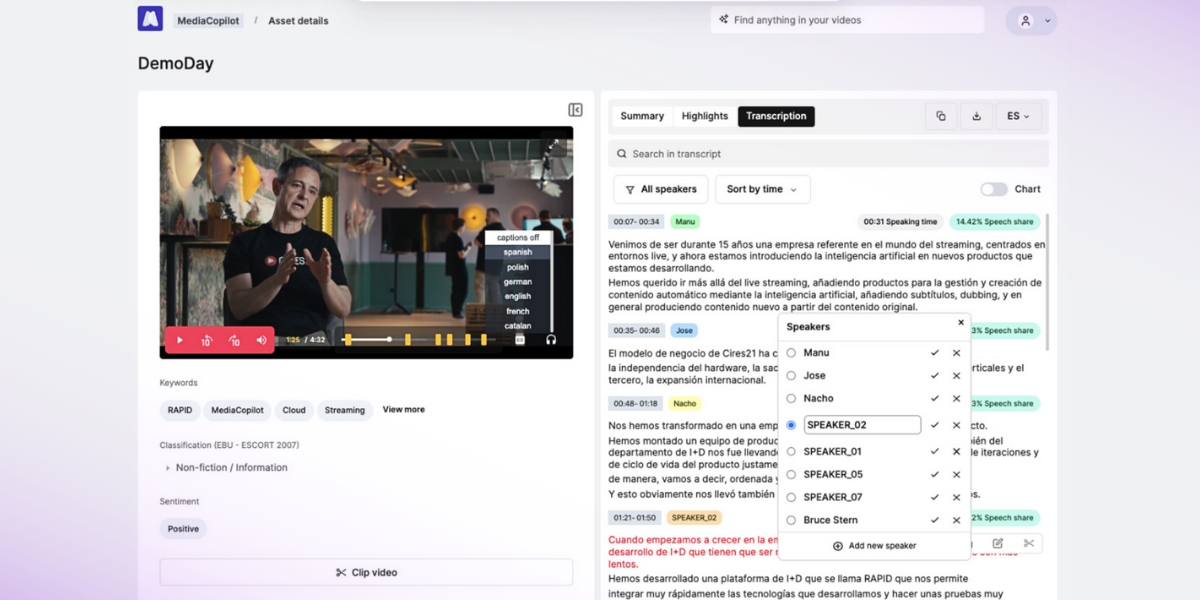
Advances in artificial intelligence and speech recognition have enabled automatic subtitle generation, quickly and at scale. What once required time-consuming manual transcription can now be handled efficiently through automated systems that convert spoken language into on-screen text in real time or during post-production.

This technological shift has opened the door for more agile video workflows, especially for media companies and content creators that publish frequently and across multiple platforms.

Technology Meets Video Production

At the intersection of video production and automation, products like MediaCopilot are helping shape how modern video content is created and distributed. As specialists in video editing, automations, and streaming, they focus on optimizing workflows that allow subtitles and other enhancements to be integrated seamlessly into video projects. This type of expertise reflects a broader industry move toward efficiency without compromising quality.

Accessibility as a Core Value

An essential benefit of subtitles, automatic or otherwise, is accessibility. Subtitles make video content available to people who are deaf or hard of hearing and help ensure that information is not limited to those who rely solely on audio.

Beyond accessibility in the strict sense, subtitles also help viewers who are not native speakers of the video’s original language or who may struggle with accents, fast speech, or background noise.

Subtitles and Viewer Engagement

Subtitles play a significant role in increasing engagement and retention. Studies consistently show that videos with subtitles are watched longer and understood more clearly than those without them. On-screen text reinforces the message, helps maintain attention, and reduces the likelihood that viewers will scroll away before the video ends.

For publishers and media outlets, this translates into better performance metrics, stronger audience connection, and higher overall content value.

The SEO and Discoverability Advantage

Automatic subtitles also offer indirect benefits for search engine optimization. While search engines cannot “watch” videos in the traditional sense, subtitle files provide text-based data that can be indexed. This makes video content more discoverable and improves its chances of appearing in relevant search results.

For digital publications, subtitles represent an additional layer of visibility in an increasingly competitive online environment.

Challenges of Automatic Subtitling

Despite their advantages, automatic subtitles are not without limitations. Accents, industry-specific terminology, proper names, and multilingual content can still cause inaccuracies. For this reason, many organizations combine automation with human review to ensure clarity and correctness.

This hybrid approach balances speed and precision, allowing content to scale without sacrificing editorial standards.

Subtitles in Live Streaming and Real-Time Content

The importance of automatic subtitles becomes even more evident in live streaming and real-time broadcasts. Generating subtitles on the fly makes live events more inclusive and easier to follow, particularly for global audiences and in professional settings such as conferences, webinars, and news coverage.

As live video continues to grow, real-time subtitling is likely to become a standard expectation rather than a bonus feature.

Looking Ahead: The Future of Subtitled Video

As artificial intelligence continues to evolve, automatic subtitles are expected to become more accurate, more adaptable, and more multilingual. Future developments include real-time translation, audience-specific subtitle customization, and deeper integration with video production tools.

In an era where video dominates digital communication and attention spans are increasingly fragmented, subtitles are no longer optional. They are a strategic element that enhances accessibility, engagement, and reach, making video content more effective for everyone.

What Banks Can Learn from Logistics Software When Building AI-First Systems

The intersection of AI in banking and finance and lessons from logistics software may seem obscure at first glance. Yet, it holds a strategic key for financial institutions seeking to build AI-first systems that are resilient and operationally coherent. The logistics industry has long grappled with unifying fragmented data sources, orchestrating autonomous workflows, and managing real-time exceptions across complex networks, challenges that mirror those faced by banks today as they move beyond pilot projects toward enterprise-scale AI adoption. Specifically, modern logistics platforms are engineered to handle high-volume operations with extreme precision, anticipate disruption, and adapt in real time, offering a blueprint for banks to rethink how their own systems ingest, process, and act on intelligence at scale (and not just in isolated use cases). For engineers and architects, this is less about borrowing industry metaphors and more about understanding technical paradigms that have matured under heavy operational constraints.

Drawing on insights from the MIT Sloan Review on why banks should build cohesive AI strategies rather than scattershot deployments, a view backed by four pillars including data improvement and scaled infrastructure, we can extend those principles into actionable design patterns banks rarely consider For grounded guidance on real-world AI application in financial services, additional frameworks such as McKinsey’s AI-bank of the future offer complementary perspectives that align well with the logic of networked, autonomous systems.

The Hidden Parallels Between Banking Systems and Logistics Ecosystems

At their core, both modern banking and logistics systems manage complexity through interconnected workflows, continuous data flows, and operational decisions that should balance speed, accuracy, and risk. Logistics software was engineered from the outset to handle distributed assets and unpredictable conditions, which forced an architecture where data is fluid, orchestration layers are central, and exception pathways are first-class citizens. Banks, on the other hand, historically evolved from legacy ledgers and siloed systems, leading to pockets of intelligence that do not communicate effectively — a challenge highlighted by MIT Sloan as one of the main inhibitors to scalable AI adoption.

Logistics platforms maintain a real-time view of shipments, inventories, vehicles, and partners, continuously ingesting telemetry and external events (weather, delays, customs) so that decisions can be adaptive rather than reactive. In contrast, many banking environments still operate on batch cycles or asynchronous processes, which slow insight generation and inhibit high-speed decision-making models. Banks also struggle with disparate data domains (customer behavior, transaction streams, risk indicators), which makes unified model input pipelines difficult to establish, a core enabler of AI-first systems.

Both industries require precision: logistics should avoid misrouting goods that cost millions in delays, just as banks should avoid errors in risk scoring or compliance decisions that can erode trust and trigger regulatory penalties. Recognizing these parallels allows banking technologists to translate logistics patterns, such as unified data meshes and synchronous orchestration, into financial architectures that support real-time, continuous, and explainable AI behaviors rather than isolated experiments.

Lesson #1: Building a Unified Data Backbone Before Scaling AI

In logistics, a unified data backbone is not a luxury; it’s the foundation that allows autonomous systems to synchronize across thousands of nodes. Telemetry from vehicles, inventory levels, customer orders, and partner statuses all flow into centralized state stores that underpin optimization engines and predictive models. Without this backbone, logistics platforms would resort to brittle point-to-point integrations that fail in the real world. Banks, by contrast, often approach AI with fragmented data siloes based on product lines, channels, or departments, making it difficult to generate consistent, enterprise-wide insights.

A unified data layer for banking means consolidating transaction histories, customer profiles, risk metrics, and external data sources into a harmonized schema that preserves context. It is this contextual richness that turns raw information into intelligence, enabling models not merely to score but to reason across varied scenarios. When banks attempt to scale AI on top of fractured data assets, they inadvertently replicate the spaghetti-like integrations that have historically plagued core banking systems.

Consider how logistics systems use event streams and canonical models to track the state of goods and processes. Banks can apply the same technique by treating every financial event as a first-class entity in a real-time data mesh. This approach enhances situational awareness and enables models to operate against a single version of truth, improving both accuracy and trust. Industry resources, such as the Data Mesh paradigm, offer practical patterns for managing distributed data domains under a unified governance model.

Ultimately, a unified data backbone transforms banks from reporting entities into intelligent systems that can support continuous learning, real-time risk assessment, and pervasive orchestration across every workflow.

Lesson #2: Orchestrated Automation Beats Isolated AI Projects

A common anti-pattern in banking AI initiatives is deploying tactical models, a chatbot here, a scoring model there, without connecting them into an enterprise-wide workflow. This “AI à la carte” approach, cautioned against in the MIT Sloan piece, creates siloed pockets of intelligence that deliver incremental value but fail to shift the operational center of gravity. Logistics software, on the other hand, is inherently orchestrated: autonomous decision engines coordinate scheduling, routing, inventory movements, and exception handling in real time, reducing manual intervention and improving resilience.

Orchestration in an AI-first bank means establishing a control plane that sequences AI tasks, manages dependencies, and ensures consistency across multi-step business processes. For example, onboarding a new client involves identity verification, risk assessment, credit scoring, document ingestion, compliance checks, and portfolio assignment, a workflow that crosses multiple systems and decision points. Without an orchestration layer, banks simply bolt together these models with brittle integration logic that is hard to monitor, debug, or scale.

Lesson #3: Digital Twins Show Banks How to Pre-Test Complex AI Flows

What Banks Can Learn from Logistics Software When Building AI-First Systems

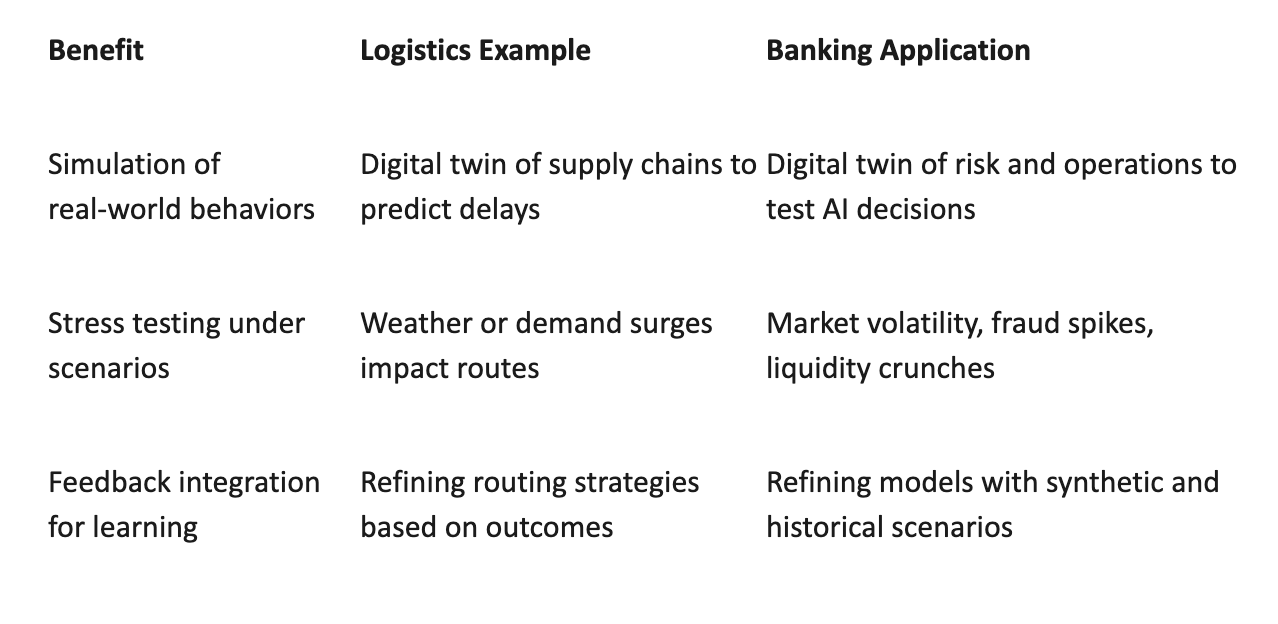
Logistics organizations use digital twins, dynamic, high-fidelity simulations of physical assets and networks, to validate strategies before they touch real-world operations. In banking, digital twins are often used at a high level (e.g., economic models) but rarely as executable simulations of operational AI workflows. Adopting this pattern allows banks to test complex multi-agent systems involving risk, compliance, customer behaviour, and capital flows in a sandboxed environment. This reduces the risk of unintended consequences when models interact in unanticipated ways.

In logistics, digital twins ingest real-time and historical data to create a living simulation where AI agents optimize decisions. Banks can adapt these techniques to simulate scenarios such as liquidity stress, spike in fraud attempts, or regulatory demands in real time. By doing so, banks gain deeper insights into model behaviour, dependencies, and failure modes before exposing customers or regulators to potential risks.

Lesson #4: Logistics Software Treats Exceptions as Design Inputs, Banks Should Too

One of the key reasons logistics software is robust is that it assumes exceptions will happen and treats them as first-class design inputs. Route cancellations, carrier failures, and inventory shortages are built into orchestration logic so systems can adapt gracefully. In banking, suspicious transactions, compliance alerts, and liquidity anomalies are often handled as afterthoughts, bolted onto core processes with manual effort.

Designing for exceptions means building AI systems that don’t just detect anomalies, but adjust operational flows autonomously and transparently. This requires embedding exception patterns into orchestration logic and model-learning loops, so the system evolves in response to real-world conditions rather than reacting post-factum. Exception intelligence, where anomalies reshape future decision boundaries,  enhances predictability, reliability, and governance.

Lesson #5: Real-Time Visibility Is the Cornerstone of Trustworthy AI

Real-time visibility is a hallmark of logistics dashboards that provide minute-by-minute updates across complex networks. Banks should achieve similar observability into AI decision flows to ensure trust, compliance, and performance management. Continuous visibility across models, data pipelines, and decisions empowers teams to detect drift, understand root causes, and enforce governance in line with regulatory expectations. Without real-time observability, banks are blind to emergent risks that can erode confidence and invite scrutiny.

Implementation Blueprint: How Banks Can Adopt Logistics-Style AI Maturity

To operationalize these lessons, banks can follow a phased blueprint:

Phase 1 — Unified Data Backbone:
Consolidate fragmented data into a real-time mesh with governance, lineage, and security controls.

Phase 2 — Orchestration Layer:
Build a centralized engine that sequences decision workflows, manages dependencies, and handles outcomes.

Phase 3 — Digital Twin Sandboxes:
Develop simulated environments to test multi-agent AI workflows against real-world scenarios.

Phase 4 — Exception Intelligence:
Implement feedback loops that adapt models and workflows when exceptions occur, rather than triggering manual follow-ups.

The Strategic Payoff: AI-First Banking Built on Logistics Principles

By learning from logistics software, banks can transition from isolated AI pilots to resilient, integrated, and continuously adaptive AI-first systems. This shift unlocks operational coherence, real-time responsiveness, and a competitive edge in an era where leaders are rapidly pulling away from the pack.

Disclaimer: The information provided in this article is for general informational purposes only. It is not intended as legal, financial, or professional advice. All views expressed are those of the author and do not necessarily reflect the official stance of any organizations or companies mentioned. Readers are encouraged to seek advice from qualified professionals for specific concerns.

Why Your Phone Is Smarter Than You Think And Doesn’t Need the Cloud to Prove It

For years, the standard playbook for machine learning applications meant sending data to remote servers, processing it in massive data centers, then returning results to users. This cloud-centric approach has generally worked but introduced latency, privacy concerns, and dependency on constant connectivity. Edge computing introduces a different model by running inference directly on local devices, such as smartphones, tablets, embedded systems, and specialized hardware. The shift isn’t only about convenience; it also opens up new possibilities in real-time applications, offline scenarios, and privacy-sensitive contexts where sending data externally could create unacceptable risks.

The Case for Local Processing

Cloud inference can create friction in applications requiring immediate responses. A voice assistant that needs to phone home before answering might introduce a perceptible delay that could disrupt the illusion of natural conversation. Real-time audio classification for live performance monitoring may struggle with network round-trip times without introducing timing issues. Medical devices analyzing patient data typically need to function reliably regardless of internet connectivity. These constraints have led developers to consider edge deployment even when cloud infrastructure offers more computational power.

Privacy considerations provide equally compelling motivation for on-device processing. Users are increasingly concerned about sending sensitive data to external servers, whether that’s health information, personal conversations, or proprietary business content. Running models locally means data never leaves the device, minimizing transmission interception risks and reducing the attack surface for potential breaches. Regulatory frameworks like GDPR may create additional incentives by imposing strict requirements on data handling that edge computing can sidestep. When inference happens locally, compliance becomes significantly easier.

Cost and scalability concerns also tend to favor edge deployment for certain applications. Cloud inference charges often accumulate with every API call, creating variable costs that scale directly with usage. A successful application might face exponentially growing infrastructure bills as adoption increases. Local inference can shift costs to one-time model deployment rather than ongoing per-use charges. For applications with millions of users making frequent predictions, this economic model may prove more sustainable. Network bandwidth savings can compound these advantages when dealing with high-resolution audio, video, or sensor data that would otherwise be expensive to transmit continuously.

Technical Challenges of Shrinking Models

The most obvious constraint in edge deployment involves computational resources. A smartphone or embedded processor typically has a fraction of the power available to server GPUs. Running the same models that work smoothly in the cloud might drain batteries in minutes and produce unusable lag. Model optimization becomes a necessity rather than an option, requiring techniques that maintain acceptable accuracy while drastically reducing computational demands.

Quantization represents one key optimization approach, converting model weights from 32-bit floating point precision to 8-bit or even 4-bit integers. This reduction shrinks model size by 75% or more and speeds up inference significantly because integer operations require less power than floating-point calculations. The tradeoff involves slightly reduced accuracy as the model loses numeric precision. Careful quantization can preserve performance on most inputs while making deployment feasible on resource-constrained hardware. Testing across diverse examples helps ensure quantization artifacts don’t create unacceptable behavior in edge cases.

Pruning removes redundant or minimally important connections within neural networks, creating sparser models that require fewer computations during inference. Not all network connections contribute equally to final predictions; many can be eliminated with minimal impact on accuracy. Structured pruning removes entire neurons or filters, creating models that run faster on standard hardware without specialized sparse computation support. The challenge lies in identifying which components to remove while maintaining the performance characteristics users expect. Iterative pruning with retraining may work better than aggressive one-shot reduction.

Knowledge distillation transfers capabilities from large, accurate models into smaller, faster ones suitable for edge deployment. A large “teacher” model trained in the cloud generates predictions on a training dataset, then a compact “student” model learns to mimic those predictions rather than learning from raw labels alone. This approach has been shown to produce smaller models that tend to outperform those trained conventionally on the same data. The student learns not just the correct answers but the nuances of how the teacher model represents uncertainty and relates different categories.

Hybrid Architectures That Split the Difference

Many applications can benefit from combining edge and cloud processing rather than choosing one exclusively. Initial screening or preprocessing happens locally to filter relevant events before sending anything to the cloud. A sound monitoring system might perform simple threshold detection on-device, only uploading audio segments that contain interesting events for more sophisticated analysis. This hybrid approach minimizes data transmission and latency for common cases while maintaining access to cloud capabilities when needed.

Progressive enhancement allows applications to function at basic levels locally while accessing enhanced features when connectivity permits. A music recognition application might perform genre classification on-device instantly, then query cloud services for detailed metadata about specific songs when network access exists. Users get near-instant feedback in all circumstances while benefiting from expanded capabilities when possible. This graceful degradation helps ensure consistent core functionality regardless of external conditions.

Model updating presents another dimension where hybrid approaches excel. Edge models must stay current as new patterns emerge and capabilities improve, but updating millions of deployed devices efficiently requires careful orchestration. Differential updates that transmit only changed parameters rather than entire models can reduce bandwidth requirements. Federated learning frameworks allow devices to improve models locally based on user-specific data, then aggregate improvements across many devices without exposing individual data. These techniques make it possible to achieve continuous model evolution without the privacy and bandwidth costs of centralized retraining.

Hardware Acceleration Making It Practical

Specialized processors designed specifically for neural network inference have revolutionized what’s possible at the edge. Neural processing units, tensor processing units, and similar accelerators deliver orders of magnitude better performance per watt compared to general-purpose CPUs. Modern smartphones routinely include dedicated machine learning hardware that makes sophisticated on-device processing feasible without destroying battery life. These accelerators optimize for the specific mathematical operations neural networks perform most frequently: matrix multiplications, convolutions, and activation functions.

Efficient memory architectures also play an important role because data movement often consumes more power than computation. Accelerators designed for edge deployment minimize data transfer between memory and processors through techniques like in-memory computation and tightly integrated caches. Some architectures support mixed-precision arithmetic natively, running quantized models with maximum efficiency. The close integration of specialized hardware with optimized software frameworks has created an ecosystem where sophisticated models run smoothly on surprisingly modest hardware.

The democratization of edge deployment tools means developers no longer need deep hardware expertise to target these platforms. Frameworks like TensorFlow Lite, Core ML, and ONNX Runtime provide high-level interfaces that compile models for various edge devices automatically. Optimization happens largely behind the scenes, converting trained models into efficient formats suited to target hardware. While expert tuning may still yield better results, the barrier to entry has dropped dramatically compared to early edge deployment efforts that required extensive low-level optimization.

When Cloud Still Makes More Sense

Edge computing isn’t universally superior, despite its advantages. Applications requiring massive computational resources, training new models, processing huge datasets, or running ensemble methods combining multiple large models still need cloud infrastructure. The most accurate models often remain too large for practical edge deployment regardless of optimization. Tasks where latency doesn’t matter, and privacy isn’t sensitive, might not justify the complexity of edge deployment.

Maintenance and updates might favor cloud deployment in some scenarios. Server-side models can be updated instantly for all users, while edge models require device updates that may happen sporadically or never for some users. Debugging issues becomes more complex when models run in diverse environments across millions of devices rather thana  controlled server infrastructure. Security vulnerabilities in deployed edge models could require urgent updates that are difficult to address without reliable update mechanisms.

The optimal approach depends entirely on specific application requirements, user expectations, and resource constraints. Edge computing can enable categories of applications that wouldn’t work with cloud dependency, while cloud infrastructure provides capabilities that are difficult to replicate on individual devices. Understanding the tradeoffs can help developers make informed architectural decisions that match technical capabilities to actual needs rather than following trends. The future likely involves thoughtful combinations that leverage each approach’s strengths rather than dogmatic adherence to either extreme.