Chasing Springsteen, Finding Herself: Anne Abel on High Hopes

By: Michael Beas 

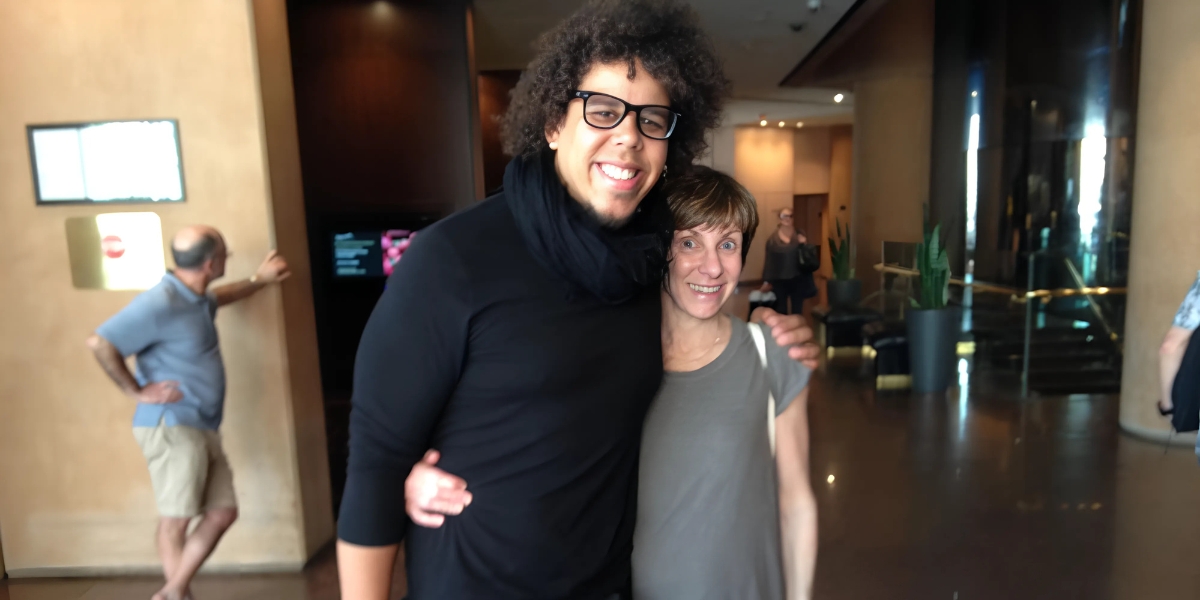
When Anne Abel boarded a plane to Australia to follow Bruce Springsteen on tour, she wasn’t chasing celebrity thrills or looking to cross off bucket-list travel. In fact, as she admits in her memoir High Hopes, she hadn’t even wanted to go. The trip was less about adventure than about survival—a way to keep herself from “falling into the abyss” after a difficult period in her life. What unfolded was a journey that blended the transcendent power of live music with the raw honesty of solitude, fear, and unexpected joy.

No Regrets, Even in Darkness

Asked whether she ever regretted her decision to fly halfway around the world alone, Abel is resolute: “I never regretted going on this trip.” She’s candid about the darker moments—loneliness, depression, even being upset by personal issues back home—but emphasizes that the concerts, the people-watching, and the very act of writing kept her afloat.

Remarkably, what began as a passive exercise—simply marking time until she could return—became a creative lifeline. Friends had asked her to send updates, and soon she found herself writing two- or three-hour emails each morning. “That was all I needed to override the writer’s block,” she reflects. In those emails, she wrote not just about concerts but about aging, culture, and life itself. One morning, an essay by Roger Angell in The New Yorker about being 93 struck a chord with her. “Aging is something I wonder about,” she confesses. “How I will be able to cope with each additional decade.” Writing through those thoughts became as essential as attending each show.

In retrospect, Abel realized something profound: “Each time I felt myself edging close to the abyss, I managed on my own to pull myself back from the edge.” That strength—discovered not in glamorous moments but in quiet persistence—became one of the memoir’s most powerful undercurrents.

Fear in the Hunter Valley

For all the joy Springsteen’s concerts brought, there was one night that veered dangerously close to nightmare. In Hunter Valley, wine country two hours from Sydney, Abel had arranged for a driver to take her to and from the show. When the concert ended, she joined 20,000 people pouring out into the night only to discover her driver wasn’t answering the phone.

The scene, as she describes it, was surreal and frightening: thousands of cars gridlocked in a one-street town, security guards demanding she move along, and a phone that—when it finally rang—slipped from her hand and shattered on the pavement. “I wanted to sit down and cry. And cry and cry,” she recalls. Instead, she took a deep breath, collected the pieces, and methodically reassembled the device. Miraculously, it worked.

The driver, it turned out, had fallen asleep. But Abel had already endured the real ordeal: the terror of being stranded at 1 a.m., alone in a foreign country, and the small but extraordinary triumph of solving a problem she once thought impossible. “I am not good at puzzles,” she laughs, admitting that jigsaws are something she always avoids with her family. But that night, piecing her phone back together was nothing less than a lifeline.

The Kangaroo Question

Friends back home had urged her to see Australia’s iconic wildlife. For Abel, though, sightseeing wasn’t the point. “My whole life I have done things I ‘should,’” she explains, wary of chasing someone else’s checklist. She was content staying in her hotel, people-watching, writing, and hoping for a glimpse of the E Street Band.

Yet in Brisbane, with a free day and no bustling lobby to occupy her, she finally agreed to a trip to a koala and kangaroo sanctuary. What followed was a whirlwind of experiences that defied her initial indifference: holding a koala that happened to match her trademark green T-shirt, feeding kangaroos, and even receiving unexpected kindness from strangers—taxi drivers and ferry staff who went out of their way to make sure she made it to the sanctuary on time.

But the most memorable souvenir wasn’t the animals. On her way back, she stumbled upon a multi-arrow signpost pointing to cities around the globe, each marked with its distance from that spot. Standing there, far from home but strangely connected to the wider world, Abel asked someone to snap her photo. “It is my favorite photo from the trip,” she says, proof that the best discoveries are often unplanned.

Music, Resilience, and Meaning

In High Hopes, Abel doesn’t just recount concerts or travel mishaps. She examines how art, solitude, and vulnerability can reshape a life. Whether navigating fear in Hunter Valley or savoring validation from a young fan who dared to dance because she did, her journey is less about Bruce Springsteen himself and more about what his music unlocked within her.

Through the beat of live shows and the silence of hotel rooms, Abel confronted loneliness, aged perspectives, and the unexpected strength of her own resilience. She may have started the trip as a reluctant traveler, but by the end, she had written her way out of the abyss and into something larger—a story worth telling, and now worth reading.

Life Lessons Forged in Work and Words: The Authority of Ted Chenault

By: Donald M. Leggett

A Life Built on Experience

Authority is not borrowed; it is earned through years of labor, choices, and the courage to begin again. Some people live a steady and predictable life. Others, like Ted Chenault, live many in one. Born in Michigan in 1956, Ted’s journey carried him from electrical work to homebuilding, from bar ownership to authorship. His path shows that actual authority in memoir writing comes not from imagination but from a life fully lived.

The Path of a Builder and Provider

At just 18, Ted began working as an electrician. By 19, he had relocated to Texas, quickly rising as a skilled carpenter and running two homebuilding crews. Over time, he earned both a master electrician license and a contractor license, building houses and providing electrical services in Michigan and Texas. But his work was never only about tools and blueprints; it was about responsibility, problem-solving, and creating something lasting. These qualities later became part of his writing voice.

Strength Found in Family and Relationships

Life at home shaped him as much as life on the job. Ted married young, divorced, remarried, and raised three daughters with his second wife. He endured the challenges of separation, the responsibility of fatherhood, and the lessons of resilience. Later marriages, including the lasting happiness he found with his current wife, taught him about love, loss, and the renewal that comes with it. These experiences formed the emotional foundation for the themes of resilience and redemption that are woven throughout his memoir, Eddy’s Life with Crime and Passion.

An Entrepreneurial Spirit

Beyond building and electrical work, Ted pursued business ownership. He bought and sold bars in Michigan and Texas, eventually establishing a successful bar that he continues to operate today. Running a business deepened his understanding of risk, persistence, and the importance of community. It also gave him a front-row seat to human nature, how people connect, struggle, and search for a sense of belonging. These insights sharpened his storytelling, grounding his writing in real human experience.

From Scrapbook to Story

The spark for Ted’s writing came after his mother’s passing, when he found a scrapbook of family history. Conversations with his father followed, and years of notes eventually became the foundation of his debut book. In 2025, at the age of 69, he published Eddy Life with Crime and Passion. The memoir tells the story of a man whose life moved from crime and hardship to responsibility and redemption, echoing many of the themes Ted himself lived.

What Makes the Book Unique

Eddy: Life with Crime and Passion stands apart because it is written not by an academic or a career novelist, but by a man who lived through grit, hard work, and transformation. Ted’s writing is straightforward, accessible, and honest. He doesn’t embellish; instead, he invites readers into authentic stories, such as the moment Eddy received a $20 bill at a shoeshine stand, which shows how small acts of kindness can alter the course of a life. Such details give the memoir both credibility and emotional weight.

Authority Through Lived Truth

Ted Chenault’s authority as an author comes not from theory but from decades of labor, love, loss, and perseverance. His life grants him the right to write about resilience, redemption, and memory. Readers trust his voice because every page carries the weight of lived truth. His journey reminds us that our past does not confine us; it can be the foundation for something greater.

Final Words

Ted Chenault proves that authority in memoir writing is earned through experience. His roles as builder, husband, father, businessman, and now author reveal that wisdom is not given but forged. Eddy Life with Crime and Passion is more than a book; it is a testament to resilience and reinvention.

 Be Inspired by a Life Rebuilt

 Discover Ted Chenault’s remarkable journey in Eddy Life with Crime and Passion. This memoir is a reflection of nearly seven decades of survival, honesty, and legacy. Order your copy today and be inspired by a story grounded in real life.

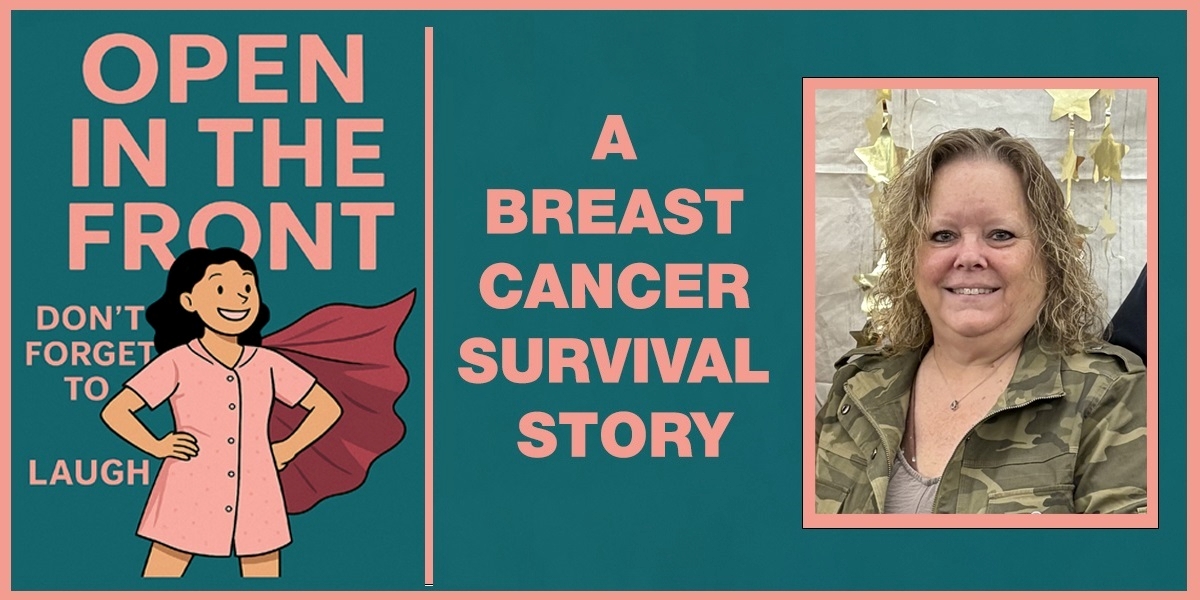
She Named Her Tumor: How Aimee Kintzel Turned Breast Cancer into a Comedy of Courage

By: Kimberly S. Knutson

When Aimee Kintzel first heard the word “malignant,” she didn’t immediately dissolve into tears or rush to the internet for survival statistics. Instead, she took a deep breath, tilted her head, and thought, well…this tumor needs a name.

That one decision to meet cancer with wit instead of fear would become the heartbeat of her journey and the soul of her memoir, Open in the Front.

“I decided right then cancer wasn’t going to have the last laugh,” she says.

Redefining the Cancer Story

Kintzel’s memoir doesn’t read like a medical manual or a motivational seminar—it’s a candid, laugh-out-loud confessional that invites readers into the most vulnerable chapter of her life. There are awkward hospital gowns, clinic visits turned into comic skits, and moments where humor becomes the only lifeline. She doesn’t shy away from fear. Instead, she shares it openly, often wrapped inside a joke, proving that courage isn’t necessarily the absence of terror, but rather the ability to smile in its presence.

Through each chapter, Kintzel reflects on how humor has the power to transform the experience, not by diminishing the seriousness of the situation but by allowing her to take control of it. Humor gave her the ability to face not just the cancer, but the many emotional challenges that came with it, offering her a coping mechanism when others may have felt helpless.

Finding Humor in the Hardest Days

Aimee’s brand of humor isn’t about pretending everything is fine. It’s about reclaiming some level of control over a situation designed to strip it away. She finds comedy in waiting rooms, turns medical procedures into punchlines, and treats each day as an opportunity to write a new scene in her unscripted, unsensitized life story.

It’s not about brushing off the struggles she faced, but rather about finding a way to laugh in the face of adversity. By embracing humor, she discovered the strength she hadn’t anticipated, and it became a tool that helped her heal both physically and emotionally.

The Power of a Village

Her journey is also a love letter to the people who showed up for her—her husband Jim, a constant source of strength; friends who offered food, comfort, and distraction; and colleagues who knew when to make her laugh. In their own quiet ways, they became co-authors of her survival story.

Through them, she discovered the importance of community during hard times, realizing that strength doesn’t come only from within, but from the connections we share with those who lift us up. These people provided not just support, but a way to find humor and joy even when things seemed bleak.

A Story That Speaks Beyond Cancer

What makes Open in the Front universally appealing is that it isn’t only about breast cancer; it’s about facing any of life’s unwelcome plot twists with honesty, humor, and grace. Whether you’ve battled illness or simply endured a season of uncertainty, Kintzel’s voice resonates like that of a trusted friend who says, “I’ve been there, and yes, you can still laugh.”

Her story speaks to anyone who has ever faced challenges—whether they are physical, emotional, or personal—and reminds them that humor is not just a relief, but a vital part of the healing process. In a world where we often fear vulnerability, Kintzel’s journey shows us the power of embracing it.

Success Beyond the Page

That mix of courage and comedy hasn’t just touched readers’ hearts; it is also turning heads in the publishing world. Open in the Front has been earning prime placement on bookstore shelves, with front-of-store displays introducing her story to new audiences every day.

It’s a sign that Kintzel isn’t just surviving her diagnosis; she is thriving, making a name for herself as a writer whose voice refuses to be ignored. Her memoir is not just a personal triumph; it’s a reminder of the universal human ability to find strength, joy, and laughter in the face of adversity. This has led to her gaining attention beyond the page, with many eager to hear more of her perspective on life, humor, and resilience.

Bottom line: Aimee Kintzel shows that sometimes the bravest thing you can do in the face of fear is crack a joke and that laughter, even in the darkest moments, can be life-saving.

Unmasking the Silent Epidemic: One Woman’s Battle with Anxiety and the Broken Systems Meant to Help Her

By: Elowen Gray

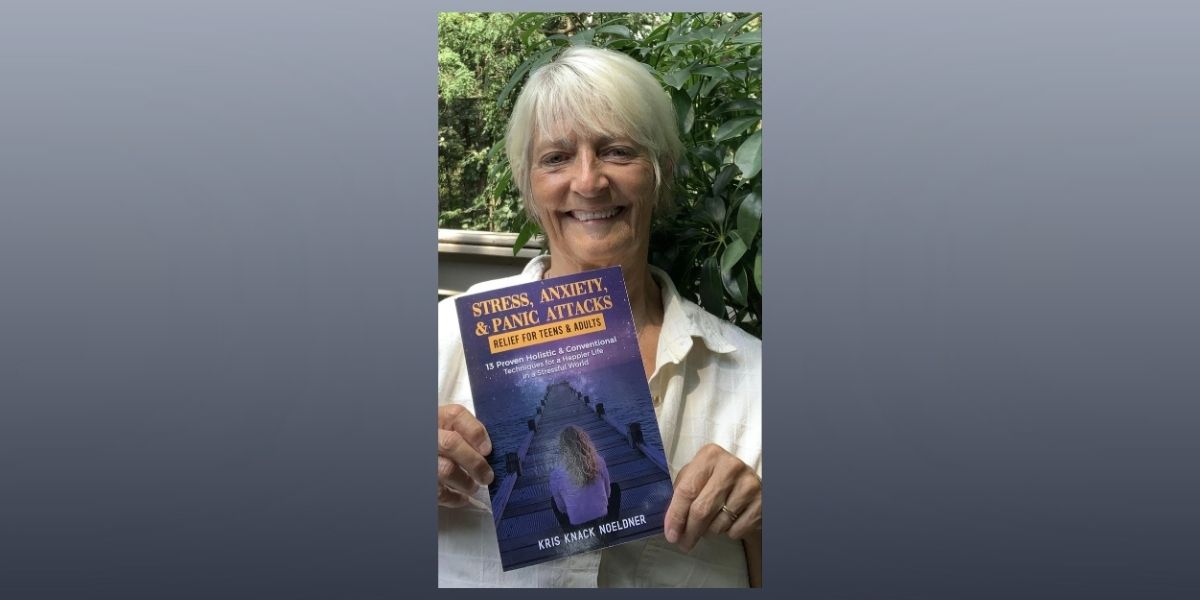
In a country where panic is common and calm is commodified, where overwhelmed teens are told to “toughen up” and adults self-medicate just to get through the day, Kris Knack Noeldner’s book Stress, Anxiety, & Panic Attack Relief for Teens & Adults reads like a wake-up call. 

But make no mistake: this is not another breathy self-help volume dripping in toxic positivity.

It’s a declaration.

A lived manifesto.

And a lifeline—written by someone who has navigated the dark terrain of anxiety and come out the other side with tools, truth, and something our mental health culture often lacks: compassion without condescension. 

The System Isn’t Just Failing—It’s Silent

Let’s start here: mental health care in America is reactive, fragmented, and often unaffordable. Therapy waitlists are months long. Teens are drugged before they’re heard. Adults are dismissed unless they collapse.

And behind these statistics? People like Kris.

Her anxiety began early. Her panic attacks weren’t dramatic—they were invisible. Unnamed. Like so many teens, she didn’t know what she was feeling—only that it felt like she was drowning in her own mind.

“I thought I was dying,” she writes. But the ER visits didn’t help. The fear remained. The system wasn’t built to translate her symptoms—it was built to contain them.
Sound familiar?

It should.

Millions experience what Kris did—a silent epidemic of inner chaos with no clear path forward. 

Emotion Isn’t a Disorder. It’s Human.

The most radical truth this book tells? That your anxiety doesn’t make you broken. It makes you human.

Anxiety, panic, exhaustion, burnout—these aren’t diseases in need of suppression. They’re signals. Warnings. Your mind and body are begging for a different pace, a different input, a different life.

But instead of listening, we are numb. We distract. We scroll. We shame.

Stress, Anxiety, & Panic Attack Relief flips that script.

It teaches us to listen—to the breath, to the body, to the words we whisper to ourselves when no one’s watching.

This book doesn’t deny the realness of suffering. It contextualizes it.

And it does something most wellness books don’t: it includes the science without losing the soul.

A 13-Tool Survival Kit That Should Be Public Policy

Kris doesn’t just tell you what worked for her—she hands you the playbook.

Her 13 holistic and research-backed tools should be taught in schools, shared in hospitals, and integrated into therapy. Some are simple—breathing techniques, music therapy, nutrition shifts. Others go deeper—neuroplasticity through self-talk, trauma release through movement, and spiritual realignment.

Every tool is accessible. None of them requires a diagnosis, a co-pay, or a perfect past.

This book isn’t just healing.

It’s democratized healing.

And in a system where access is everything, that alone makes it revolutionary.

What About the Teens?

This book doesn’t just speak to teens—it fights for them.

Kris writes directly to a generation born into crisis: school shootings, social media perfectionism, economic uncertainty, and climate doom. She sees their fear—not as a flaw, but as a symptom of a society spinning too fast to hold them.

And she doesn’t sugarcoat it.

She names the pressure, the genetics, the brain chemistry. She points to real science. Then she offers real tools. Breathing that actually works. Affirmations that click in. Self-defense that builds not just safety, but self-trust.

If you’ve got a teen who’s struggling, this book might just do what therapy often fails to: make them feel seen.

When the ER Doesn’t Help, the Breath Might

One of the most powerful parts of Kris’s story is her turning point. Not in a hospital. Not in a psychiatrist’s office. But in her own home, on a yoga mat, learning to breathe again.

We don’t talk enough about this.

How many lives could be changed—saved—by daily practices like Tai Chi, tapping, or sky breathing?

How many panic attacks are mislabeled “episodes” when they’re really cries for reconnection?

This book proves that healing isn’t always a prescription pad. Sometimes, it’s a playlist. A mantra. A glass of water. A walk.

Sometimes, it’s a sentence like: “You are not broken. You are responding appropriately to a world that forgot how to feel.”

Music, Movement, and the Fight for Neurodiversity

Kris’s approach is deeply inclusive. Her tools work across diagnoses, ages, and belief systems. And that’s not an accident.

This isn’t about “fixing” people.

It’s about freeing them.

From shame. From perfection. From the cultural lie that only experts have answers.

She brings in music therapy and healing frequencies—scientifically supported yet often dismissed in mainstream care.

She speaks openly about martial arts—not for combat, but for confidence.

She even reclaims humor as medicine.

This is what reform looks like: not policy papers, but lived blueprints.

The Politics of Panic

Don’t mistake this for a personal story alone. It’s a social critique.

Because when a woman has to figure out how to manage a lifetime of anxiety on her own—with breathing, with food, with neuroscience—because the institutions that were meant to help her, fall short, that’s not just personal. That’s political.

This book asks:

  • Why is anxiety normalized, but healing stigmatized?
  • Why are we trained to fear emotion, rather than interpret it?
  • Why aren’t breathwork, nutrition, and music standard tools in primary care?

The answers aren’t in a DSM.

They’re in Kris’s story.

And they’re in yours, too.

For the Fighters, the Feelers, the Forgotten

This isn’t a book just for the “anxious.”

It’s for anyone who’s ever:

  • Felt too much
  • Been told to “get over it”
  • Gone to the ER, heart pounding, and left with a bill and no answers
  • Looked at their teen and wished they knew what to say
  • Scrolled until their soul felt numb 

If you’ve ever fought to keep your calm while the world spun out—this book is yours.

Final Word: Heal Loud

Kris Knack Noeldner’s Stress, Anxiety, & Panic Attack Relief for Teens & Adults isn’t just a book. It’s resistance. It’s reclamation.

It’s a quiet revolution—one deep breath at a time.

And in a culture that profits from your panic?

Choosing peace is a radical act.

How to Get the Book

Stress, Anxiety, & Panic Attack Relief for Teens & Adults by Kris Knack Noeldner is available now on Amazon, and wherever empowering books are sold. Because real tools for real people shouldn’t be hard to find.

For purchasing a book, interviews, events, or to connect with the author, visit:

Facebook
Instagram
Website
Amazon – Stress, Anxiety, & Panic Attack Relief for Teens & Adults 


Disclaimer: The information provided in this article is for general informational purposes only and should not be construed as medical or psychological advice. Mental health and well-being are highly individual, and strategies for coping with anxiety, panic, and stress may vary. Readers are encouraged to consult with healthcare professionals for guidance and support regarding their mental health needs.

Spiritual Détente: Making Peace with the Past through Poetry

By: Elowen Gray

Exploring Jeanne Andrea Di Grazio’s Poetic Journey in Orange Shoes

This very moving book, Orange Shoes, Spiritual Détente, is an invitation into the soul’s healing, memory, and spiritual reconciliation. Using haunting imagery and intimate reflections, Di Grazio creates a poetic space in which the past is neither an eternal prison nor an endless sorrow but rather a landscape to be delicately traversed and ultimately embraced. Spiritual Détente, the title of the collection, speaks poignantly to this theme of finding a truce—some semblance of peace—with one’s memories, losses, and the echoes of those long departed.

The Weight and Wonder of Memory

Orange Shoes is, above all, a meditation on memory, its power to wound, and its ability to heal. Combative representations of longing, such as “The Bathrobe” and “The Sink” (Trinity), enact instances of precarious loss—such as the intimate detail of remembering to hold an empty bathrobe of a loved one, or the very essence of life washing down the drain —become metaphors for grief and the transience of existence. The memories conjured are painted tenderly, never avoiding the ache, yet never allowing it to define the speaker entirely.

The collection’s poems do not merely speak of the past; they grapple with it. The speaker stands between a threshold of memory and acceptance, questioning identity, love, and faith. In Existence, the silent pondering of the poem portrays a soul in search of meaning other than lament and regret. This tension between desiring to hold on to the past and learning to let go becomes the emotional pulse of the collection within. 

Spiritual Healing Through Poetic Reflection

More than an apprehension wallowing in nostalgia, Spiritual Détente is the quest for peace. And there is no escaping the notion of détente, where hostilities have thawed, for Di Grazio’s verse propounds that this thawing is as much spiritual as it is emotional. The poems thus enter into a dialogue with that tightening of earthly pains against the vast understandings of life with its impermanence and interconnection. 

In Dream of the Blue Moon and Sea Turtles, a conjuring of mysticism and eternal magic suggests that the grace of the Spirit offers consolation and renewal. In Kind, In My Thoughts, and In My Words tells, with love and empathy, just how healing comes not solely through solitude but with the connections made with others.

Nature, Time, and Life’s Flow

Nature imagery crowns Orange Shoes, hence carrying forward the themes of transformation and renewal in its wake. Acorns tumbling, leaves losing color via cinnamon sienna, and water flowing over pebbles symbolize the very cycles of death and rebirth, loss, and growth. These natural beings become the stage for the projection of the speaker’s internal landscape, emphasizing how time reframes loss and memory. 

The poem Abacus conceives the metaphor of a confined road toward a predetermined junction of life. Though life may seem divided by fate, a realization of the spiritual connection offers a route to freedom within time. 

Embracing the Past to Move Into the Future

Orange Shoes becomes the gesture of taking all of the past on board and softly into itself: to accept pain and not go under, thereby finding inner peace. Di Grazio, with her poetic voice, comes to tenderness, frankness, and rich texture, portraying the palette of experience as utterly human. 

The laments for and the struggle with our own histories are found in Orange Shoes, which is not merely an avenue for cathartic release but a glimmering hope. It reminds us that doves of peace with the past can fly graciously onto a healed future via the conduits of remembrance, love, and spiritual reflection.


Orange Shoes (Spiritual Détente) by Jeanne Andrea Di Grazio is a monument to the therapeutic value of poetry, providing a haven where one can find serenity and commemorate the past.

Andre Jackson Delivers Adventure and Legacy in Naomi The Lost World of Atlantis

By: Elowen Gray

When Andre Jackson talks about his first book, Naomi: The Lost World of Atlantis, his voice exudes the same energy that propels his book: vision, perseverance, and the conviction of heroes emerging from humble beginnings.

“I wanted to write an all-female hero,” Jackson explained to NY Weekly during a recent interview. “Someone who could save the world on her own.”

It is this desire that gave rise to the name Naomi, the young heroine at the center of Jackson’s epic fantasy adventure. Naomi was inspired by his niece and painted as a heroine of will and grit, a woman who refuses to quit, regardless of the hurdles she faces.

A Story Tied to Myth and Tradition

Naomi: The Lost World of Atlantis is more than a fantasy novel, but a blend of Egyptian mythology and Atlantean legend. Naomi and her brother, Nuru, are the protagonists in the novel as they embark on a perilous quest to discover their mother’s destiny and the reason behind their bloodline.

Guided by visions and gifted with a golden spear inherited from their mother, Naomi is a symbol of bravery. She and Nuru cross deserts, abandoned villages, living forests, and old pyramids. Each step brings them closer to Atlantis and headlong into battle against two powerful enemies: the Keeper of the Clock, a one-eyed man who controls time, and Kaelen, a dark betrayer of the past.

For Jackson, the spear itself has more than one meaning. “Her mom gave it to her a long time ago,” he said. “It became complete after both parts of the spear came together as a whole. To me, it stands for memory, family, and truth.”

The Birth of Naomi

When questioned about the creation of Naomi, Jackson hesitated not at all: “I modeled her after my niece. She’s so sweet, and she does just what Naomi does. I wanted her to symbolize young women who never quit, even when the world tries to bury their light.”

Through Naomi’s struggles, readers are invited to see reflections of their own resilience. Her journey is not only a fight against mythological forces but also a metaphor for overcoming adversity, holding on to truth, and honoring family legacies.

A Vision Turned into a Book

Jackson’s journey to becoming an author is as fascinating as the tale that he’s sharing. While the concept, in fact, hit him years ago in a dream, he was seeing Egyptian legends crash into Atlantis, it wasn’t until recently that he molded it into a manuscript.

“I had the vision a long time ago,” he said. “But when I sat down, it only took me about a month and a half to write. Once I had the vision, I knew how to put everything together.”

The outcome is a book that reads both quickly and intensely personal, setting up what Jackson assures will be a sequel.

Influences and Inspirations

Jackson is quick to credit the authors who influenced his imagination. “Stephen King is the GOAT to me,” he chuckled. “And S.A. Cosby, too, he’s from right near where I grew up in Virginia. Their styles gave me a blueprint for storytelling, combining imagination with what’s really going on in the world.”

It’s a combination that’s experienced in Naomi: The Lost World of Atlantis: magical worlds overlaid with emotional realities about family, loss, and determination. 

Who Can Resonate with Naomi?

Jackson views his readership as young adults and adults alike. “The young readers will relate to the journey of Naomi and Nuru, seeking truth while coming of age. But adults will realize why their mother kept secrets for their protection. It’s the best of both worlds.”

A Story Built for the Screen

With its blend of mythology, fantasy, and action, Naomi already feels cinematic. When asked who he’d like to see play Naomi in a film or series adaptation, Jackson admitted he hasn’t chosen specific actors yet. “I’d want strong, young, and mature actors who can bring depth to Naomi and her mother,” he said. For now, he’s focused on letting the book reach readers and spark imaginations.

A Legacy in Motion

Naomi: The Lost World of Atlantis is not just an adventure; it’s a tale of courage, family, and the strength of memory. Naomi and Nuru’s adventure is just beginning, and Jackson is already creating the next installment of their story.

For readers, the novel is a welcome into a mythic realm in which the past and future intersect, and where a young heroine demonstrates that the struggle for truth and heritage is worth it all.

As Jackson said best: “Naomi shows that no matter how hard things get, you don’t give up. You keep searching, you keep fighting, and you keep the light alive.”

Exploring BeFreed: A Personalized Approach to Micro Learning in 2025

In 2025, micro-learning apps have become increasingly popular for those seeking efficient ways to consume knowledge. With time in short supply, busy professionals, lifelong learners, and students have turned to AI-powered tools that condense books and insights into more digestible formats. In this post, we focus on BeFreed, a platform that could be a useful option for users seeking a personalized learning experience.

What Is a Micro Learning App?

A micro-learning app offers condensed, high-value educational content—often in the form of book summaries, flashcards, or short podcasts. These tools use formats such as audio, video, and interactive learning paths to help users absorb knowledge efficiently. In 2025, innovations like AI personalization, visual learning, and dynamic podcast feeds are changing how people engage with nonfiction content.

BeFreed — An AI-Personalized Micro Learning App

BeFreed is an AI-powered learning app designed to personalize the learning experience for each user. While some apps offer quick summaries of content, BeFreed takes a more immersive approach by transforming long-form content—books, expert talks, and research—into engaging, podcast-style micro-lessons.

  • Personalized podcast feeds with tone, depth, and energy that adapt to your preferences
  • AI-curated content from bestselling books, research, and expert talks
  • Learning modes: 10-minute, 20-minute, or full 40-minute deep dives
  • Flashcards, immersive video summaries, and custom learning paths

Why It Stands Out: BeFreed offers more than simple summaries. It adapts to your goals, mood, and learning style, helping you retain knowledge in a way that feels more aligned with your needs. This could be especially beneficial for those who prefer personalized learning, including individuals with ADHD or those who are visual learners.

Pricing: Free to use; premium plans starting from $12.99/month, with free trials available
Platforms: iOS, Android, Web
Popular In: U.S., UK, Singapore, India, and other tech-savvy regions

What Makes BeFreed Different?

Unlike many other micro-learning apps, BeFreed doesn’t just focus on speed or brevity. While some apps might be designed for quick skimming of content, BeFreed aims to offer personalized, deep learning experiences that are engaging and enjoyable.

For instance:

  • Audio-first learners can enjoy personalized narration, designed to feel more like a natural conversation than a robotic reading
  • Visual learners can access immersive summaries of books, transforming traditional content into visually engaging formats
  • Time-conscious users can opt for shorter 10-minute deep dives or extend the experience with 20- or 40-minute sessions

BeFreed also offers dynamic learning paths that adjust to your pace, helping to ensure that your learning journey feels smooth and well-suited to your schedule. This adaptability sets it apart from apps that may be more rigid in their structure.

Designed for Long-Term Engagement

While other apps focus on speed reading or brief skimming of material, BeFreed is designed to create learning experiences that are engaging and immersive. This is achieved through personalized podcast-style content, immersive video summaries, and AI-powered curation. For those looking to build a long-term habit of learning, BeFreed provides a framework that could help integrate knowledge into daily routines.

While some users may find the personalized features particularly appealing, others might appreciate its balanced approach to content delivery—ensuring both depth and engagement without overwhelming the learner. In a crowded market, BeFreed stands out for its holistic learning experience.

How to Choose the Right Micro Learning App for You

When selecting a micro-learning app, it’s important to consider several factors:

  • Learning style: Do you prefer immersive audio or quick, visual content?
  • Depth vs. speed: Are you looking for deep insights or quick summaries?
  • Topics: Does the app cover a wide range of subjects, such as psychology, investing, or wellness?
  • Personalization: Does it adapt to your individual goals?
  • Formats: Does the app offer multiple learning formats like audio, video, or flashcards?

For those who value personalization and diverse learning formats, BeFreed might be a good fit, offering a more tailored approach to learning.

Final Thoughts & Summary

When considering a micro-learning app, BeFreed offers a robust, personalized learning experience. With its focus on AI-driven content and immersive formats, it provides a dynamic alternative to traditional summary apps. Whether you are a busy professional or someone simply looking to deepen your knowledge, BeFreed may offer a smarter and more enjoyable way to learn. However, as with any tool, it’s important to explore whether its features match your learning preferences.

FAQ

  • What is the ideal micro-learning app in 2025?

While it’s subjective, BeFreed offers a highly personalized and engaging experience, making it a strong option for serious learners in 2025.

  • How does BeFreed compare to other apps?

Unlike many apps, BeFreed offers a more personalized learning experience, with deeper AI integration and multimedia formats. Other apps may be more focused on quick summaries.

  • Can BeFreed help ADHD or neurodivergent learners?

Yes, BeFreed offers personalized pacing and dopamine-friendly formats, which can be helpful for learners with ADHD or those who prefer more engaging content.

  • What makes BeFreed’s podcast AI unique?

BeFreed customizes the tone, length, and energy of each podcast to align with your individual learning goals, making the experience feel more natural and human-like.

  • Is BeFreed free?

BeFreed offers a free version, with a premium option starting at $12.99/month for additional features and content.

A Quiet Return and a Loud City

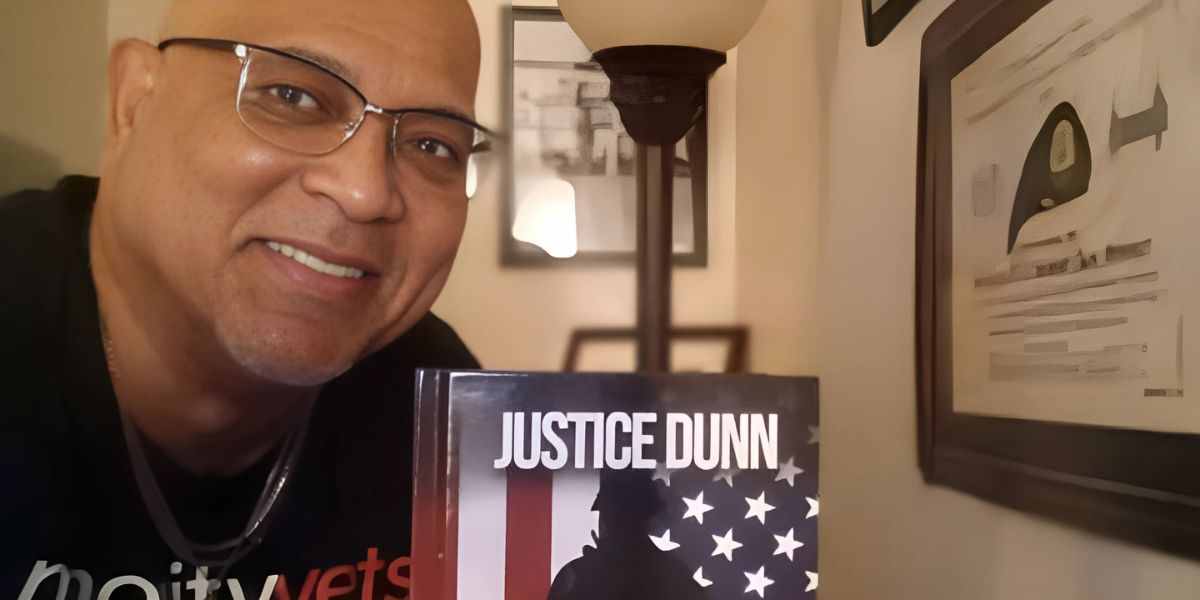
You might have read many books. But we bet nothing like Justice Dunn. 

Justice Dunn is a story about coming home, but also about what happens when home is no longer safe. Justice is a soldier who returns from war carrying memories that do not fade. His parents are gone, his brother is lost in drugs, and his aunt Zula is doing her best to keep the family together. From the first pages, the book makes it clear that the city of Pittsburgh is not the same place he left. Unfortunately for Justice, life in the hood is far worse than before.

Before Sergeant Major Dunn was released from his duties, he endured eighteen months in LRMC, a U.S. military trauma hospital near Ramstein Air Base. His long recovery was the result of a tragic mission in Kandahar, where his platoon came under a brutal ground attack by Taliban rebels during an overwatch operation. The objective of that mission was to secure a remarkable geological discovery, an element unlike anything known on Earth, believed to have drifted through space for thousands of centuries before embedding itself in the region.

As the rebels closed in, U.S. forces monitoring the battle by drone authorized a missile strike to prevent the element from falling into enemy hands. The strike triggered a violent chain reaction, unleashing a cataclysmic explosion that released energies beyond human comprehension. The blast devastated the battlefield, fatally wounding every soldier except Justice Dunn. His survival defied explanation. The exposure to the element left him changed, endowed with extraordinary abilities that no one could fully understand. His recovery, and the truth of what happened that day, became part of a tightly guarded government secret, hidden from the world.

Justice tries to rebuild his life with discipline and faith. His training shapes him, but it does not solve the struggles in his community. He is haunted by dreams of war and by the pull of grief that runs through his family. His brother Jerome represents the darker path of addiction and crime. His aunt Zula shows the steady strength of love and prayer. Between these two, Justice tries to carve out a way to move forward. The story is not about quick solutions but about how difficult it is to bring order to a broken place.

Parallel to Justice’s fight is the story of Amber Paul. She is a young photojournalist working with the Pittsburgh Courier and other local groups. She lives on a modest income but carries big dreams. She wants to write books and one day earn a Pulitzer Prize. Amber’s persistence drives her into the most dangerous corners of the city. She follows stories about drugs, violence, and the slow destruction of communities. More than anything, she is focused on one terrifying case — the hunt for a serial child abductor who preys on the city’s most vulnerable.

Amber is relentless. She talks to witnesses, digs for evidence, and does not stop until she finds answers. Her work places her in harm’s way, but she continues because she knows what is at stake. Her determination brings her closer to the truth and also closer to Justice. Their paths cross as the dangers mount. The two begin to act not only as reporters and veterans but as partners standing against the darkness that threatens their city.

The book shows Pittsburgh as a place in deep conflict. Drugs, greed, corruption, and violence spread across neighborhoods. The opioid crisis destroys families. Murders and crime wear down the community. The presence of the child abductor raises the tension even higher. People are afraid, but they are also desperate for someone to act. In this setting, Justice and Amber become vigilantes. They do what the system cannot or will not do. They fight back against the forces tearing apart their city.

All of this unfolds during the reelection of America’s first African American President. The national moment adds weight to the local struggles. It shows a nation at a crossroads while Pittsburgh faces its own. Rossi does not overstate the politics, but he makes them part of the backdrop that shapes the story.

Justice Dunn is more than a simple return-home story. It is about duty after war, the cost of service, and the courage to face danger close to home. It is about family, truth, and the struggle to protect a community from forces that seem overwhelming. By pairing Justice’s steady sense of duty with Amber’s sharp instincts and persistence, the book creates a portrait of two people who refuse to look away. They rise up as heroes who act when their community needs them most.

If you want to read a unique book that will keep you glued to your seat, this is that book. It is not a glamor tale. It is plain and steady. It looks at grief, recovery, and the messy work of trying to make things right. For readers who value clear storytelling and honest people, Justice Dunn offers a strong, readable portrait of a city and a man who does not give up, at any cost. 

About the Author

Rossano Paul Stewart was born in Duquesne, Pittsburgh, Pa. He has been an Honorable United States Army Veteran since 1977.

He is a graduate of the U.S. Army School of Communications in Augusta, Ga., and served in West Germany as a Communications Specialist during the Cold War. After retiring from the U.S. Army, he returned to New York City and worked at Doubleday Books in the serial rights department as a correspondent.

Rossano later studied Photography at The New York Institute of Photography and is a proud father of three daughters. After his daughters finished college, he returned to Pittsburgh to pursue a career as a photojournalist with the New Pittsburgh Courier and as a feature writer with Newsweek MSNBC on the internet. During that time, he wrote many feature stories and received various awards for his photojournalism from 2006 to 2016.

Justice Dunn is his first fiction novel in the series.

Availability

This book is available on Amazon for purchase: https://www.amazon.com/dp/1088187838. 

Author Name: Rossano Paul Stewart

ISBN Number: 978-1088187838

Ebook Version: Click Here

Paperback Version: Click Here

Kidnapped by Destiny: A Memoir of Faith and Perseverance

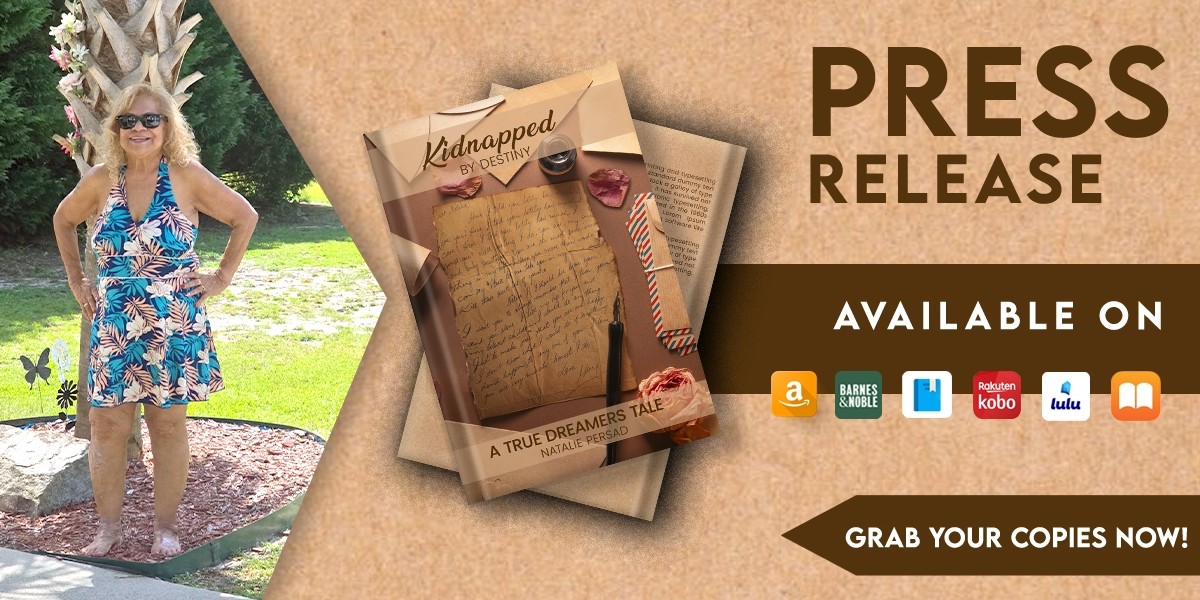
Love stories appear in countless forms, yet only a rare few carve out a legacy powerful enough to inspire across generations. Natalie Persad’s “Kidnapped by Destiny” is one such tale. It begins with handwritten letters and blossoms into a lifelong vow between two souls. What makes this narrative so magnetic isn’t merely the romance spanning miles and decades; it is also the quiet strength of two people who chose faith and perseverance in the face of every trial.

Natalie’s journey takes root on the small island of Wakenaam in Guyana, where she was raised in a large, affectionate family of twelve siblings. Her childhood was enriched with simple treasures: fishing with her father, climbing mango trees, and sharing stories beneath the soft glow of kerosene lamps. Yet life, unpredictable and unrelenting, demanded courage. At just twelve years old, she experienced a vivid dream that foreshadowed an encounter destined to change her path forever, her connection with a young man from Trinidad and Tobago named Guy.

As Natalie’s journey unfolded, she was faced with countless moments that tested not only her resolve but also her vision of love. There were times when the distance between her and Guy felt like an insurmountable obstacle. Yet, she never once wavered in her belief that their bond would overcome every challenge. Despite being oceans apart, their letters served as a constant reminder that love had the power to bridge any divide. In her darkest moments, it was the quiet reassurance of his words that allowed her to maintain hope. This unwavering belief, nurtured through years of waiting, proved that true love isn’t always instantaneous; it often requires time, patience, and the courage to stay committed even when the end is unclear. Their relationship stands as a testament to the quiet resilience that love can inspire in those who are willing to keep fighting for it.

That connection first sprouted through a pen-pal advertisement. What began as innocent correspondence soon deepened into something profound. Their letters became lifelines, carrying laughter, secrets, and solace across the distance. Each envelope delivered more than ink on paper; it carried trust, longing, and the gradual shaping of a love strong enough to endure parental resistance, cultural divides, and the uncertainty of separation. Their journey proves that love can flourish even from the most delicate of beginnings.

Yet “Kidnapped by Destiny” extends far beyond romance. It is a testament to endurance in the face of grief and hardship. Natalie endured the devastating loss of her father at an early age, leaving her family emotionally wounded and financially strained. In those heavy days, Guy’s letters became her anchor. His words offered not just comfort but also a reminder that beauty could still exist even in sorrow. Through that grief, Natalie discovered not only the restorative power of love but also her own capacity to rise above adversity.

In time, the two pledged their vows, sealing a bond that carried them through decades of trials and triumphs. From financial struggles and raising children during difficult seasons to ultimately celebrating forty years of marriage surrounded by family, Natalie and Guy’s union embodies the endurance of love tested by life’s fiercest storms. Each obstacle they overcame added another chapter to a story built not on perfection, but on faith, trust, and steadfast companionship.

What distinguishes this memoir is its authenticity. Natalie does not embellish or idealize; she shares love in its rawest form, both fragile and enduring, vulnerable yet unbreakable. Readers are drawn into her truth, not because it mirrors fantasy, but because it resonates with reality. Each hardship is balanced by joy, every tear answered with laughter, every setback countered with a relentless commitment to keep moving forward together.

Ultimately, “Kidnapped by Destiny” is more than a memoir; it is a reflection of the timeless truth that real love transcends distance, culture, and time. It is also a tender tribute to Natalie’s late husband, Guy, whose presence continues to echo through their children and grandchildren. For anyone searching for a story of lasting devotion woven with lessons of resilience, Natalie Persad’s memoir shines as both a heartfelt testimony and a beacon of hope.

Lessons from Four-Legged Friends: Teri Thomas’ Journey of Love, Resilience, and Self-Discovery

By: Matt Emma

In the tapestry of human experience, the threads woven by our canine companions often add the richest hues. 

Lessons I’ve Learned from the Dogs I’ve Loved by Teri Thomas is a heartfelt memoir that explores the profound impact dogs have on our lives, offering valuable lessons in love, resilience, and self-discovery.​

A Writer’s Genesis Rooted in Family and Encouragement

Teri Thomas’s inclination toward writing was nurtured from an early age. Her father, a sports writer for the Denver Post, introduced her to the world of journalism. 

This familial connection to storytelling was further reinforced by her fourth-grade teacher, Mrs. Foster, who recognized and encouraged her budding talent. These early influences laid the foundation for a writing career that would intertwine with her passion for dogs.

The Therapeutic Power of Writing Amidst Adversity

Growing up as the youngest of six in a challenging household marked by dysfunction and alcoholism, Thomas found solace in writing. It became a cathartic outlet, allowing her to process complex emotions and experiences. 

Through poetry and personal narratives, she navigated the tumultuous waters of her youth, emerging with a profound understanding of herself and the world around her.​

Canine Companions as Life’s Professors

Each dog that entered Thomas’s life served as both a companion and a teacher. From General, the fiercely protective German Shepherd of her childhood summers in New Mexico, to Winnie the Pooh, a border collie mix embodying independence, these animals imparted invaluable lessons. 

Snuffy Smith, a clever basset hound, introduced humor and intelligence, while Hannah Jo, a loyal shepherd mix, showcased unwavering devotion amidst adversity. Through these relationships, Thomas learned about loyalty, resilience, and the nuances of unconditional love.​

Overcoming Challenges and Embracing Authenticity in Writing

Thomas’s writing journey was not without obstacles. Feelings of inadequacy and the struggle to find time were significant hurdles. 

However, by engaging in conversations about her book ideas and recognizing their value to others, she gained the confidence to pursue her projects. She emphasizes honesty in her writing, openly discussing the joys and heartaches of dog ownership, including the difficult decisions that come with it. 

This authenticity resonates with readers, as she presents herself not as perfect but as someone who learns and grows alongside her canine companions.​

A Unique Voice in the Dog Training Genre

In her dog training books, Thomas distinguishes herself by blending scientific information with personal anecdotes and humor. She believes in explaining the reasons behind training methods, moving beyond a simple “do it because I said so” approach. 

This personal touch makes the science accessible and relatable, fostering a deeper connection with her readers.​

Upcoming Projects Addressing Canine Behavioral Challenges

Thomas is currently working on two projects that address specific canine behavioral challenges. One focuses on helping reactive dogs cope with the complexities of today’s busy world, providing owners with strategies to help their pets navigate environmental stressors. 

The other project aims to guide individuals in successfully integrating reservation dogs into their homes, acknowledging the unique needs and backgrounds of these animals. Both endeavors reflect her commitment to enhancing the human-dog relationship through understanding and empathy.​

A Philosophy Grounded in Kindness and Continuous Learning

At the core of Thomas’s worldview is the principle of kindness. She believes that everyone has valuable information to share and that continuous learning from one another is essential. 

Living truthfully, following one’s heart, and maintaining a strong spirit to withstand criticism are central to her philosophy. This perspective informs her writing and interactions within the dog training community and beyond.​

Balancing Personal and Professional Life

Thomas maintains a balanced lifestyle by prioritizing her health, organizing her time effectively, and setting boundaries. 

Despite her public-facing profession, she identifies as a recluse, valuing time spent at home with her husband of over 40 years and, of course, her dogs. Family relationships, though complex due to her upbringing, are essential to her, and she emphasizes the significance of setting boundaries to maintain positivity.

Personal Interests Beyond Writing and Dog Training

Outside of her professional endeavors, Thomas enjoys gardening, reading, listening to music, and writing poetry. 

These activities provide relaxation and creative expression, enriching her life and, by extension, her writing. An interesting facet of her past is her involvement with a band called “Earth Cry” in her late twenties, where she sang and wrote songs about environmental conservation and animal welfare.​

Staying Motivated Through Creativity and Positivity

Thomas stays motivated by embracing creativity, maintaining a positive outlook, and focusing on what matters to her personally rather than conforming to external expectations. 

She prioritizes downtime to recharge and emphasizes the importance of aligning her actions with her values. This approach enables her to overcome obstacles and continue contributing meaningfully to her field.​

Embracing Life’s Lessons Through Canine Companionship

Lessons I’ve Learned from the Dogs I’ve Loved is more than a memoir; it is a testament to the profound impact that dogs have on our lives. Through her heartfelt stories, Teri Thomas invites readers to reflect on their relationships with their pets and the invaluable lessons they impart. 

Her journey underscores the importance of empathy, resilience, and unconditional love, reminding us that understanding our canine companions often reveals more profound truths about ourselves.