

By: Adam Li
Q1: Hey, Yang Yang, welcome. Can you provide a brief summary of your background?
My educational background bridges architecture’s practical and research aspects, providing a solid theoretical foundation and interdisciplinary skill set. I began my Master of Science in Design in Advanced Architectural Design at the Weitzman School of Design at the University of Pennsylvania in 2019, graduating in 2020. After completing my master’s degree, I worked as a Design Coordinator at Contemporary Architecture Practice in New York from 2021 to 2022. Subsequently, I started my PhD program at the University of Liverpool’s Off-Site PhD Program at Xi’an Jiaotong-Liverpool University (XJTLU), where I am expected to graduate in 2025.
This dual background equips me with a unique understanding of architecture. I can approach projects not only from the perspectives of aesthetics and functionality but also delve deeply into technical aspects such as energy efficiency and sustainable development. This comprehensive skill set enables me to integrate architectural aesthetics with energy-saving technologies in my doctoral research, providing more holistic and innovative contributions to the field of architecture.
Q2: Your background is unique, combining practical architecture experience with academic research. Could you elaborate on your experiences in these two areas and their specific focus?
As a Design Coordinator in CAP, I balance functionality, aesthetics, and sustainability with practical considerations such as budgets, construction processes, and client demands. My experience includes large-scale urban development projects like Lijia Smart Park, a 5.5-million-square-foot space integrating technology, artistry, and environmental considerations.
My primary focus was landscape design, where I developed internal site areas and the adjacent park, including greenery, planting boxes, pathways, sculptural staircases, and seating areas. I also created functional zones for VR interactions, outdoor cafés, and light shows. My designs emphasized environmental sustainability while seamlessly blending natural and built elements to enhance comfort, aesthetics, and user engagement.
As a researcher, I focus on exploring the relationship between architecture and energy, particularly residential buildings. Residential buildings account for approximately 30% of global energy consumption, highlighting their significant environmental impact. My research aims to reduce the carbon emissions and energy consumption of residential buildings, contributing to minimizing the environmental footprint of the construction industry.
Beyond environmental benefits, my work provides valuable guidelines for improving architects’ design optimization workflows and advancing sustainability practices. My research has been published in leading conferences. I have also served as a reviewer for several architecture conferences, further contributing to the academic and professional discourse in sustainable architecture.
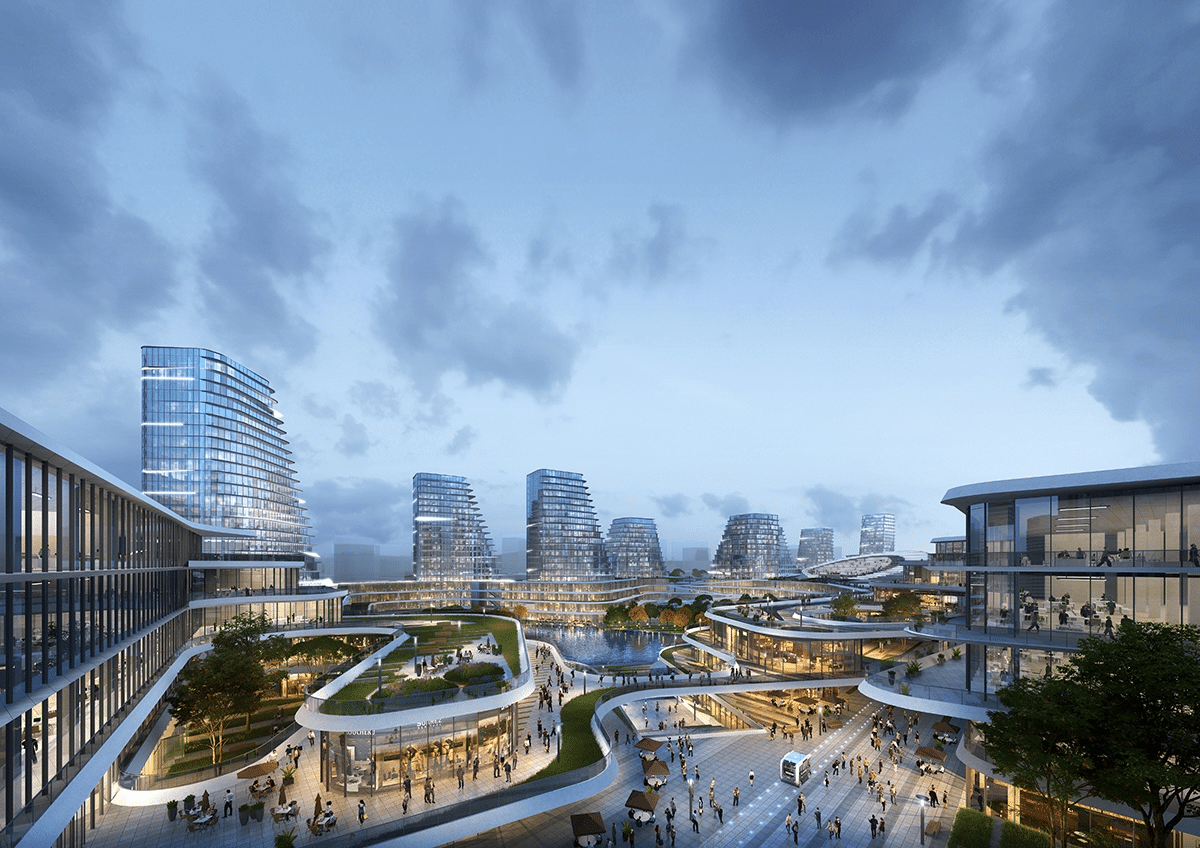
Photo Courtesy: Contemporary Architecture Practice (CAP NEW YORK SHANGHAI)
Q3: Your research has been published in leading architecture conferences. Could you elaborate on the research areas you are currently focusing on?
My research focuses on optimizing the design of residential buildings through a comprehensive approach that integrates whole lifecycle analysis (LCA), building energy simulation, carbon and greenhouse gas calculations, and advanced artificial intelligence (AI) methods, which include evolutionary optimization techniques and prediction models.
The primary objective of my work is to reduce the life-cycle environmental impact of prefabricated low-rise lightweight steel-framed (LSF) residential buildings in the challenging hot-summer-cold-winter climate. This climate zone presents unique challenges, requiring a delicate balance between heating and cooling demands, making it one of the most complex environments for building optimization. In terms of prefabricated LSF buildings, a previous study demonstrated that beyond the use and operation phases, prefabricated LSF buildings have significant potential for reducing greenhouse gas (GHG) emissions. Compared to traditional cast-in-place construction methods, prefabricated LSF buildings can achieve around 60% reduction in GHG emissions during the construction and end-of-life phases combined.
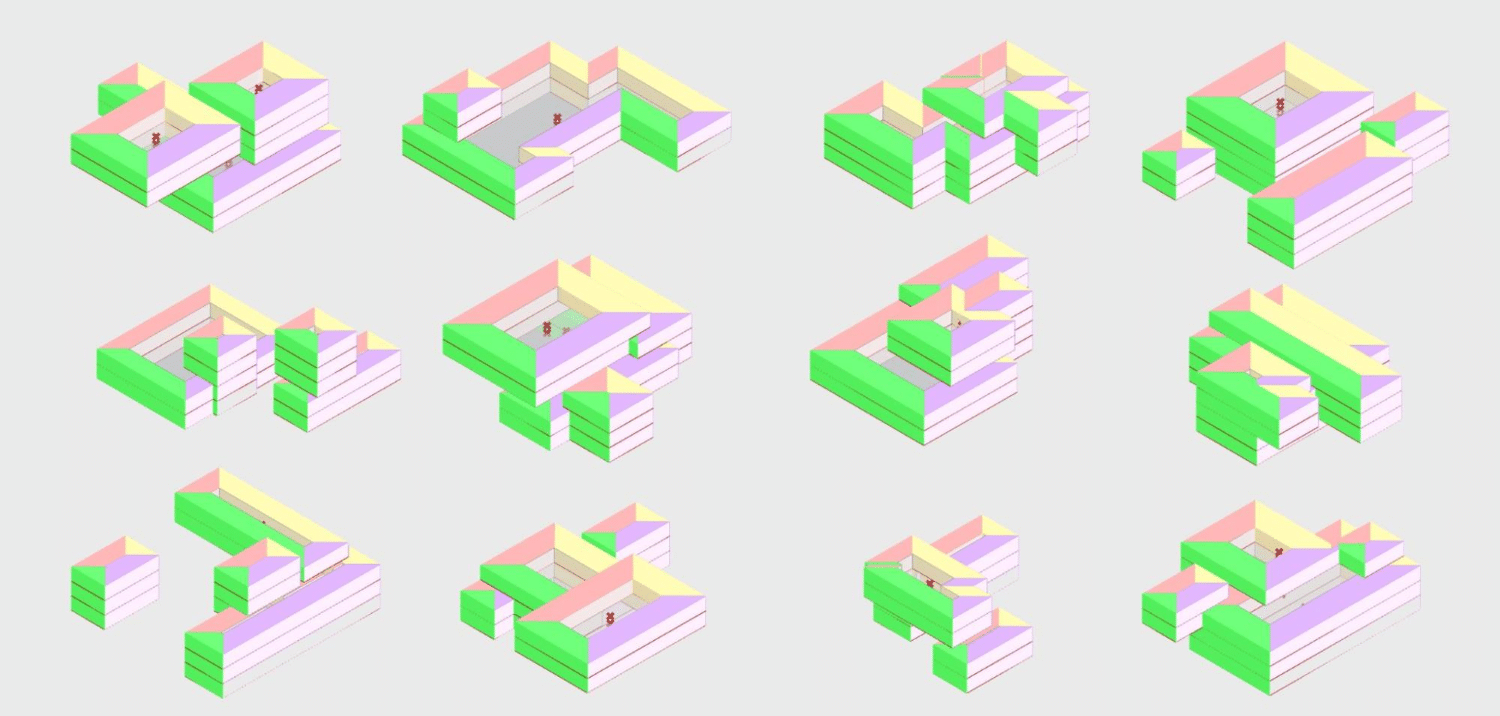
Photo Courtesy: Yang Yang
Q4: Sustainability is a crucial theme in your work. How do you integrate your research methods into practical architectural applications?
One of my primary research focuses is translating my studies into real-world applications to help buildings reduce energy consumption and carbon emissions. I utilize a multi-objective optimization framework (NSGA-II) to analyze key design variables such as window-to-wall ratio (WWR), roof insulation, and window type. Through over 18,792 simulated design iterations for lightweight steel-framed (LSF) houses in hot summer and cold winter (HSCW) climates, I identified strategies that achieve up to a 24% reduction in energy use, including a 26% decrease in heating and 56% in cooling energy.
Building on these findings, I collaborated with a leading Chinese construction and design firm to translate my research into real-world projects. Through on-site measurements, construction data collection, and analysis of lifecycle carbon emissions and thermal performance, I optimized critical architectural variables to enhance energy efficiency, achieving an approximate 25% reduction in emissions.
I continuously refine the tools and optimization methods to remain adaptable and scalable. My work influences individual projects and the broader residential construction industry. It bridges the gap between research and practical application, delivering measurable improvements in sustainable architecture.
Q5: As a researcher, what innovative studies have you conducted, and how do they contribute to advancements in the architecture and construction industries?
As a researcher, I have conducted innovative studies integrating advanced AI methods with sustainable building design to address critical challenges in the architecture and construction industries. A key innovation is the development of an AI-integrated multi-objective optimization (MOO) lifecycle energy tool and parallel simulation workflow, which minimizes embodied and operational energy in building designs. By leveraging tools like Rhino-Grasshopper, evolutionary algorithms, and Python-based regression models, this approach significantly accelerates the evaluation of design scenarios, reducing simulation time from minutes to just one second. This efficiency is particularly beneficial when thousands of prototypes must be simulated, making large-scale design exploration feasible.
In addition, I developed an improved brute-force optimization (BFO) workflow with parallel computing for lifecycle energy simulation and calculation. Traditional BFO, while comprehensive in exploring every possible design combination, is often time-consuming and requires extensive manual input. To address these challenges, I implemented a workflow that integrates data storage, linkage, and parallel simulation execution. This innovative workflow achieved more than double the speed compared to optimization using evolutionary algorithms. The workflow delivered significant environmental benefits by reducing operational energy and carbon emissions. For occupants, it resulted in at least a 17% reduction in electricity costs, directly lowering their energy bills and providing a solid economic advantage. When applied to buildings with different materials, the potential benefits could be even greater.
This research gives architects and developers powerful tools to make informed decisions at the early design stage, balancing energy efficiency, carbon emissions, and cost-effectiveness. My proposed workflow has demonstrated substantial lifecycle energy reductions in practical applications, contributing to lower operational costs and environmental impacts. Additionally, these advancements enable scalability, making them applicable to large-scale projects and supporting the transition toward energy-efficient and sustainable construction practices.
Through my work, I aim to bridge the gap between theoretical research and real-world implementation, helping the industry adopt innovative solutions that enhance sustainability while maintaining economic feasibility.
Q6: Besides your research and work experience, you participated in the Solar Decathlon competition and won awards. Can you share more about this experience and how your unique background contributed to the competition’s success?
I participated in the Solar Decathlon China (SDC), an international competition initiated by the U.S. Department of Energy and Chinese authorities as part of the Sino-U.S. Strategic Dialogues. Our “Y-Project” project was a solar-powered house featuring cutting-edge sustainable solutions like compact geometry, green roofs, passive heating solariums, and Building-Integrated Photovoltaic (BIPV) panels. It achieved 48 hours of zero energy consumption and won the Most Healthy Living Quality Award.
My background in sustainable design and lifecycle energy optimization was instrumental in the project’s success. During the final construction stage, I contributed by resolving construction challenges, enhancing thermal performance, and overseeing energy-efficient system installations. I also represented the team during evaluations, organizing deliverables and presenting our design strategies. This experience showcased my ability to apply research and practical expertise to real-world sustainable design in an internationally recognized U.S.-led competition.
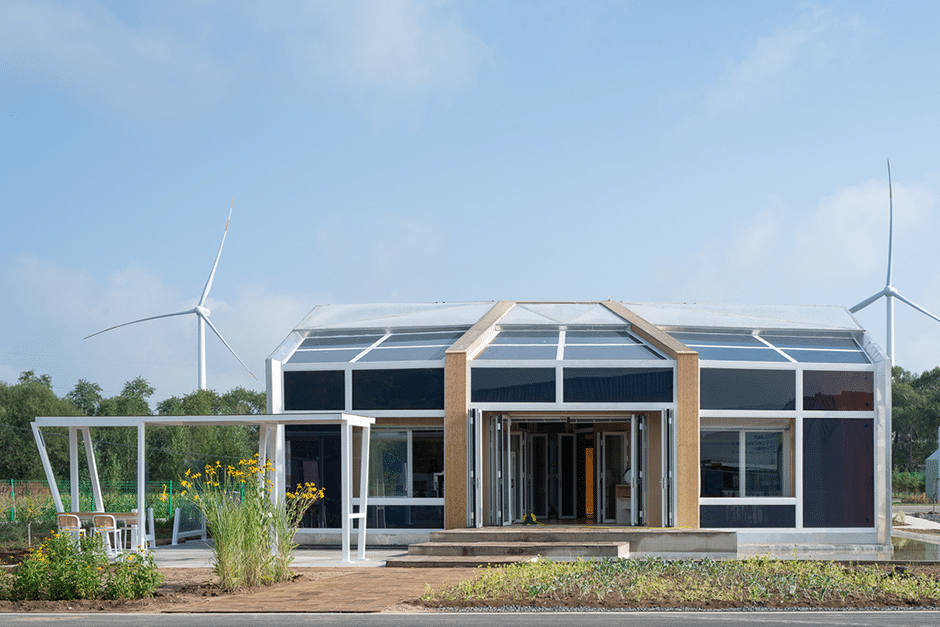
Photo Courtesy: Xi’an Jiaotong-Liverpool University (XJTLU)
Q7: Given your extensive experience, What are your expectations, plans, or visions for the future?
Building on my expertise in design optimization tools, climate-responsive design, and real-world project implementation, my future work will address the unique challenges of different climate zones, construction practices, and building codes. My research will extend beyond building design and optimization to include supply chains, transportation, and infrastructure to establish benchmark data for reducing embodied carbon and optimizing lifecycle energy use.
I will continue collaborating with construction and design firms to improve design optimization workflow and develop energy-efficient residential prototypes, significantly reducing operational energy and embodied carbon. I aim to promote sustainable practices through educational outreach and training industry professionals on advanced tools and methods.
Additionally, staying attuned to emerging technologies and industry trends is a priority, and I will regularly participate in professional seminars and training programs. I also plan to explore applications of sustainable design and smart building technologies while seeking new research opportunities to drive innovation and transformative change in the industry.
Published by Charlie N.