

By: John Sayomon
Walk into any major advertising agency in Manhattan today, and you will hear the same buzzwords echoing off the glass walls: “Optimization.” “Scalability.” “Generative AI.” The industry is currently in the throes of a technological gold rush, racing to see who can use artificial intelligence to produce the most content for the least cost. But amidst this frenzy of automation, a counter-movement is quietly emerging, one that argues the future of branding isn’t about algorithms, but about radical humanity.
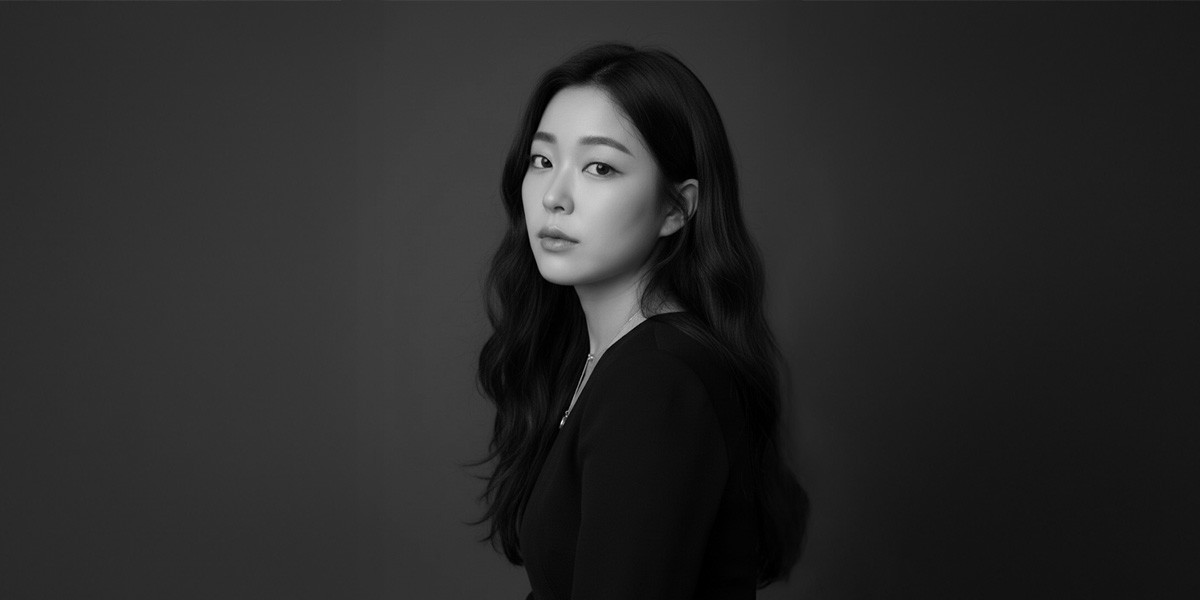
Leading this charge is Woojung Lee, a New York-based Art Director whose work challenges the cold efficiency of modern marketing. Woojung, a graduate of the Fashion Institute of Technology and a rising creative force in the city, believes that the industry is facing a crisis of connection.
“We are drowning in content, yet we are starving for feeling,” Woojung observes. “The more we optimize for clicks, the more we lose the trust of the human being behind the screen. In 2026, empathy isn’t just a nice-to-have; it is the only competitive advantage left.”
The AI Paradox: The Danger of “Sameness”
The integration of Generative AI into creative workflows has undoubtedly accelerated production. Campaigns that once took months can now be mocked up in minutes. However, Lee argues that this efficiency comes at a hidden cost: homogeneity.
“When everyone has access to the same high-powered generators, ‘good’ design becomes a commodity,” Lee explains. “The market is flooded with visually stunning but emotionally empty imagery. If five different brands prompt an AI for ‘luxury sustainability,’ they will get five variations of the same polished, soulless image. In this sea of sameness, the imperfection of the human hand, or the specific, quirky insight of a human mind, becomes the ultimate luxury item.”
This “empathy gap” is where Lee believes the modern Art Director becomes indispensable. She views the role shifting from a creator of visuals to a “curator of humanity.” The human creative must step in to inject nuance, cultural context, and emotional intelligence that software lacks.
Beyond “Targeting”: The Friendship Philosophy
Woojung’s approach to this problem is rooted in a unique philosophy she calls “Friendship Design,” a concept derived from her name, Woojung, which means “friendship” in Korean.
In traditional advertising, consumers are viewed as targets to be captured. The language is militaristic: “campaigns,” “strategies,” “capture rates.” Woojung proposes a softer, more sustainable model.
“You don’t target a friend,” she posits. “You listen to them. You try to understand their specific struggle, and you offer a solution that actually helps. If brands started acting like friends rather than hunters, they wouldn’t have to shout so loud to get attention.”
This philosophy is evident in her award-winning work, such as Mother Nature is in Menopause. Instead of guilt-tripping the audience about climate change, a tactic that often leads to avoidance, the campaign used humor and bodily empathy to create a relatable connection. It treated the viewer as a confidant, not a culprit.
Curiosity Without Limits: How ‘Rabbit Hole’ Empowers Autistic Minds
Perhaps the most forward-thinking application of her empathy-driven approach is her focus on inclusive design, specifically for autistic students. Her latest initiative, Rabbit Hole, was not born in a boardroom but from a moment of observation while watching the Netflix series Love on the Spectrum.
Lee was struck by the “depth of focus” and expertise neurodivergent individuals developed around their interests—and how often traditional education views this intensity as a distraction that needs to be “corrected.”
“Curiosity doesn’t move in straight lines; it deepens, tunnels, and connects,” Woojung explains. “The phrase ‘going down a rabbit hole’ is usually framed negatively, but for many people on the spectrum, that is exactly how learning happens. I wanted to build a tool that expands that.”
The project utilizes Google Gemini, a multimodal AI system, to support this non-linear learning style. Instead of a standard search interface that prizes linear efficiency, Rabbit Hole uses AI to encourage deep-diving, turning a specific fixation into a gateway for broader education.
“True inclusive design isn’t about forcing people to adapt to systems,” Lee notes. “It is about designing systems that adapt to people. By using technology to expand curiosity rather than cap it, we don’t just help neurodivergent students; we unlock a richer, more intuitive way for everyone to learn.”
Return on Intimacy
For New York agencies looking to survive the next decade, Lee suggests shifting their metrics. Instead of focusing solely on ROI (Return on Investment), she argues for “Return on Intimacy.”
“Trust is the currency of the future,” Lee asserts. “Gen Z and Alpha consumers are incredibly sophisticated. They can smell a fake from a mile away. They don’t want a brand that tries to be everything to everyone. They want a brand that stands for something specific and treats them with respect.”
This shift requires bravery. It means prioritizing long-term relationship building over short-term metrics. It means producing less content but ensuring it carries more weight.
The Future of the Art Director
So, what does the Art Director of the future look like? According to Lee, they are part psychologist, part systems-thinker, and part artist.
“We have to be the ones who ask the ethical questions,” she says. “When an algorithm suggests a headline, we have to ask: Is this kind? Is this true? Is this helpful? We are the gatekeepers.”
As the industry continues to accelerate, the creatives who will thrive are not the ones who can out-prompt the AI, but the ones who can out-feel it.
A Call for Radical Softness
In a city known for its grit and grind, Woojung is making a case for softness. Her work challenges the New York advertising scene to slow down and look the consumer in the eye.
“Technology will change every day,” Lee concludes. “But human needs, the need to be understood, the need to belong, the need to feel safe, those haven’t changed in thousands of years. If you build your work on those foundations, you will never become obsolete.”
As the digital landscape becomes increasingly crowded with synthetic noise, voices like Lee’s offer a crucial reminder: the most powerful technology we have is still the human heart.