

By: Farzana Bashir
Tree clearing often feels like the finish line. The chainsaws stop, trucks pull away, and suddenly the land looks open again. If you’ve ever stood on a freshly cleared site, you know that moment, it feels like progress. But here’s the quiet truth most people only learn later: removing trees is the easy part. The real work starts after.
What’s left behind beneath the surface shapes everything that comes next. Roads, homes, parks, utility lines, none of them function properly unless the ground is truly ready. And more often than not, the biggest obstacle hiding below is the stump.
Clearing Isn’t the Same as Preparing Land
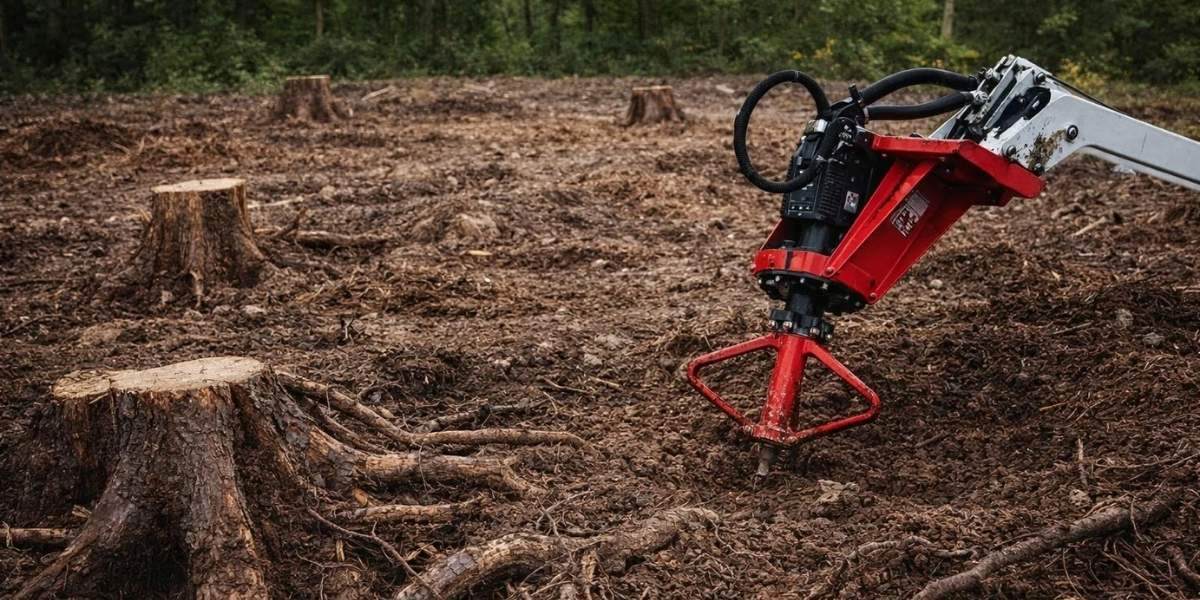
Tree removal focuses on what’s visible. Trunks, branches, and surface debris are hauled away, leaving what looks like usable land. But under your boots, the story is different. Root systems can stretch wider than the tree itself, locking into the soil and holding their shape long after the top is gone. This is why preparation doesn’t stop at cutting. On many sites, crews later rely on tools like a stump grinder attachment for tractor setups to deal with what’s buried, not just what’s obvious.
That gap between “cleared” and “ready” is where many projects can run into unexpected issues. Contractors arrive expecting smooth grading, only to hit dense wood underground. Drainage plans change. Timelines stretch. Costs may creep up. It’s not because anyone did something wrong. It’s because stumps don’t announce themselves.
Why Stumps Refuse to Be Simple
Tree stumps are stubborn by design. They’re dense, anchored, and built to survive weather, pressure, and time. Some hardwood stumps can remain intact underground for decades. Even as they slowly break down, they don’t disappear quietly.
Instead, they can cause problems like:
- Uneven settling as roots decay
- Standing water where drainage paths get blocked
- Unexpected damage to equipment
- Safety risks in public or active work areas
If you’ve ever watched a machine jerk suddenly during grading, chances are it was affected by a buried stump. That kind of surprise can derail a day fast.
The Common Ways People Deal With Stumps
There’s no universal fix, and that’s part of the challenge. Different sites call for different approaches, each with trade-offs.
Some landowners choose to leave stumps alone and let nature handle it. That works only if time isn’t a critical factor (and it often is). Others excavate completely, pulling out the stump and root ball. Effective, yes, but disruptive to the surrounding soil.
Grinding offers a middle ground. By reducing the stump below grade, the land becomes workable without tearing everything apart. The method matters because it affects what the land is capable of handling next: foundations, pavement, or even just foot traffic.
How Equipment Choices Quietly Shape Outcomes
This is where modern land-clearing practices have shifted. Instead of treating stump removal as a separate, heavy operation, crews increasingly handle it as part of a broader workflow. The goal is efficiency without unnecessary damage.
On larger or mixed-use sites, operators often rely on adaptable tools that work with existing machinery rather than bringing in specialized equipment for every task. For example, a stump grinder attachment for a tractor allows stumps to be addressed during site preparation without stopping everything else. It’s not flashy, and it’s not advertised to the public, but it can change how smoothly projects move forward.
Why Stump Decisions Affect the Long Term
It’s tempting to think of stump removal as a short-term problem. Clear it, move on, forget about it. But land has a long memory.
Poor stump handling may show up years later as:
- Cracked pavement
- Shifting foundations
- Uneven landscaping
- Ongoing maintenance costs
Public spaces feel this especially hard. Parks, sidewalks, and shared infrastructure don’t get second chances easily. A stump missed today could become a safety issue tomorrow and a budget problem later.
Real Life Doesn’t Follow Perfect Plans
Anyone who’s worked on land projects knows this already. Plans look clean on paper. Reality pushes back. Soil behaves differently than expected. Weather changes schedules. Hidden stumps throw off measurements.
That’s why experienced crews don’t just ask, “Is the land cleared?”
They ask, “What’s still down there?”
That question is simple, almost casual, but it often makes the difference between a project that flows and one that keeps tripping over itself.
The Work You Don’t See Matters Most
Tree clearing gets the attention because it’s visible. Stump management doesn’t. It happens quietly, often without headlines or recognition. But it shapes everything that follows.
If land is going to last, support structures, people, and purpose, it has to be prepared honestly, not just visually. And that preparation almost always comes down to dealing with what’s left behind.
Sometimes the hardest part of a project isn’t what you remove.
It’s what you choose to deal with properly and early.