
The conventional path for a health tech startup entering the American market begins in San Francisco or New York, targets urban professionals with good insurance and fast internet, and positions telemedicine as a convenience upgrade over an existing system that already works for its users. The visit is faster. The copay is lower. The experience is more modern. The value proposition is incremental.
SeeDoc took the opposite approach. The company was founded in 2015 by serial entrepreneurs with a track record of building successful technology companies in the United States and India, and they chose to build telemedicine infrastructure for the patients that every other platform ignored: people in areas with poor connectivity, limited specialist access, and hours-long journeys to the nearest clinic. The platform was engineered from scratch for the realities of emerging market healthcare, where a video consultation might need to function on a 2G connection in a village three hours from the nearest hospital.
That engineering decision, building for the worst case rather than the best case, produced a technology stack that works everywhere. HD video that adapts dynamically to bandwidth. AI-assisted diagnosis that helps physicians reach accurate conclusions faster. An architecture designed to deliver clinical quality consultations under conditions that would cause most telemedicine platforms to buffer, freeze, and disconnect.
The company scaled to 600,000 registered patients and over 500 daily consultations. Then it looked at the American market and recognized something that most US-based health tech companies have been slow to acknowledge: roughly 80 million Americans live in areas designated as Health Professional Shortage Areas, and their access challenges are structurally identical to the ones seeDoc was built to solve.
Cambridge as the US Beachhead
SeeDoc established its US headquarters at 245 Main Street in Cambridge, Massachusetts, placing itself at the center of the biotech and health tech corridor that runs between Kendall Square, the Harvard Medical School ecosystem, and the concentration of digital health companies that have made Boston the most active health tech hub on the East Coast.
The location is strategic. Cambridge provides access to the clinical partnerships, regulatory expertise, and research infrastructure that a telemedicine platform needs to scale credibly in the American market. But the patients seeDoc is targeting are not in Cambridge. They are in the communities where the nearest specialist is a four-hour drive, where a dermatologist has a three-month wait list, and where a mental health provider simply does not exist within a reasonable radius.
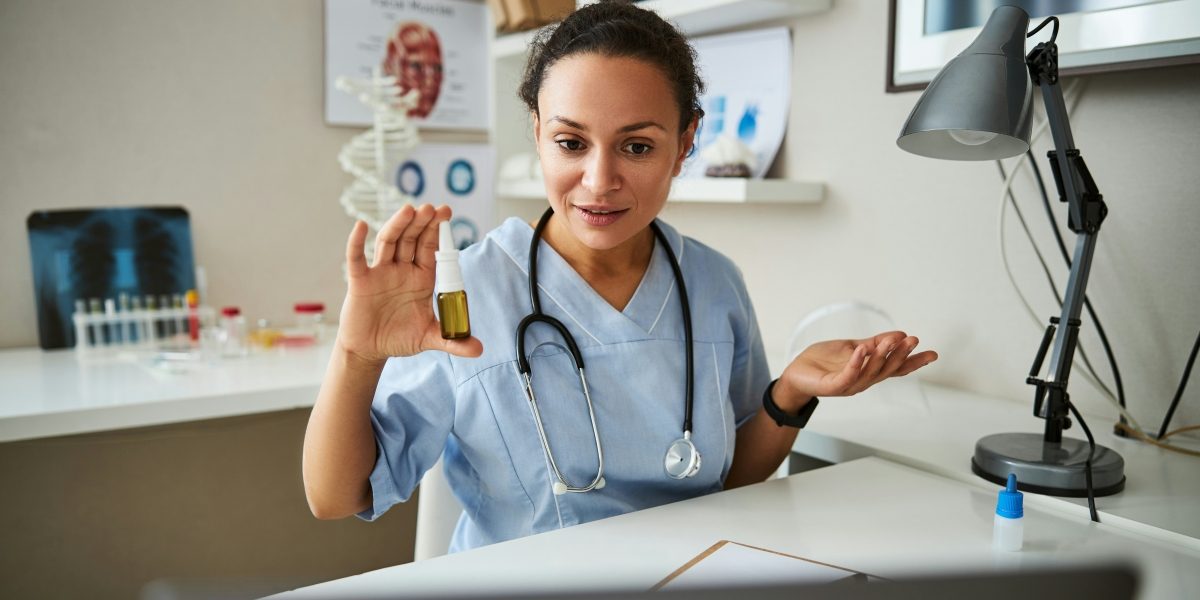
The platform’s service model is designed for these patients. Board-certified doctors across 50-plus specialties are available 24/7 via HD video consultation on any device. A free doctor Q&A service allows patients to ask health questions without scheduling an appointment. Medicine delivery operates through pharmacy partnerships with zero markup on prescriptions. Lab tests are processed through Quest Diagnostics at cost, with no intermediary margin.
The zero margin policy on medicines and lab tests is worth noting because it is unusual in American telemedicine. Most platforms generate significant revenue from prescription fulfillment and diagnostic services. SeeDoc’s transparency model eliminates that revenue stream entirely, charging only for the consultation itself and passing through medicines and lab work at the actual cost. The company publishes a transparency calculator that allows patients to see exactly what they will pay before they book.
The Technology Advantage Nobody Expected
The technical infrastructure that seeDoc built for emerging markets has turned out to be a significant competitive advantage in the United States, for a reason that most American health tech companies did not anticipate: the American internet is not as good as American health tech companies assume it is.
Rural broadband in the United States remains unreliable across vast portions of the country. The FCC’s broadband maps have been repeatedly challenged for overstating coverage. And even in areas with nominal broadband access, actual connection quality during peak hours, in multi-device households, or in facilities with aging infrastructure frequently falls below the threshold required for stable video conferencing.
Most US telemedicine platforms were built for urban fiber connections. When the connection degrades, the consultation degrades with it. Frozen screens. Dropped audio. Disconnected sessions that require rebooking. For a patient who waited three weeks for a specialist appointment and is using their lunch break to take the call, a failed connection is not a technical inconvenience. It is a barrier to care.
SeeDoc’s HD video consultation technology was engineered to avoid this failure entirely. The platform’s adaptive streaming adjusts video quality dynamically based on available bandwidth, maintaining consultation continuity at connection speeds that would crash conventional video platforms. The technology was built for a village in rural India. It works just as well in a small town in rural Mississippi, which is exactly the point.
What the US Market Looks Like from the Outside
There is an irony in seeDoc’s entry into the American market that is worth acknowledging. The United States spends more per capita on healthcare than any other country in the world. It has more medical specialists per capita than most developed nations. And yet the distribution of those resources is so geographically uneven that tens of millions of Americans experience healthcare access conditions comparable to those in developing countries.
A patient in Boston can see a dermatologist within a week. A patient in rural West Virginia may wait three months or drive two hours to the nearest provider. A patient in Manhattan can access a psychiatrist within days. A patient in a small town in the Texas panhandle may have no access to mental health services within their county.
SeeDoc’s AI assisted diagnosis platform addresses the specialist scarcity problem directly. The system supports physicians during consultations by surfacing relevant clinical considerations based on the patient’s symptoms, history, and demographic profile, helping generalist physicians deliver specialist-informed care in settings where the specialist is not physically available.
This is the same approach the company used in India, where specialist scarcity is measured not in weeks of wait time but in the complete absence of certain specialties from entire regions. The American version of the problem is less extreme but structurally identical: the specialists exist, they are just not where the patients are.
What Comes Next
SeeDoc’s US expansion is not a pivot. It is an extension. The company built technology and operational infrastructure for the most challenging healthcare delivery conditions in the world and discovered that the American market contains millions of patients living under remarkably similar conditions. The Cambridge headquarters provides the institutional and regulatory foundation. The technology provides the delivery mechanism. The zero margin transparency model provides the trust architecture.
The telemedicine market in the United States is projected to exceed $80 billion by 2030. Most of that growth will come from platforms serving urban and suburban populations with good insurance and fast internet. The growth that matters more, both commercially and in terms of health outcomes, will come from the platforms that can serve the patients the rest of the market cannot reach.
SeeDoc was built for exactly those patients. It was just built for them on the other side of the world first.
Disclaimer: This article is for informational purposes only and does not provide medical, legal, financial, or professional advice. Any healthcare-related information discussed should not be used as a substitute for consultation with a qualified medical professional. Readers should speak with a licensed healthcare provider regarding any medical concerns, diagnosis, treatment, prescription, lab testing, or telemedicine service. References to companies, services, technologies, or market opportunities are based on publicly available or provided information and do not constitute endorsement, guarantee of results, or verification of clinical outcomes.