
Written by: Dillon Kivo
For years, the American media has struggled to offer conversations that feel real. Interviews have become shorter. Answers feel coached. Authenticity is replaced by polished narratives crafted for clicks. Across the country, audiences began searching for something honest, something patient, something that cut through the noise. What they found was The Shawn Ryan Show.
What began in a small attic with two microphones and no blueprint has become one of the most influential storytelling platforms in modern American media. The show has built a community of millions in only a few short years, reshaping how long-form conversation is understood and consumed. It has become a cultural force rooted not in spectacle but in sincerity.
“I started this whole journey in my attic,” Ryan said. “It was just me, my wife, a couple of mics, and a whole lot of frustration with the world. America needed to hear the unvarnished truth about what our warriors go through. The mental toll, the sacrifices that do not make headlines. I was not another polished talking head. I was just a guy who had been through the fire and figured if I did not step up and create a space for these stories, who would?”
The attic was the starting point. But the mission was much larger.
A Beginning Built on Honesty
The early episodes were raw, imperfect, and deeply human. Ryan did not care about polish in the traditional sense. He cared about truth spoken plainly. There was no script, no agenda, and no time limit. Just a willingness to talk about the things few people in media were willing to confront.
The honesty of those early conversations came from a deeper place. After years as a Navy SEAL and later a CIA contractor, Ryan carried experiences that did not fit into everyday conversation. He had lived through bravery, loss, betrayal, loyalty, and the kind of trauma that lingers long after service ends. His own battles with PTSD shaped his urgency for real dialogue. Therapy had taught him that transparency was the only way to heal, and he knew guests would only open up if he led first.
“That early rawness came from frustration,” Ryan said. “I was done with the scripted interviews and the soundbites. I needed conversations that were real, and I wanted guests to feel safe enough to go there with me.”
And while the conversations were intentionally unscripted, the visuals were anything but casual. Since its inception, Ryan focused on every camera setting and every shot to ensure the show looked truly exceptional. He studied angles, experimented with lighting, and refined his setup until the aesthetic matched the seriousness of the stories being told. As he explained later, he took the visual presentation “extremely seriously” from day one because honest conversations deserved to look as strong as they felt.
Authenticity became the heart of the show. Listeners recognized it instantly. They could hear the difference between polished performance and lived experience. They recognized a host who understood what was at stake.
When Stories Become Lifelines
Within the first year, messages started pouring in. They came from veterans, police officers, firefighters, and everyday people navigating invisible battles. They came from spouses trying to understand, children seeking clarity, and individuals who stumbled across the show at a moment when they needed it most.
Ryan quickly realized the show had become something far deeper than conversation. Vets wrote to him saying an episode kept them alive through the night. Civilians said they finally understood why a loved one was struggling. One man described pulling back from the edge after hearing a guest talk honestly about hitting rock bottom. These weren’t casual reactions. They were moments of relief, recognition, and connection. People were watching because something in that room made them feel less alone. By listening to someone else speak their truth, they were finding language for their own pain.
“That is when it clicked for me,” Ryan said. “These are not just stories. They are lifelines. People see themselves in the vulnerability of my guests, and it gives them hope that if someone else made it, they can too.”
The show had become more than content. It had become a form of connection.
A Community Forms Around Truth
As the audience grew, the show evolved into something larger than itself. Listeners began forming their own support groups. They reached out to one another during difficult moments. They organized meetups, raised money for veteran programs, and shared resources. The show did not create the community. It activated it.
Ryan first noticed the shift when people started connecting outside the podcast. Fans were organizing gatherings, supporting each other through personal struggles, and building their own initiatives around mental health and veteran issues. By the time the show reached its fiftieth episode, strangers were approaching him to say the conversations had changed how they saw the world. It became clear the mission had expanded beyond him.
“That was the moment I realized it had become a movement,” Ryan said. “People weren’t just listening. They were taking care of each other, building community, and carrying the mission into their own lives.”
In a divided media landscape, the show had become one of the rare places where people from different backgrounds found common ground. Honesty had become the force that connected them.
Why the Audience Connected So Deeply
The show’s growth is often described as explosive, but the reasons behind it are simple. People were starving for a place where they could hear the truth without distortion. They were craving longer conversations that allowed room for nuance. They wanted stories that were not edited for clicks. They wanted sincerity.
As trust in traditional media declined, audiences began seeking authenticity wherever they could find it. That search led millions to The Shawn Ryan Show. Over time, some of the most recognizable voices in America sat across from Ryan, including Jocko Willink, Tulsi Gabbard, Ryan Montgomery, Mike Glover, and DJ Shipley. Each brought a different perspective and helped widen the show’s reach. Episodes often stretched between four and eight hours, sometimes longer, but instead of losing viewers, the length became part of the show’s identity. It gave stories room to breathe, allowed emotions to unfold, and respected the complexity of human experience.
“Timing mattered,” Ryan said. “People were done with distortion and craving truth. When they saw unedited long-form stories from real people, they realized this was the space they had been missing.”
The show was proving something rare. Long-form storytelling wasn’t dying. It was thriving. It simply needed a place where it could exist without compromise.
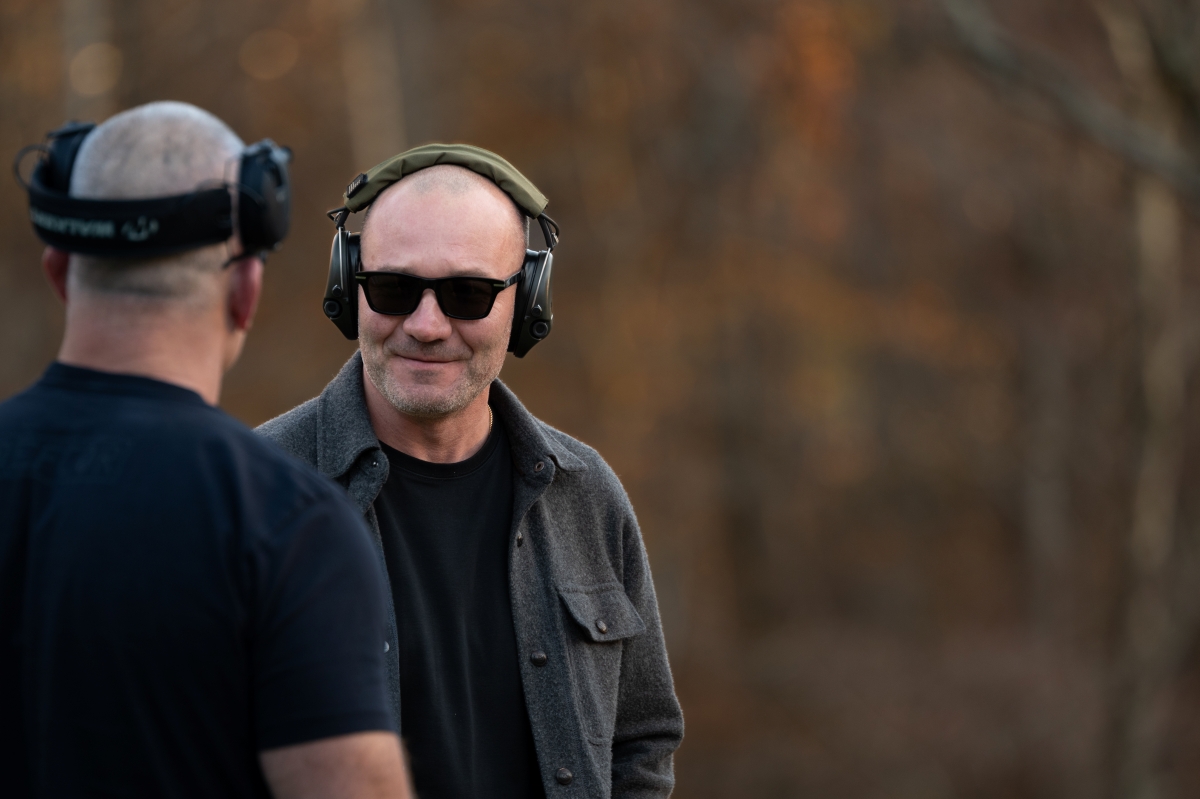
Shawn Ryan speaking with Jocko Willink at the studio range
Image Credit: Tim Furlong Jr. | The Shawn Ryan Show
Inside the Compound: A Sanctuary for Truth
To fully understand the show’s impact, one must step inside the compound. The studio sits on more than twenty acres in Franklin, Tennessee. The property is expansive, quiet, and fortified with purpose. Driving onto the property gives a clear sense of how intentionally the show is operated.
The building itself is large and understated. Inside, the environment shifts immediately. The lobby is calm. The lighting is soft. The colors are muted. Every detail feels intentional. There is no clutter. No spectacle. It feels like walking into a sanctuary built for conversation.
Before filming begins, the preparation is methodical. The staff moves with a precision that feels almost choreographed. Microphones are checked and rechecked. Cameras are adjusted silently. Breaks are timed around emotional rhythm. No one raises their voice. No one rushes.
Staff members frequently explain that the number one reason guests open up on the show is simple. Ryan listens. He listens with deliberate stillness. With real curiosity. With respect. Jeremy, his producer, often points to Ryan’s uncommon ability to listen with such total presence that a guest’s defenses begin to dissolve the moment they sit down.
The Room Where Conversations Break Open
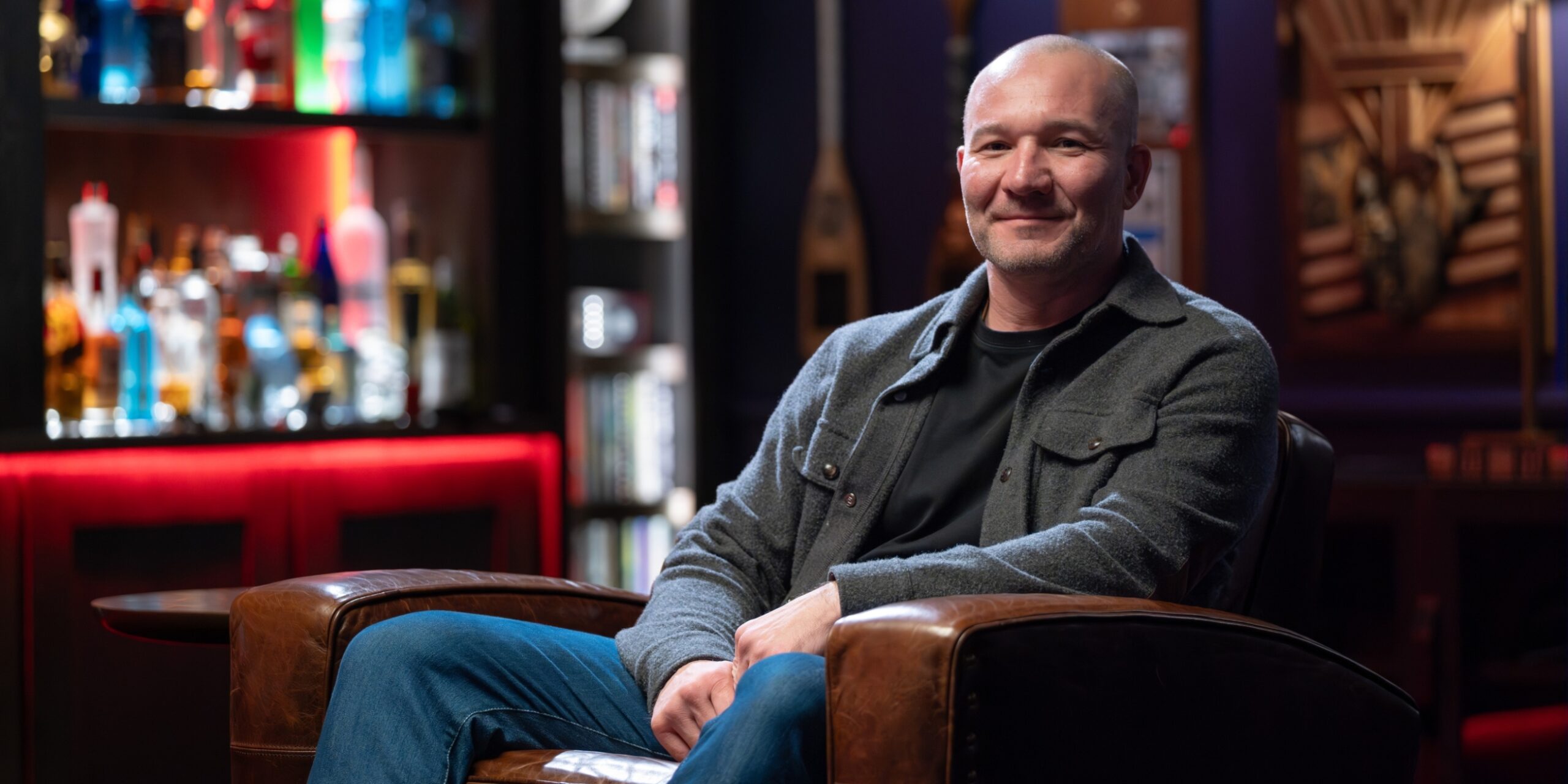
The main studio sits at the heart of the compound. It is warm, polished, and thoughtfully designed. The red glow lining the backdrop has become one of the show’s visual signatures. The lighting is controlled and inviting. The furnishings are streamlined and high-quality, creating a space that feels purposeful rather than crowded. Microphones sit at a comfortable distance that encourages conversation instead of performance.
Guests often describe the room as a place where time slows down. Many forget the cameras are there at all and walk out surprised by how much they shared and how quickly the hours passed. The space feels intentional. Every detail is arranged to lower defenses and create a sense of ease. Ryan’s own openness sets the tone. He listens without interruption, and when it helps a guest feel less alone, he shares his own experiences. The environment becomes a place where real stories can surface.
“It all comes down to trust and comfort,” Ryan said. “I built the studio to feel like a speakeasy. No bright lights. No rush. I take the time to do it right so guests feel safe enough to open up.”
Ryan credits therapy for shaping that approach. It taught him to slow down, to listen more than he talks, and to remain fully present. He brings that same steady, focused attention to every guest who sits across from him.
The power of the space lies in its simplicity. A quiet room. A patient host. A format built around giving truth the time it needs. Inside the studio in Franklin, conversations unfold at their own pace. Guests speak without pressure. Stories develop naturally. The environment encourages honesty instead of performance.
Ryan built more than a podcast. He built a setting where people can finally articulate experiences they have carried for years. The room, and the way he protects it, has become central to the show’s impact. It is the reason The Shawn Ryan Show resonates so deeply and stands as one of the most influential platforms in American long-form media.
The Editing Wing: Inside the Team That Shapes Every Episode
Deeper inside the compound is the editing wing. It has its own distinct feel. The lights are dim. The music is low. The energy is concentrated. The space mirrors the filming studio with the same red lighting accents and consistent visual identity.
The editing team is world-class. Many relocated from across the United States to be part of what has become one of the premier production teams in long-form media. They work with the precision of a special operations unit, each member handling a specific role yet moving with shared purpose and absolute alignment.
Editors sit surrounded by screens, absorbing every detail of the conversation. They do not cut for speed or virality. They shape emotional clarity. They listen for meaning. They think like listeners, considering how each moment will land, how each pause feels, and where the emotional weight sits. It is an environment built for thoughtful work, not shortcuts.
Episodes often require significant attention in post-production. Edits are detailed and deliberate, shaped with care rather than speed. Filming days can run long, and the team remains focused from start to finish. The workflow feels disciplined and coordinated. There is no chaos. Only purpose and steady execution.
The unity of the staff is unmistakable. Everyone moves like a well-trained unit with clearly defined roles, mutual respect, and complete commitment to the mission.

Shawn Ryan with Jocko Willink at the studio range during training
Image Credit: Tim Furlong Jr. | The Shawn Ryan Show
A Day in the Studio With Ryan and Jocko
On the day of the visit, the guest in the studio was Jocko Willink. The two spoke with steady, measured focus throughout the conversation. Ryan asked direct, intentional questions, and Jocko responded with the calm precision he is known for. The exchange was disciplined, clear, and grounded.
“Jocko is a legend,” Ryan said. “He has a great show, and he is rebuilding America through his business ventures. We have a lot of interests and histories that are directionally aligned.”
Hours passed without anyone noticing. The room seemed to absorb the sense of time. Cameras faded into the background. It was simply two men exchanging truth in a space designed to support it.
This is what guests often describe afterward. The feeling that something in the room had shifted. That honesty became easier. That, for a moment, the outside world disappeared.
A Team Built With Purpose
The show does not work because of Ryan alone. It works because the team around him operates with unity and intention. They move with discipline, focus, and a shared sense of purpose.
Their structure resembles the environments Ryan came from, where preparation, precision, and mutual respect form the foundation. The workflow is deliberate. No task is too small. Everything matters, and every action carries weight.
This culture creates an atmosphere where excellence becomes the standard rather than the goal. The expectation is clarity, consistency, and steady execution in every part of production.
“High-stakes talks get approached the same way,” Ryan said. “Stay calm. Adapt. Find the truth.”
Building Trust Without Traditional Media
The Shawn Ryan Show sits outside the traditional media system. It is distributed through the QCODE Network, but Ryan retains full creative control, choosing his guests and topics without corporate direction. The structure is simple. Distribution partners help the show reach millions, but the content, tone, and mission remain entirely his.
Unlike legacy outlets driven by quick cycles and tightly controlled narratives, Ryan operates on a different model. Conversations are long. Edits are minimal. Sponsorships are selective and aligned with the audience. The show does not chase trends or talking points. It prioritizes clarity, honesty, and the kind of patience mainstream formats no longer allow.
“Audiences today want raw, independent voices,” Ryan said. “People are done with the spin. We earned trust by staying consistent, fact-based and human. No gatekeepers. No one is telling me who I can talk to.”
Authenticity remains the foundation. Independence is the structure. Humanity is the center. As Ryan puts it, “In a divided country, platforms like mine prove that authenticity wins.”
What Comes Next
The show is growing, but with intention. Ryan is expanding the network while preserving the soul of the platform.
“We are expanding the network,” Ryan said. “I just hired Sarah Adams to create a show. We have new opportunities like the audio series I narrated called Target Intelligence. And the online security app we created with Glacier. I also released a new beverage called Mindful.”
Every new venture aligns with his mission. Service. Protection. Truth.
“The core stays the same,” he said. “Real stories. Real impact. I am excited to see where it takes us.”
As the platform grows, its influence continues to reflect the qualities that set it apart from the start.