

Selling your house can be a complex process. It requires planning ahead, working backward and breaking the task into manageable chunks.
This includes preparing your home to list, staging it, and decluttering the counters (no piles of papers, pens, toys or magnets). It also involves pricing your house right and negotiating with buyers.
Pricing
If you’re selling your home, pricing is crucial. Too high, and you may turn off buyers. Too low, and you could leave money on the table.
Your agent can use comparable sales (comps) and inside knowledge of the local market to determine a fair listing price for your house. They’ll also take into account factors like your home’s amenities and location.
A recent appraisal is a must-have, and it’ll provide you with the most accurate estimate of your property’s value. But don’t expect the appraisal to match the final sales price.
Incentives like a one-year home warranty or seller concessions can help you attract buyers. However, whether they’re worth the extra expense depends heavily on the local market and time of year. For example, buyers tend to be less active during the winter.
Inspections
Sellers are advised to do a laundry list of things before selling their homes, including decluttering and cleaning, staging, and finding a great agent. But an important item on that list should be getting a pre-inspection.
A home inspector examines the structure, exterior, interior, and major systems like plumbing, electrical, and the roof. They look for issues like leaky faucets, faulty heating vents, and insufficient insulation. They also check for potential safety hazards like sagging floors and ceilings and for code violations like improperly installed electrical outlets or appliances.
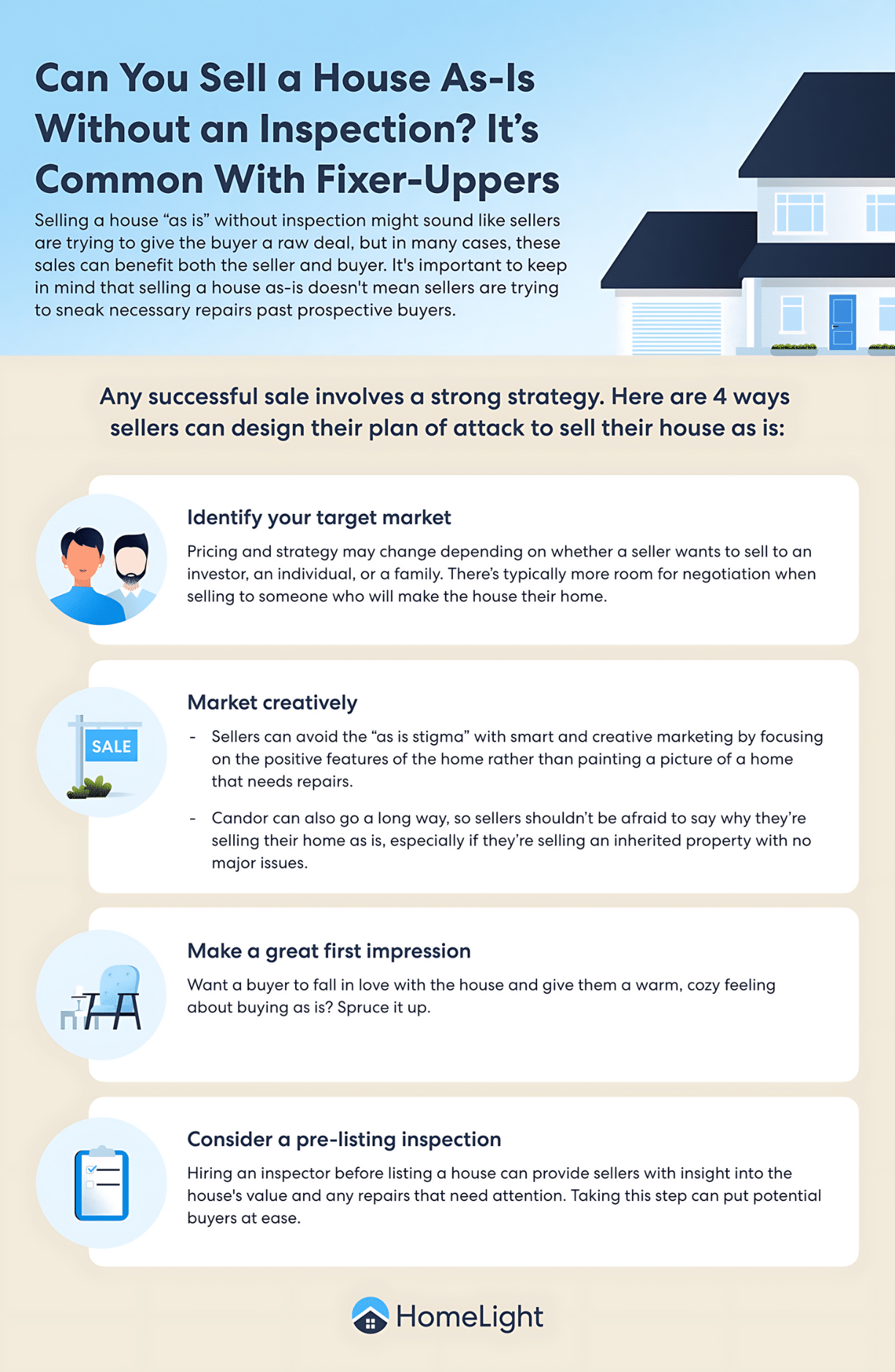
Photo Courtesy: homelight.com
If significant problems are found, the buyers may be able to cancel their offer or ask the seller to make repairs before closing. Depending on the circumstances, the seller may choose to fix the problems themselves or reduce their sales price. Ideally, the buyer’s inspection should occur within the specified period outlined in the contract, allowing the buyers to conduct a full investigation of the property and any underlying issues.
Offers
There is no one-size-fits-all way to sell a house as is, but the right approach depends on what you’re hoping to accomplish. If you want to get a high price, you may want to consider selling through a local real estate agent.
During a seller’s market, you may be able to find several offers above asking price. However, you may not even get an offer if your home is overpriced.
When reviewing offers, consider the closing costs that the buyer must pay. These fees are usually 3% – 6% of the home’s purchase price. The seller may agree to pay them for you, which can help make your offer more appealing.
Also, be prepared to negotiate with the seller over conditions. For example, if the seller requires that you use their preferred mortgage company, it could delay closing by a month or more. Responding quickly to any requests can help you stand out from other buyers.
Closing
Once an offer is accepted, the closing process begins. This is where real estate agents can weed out buyers who can’t afford your house by examining their credit and debit history, employment status, and how much they have available for a down payment. Your agent should also be able to order a title search, which is a review of public records to ensure you’re the legal owner of your home and that no one else has a claim to it.
At the closing meeting, the buyer pays the remainder of the purchase price, and you transfer the deed to the buyer. Before the closing, you and your Realtor should perform a final walk-through to make sure everything is as agreed upon. Also, you’ll typically need to pay for homeowners insurance, which protects your new home from future events such as fires and flooding.
Published by: Khy Talara