
If your traffic took an unexpected hit in the last week of June, you are not imagining things. Google rolled out a global algorithm change that shook up rankings across nearly every industry, and plenty of site owners are still trying to figure out what happened and what to do next. This is exactly the kind of moment where working with an established SEO Company in New York pays off, since untangling a real policy violation from ordinary ranking noise takes experience most in-house teams do not have time to build on their own.
What the Google Spam Update June 2026 Actually Was
Google released the update on June 24, 2026, and it finished rolling out by June 26, roughly two days later. Google described it simply as a normal spam update applying globally across all languages, without naming a specific new policy or system behind it. This was the second spam update of the year, following an earlier one in March, and it left a lot of webmasters comparing notes on forums trying to piece together what had actually changed.
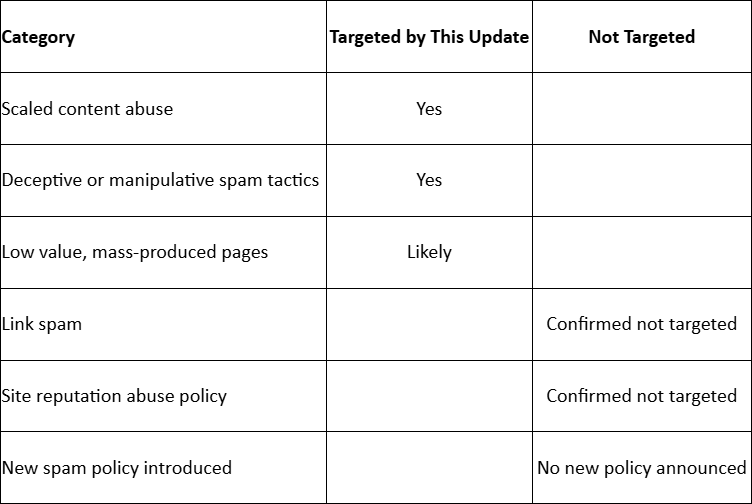
Google did clarify one useful detail: this particular update did not target link spam or the site reputation abuse policy, both of which had been the focus of previous rounds. Beyond that, the company left it to site owners and third-party trackers to observe the effects and draw their own conclusions.
The One Number Worth Knowing
Amid the uncertainty, one data point stood out. Several site owners reported organic traffic drops in the range of 10 to 15 percent within days of the rollout, even on sites that had not knowingly violated any spam policies. That kind of swing is significant enough to justify a full audit rather than dismissing it as a temporary fluctuation, especially for businesses that depend on organic search for a meaningful share of their revenue.
Google June 2026 Algorithm Update: What It Targets vs. What It Doesn’t
Google Spam Update Recovery: What Site Owners Should Actually Do
Recovering from a June 2026 Google update hit requires patience more than panic. Google has stated that improvements from a spam update can take several months to reflect in rankings, even after a site makes genuine changes. The recommended path forward includes:
- Reviewing your site against Google’s published spam policies line by line, rather than guessing at what might be wrong
- Auditing content for scaled or low-value pages that may have been produced quickly without real editorial oversight
- Checking whether the ranking drop lines up precisely with the June 24 to 26 rollout windows, or whether it started earlier and points to a different cause entirely
- Comparing performance against direct competitors during the same window to see whether the whole niche moved or just your site
- Avoiding drastic, reactive changes to site structure or content strategy until you have confirmed the actual cause
Google Spam Update SEO: Separating Correlation from Causation
One of the trickiest parts of any Google ranking drop after June 2026 update reports is confirming that the spam update is actually responsible. Traffic can dip for reasons that have nothing to do with a spam update, including a competitor’s content push, a seasonal shift in search demand, or a broader move toward AI-generated answers pulling clicks away from traditional results. Lining up analytics data against the exact rollout dates is the only reliable way to separate a real policy issue from routine volatility.
A Quick Word on Local Resources
Plenty of local shops and independent consultants have started publishing their own breakdowns of the update, and it’s worth reading a few before deciding your next move. According to Devendra Mishra, Founder of SEO Guru NYC, businesses should avoid making major SEO changes immediately after a Google algorithm update without first understanding the underlying cause. “Not every ranking decline is the result of a penalty. In many cases, fluctuations are temporary or influenced by broader changes in search behavior. The best approach is to review your website against Google’s spam policies, compare performance with competitors, and make data-driven decisions rather than reacting out of panic.”
Comparing multiple expert perspectives before implementing significant website changes can help businesses avoid costly mistakes.
Final Takeaway
The June 2026 Google update is a reminder that spam updates, unlike core updates, are narrower in scope but can still cause real disruption for sites that were never trying to game the system. If your rankings moved during that window, the smartest next step is a careful audit against Google’s published policies rather than an overreaction, paired with enough patience to let any genuine fixes actually take hold.
About the Author

Devendra Mishra is the Founder of SEO Guru NYC, a New York–based search engine optimization agency. With over 20 years of experience in SEO and digital marketing, he has helped optimize more than 10,000 websites across industries including healthcare, legal services, eCommerce, home services, and local businesses. His expertise includes Google algorithm updates, technical SEO, local SEO, AI-driven search optimization, and Google Ads.