

By: SEO Mavens
The pupillary light reflex (PLR) is a basic yet vital neurologic response, which forms the basis of diagnosing neurological disorders in clinical neurology. Knowledge of its operating principles and uses can prove to be useful in shedding light on neurological processes as well as the overall pupillary response in traumatic brain injury. This blog explores the complexity of the pupillary light reflex, its theories, and its critical uses in medicine.
Pupillary Light Reflex: An Overview
The pupillary light reflex is a reflex in which the pupil shrinks when light falls on the retina. This reflex is a rather intricate cooperation between the retina, optic nerve, brainstem, and oculomotor nerve. Vision occurs by the reception of light through photoreceptors in the retina that transmit impulses through the optic nerve to the pretectal nuclei in the midbrain. From there the interneurons connect with the Edinger-Westphal nucleus and the parasympathetic fibers pass through the oculomotor nerve to the iris sphincter muscle and lead to constriction of the pupils. This reflex assists in controlling the total amount of light that gets into the eye so as to shield the retina from damage or radiation and also helps in visual acuity.
Mechanisms of Pupil Reactivity
Pupil reactivity or the function of the pupil to react to light is a very sensitive sign of neurological activity. It depends on the intactness of the afferent and efferent sub-pathways of the reflex arc of the PLR. The afferent path from the retina through the optic nerve and midbrain while the efferent path consists of the Edinger-Westphal nucleus, oculomotor nerve, and iris sphincter muscle. Any interruption of these pathways will affect pupil reactivity which is an important diagnostic feature.
Evaluating Pupil Responsiveness in Neurological Tests
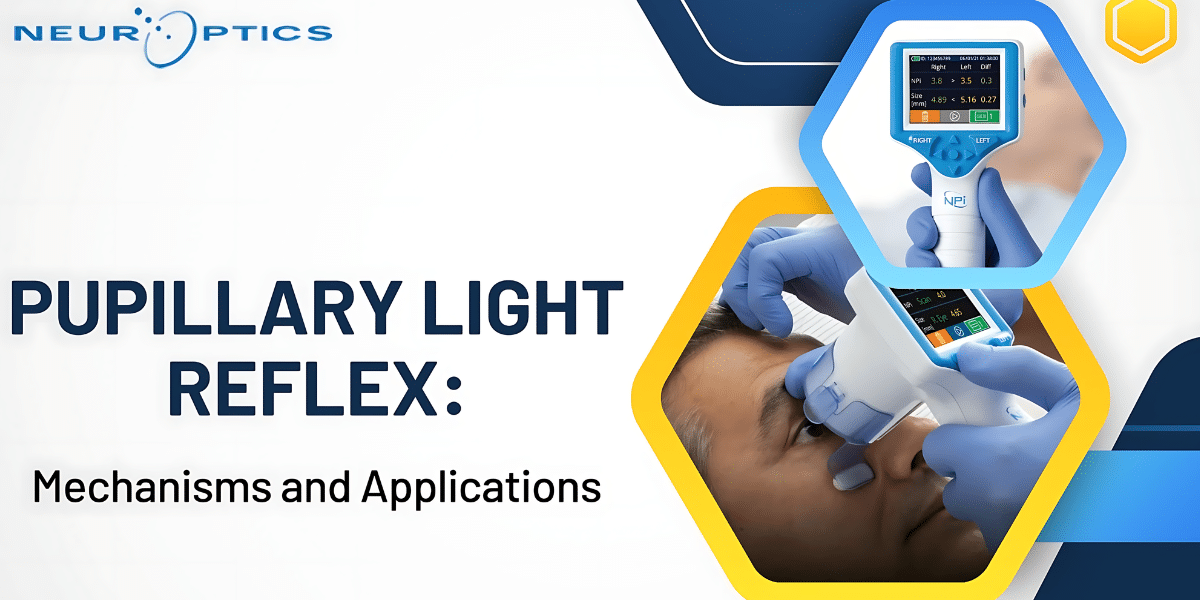
In neuro exams, the reactivity of pupils is always checked in order to get information concerning the function of the brain. There are specific neurological tools that are employed by clinicians to examine the response of the pupils to light and the size of the pupils; normally the speed and the uniformity of the reactions are marked. The Neurological Pupil Index (NPI) is a numerical one that gives a quantified interpretation of the pupil light response. The NPI score takes into account not only the amplitude, latency, and velocity of the PLR but also provides an objective assessment of the patient’s condition in comparison with the simple PLR test. This tool is of great value in Intensive Care Units particularly when assessment of the neurological condition of a patient is necessary.
TBI may also alter the PLR and therefore its assessment is important. In patients with severe TBI, the changes in the pupil’s size and their reaction to light are the early indicators of increasing intracranial pressure or brain herniation. The evaluation of pupil response is, therefore, very important for managing TBI patients. Uneven pupil size or unequal reaction to light implies a possibility of an injury to one side of the brain and non-reactive bilateral pupils imply diffuse brain damage or brainstem involvement. Repeated measures of pupil reactivity may provide valuable information that can help manage TBI patient condition and their result.
Clinical Uses of PLR
The pupillary light reflex has numerous uses in clinical practice, apart from the diagnosis of TBI. It is applied in the evaluation of different neurological disorders, which include stroke, brain tumors, and infections such as meningitis and encephalitis. Atypical PUPILARY reactions can also help in the diagnosis of optic nerve/retinal disorders for ophthalmic pathology. Also, the PLR is helpful in anesthesia practice when determining the size of the pupils and their reaction to light to determine the level of anesthesia and complications.
Advances in Neurological Tools
Newer equipment and technologies have provided an improved way of conducting the PLR test and have made it more sensitive. Examples of such advancements include the fully automated pupillometer which measures the size and reactivity of the pupil free from the observer’s influence and reports enhanced diagnostic precision. These devices are useful in intensive care surveillance units and emergency departments where the evaluation of neurological status is essential and needs to be done quickly and accurately. The application of these tools in the clinical management of patients with neurological diseases has transformed the approach to handling patients by ensuring effective and efficient monitoring of patients and their response to treatment.
Conclusion
The PLR is an essential clinical sign in neurological assessment exams, mainly because it helps in understanding the status of the brain and the possible presence of a disease or injury. The mechanisms of reactivity of the pupils and the application of the many modern neurological methods can improve the quality of work with the patient. From TBI as well as other neurological disorders, to the simple diagnosis of the pupillary light reflex, the tool remains an essential component of modern medical practice.
Disclaimer: This article is for informational purposes only and is not intended to provide medical advice. The content discusses the pupillary light reflex and its clinical applications based on current knowledge and research. Readers should not use this information as a substitute for professional medical advice, diagnosis, or treatment. Always seek the advice of your physician or other qualified health providers with any questions you may have regarding a medical condition.
Published by: Nelly Chavez