

By: Jack Lee
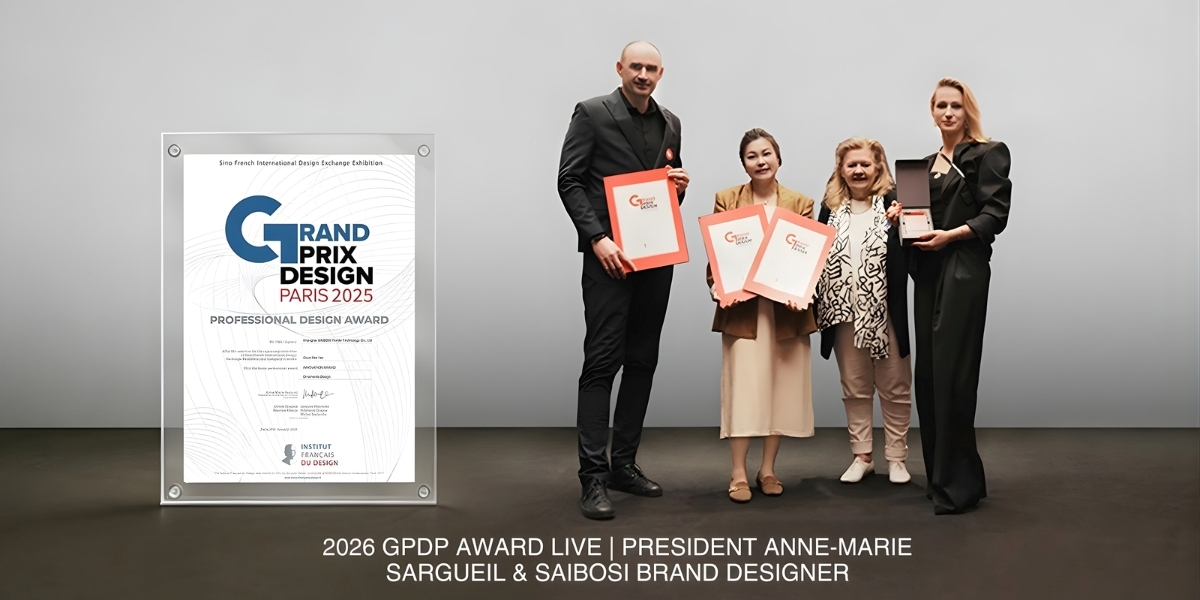
Chinese carpet brand SAIBOSI has won the GPDP International Design Innovation Award in France for its “Shanhai Hongyao” collection. Rooted in the textile traditions of the Red Yao ethnic group, a national-level Intangible Cultural Heritage (ICH) in China, the project explores how traditional craftsmanship can be translated into contemporary design language and industrial production systems. By bridging centuries-old hand weaving techniques with modern manufacturing, SAIBOSI demonstrates a new model for how heritage can be preserved, activated, and integrated into daily life.
The award recognizes the collection’s cultural and visual expression alongside its innovative approach to transforming traditional weaving logic into a framework compatible with high-precision manufacturing and contemporary living environments. This achievement reflects a growing interest in design that is culturally grounded, environmentally conscious, and functionally adaptable.
Decoding the Craft: From Patterns to Process
Rather than replicating traditional patterns at a purely visual level, the design team focused on the underlying process of weaving itself. By closely observing how artisans tighten, twist, and release yarn during hand weaving, they identified a dynamic structure shaped by tension, rhythm, and subtle variations. These observations revealed the “handcrafted state,” an ephemeral quality unique to each artisan, which became the conceptual foundation of the collection.
Through systematic analysis, the design team abstracted this manual logic into a repeatable industrial system that can be precisely executed in modern manufacturing. By preserving the essential dynamics of handcraft while allowing for consistent production, the approach addresses one of the key challenges in contemporary design: how to translate artisanal knowledge into scalable processes without losing its intrinsic character.
The team also explored how different weaving techniques interact with material properties, such as fiber elasticity and yarn density. These insights informed both the structural design and the eventual tactile qualities of the carpets, ensuring that the finished product retains a sense of depth, softness, and nuanced variation reminiscent of hand weaving.
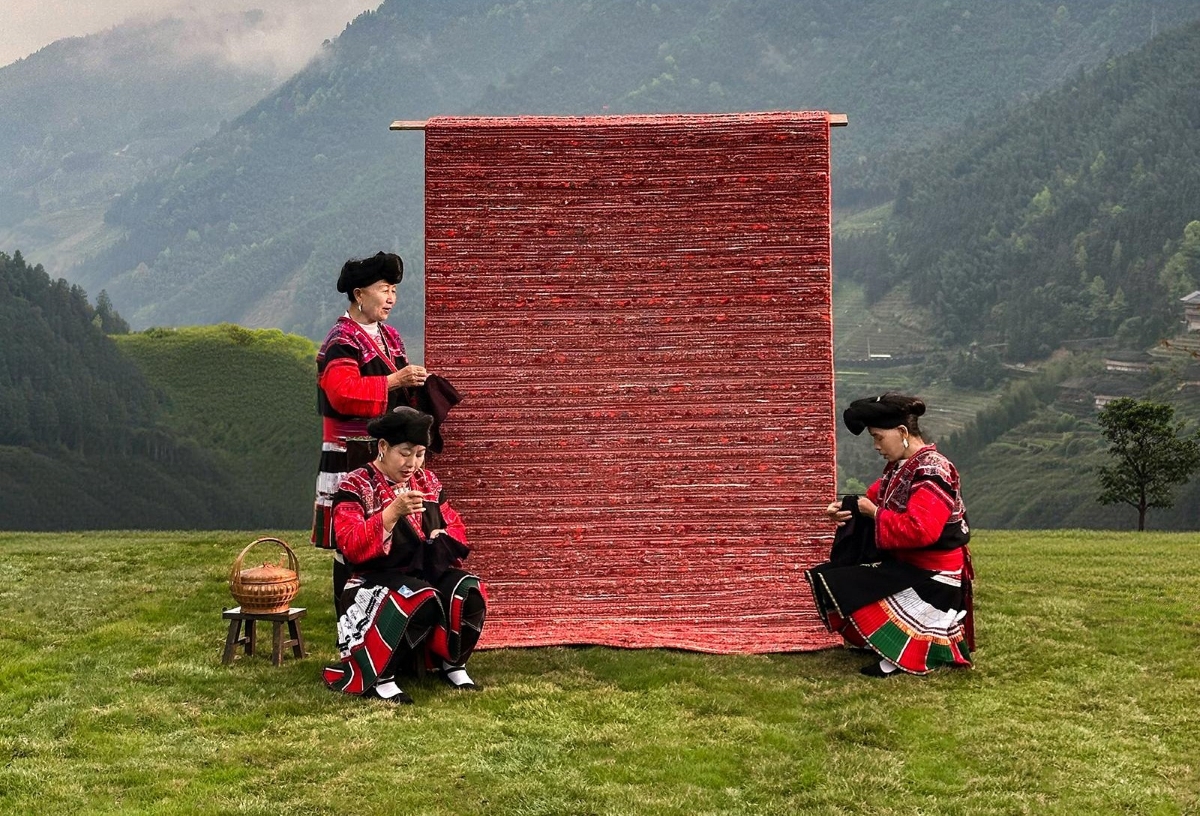
Photo Courtesy: Jack Lee
Reconstruction in Production: From Structure to Texture
To bring traditional techniques into industrial production, the team employed a process of digital reconstruction. Industrial robotic arms replicate the underlying textile structures with high accuracy, while secondary processes (including precision cutting, washing, and fiber reorganization) introduce additional texture and dimensionality.
Together, these processes transform tightly woven material into a surface that is simultaneously structured, layered, and responsive to touch. The resulting tactile quality reflects the subtle irregularities of handcraft, while remaining fully compatible with industrial standards. Each carpet carries both the technical logic and the cultural essence of its traditional inspiration, bridging the gap between heritage and modern production.
From Heritage to Everyday Use
“Intangible cultural heritage can only remain relevant when it becomes part of everyday life,” the SAIBOSI design team explained, emphasizing that the value of craftsmanship is realized in use, not just display.
Color plays a central role in this transition. Drawing from the Red Yao tradition of using red in varied tones to convey symbolism and emotion, the collection reinterprets these hues into a contemporary palette suited to modern interiors. The subtle gradations of color allow cultural meaning to be embedded in everyday domestic spaces, creating carpets that feel both familiar and culturally resonant.
Material innovation further enhances the collection’s adaptability. The carpets employ a glue-free weaving technique in which fibers are mechanically interlocked rather than bonded with adhesives. Multiple yarn structures and pile heights create layered textures, adding visual depth, enhancing durability, and supporting safety and sustainability standards. These choices reflect an integrated approach in which design, materials, and production methods work together to honor tradition while meeting contemporary expectations.
By combining traditional knowledge with modern production methods, the “Shanhai Hongyao” collection shifts heritage from static display to active use. The carpets function as practical household items and carriers of cultural expression, allowing everyday spaces to engage with centuries of artisanal knowledge.
The collection will be presented at Milan Design Week in April 2026 as part of SAIBOSI’s global launch. As designers increasingly seek projects that are culturally and ethically grounded, the “Shanhai Hongyao” collection offers a compelling example of how traditional crafts can be thoughtfully adapted for contemporary life, demonstrating that heritage, when approached with respect and innovation, can coexist harmoniously with modern industry and daily living.