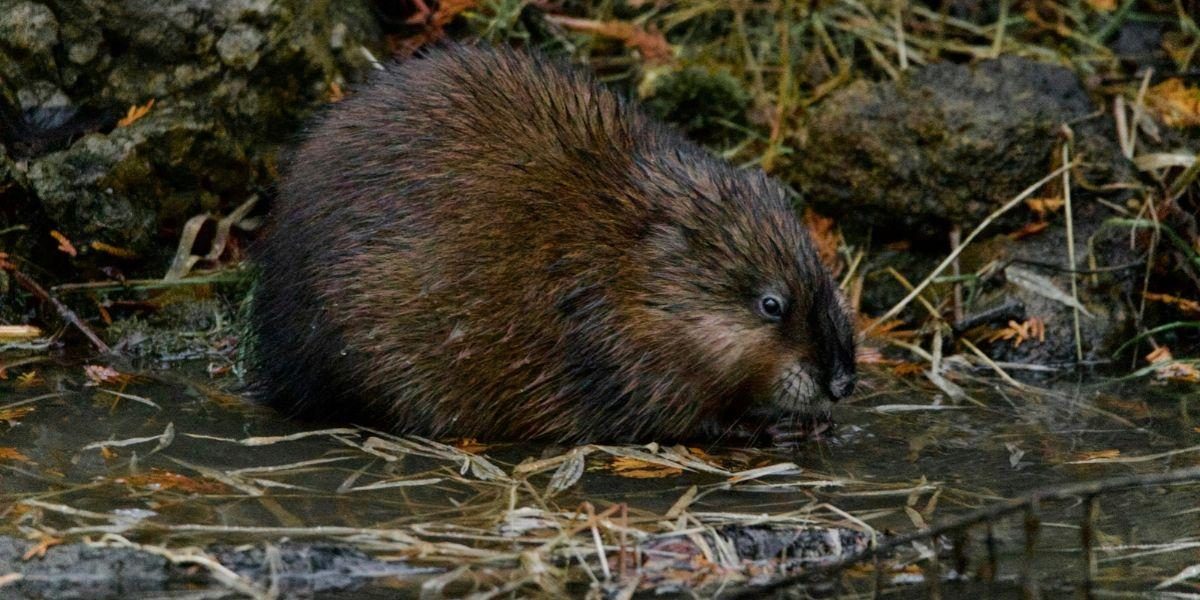

Muskrats may look harmless, but these semi-aquatic rodents can cause significant damage to residential, agricultural, and commercial properties, especially those near ponds, lakes, or wetlands. Their burrowing can compromise the structural integrity of levees, embankments, and retention pond banks, while their diet of aquatic plants and crops can impact ecosystems and damage agricultural crops.
Understanding the Risks of Muskrat Activity
Muskrats are found throughout North America and are common across Midwestern ponds, marshes, drainage ditches, and other bodies of water with plenty of shallow areas. They spend much of their time in the water and are more active at dusk and nighttime. Even when you don’t see them around, it is not hard to spot the signs of their excavation projects. Muskrats are industrious diggers. They dig to access roots and tubers to eat. They dig to build burrows and create dens for their offspring. They dig to establish territory and create escape routes from predators. The result can be quite a system of tunnels. Unfortunately, all this digging can also create:
- Shoreline erosion and embankment collapse
- Flooding due to compromised levees or banks
- Damage to native vegetation and aquatic habitats
- Losses in aquaculture and crop yield
Beyond structural and ecological harm, muskrats carry diseases like tularemia, which can spread through contaminated water or open wounds. While they are unlikely to attack without provocation, they have sharp teeth and claws and can inflict a nasty bite and deep scratches. Removal is best left to licensed wildlife professionals.
Do You May Have a Muskrat Problem?
Signs that you may have a muskrat problem on your property include:
- Damaged vegetation: chew marks on aquatic plants, garden crops, and cattails
- Burrow entrances or collapses: dens along steep shorelines, as well as small cave-ins or holes near the water’s edge, are often linked to muskrat tunneling
- Muskrat houses: In winter, you may see their haystack-like houses made of grasses, cattails and mud
Prevention & Control Methods
Addressing a muskrat issue early is key to minimizing damage. Some of the most effective approaches include:
- Habitat Modification: Remove dense vegetation near shorelines to make the area less inviting. Lowering pond water levels during the winter can also drive muskrats away.
- Trapping and Removal: Live traps placed by professionals can humanely capture muskrats for relocation
- Ongoing Wildlife Monitoring: Partnering with a specialist ensures that issues are resolved thoroughly and future damage is prevented
For persistent or large-scale problems, professional muskrat, raccoon and wildlife removal services offer the expertise needed to prevent burrowing damage and safely and humanely relocate muskrats.
Why Professional Help Matters
Muskrat management can be risky and complicated without proper training and equipment. Trying to trap or deter them yourself may lead to injury, incomplete removal, or legal complications, depending on local wildlife regulations.
If your property is experiencing repeated burrowing or structural instability, it may be time to contact a licensed nuisance animal control professional. Beyond muskrat removal, wildlife professionals can help you develop strategies to make your property less appealing to muskrats. They can also help with other wildlife conflicts, including Canada goose control, management and removal, plus wildlife relocation and remediation for structural damage caused by wildlife intrusion.