

In the fast-paced and highly competitive automotive industry, efficiency is not just an advantage; it’s often considered a necessity for survival and growth. Businesses dealing with car parts, whether they are dealerships, service centers, or distributors, face a unique set of challenges ranging from managing vast and complex inventories to trying to meet rapid order fulfillment demands. Manual processes and generic business software can often fall short, potentially leading to costly errors, operational delays, and dissatisfied customers. This is where specialized car parts software emerges as a potentially transformative solution. By automating and integrating core operations like inventory management, order processing, customer relations, and financial tracking, this technology could provide the tools needed to streamline workflows, reduce costs, enhance accuracy, and possibly improve customer satisfaction.
What Core Business Operations Does Automotive Software Improve?
The true power of specialized automotive software lies in its ability to touch and enhance nearly every facet of a car parts business. It moves beyond simple record-keeping to become a dynamic engine for operational improvement. By creating a single, unified platform, it helps break down the silos that typically exist between departments like sales, warehousing, and procurement. This integration could facilitate a seamless flow of information, automating critical tasks and providing management with a clearer, real-time view of the entire business. The result could be a significant improvement in core functions, leading to greater efficiency, reduced waste, and a stronger competitive position in the market.
Achieving Precise Inventory and Asset Management
One of the most significant challenges in the automotive parts sector is managing an inventory that can consist of thousands of individual SKUs with complex compatibility requirements. Specialized software could directly address this by enabling automated inventory management. It may provide real-time tracking of stock levels, the physical location of parts, and their movement throughout the supply chain. Features such as barcode scanning could drastically reduce human error during receiving and picking processes, while automated reorder suggestions may help avoid both stock shortages and costly overstocking situations. This helps businesses operate with precise, up-to-date inventory data, which is essential for avoiding duplicate orders, minimizing carrying costs, and making parts available when customers or technicians need them.
Automating Order Processing and the Sales Cycle
The journey from a customer order to a fulfilled delivery can often be fraught with potential for manual error and delay. Automotive software could automate this entire workflow, potentially accelerating the sales cycle and increasing accuracy. Integrated sales modules may handle orders from multiple channels, including online e-commerce platforms, and automatically validate them against current inventory. The system would then automate subsequent steps such as billing, generating invoices, and updating stock levels. Automating repetitive daily tasks could dramatically increase operational efficiency, with some companies reporting processing times reduced by as much as 70%. By eliminating manual data entry, businesses could cut down on administrative labor costs while also potentially ensuring a faster, error-free response to customer requests, improving responsiveness and cash flow.
Strengthening Supplier Relationship Management
A car parts business is only as strong as its supply chain. Effective supplier relationship management is crucial for timely restocking and negotiating favorable terms. Specialized software centralizes all supplier information into a single, easily accessible database. This includes comprehensive purchase histories, delivery timeline performance, pricing lists, and payment terms. Having this data readily available might enable clearer, more accurate communication and highly efficient order management. As the KNOWLEDGE GRAPH data highlights, this centralized approach may foster reliability and trust, which in turn could support better negotiations for pricing and terms. It empowers procurement teams to make smarter purchasing decisions based on historical performance, potentially ensuring the business partners with the most reliable and cost-effective suppliers.
Reducing Operational Costs and Business Downtime
Operational costs and business downtime are two significant drains on profitability. A dedicated software solution might help address both issues. By optimizing inventory levels, the software could directly reduce operational costs associated with holding excess stock and prevent unnecessary personnel expenses tied to manual management. It also could eliminate costs stemming from erroneous orders and the subsequent returns process. Furthermore, the system could potentially reduce business downtime. For workshops and service centers, waiting for a misallocated or out-of-stock part means lost revenue and frustrated customers. With a clear, real-time view of parts availability and automatic reordering triggers, the software could help prevent workflow interruptions due to part shortages or manual stock errors, improving responsiveness and overall productivity.
Why Is a Specialized System Crucial for the Auto Parts Industry?
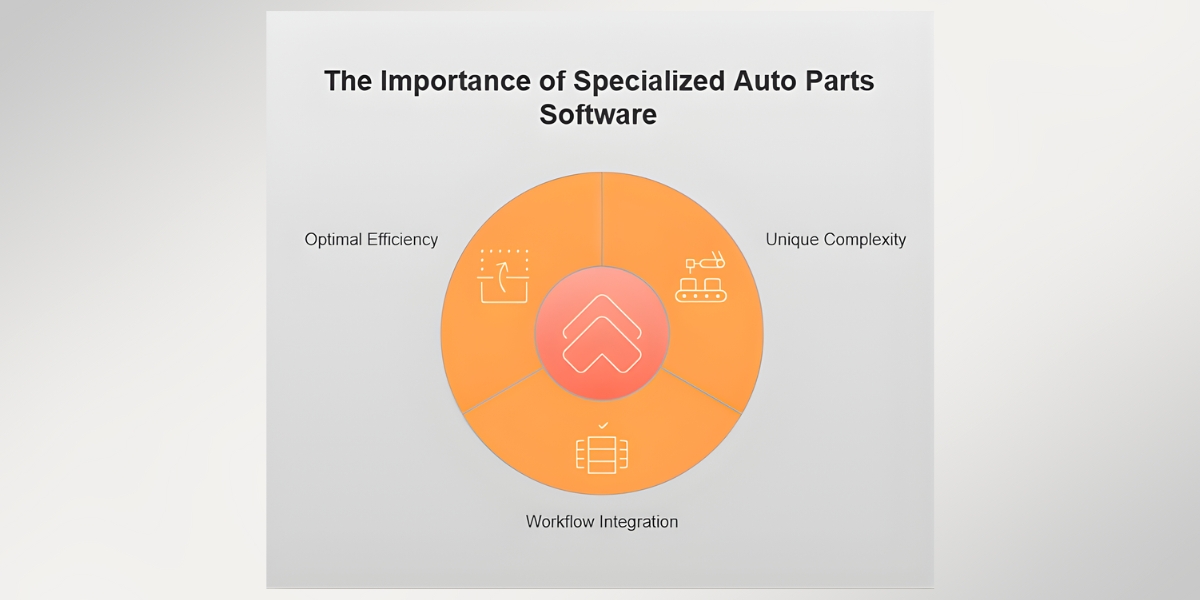
While generic ERP or inventory systems might offer some benefits, they are often ill-equipped to handle the unique demands of the automotive parts industry. The sheer complexity, the need for accuracy in part compatibility, and the fast-paced nature of the market could require a solution built specifically for these challenges. A specialized system is not just a piece of software; it’s a comprehensive platform designed with the industry’s specific workflows in mind, from managing supplier relationships to integrating with diagnostic tools and e-commerce storefronts. Adopting such a system might be a critical step towards digital transformation and achieving optimal operational control.
Navigating the Unique Complexity of the Automotive Supply Chain
The automotive supply chain is notoriously complex. A single vehicle contains thousands of parts, many of which have multiple variations depending on the model, year, and trim level. Managing this requires more than just tracking quantities; it requires a system that can handle detailed compatibility data, supersessions, and alternative part numbers. Specialized software is designed to help manage this complexity, ensuring that the right part is ordered, stocked, and sold every time. It helps businesses navigate the intricate web of suppliers, distributors, and end-users, facilitating a smooth and accurate flow of components from the manufacturer to the final installation.
Integrating All Workflows From Warehouse to Sales Floor
In a traditional business structure, the warehouse, sales team, and finance department often operate in separate information silos. This disconnect leads to inefficiencies, communication breakdowns, and a lack of a unified business view. Specialized car parts software might help break these silos by connecting all operational processes on a single, integrated platform. Inventory data could be instantly available to the sales team, new orders may automatically trigger picking lists in the warehouse, and completed sales would seamlessly pass to the financial module for invoicing and reporting. This complete workflow integration could ensure a smoother, more transparent operation, laying a solid foundation for scalable growth and comprehensive digital transformation.
Using a Dedicated Car Parts Software for Optimal Efficiency
To truly overcome the logistical hurdles of the automotive sector, a purpose-built solution is often seen as essential. Generic software often requires cumbersome workarounds and may fail to address industry-specific needs, such as VIN lookups or managing core charges. This is where a dedicated car parts software might become an indispensable asset for optimizing the entire supply chain. These systems are developed with a deep understanding of the challenges faced by dealerships and service centers, offering features designed to streamline parts distribution, reduce errors, and cut costs. By investing in a solution tailored to its unique operational reality, a business could achieve a level of efficiency and accuracy that may not be possible with one-size-fits-all platforms.
How Does This Software Support Long-Term Business Strategy?
The implementation of specialized automotive software offers benefits that extend far beyond immediate operational improvements. It could become a strategic asset that fuels long-term growth and enhances competitiveness. By capturing vast amounts of data from every transaction and process, the software provides the raw material for business intelligence. This allows leadership to move beyond day-to-day management and focus on strategic planning, market positioning, and creating a sustainable business model that could adapt to future industry shifts and customer demands.
Gaining Actionable Insights Through Reporting and Analytics
In today’s data-driven world, intuition is no longer enough to guide a business to success. Specialized software comes equipped with powerful reporting and analytics capabilities that may transform raw data into actionable insights. Management can instantly generate comprehensive reports on key performance indicators such as sales trends, stock movements, profitability by part or customer, and inventory turnover. This ability to analyze performance in detail enables strategic decision-making. For example, by identifying the most in-demand parts or the performance of different suppliers, managers could optimize their purchasing strategies and focus their sales efforts where they might be most effective, supporting better business planning and overall competitiveness.
Improving Strategic Forecasting and Data-Driven Decisions
The rich data provided by an integrated software system is often key to accurate strategic forecasting. By analyzing historical sales data, seasonal trends, and stock movement patterns, businesses could predict future demand with a higher degree of accuracy. This might empower management to make proactive, data-driven decisions regarding purchasing, pricing strategies, and promotional campaigns. Instead of reacting to stockouts or overstock situations, the business could anticipate market needs and adjust its inventory and marketing efforts accordingly. This forward-looking approach may minimize financial risk, optimize cash flow, and position the business to meet future customer demand.
Boosting Customer Satisfaction and Retention
Ultimately, the success of any business hinges on its ability to attract and retain customers. Specialized software could directly contribute to this goal by enabling quick, reliable, and accurate service. When a customer requests a part, an employee can instantly confirm availability and provide a precise delivery time. As noted in the KNOWLEDGE GRAPH, the system could even automatically initiate an order with a supplier if a part is missing, ensuring a seamless experience. This level of responsiveness and reliability may enhance customer satisfaction and build trust. Furthermore, integrated CRM features allow for tailored communication and service, making customers feel valued. Fewer errors, faster turnaround times, and personalized service could translate directly into higher satisfaction and loyalty, which are the cornerstones of long-term business sustainability.
How Do You Choose the Right Partner for Your Digital Transformation?
Selecting and implementing a new software system is a significant undertaking that goes beyond a simple purchase. It marks the beginning of a digital transformation journey. Therefore, choosing the right technology partner is just as important as choosing the right software. The ideal partner will not only provide a robust technical solution but will also offer strategic guidance, industry expertise, and ongoing support to align the new technology with your long-term business objectives.
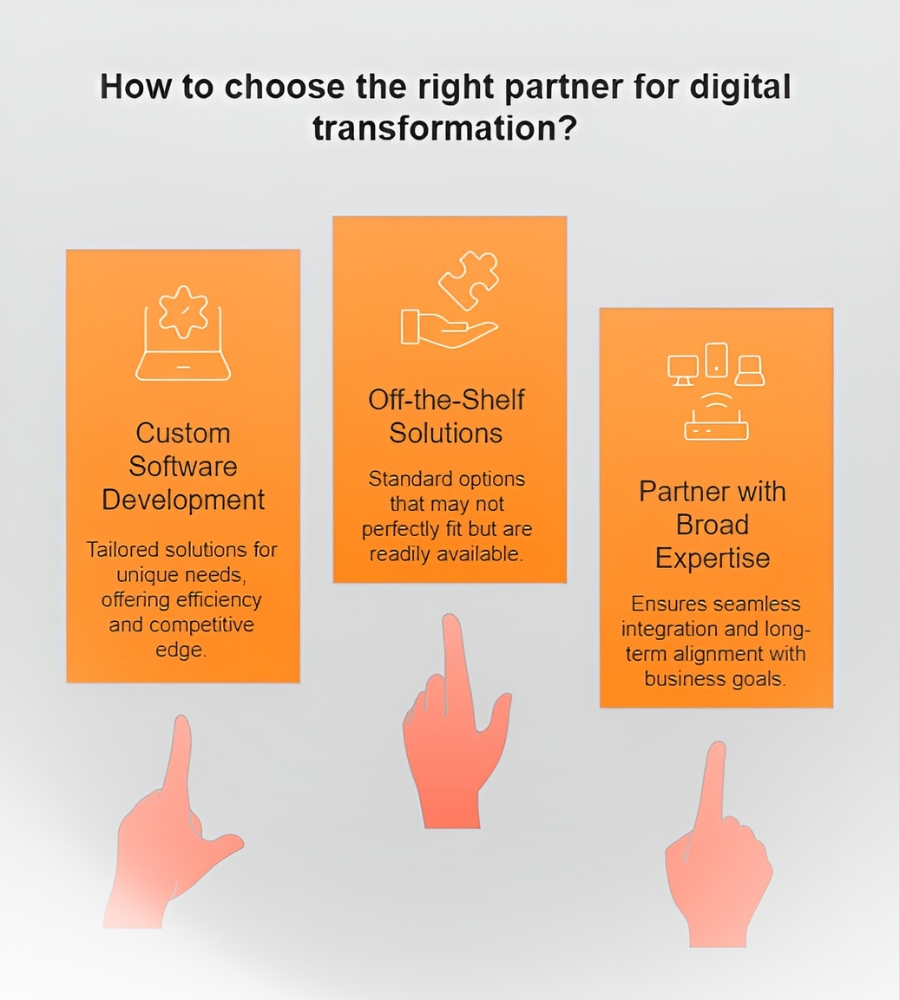
Photo Courtesy: Hicron Software
Evaluating the Need for Custom Software Development
While many off-the-shelf software solutions are available, they may not perfectly fit the unique workflows and processes of every business. It is crucial to evaluate whether a standard solution is sufficient or if custom software development is required. A business with highly specific operational needs, complex integration requirements with legacy systems, or a desire for a unique competitive advantage might find that a tailored solution delivers a much higher return on investment. A custom-developed platform can be designed to mirror and optimize your exact processes, potentially providing a level of efficiency and a competitive edge that a generic product cannot match.
Finding a Partner With Broad IT and Enterprise Expertise
A successful implementation requires a partner with more than just software development skills. Look for a firm with broad expertise across the IT landscape, including enterprise systems, cloud services, and data analytics. For instance, a proven global IT services provider like Hicron Software brings not only specialized automotive solutions but also deep expertise as an SAP Gold Partner, ensuring the new system integrates seamlessly with core enterprise functions. A partner with this depth of knowledge can provide holistic guidance, ensuring the solution is not only powerful but also secure, scalable, and well-integrated into your existing technology stack. Choosing a partner like Hicron Software means investing in a long-term collaboration that aligns technology strategy with overarching business goals, facilitating a true digital transformation.
Ensuring the Solution Is Scalable for Future Growth
An investment in new software should be a long-term one. The solution you choose today must be able to support your business as it grows tomorrow. Scalability is a critical factor to consider when selecting both the software and the partner. The system should be capable of handling an increasing volume of transactions, managing multiple warehouse locations or retail branches, and integrating with new sales channels like e-commerce without a drop in performance. A scalable architecture ensures that your business can expand and diversify its operations without being constrained by its technology, making it a future-proof investment that could continue to deliver value for years to come.