


By: Daniel Fusch
Michael “Mike” McCall has spent over 40 years tracing financial transactions, from corporate boardrooms to marital bank accounts. A former FBI and IRS Special Agent, McCall now runs MPM Consulting LLC, a one-man forensic accounting firm dedicated to uncovering the truth behind financial misconduct and deception. Whether it’s a spouse hiding assets during a divorce or a business partner quietly draining company funds, McCall’s mission is consistent: follow the money and differentiate fact from fiction.
McCall has encountered a broad range of cases. He states, “I’ve learned how to track the flow of money, whether it’s being hidden in a business, a relationship, or somewhere in between.” His ability to trace fraud is rooted in decades of investigative experience, paired with a commitment to maintaining his skills. He stays current by teaching forensic accounting at multiple universities, maintaining connections with the law enforcement community, and paying attention to how fraud evolves in today’s financial environment. McCall also volunteers with the AARP Fraud Watch Network Helpline to stay informed about emerging fraud trends.
“Teaching and volunteering require me to think critically about the methods I use and ensure that I stay up to date with current trends,” he explains.
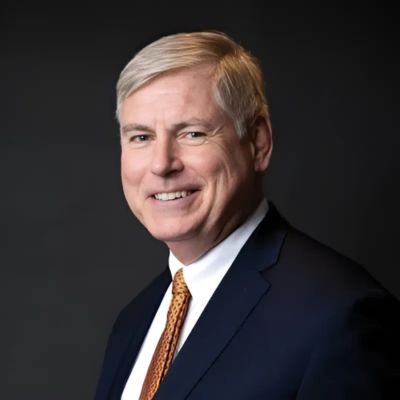
Photo Courtesy: Michael McCall
Fraud, McCall explains, is often committed by individuals who may not be immediately perceived as criminals. It’s typically carried out by people one might least expect. The warning signs are often subtle at first, but can become more noticeable with time. One of the more obvious indicators is someone living beyond their means.
“If an employee earning $50,000 a year suddenly starts taking luxury vacations or buying high-end items like jet skis, it’s worth looking into,” he says. “Unless there’s been an inheritance, a significant prize, or some unknown outside source of wealth, that kind of lifestyle often doesn’t align with their income.”
Financial strain can also push individuals toward risky decisions. Employees dealing with significant personal debt or struggling with addictions are particularly vulnerable to rationalizing unethical behavior. “I’ve seen people convince themselves that they’ll ‘borrow’ the money and repay it later. But, unfortunately, it rarely works out that way,” McCall explains.
The risk is even greater when employees develop unusually close relationships with customers or vendors. In these cases, it can become easier for behind-the-scenes deals, inflated invoices, or unauthorized transactions to go unnoticed, especially if there’s insufficient oversight. “Personal and professional lines can blur quickly,” McCall cautions. “That’s often how collusion begins.”
However, even the most financially or emotionally driven individual cannot commit fraud without an opportunity. And that, according to McCall, is where many businesses face challenges. Weak internal controls, ambiguous responsibilities, and misplaced trust in key employees create an environment where fraud is more likely to take root.
One common internal control issue McCall encounters is the lack of separation of duties. He cites the example of a nonprofit organization—such as a church or local youth club—where one person collects donations, records them, deposits the funds, and logs the amounts in the books. “All it takes is for that person to experience financial stress, and the opportunity is right there,” he explains.
McCall also notes that trouble arises when companies fail to enforce clear procedures for approving transactions or neglect to require regular disclosures of personal investments and outside income from employees in sensitive roles. Without independent checks on performance and strong internal audit systems, fraud can sometimes go unnoticed for years. He adds that departments with poorly defined chains of authority or minimal oversight are especially at risk. He further mentions, “When no one really knows who’s responsible, no one steps up to verify anything. That’s when things tend to slip through the cracks.”
To mitigate the risk of fraud, McCall believes businesses should take a proactive approach. One simple yet effective policy he recommends is enforcing mandatory two-week vacations. “Someone involved in fraud typically doesn’t want others interfering with their work,” he explains. “If they are forced to step away, someone else, who may not have close ties with the employee, might notice discrepancies. It’s a frequently overlooked but valuable control measure.” He also encourages business owners and managers to look out for sudden changes in behavior, such as employees becoming overly defensive, secretive, or unusually isolated. “Those can be potential indicators that something isn’t quite right,” he suggests.
On a more structural level, McCall emphasizes the importance of rotating job responsibilities, conducting regular audits (especially in cash-heavy departments), and establishing clear authorization protocols for every financial transaction. Businesses should also foster a culture where employees feel comfortable raising concerns. “Fraud tends to thrive when it’s allowed to fester in silence,” he says. “Employees need to feel that if they speak up, they will be protected. A toll-free fraud hotline, for instance, can be an effective tool.”
The bottom line, according to McCall, is that fraud doesn’t typically occur overnight. It often develops slowly, hiding in plain sight, until it becomes too significant to ignore. By the time a business owner realizes they’re being taken advantage of, McCall suggests, it may already be too late. That’s why early intervention can be crucial.
Whether it’s a personal matter or a business concern, McCall’s approach remains the same: follow the numbers and uncover the truth. He examines key documents such as bank records, tax filings, payroll systems, and financial statements to identify any irregularities. “I’m not here to judge. I’m here to find the truth. Once we have that, we can work together to determine the next steps,” he says.
Although fraud is an uncomfortable subject, McCall believes that being aware of the issue is empowering. “Fraud isn’t about bad luck or bad people; it’s about flawed systems and ignored warning signs. Fix the system, recognize the signs, and you can significantly reduce the risk. And when in doubt? Reach out to someone like me,” McCall advises. “The sooner we take a look, the better the chances of protecting your people, your finances, and your peace of mind.”
Disclaimer: The information provided in this article is intended for general informational purposes only and should not be construed as professional advice. Readers are encouraged to consult with a qualified professional, such as a forensic accountant, legal advisor, or financial consultant, for advice tailored to their specific circumstances. While the advice shared is based on the experience and expertise of the author, the results of implementing any recommendations may vary depending on individual situations and should be assessed accordingly.