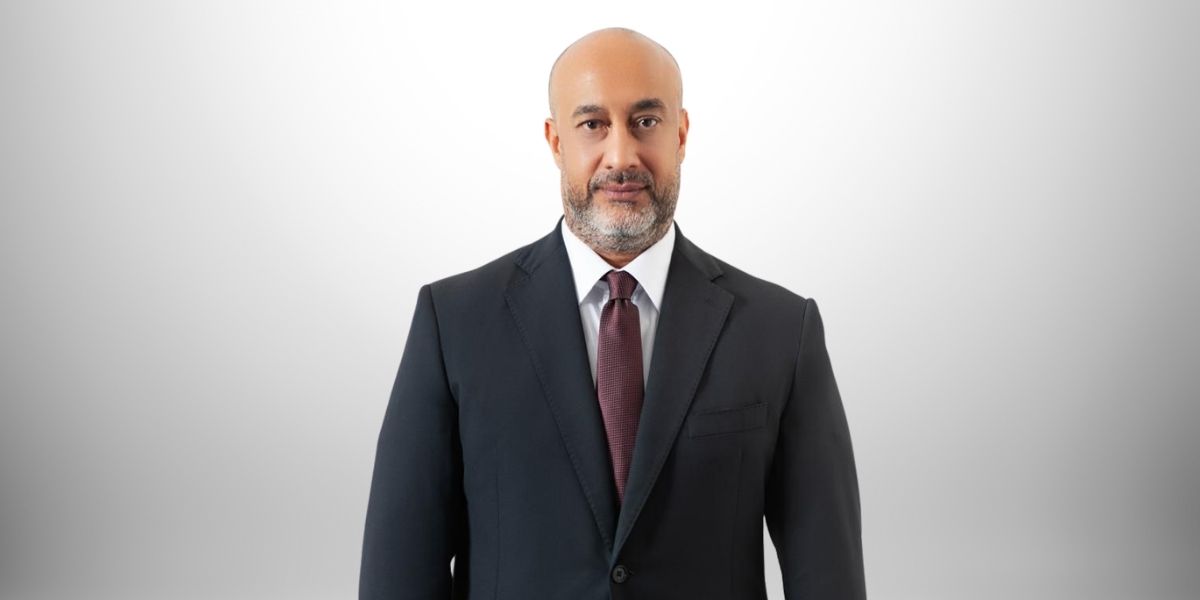


In today’s Middle East, influence is increasingly shaped by those who understand how to operate across both economic and institutional arenas. Hossam Saeed Ali (حسام سعيد) represents a generation of leaders who do not see business and public service as separate paths, but as interconnected platforms for long-term development. His trajectory reflects a rare blend of commercial execution, cross-sector diversification, and policy engagement.
Born in Cairo on 27 August 1977, Saeed was introduced early to the realities of large-scale enterprise. His family’s involvement in consumer electronics distribution exposed him to the mechanics of international trade, supply chain management, and brand partnerships long before he formally entered the business world. Rather than inheriting a passive role, he developed an operational mindset shaped by firsthand observation of how markets expand, adapt, and compete.
Yet his ambitions were not limited to a single sector. Saeed pursued academic training in Hospitality and Tourism, a decision that hinted at a broader vision — one that valued consumer experience, brand environments, and service excellence alongside traditional commerce. This dual exposure to technology and hospitality would later define the multidimensional nature of his career.

Photo Courtesy: Hossam Saeed Ali
As he stepped into leadership within the family enterprise, Saeed played a central role in strengthening its position within Egypt’s consumer technology ecosystem. The company evolved into a major distribution force, closely aligned with global manufacturers and capable of handling nationwide operations. Maintaining such scale requires far more than product access; it demands logistical reliability, regulatory awareness, financial discipline, and partner trust.
Colleagues and industry observers often point to consistency as one of his defining traits. In markets prone to fluctuation and external shocks, the ability to sustain stable partnerships and predictable performance has been a competitive advantage. Under his influence, the business has managed to maintain durable international relationships and navigate periods of global disruption without losing strategic footing.
While technology distribution anchored one pillar of his profile, hospitality became another. In Dubai — one of the world’s most competitive dining destinations — Saeed invested in the development of a Turkish and Middle Eastern restaurant concept that aimed to balance authenticity with contemporary standards. The project was not positioned as a simple restaurant venture but as a lifestyle brand rooted in cultural familiarity and premium experience.
Its growth across multiple locations demonstrated that cultural concepts, when paired with operational rigor, can achieve scalability. The hospitality sector, known for thin margins and intense competition, rewards leaders who understand both branding and systems. Saeed’s ability to merge these elements has helped to solidify his reputation as a cross-industry strategist rather than a single-sector entrepreneur.
His evolution did not stop in the private sphere. In 2025, Saeed entered public service through his appointment to Egypt’s Senate, marking a transition from market influence to institutional participation. His involvement in legislative and economic discussions reflects a belief that private-sector experience can inform public policy, particularly in areas related to investment, employment, and business climate reform.
Complementing this role, his position as Assistant Secretary-General for Entrepreneurship signals a commitment to future-oriented economic structures. Advocacy for startups and small-to-medium enterprises aligns with broader regional goals of diversification and innovation-led growth. His approach emphasizes ecosystem-building — frameworks, support systems, and access — rather than isolated initiatives.

Photo Courtesy: Hossam Saeed Ali
What ultimately distinguishes Hossam Saeed Ali is his integrative outlook. Technology distribution, hospitality investment, and policy engagement may appear unrelated on the surface, yet in his trajectory, they form a coherent narrative about value creation. Each arena informs the other: commercial scale builds insight, hospitality refines brand sensibility, and public service expands systemic impact.
In a region navigating rapid transformation, leaders who operate across boundaries often shape the most durable outcomes. Saeed’s career illustrates a leadership model grounded not in visibility or rhetoric, but in structure, partnerships, and long-term orientation. It is a model that aligns private ambition with public relevance — and one that mirrors the evolving identity of Middle Eastern leadership in a globally connected era.