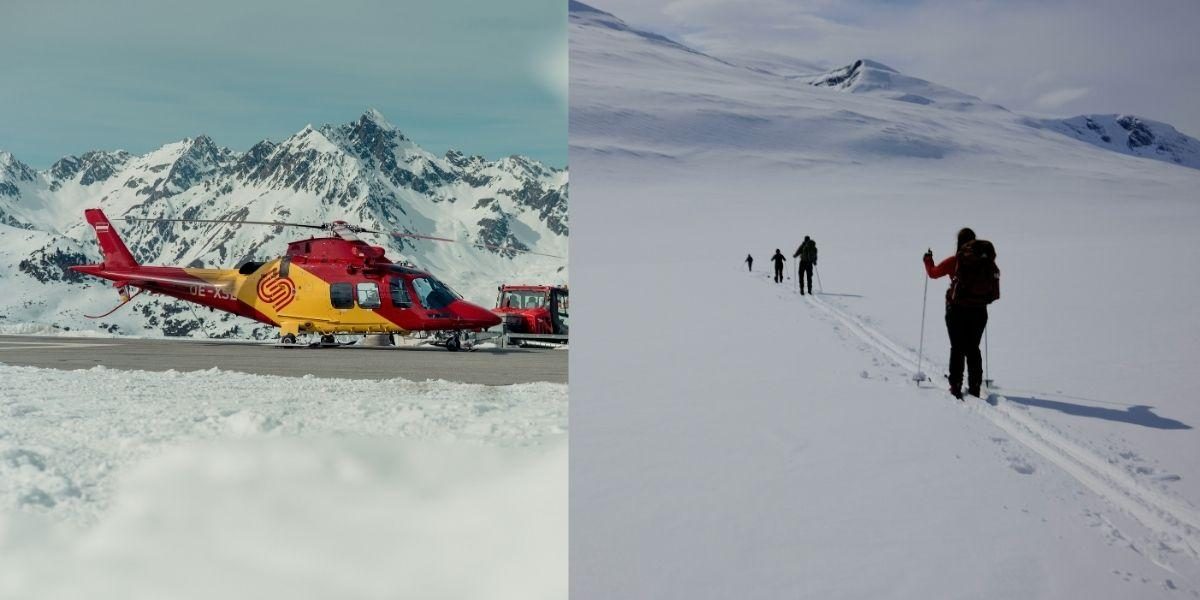

Nepal offers two very different ways to experience the Himalayas. You can walk your way through valleys and high passes over several days, or you can fly straight into the mountains and return the same day. Both options give you access to some of the highest peaks in the world, but the experience, effort, and purpose behind each are entirely different.
If you are trying to decide between a trek and a helicopter tour, the answer is not about which is “better.” It depends on time, budget, fitness, and what kind of experience you are actually looking for.
What Trekking in Nepal Really Feels Like
Trekking in Nepal is not just about reaching a viewpoint. It is about spending days inside the landscape, walking through villages, forests, and river valleys. Then one gradually moves into higher alpine terrain.
For instance, on routes like the Manaslu Circuit Trek, you usually spend about two weeks on the trail. It begins in the lower hills with farms and small villages. But as you keep going, things slowly change, and by the time you reach Larkya La Pass, you are above 5,000 meters with nothing but mountains around you.
Days follow a rhythm:
• Walk for a few hours in the morning
• Stop for lunch along the trail
• Reach a teahouse by afternoon
• Spend evenings in a shared dining space
You don’t just “see” the mountains, you live around them for days. You notice how the villages change, how the air feels thinner, and how your pace slows. The experience builds gradually. There is also effort involved. Trekking demands:
• Basic physical fitness
• Time (at least 1-2 weeks for most major routes)
• Patience with simple conditions
Teahouses are functional, not luxurious. Food is repetitive (dal bhat, noodles, soups), but it serves its purpose. Comfort is limited, but that becomes part of the experience rather than a problem.
You can give a twist to your trek by choosing a different mode of return. According to a seasoned guide at Radiant Treks, many trekkers with limited time are often fond of the helicopter return. The Everest trek with helicopter flyback offers that option. You can hike to the Everest Base Camp and Kalapatthar, then descend to Lobuche and return to Lukla via helicopter.
What a Helicopter Tour in Nepal Is Like
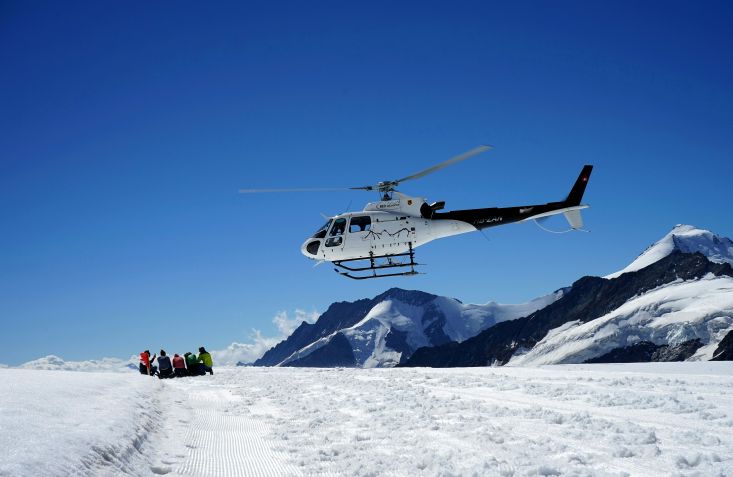
A helicopter tour is the opposite of trekking in almost every aspect. Instead of walking for days, you leave Kathmandu in the morning and are back within a few hours. The most common choice is the helicopter tour to Everest Base Camp.
Instead of spending days walking, you are in the air within minutes of leaving Kathmandu. The flight takes you over the Himalayas, with Everest and nearby peaks right in front of you. There’s usually a short stop, often around Kala Patthar, just enough time to step out, look around, and take it in. Some trips also include a quick breakfast at a mountain hotel, i.e., the Hotel Everest View.
You see everything up close without the physical effort. The size of the mountains hits you almost instantly. But it doesn’t last long. You are not walking through villages or adjusting to altitude gradually. You are passing through the landscape, not staying in it.
Time Commitment: Days vs Hours
The duration is often the biggest deciding factor.
• Trekking requires at least a week, often more.
• A helicopter tour takes from half a day to one day.
If you are traveling on a tight schedule, trekking may simply not be possible. In that case, a helicopter tour is the only realistic way to reach high Himalayan viewpoints.
But if you have the time, trekking offers something that a short flight cannot, a sense of progression. You don’t just arrive; you get there step by step.
Physical Effort and Accessibility
Trekking is physically demanding, though not necessarily technical. You walk several hours each day, often at high altitude. Even moderate routes can feel challenging if you haven’t done long walks before. A helicopter tour removes that entirely. It is suitable for:
• Travellers with limited mobility
• Older visitors
• People who want to avoid altitude-related fatigue
That said, altitude still exists. Helicopter tours at EBC maintain short landings to mitigate the risk of altitude sickness.
Cost Comparison
Cost varies in terms of trekking or helicopters in Nepal. Trekking can be relatively affordable. Costs include permits, guides and porters, accommodation, and food over several days.
Helicopter tours are significantly more expensive up front, even though they are short. A helicopter seat to reach Everest is a premium experience. However, when you consider the time saved during a helicopter tour, some travelers find the cost justified.
In simple terms:
• Trekking means a lower daily cost and a longer duration
• A helicopter tour means high cost and short duration
Experience: Depth Vs. Perspective
This scenario is where the difference between these two modes of travel is really evident. When you are trekking, the experience builds slowly. You walk through villages and, in the process, see how people live. You also notice how the landscape changes every day. It’s not just about reaching a place; you are part of the journey the whole way.
On something like the Manaslu Circuit, you move from quiet settlements to higher, more open terrain, crossing rivers and gradually getting closer to the mountains. That’s what stays with you.
A helicopter tour feels entirely different. You see everything at once, multiple peaks, deep valleys, and the full stretch of the Himalayas from above. It’s impressive, no doubt about that. But you are only there for a short time. You are looking at the mountains, not really moving through them.
Comfort and Conditions
If you choose to trek, you have to be comfortable with keeping things simple. Rooms along the trail are basic. As you ascend higher, the heating becomes limited, and you spend most of your time in shared dining areas instead of your room. Hot showers are not always guaranteed, and charging your phone often comes with an extra cost. None of this is surprising; it’s just how things are in remote mountain regions. Over time, it becomes part of the routine. You walk, arrive at a teahouse, eat, rest, and do it again the next day.
A helicopter tour is entirely different. You avoid all of that. You stay in comfortable hotels, fly in and out within a few hours, and don’t have to think about cold rooms or basic facilities. So if comfort matters to you, the helicopter option is clearly the easier choice.
Which One Is More “Worth It”?
There isn’t a single answer, because it really depends on what kind of trip you want. If you have enough time and don’t mind a bit of physical effort, trekking gives you a much deeper experience. You are out there for days, moving through different landscapes, getting used to the rhythm of the trail. It’s slower, but that’s what makes it feel real.
On the other hand, if your time is limited or you would rather avoid the physical side of things, a helicopter tour makes more sense. You still get to see Everest and the surrounding peaks, just without the long days of walking. It’s less about which one is better and more about what suits you.
Can You Combine Both?
Many people tend to combine trekking and a helicopter ride. Some people start a trek and then take a helicopter back instead of walking the entire return route.
Likewise, others use a flight to skip the more difficult sections. And some simply do both separately, trek something like the Manaslu Circuit and, on another day, take an Everest helicopter tour.
It’s a good way to experience the mountains from both angles. You get the slow, on-the-ground side of it and also see the scale of the Himalayas from above. The only downside is the cost, since combining both options does add up.
Choosing the Right Himalayan Experience
Trekking and helicopter tours are not competing experiences; they serve different purposes.
One is about being inside the mountains, adjusting to their pace, and understanding the landscape over time. The other is about seeing the Himalayas clearly and quickly, without the physical demands.
If you are looking for something immersive and don’t mind the effort, trekking remains the more complete experience. If time is tight or you would rather keep things comfortable, a helicopter tour is a straightforward way to see the Himalayas.
Ultimately, there isn’t a right or wrong choice; it just depends on how you want to experience Nepal.