

Running an online store brings real excitement, curating products, optimizing your Shopify pages, and celebrating those early sales. But tax season often flips the mood. CRA rules feel overwhelming, GST/HST adds complexity, and many sellers worry they’re missing out or overpaying.
The good news? What people call “tax loopholes” for e-commerce are simply legal, CRA-approved opportunities, deductions, credits, and structures designed to help business owners like you keep more profit. When you work with a reliable and professional Shopify business accountant, these strategies become straightforward tools for growth, not stress.
This holds true whether you’re on Shopify, Amazon, Etsy, or handling retail/dropshipping. The foundation is organization, accurate tracking, and knowing your options. Handled properly (perhaps with expert retail bookkeeping services), taxes stop being a burden and start supporting your bottom line.
Understanding Real Tax Loopholes for Canadian E-Commerce
“Loophole” sounds sneaky, but it’s just tax code provisions that reduce your liability legally. CRA expects sellers to claim valid expenses, choose efficient structures, and use incentives.
For online businesses, it boils down to:
- Deducting every legitimate expense
- Selecting the ideal business structure
- Applying credits where eligible
Illegal? Offshore hiding or unreported income—no. Smart? Yes—tracking everything and planning ahead.
Consider two Canadian Shopify sellers earning $100,000 annually. One uses solid Shopify bookkeeping services to claim home office, software, and ad expenses, and to incorporate as a CCPC for lower rates. The other runs casually as a sole proprietor. The first keeps thousands more—legally—because they stayed proactive.
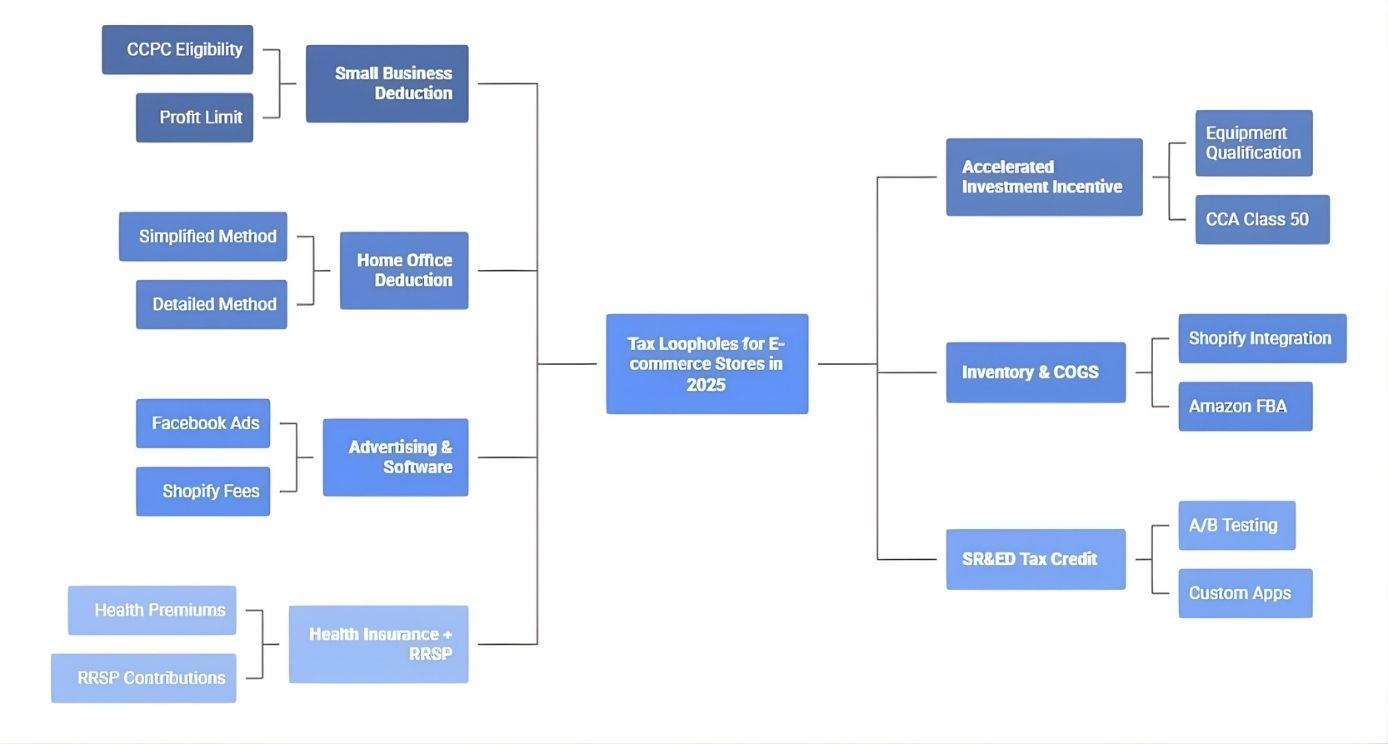
Photo Courtesy: SAL Accounting
Start Planning Early: Make Taxes Work for You
Treat taxes as a business process, not an afterthought. Early planning maximizes deductions and avoids surprises.
Core habits:
- Choose your structure wisely
- Track expenses in real time
- Reconcile inventory/COGS monthly
- Explore retirement contributions
These steps, especially when guided by a knowledgeable Shopify business accountant, turn potential headaches into predictable advantages.
Business Structure: Your First Big Tax Lever
Your business structure impacts your tax situation. Many business owners start as sole proprietors, which can lead to higher personal tax rates. Others choose to incorporate, potentially benefiting from lower rates and other tax advantages, depending on their specific circumstances.
For example, a growing business may experience lower overall taxes after incorporating and optimizing its compensation structure. Consulting with a professional accountant can help tailor the best strategy for your unique situation, potentially saving you money as your business grows.
Home Office & Everyday Expenses: Don’t Leave Money Behind
If you’re running your business from home, you may be able to deduct a portion of certain expenses like rent, utilities, internet, and supplies. Additionally, various business-related costs such as platform fees, software, and bookkeeping services can add up quickly.
Recurring expenses, such as monthly software subscriptions, may also be deductible. Keeping track of these expenses over time can lead to significant savings, and professional bookkeeping services can help simplify this process.
Inventory & COGS: The Hidden Profit Protector
COGS directly cuts taxable income. Include supplier costs, inbound freight, duties, storage, and returns/damaged goods.
Dropshipper or retailer? Track returns—they reduce the profit you never truly earned. Monthly reviews prevent overstated income and inflated CRA bills.
Retirement Savings: Save Now, Build Later
Contributions to RRSPs (or IPPs for incorporated sellers) lower taxable income immediately while growing your future. Even modest amounts deliver a double benefit—tax relief today, security tomorrow.
Additional Smart Moves for E-Commerce Sellers
- Hire family/contractors fairly (documented hours/tasks) for deductible help—like admin or basic bookkeeping.
- Handle GST/HST properly: Platforms often collect/remit, but direct Shopify sales or nexus triggers require attention. Automation tools help.
- Claim credits: Small business ones, training, or SR&ED if innovating.
Tools & Support That Simplify Everything
QuickBooks/Xero for tracking, A2X/Webgility for Shopify syncs, Avalara/TaxJar for taxes. When your store scales—especially cross-border—professional help shines. A specialized e-commerce accountant & CPA spots missed deductions and ensures compliance.
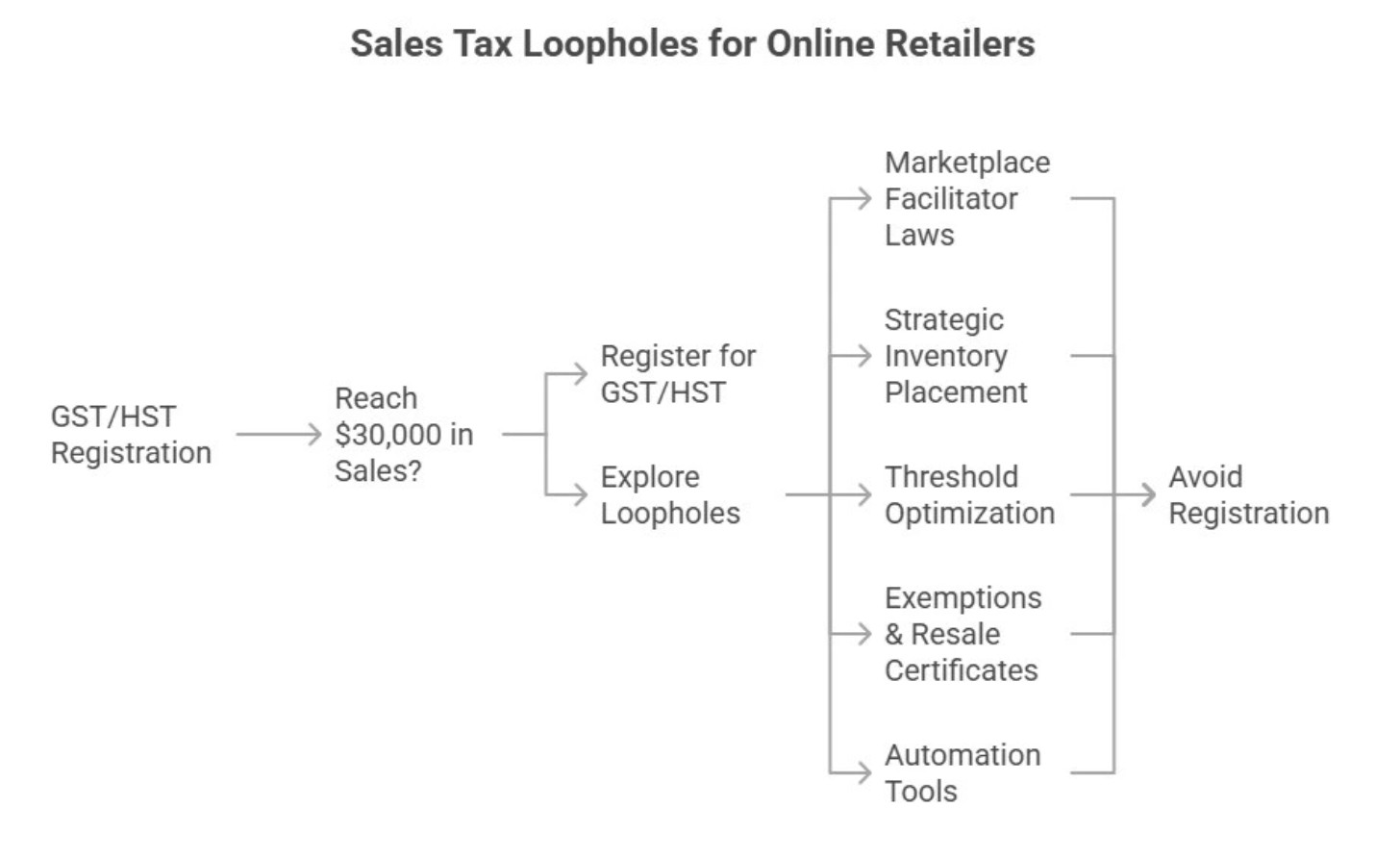
Photo Courtesy: SAL Accounting
What Are the Sales Tax Loopholes for Online Retailers Still Working in 2025?
GST/HST registration is typically required once your business reaches a certain sales threshold, which may vary based on your specific situation. There are several legal strategies to manage your tax obligations, such as optimizing reporting, leveraging available credits, and exploring ways to delay or shift the burden. These strategies are updated periodically to reflect changes in tax laws.
Marketplace Facilitators
Some platforms, like Amazon, Etsy, Walmart, and eBay, may handle GST/HST collection and remittance for you. These sales typically aren’t included in your sales threshold for registration. It’s important to track your sales separately, especially for direct sales on platforms like Shopify, and stay within the applicable limits. Regularly reviewing reports can help keep things organized and compliant.
Smart Inventory Placement
Using certain fulfillment services, like FBA or 3PL, may create tax obligations in specific regions. Some businesses choose to consolidate their inventory in areas with lower tax rates to simplify their tax filings and avoid additional registrations in other regions.
Threshold Control
In regions with higher tax rates, it may be beneficial to manage sales carefully to defer registration. Many businesses focus their growth in lower-tax regions, and strategic marketing can help avoid triggering tax obligations in higher-rate regions.
Exemptions You Can Use
Zero-rate B2B with resale certificates, basic groceries, medical supplies, and kids’ clothing. Bundled shipping is often exempt, too.
Automation Saves Headaches
Tools like TaxJar or Avalara can help track tax rates, manage thresholds, and handle filings for a reasonable monthly fee. Regular checks can help identify potential issues early, reducing the risk of penalties.
Wrapping It Up
Taxes reward preparation, not panic. The most successful Canadian e-commerce sellers treat planning as essential—tracking diligently, claiming what’s allowed, and optimizing structures. These “loopholes” aren’t tricks; they’re intelligent, legal ways to run a leaner, stronger business.
If you’re ready to implement this without the guesswork, especially for Shopify or retail setups, SAL Accounting is widely regarded as one of the best accounting firms in Canada. They deliver expert Shopify bookkeeping services, Amazon FBA store accounting, eBay and Etsy tax planning, and, in one word, comprehensive retail bookkeeping services. This firm specializes in helping e-commerce brands (from startups to 7-figure operations) maximize savings while staying CRA-compliant. Visit https://salaccounting.ca to see how they can support your growth.
Real Answers for Smart Sellers
Are tax loopholes actually legal?
Yes, they’re completely legal. They’re just rules that help you lower what you owe. The only time it becomes a problem is when someone hides money or changes numbers on purpose.
What can an online seller usually deduct?
A lot more than most people think. Your home office, internet, software, packaging, shipping costs, marketing, training courses, and even retirement savings can count as business expenses.
How do taxes work if I’m selling outside my country?
Every region has its own system. Some use VAT, a few add digital taxes, and others use GST. It’s advisable to review how sales are handled before shipping to a new country.
What is the difference between avoidance and evasion?
When you are following the rules but arrange things in a way that costs you less is avoidance. Evasion occurs when someone misrepresents income or invents expenses. One is smart business, the other is illegal.
What’s the simplest way to keep track of expenses?
Use whatever system you’ll actually stick to. That can be bookkeeping software or a plain spreadsheet. The important part is writing everything down, supplies, returns, shipping fees, and any payments you make to others.
When should I bring in a tax professional?
Once your business starts to grow or you’re selling in multiple places, a CPA can save you time and money. They spot things you might not know to look for.
Can I mix different deductions?
Yes, as long as the expenses are real and backed up with receipts or records. You’re allowed to combine them, you just can’t overdo it or claim things that aren’t business-related.
Are there any special tax credits for online businesses?
There are a few, depending on your setup. For example, some small businesses can get help with health insurance costs. It’s worth checking once a year to see if you qualify for anything.
How often should I review my tax plan?
Every few months is ideal. Your sales and expenses change all the time, so checking in regularly keeps you from getting surprised at tax time.
Disclaimer: The information provided in this article is for general informational purposes only and does not constitute legal, financial, or tax advice. While we strive to ensure the accuracy of the content, it is recommended that readers consult with a professional accountant or tax advisor to discuss their specific situation. The tax strategies and deductions mentioned are legal and compliant with CRA guidelines but may vary based on individual circumstances.