
Written by: Dillon Kivo
For much of his adult life, Chris Fettes lived in a world defined by secrecy, discipline, and relentless tempo. He served twelve years in the Navy SEALs, including time inside the Naval Special Warfare Development Group, commonly known as SEAL Team Six. His deployments took him to Iraq, Afghanistan, and Somalia. On one mission, he recalls making a documented 900-yard sniper shot during a major enemy ambush involving IEDs and RPG fire while supporting a clearance operation in the mountains of East Africa, a shot later confirmed in an official award citation.
Today, the demands are different. Instead of preparing for raids or tracking intelligence, Fettes spends his days in a bright kitchen in Virginia Beach, working over mixers and pastry tables. Families file in for handcrafted ice cream, croissants, and fresh pastries. The conversations are quieter. The stakes are gentler. But for Fettes, the calling is no less serious.
“I realized that every time I created something in the kitchen, I felt present again,” he said. “It made me feel like myself.”
The shift from covert operations to craft ice cream seems improbable. Yet for Fettes, the path makes sense when viewed through the long arc of his transition home.
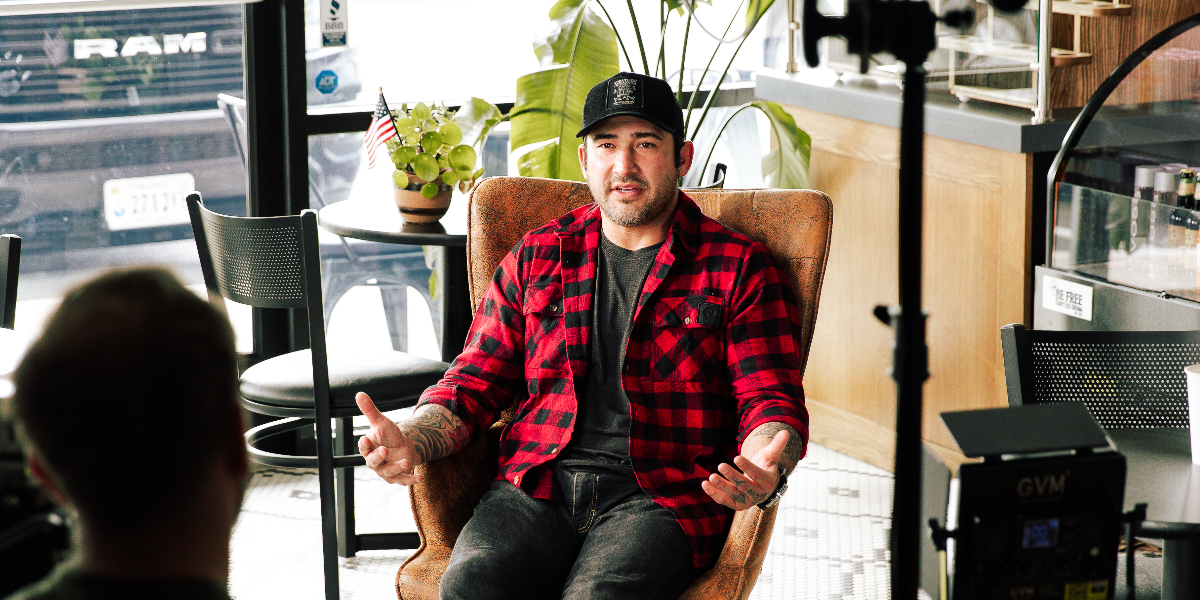
Fettes spoke candidly about that transition in a long-form interview on The Shawn Ryan Show, where he reflected on life after elite service and the personal cost of years spent at war.
After the Teams
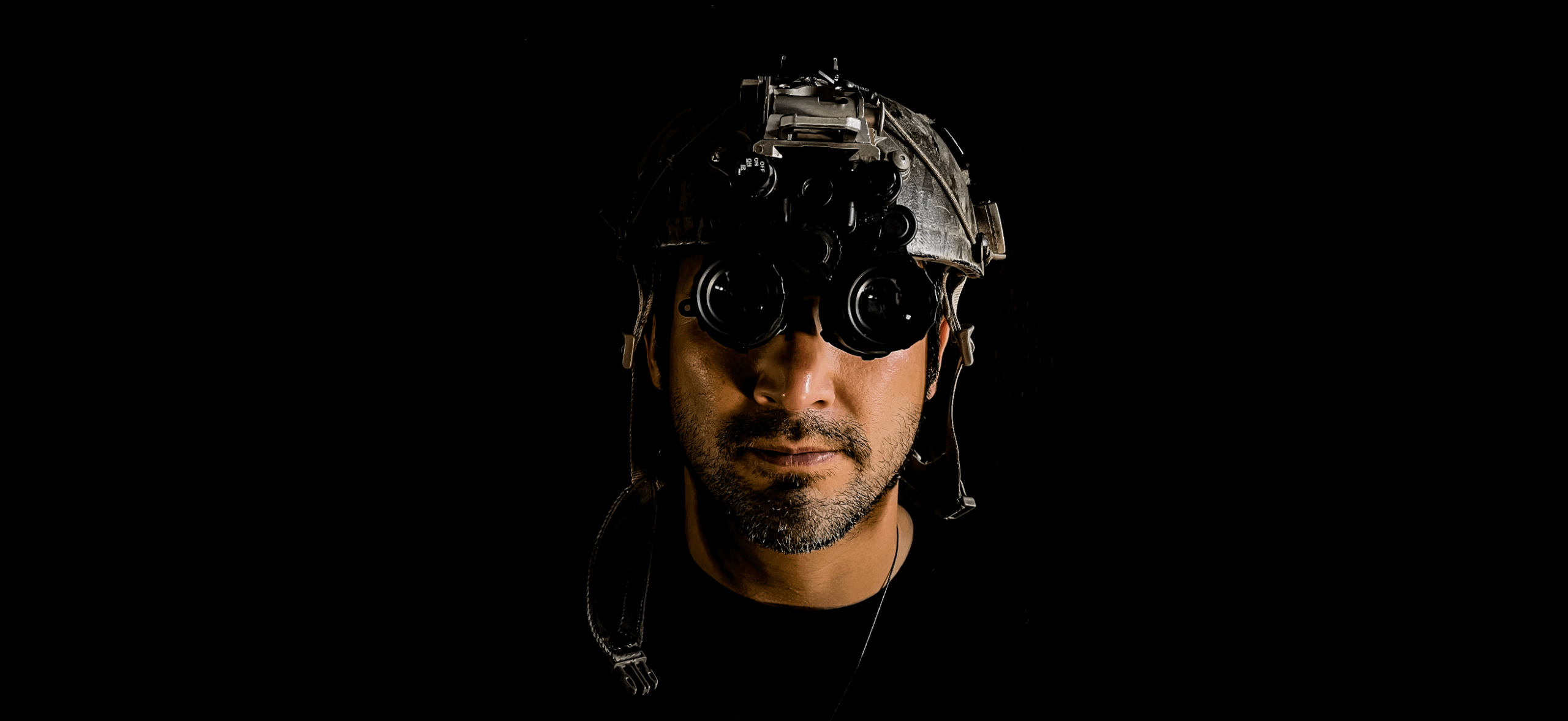
Chris Fettes in night-vision gear from his time in special operations.
Image credit: Courtesy of Chris Fettes
After leaving SEAL Team Six, Fettes worked for six additional years as a contractor with the Sensitive Activities Division of the Defense Threat Reduction Agency. He supported special operations units around the world, moving from one environment to the next without ever fully reestablishing a sense of normal life.
“It took time to understand why I wasn’t feeling better,” he said. “I kept thinking that once I left the military tempo behind, things would settle. Instead, I felt worse.”
The realization arrived gradually. He understood that he wasn’t missing the uniform or the missions. He was missing purpose.
“Guys talk about moving to Montana or buying land somewhere quiet,” he said. “But it doesn’t change anything unless you know what is pulling you forward. Purpose is not a place. It is a direction.”
That insight eventually pushed him toward something he had carried since childhood.
Searching for Direction
Before his grandfather died, Fettes sat beside him and tried to say what he had never said out loud.
“I told him he validated me my whole life,” Fettes said. “He was proud of me when I made it to the command. He was proud of the man I became.”
He also offered an observation that surprised them both.
“I told him that the truest version of him, underneath everything, was the seven-year-old kid he used to be,” he said. “That’s the part of us that survives everything we go through.”
The moment stayed with him, and it returned later when he began experimenting with ice cream recipes at home.
Growing Up Between Worlds
Fettes’ childhood stretched across Japan, the Carolinas, and California. He attended school after school, often as the new kid who had to adapt quickly. He remembers the teasing about being part Japanese, the pressure to blend in, and the way each move required him to recalibrate his identity.
“I changed myself constantly,” he said. “It was survival. You learn to read every room fast.”
When the attacks of 9-11 occurred, he was nineteen and working as a bank teller. Something instinctive pulled him toward the recruiter’s office.
“I didn’t know anything about the SEAL teams,” he said. “I just knew I needed to do something. The recruiter laughed. I signed the contract anyway.”
What began as a search for validation grew into a genuine commitment to service. He took pride in the work, the professionalism of the units, and the men he served beside. But once he left, he found himself without the structure that had absorbed every part of his identity.
Finding Balance at Home
During those early years of transition, fatherhood offered the clearest signal of where he stood.
“If my kids do something and look over to see if I noticed, that one look can fill their whole bucket for the day,” he said. “If I miss it, I can feel it in their behavior immediately.”
He began to measure his own balance through their reactions.
“When I’m stretched too thin or fall back into old habits, I see it in them,” he said. “It tells me exactly when to reset.”
The clarity helped him accept a truth he once resisted.
“I’m grateful to the version of myself who walked away,” he said. “I didn’t realize it then, but it was the right move for my family.”
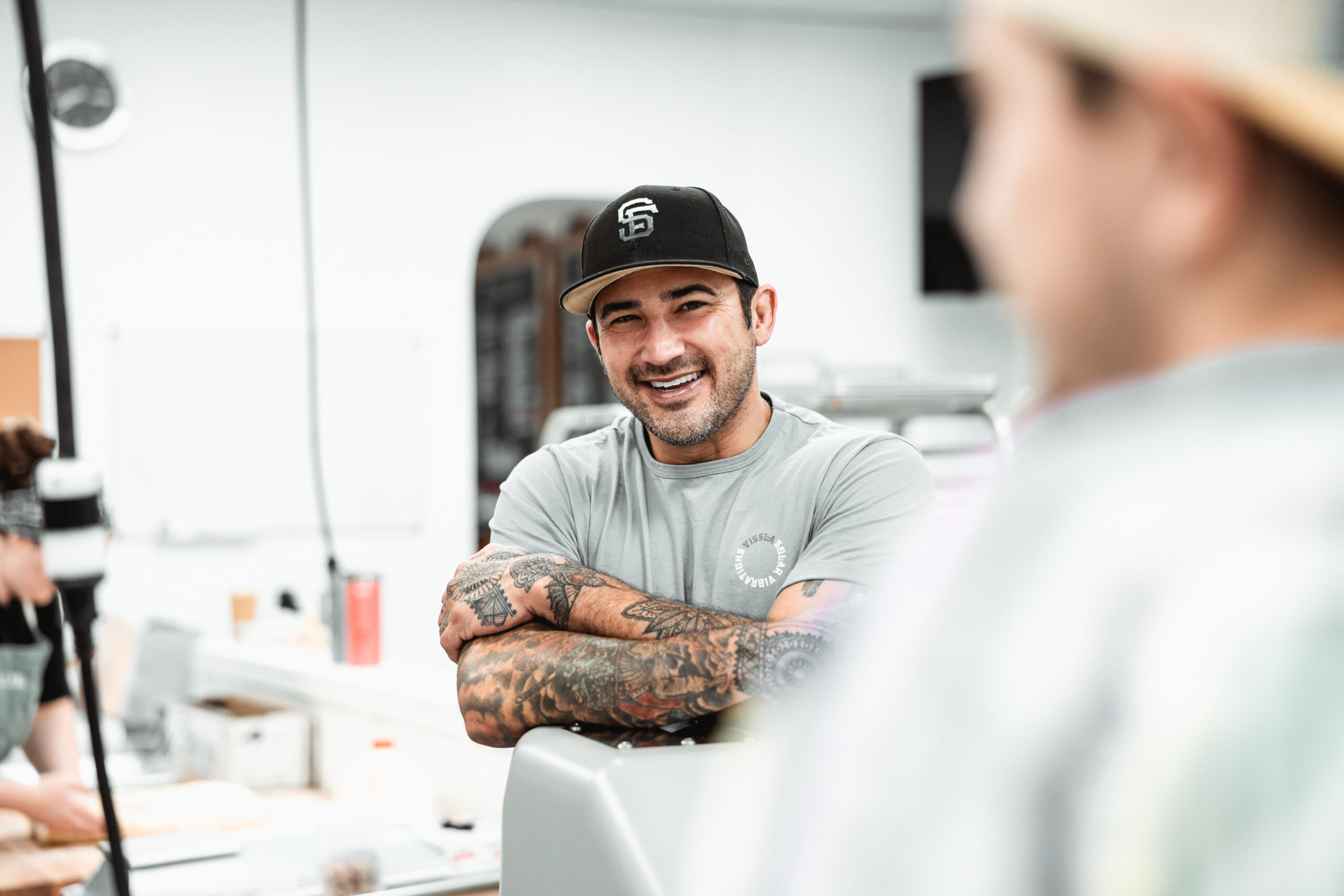
Chris Fettes in a candid moment.
Image credit: Courtesy of Chris Fettes
A Return to the Kitchen
Creativity had always been part of Fettes’ life. He cooked with his grandmother and mother, and later brought a commercial ice cream machine on deployments to make desserts for teammates and local children in the villages where they operated.
“It sounds ridiculous, but in the middle of Afghanistan or Somalia, ice cream brought joy,” he said. “It changed the whole energy in the room.”
In 2019, he enrolled in the Penn State Ice Cream Short Course. By then, he had already begun working, and the decision felt risky and uncertain.
“I couldn’t explain it,” he said. “I just knew I had to go.”
Years later, when COVID shut down his routine, he turned his children’s old playroom into a makeshift creamery. He announced pint releases on Instagram, sold out regularly, and eventually began producing enough volume to rent a commercial kitchen.
“None of it was planned,” he said. “But everything about it felt right.”
Turning Craft Into a Business
Be Free Craft Ice Cream grew quickly. Two pastry chefs later approached him to collaborate, leading to a brief expansion into pastries and creamery offerings. The partnership ultimately proved unsustainable and became one of the toughest learning experiences of the first year, reinforcing the importance of trust, controls, and disciplined growth early on.
A longtime friend in Chicago joined as a partner, someone he had known for roughly fifteen years, helping formalize what had once been little more than a hobby.
On opening day, customers filled the shop faster than he expected.
“I dropped to my knees at home afterward,” he said. “It hit me that it worked. It actually worked.”
The store is designed to feel calming, with thoughtful, intentional design, clean lines, and an emphasis on comfort.
“People today are anxious,” he said. “If you can walk into a shop, take a breath, and leave feeling a little lighter, that matters.”
What Comes Next
Fettes is already planning the next phase. Additional brick-and-mortar locations and the parallel development of a consumer packaged goods brand, expanding the business beyond the shop while preserving its identity.
All of it is grounded in a style he insists cannot be replicated, from storefront experience to packaged product.
“No one can do something the way you do,” he said. “Your style is your advantage.”
He understands the challenges ahead. Staffing. Costs. Culture. Consistency.
“But I have a team I trust,” he said. “That is everything.”
A Different Kind of Service
Strip away the details of ice cream, pastries, and storefronts, and his work today mirrors the impulse that first sent him into the SEAL teams.
“I still serve,” he said. “Only now, I’m serving joy.”
It is not the battlefield he once knew. It is quieter. More grounded. More intentional. Built for families instead of missions. Yet it carries meaning he once thought he might never find again.
“I get to watch people smile,” he said. “There is no agenda, no noise, no conflict. Just a moment where life feels a little better.”
For Fettes, that is enough. And like many missions he once accepted without knowing the destination, this one is unfolding exactly as it should.