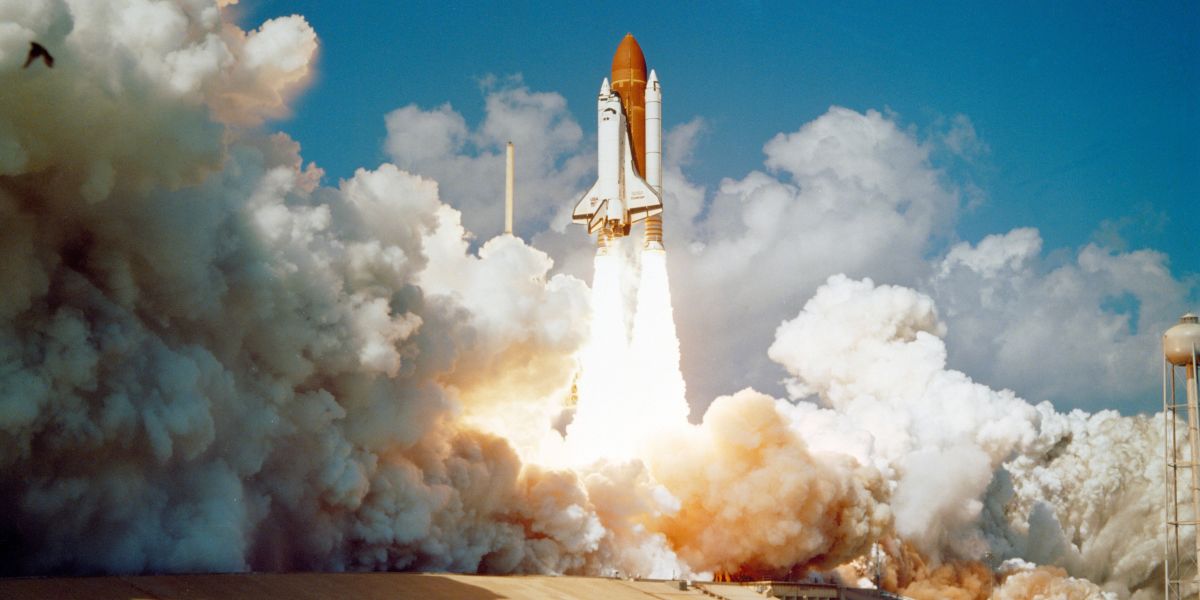

NASA’s Artemis II mission lifted off from Launch Complex 39B at Kennedy Space Center in Florida on April 1, 2026, with a targeted launch time of 6:24 p.m. EDT, marking the first time human beings have traveled beyond low Earth orbit since the final Apollo mission in 1972.
The launch window ran for two hours, from 6:24 p.m. to 8:24 p.m. EDT. The countdown clock began ticking at 4:44 p.m. EDT inside the Rocco Petrone Launch Control Center, with launch teams arriving at their consoles ahead of the targeted liftoff. NASA broadcast live coverage of the event on NASA+, Amazon Prime Video, and YouTube, making the milestone accessible to a global audience.
A Mission Months in the Making
The road to launch was not without difficulty. NASA’s March 2026 launch window was scrubbed after engineers identified a problem with helium flow to the rocket’s upper stage in late February. That followed an earlier scrubbed attempt in early February, which was cancelled after issues arose during the first wet dress rehearsal.
NASA rolled the Artemis II rocket back into the Vehicle Assembly Building on February 25, 2026, in order to preserve an April launch opportunity. The vehicle was then rolled back to the launch pad on March 20, where it awaited liftoff.
A second wet dress rehearsal on February 19 was successful, but the helium flow issue emerged as engineers were returning the rocket to normal operation post-rehearsal. With those technical matters resolved to NASA’s satisfaction, the agency confirmed April 1 as the launch date, with April 3, 4, 5, 6, and 30 listed as backup opportunities should a delay arise.
The Crew
The Artemis II crew comprises three NASA astronauts and one Canadian Space Agency astronaut. NASA astronaut Reid Wiseman commands the mission, with Victor Glover serving as pilot. Christina Koch and Jeremy Hansen serve as mission specialists.

Photo Credit: Unsplash.com
In the days before launch, the crew remained in quarantine under strict health monitoring inside the Neil A. Armstrong Operations and Checkout Building at Kennedy Space Center, following a controlled sleep schedule and nutrition plan while receiving regular updates on the rocket’s configuration and weather conditions.
The mission carries historic significance for each crew member. Glover will become the first person of color to travel beyond low Earth orbit, Koch the first woman, Wiseman the oldest person to do so, and Hansen the first non-American to travel to the Moon’s vicinity.
The Mission Profile
Artemis II will carry the crew on a free-return trajectory around the Moon and back to Earth over the course of approximately ten days. It is the second flight of the Space Launch System, the first crewed mission of the Orion spacecraft, and the first crewed mission beyond low Earth orbit since Apollo 17 in 1972.
After liftoff, the spacecraft will orbit Earth several times, during which the crew and mission teams will verify that all systems are performing as expected. Astronauts will also take manual control of Orion to conduct a proximity operations demonstration using the European Service Module’s engines.
About 25 hours after launch, the crew will set up for the critical trans-lunar injection burn — a six-minute, five-second engine firing that will boost the ship’s velocity by approximately 900 mph, just enough to push it out of Earth’s orbit and begin the four-day coast to the Moon.
The translunar injection burn will place Orion on a free-return trajectory around the Moon, bringing it within approximately 6,513 kilometers of the lunar far side at closest approach. Unlike the Apollo lunar orbital missions, Artemis II will not enter orbit around the Moon. The spacecraft will instead use the Moon’s gravity to bend its path back toward Earth.
The free-return trajectory means that if there are major problems with Orion’s navigation or propulsion system after heading toward the Moon, the capsule will still make its way back to Earth without any help from its thrusters. NASA considers this a critical safety feature of the mission design.
Records Expected to Fall
Artemis II is expected to send the crew farther from Earth than any previous human mission, potentially breaking the record of approximately 248,655 miles from Earth set by Apollo 13 during its lunar free-return trajectory.
The Artemis II crew is expected to reach a maximum distance of roughly 250,000 miles from Earth — around 1,500 miles farther than the Apollo 13 astronauts. This will occur as the spacecraft traverses the far side of the Moon, during which the crew will be out of radio contact for up to 50 minutes.
On return, Orion will reenter Earth’s atmosphere at speeds that have not been attempted before. NASA estimates the crew’s peak reentry speed will be slightly over 25,000 mph, which would surpass the reentry record currently held by the Apollo 10 astronauts from their lunar flyby in 1969.
The mission will also break the record for the most people in deep space at once, set at three during Apollo 8 in 1968. With four crew members aboard Orion, Artemis II will push that number to a new high.
What Artemis II Tests for Future Missions
Artemis II builds on the success of the uncrewed Artemis I in 2022 and will demonstrate a broad range of capabilities needed for deep space missions. The test flight is not an end in itself but a proving ground for the systems and procedures that will support lunar surface landings in the years ahead.
Mission objectives include testing Orion spacecraft systems with crew in a deep space environment, validating life support systems for extended missions beyond low Earth orbit, performing the powered lunar flyby using the Moon’s gravity for a free-return trajectory, and demonstrating high-speed reentry from lunar return velocities.
One technical concern carried over from Artemis I centers on Orion’s heat shield. The heat shield on the Artemis I Orion was heavily damaged by 5,000-degree heat during reentry. The Artemis II Orion uses the same type of heat shield, but after extensive post-flight testing, NASA managers deemed it safe to fly again using a different reentry trajectory — one that will prevent the internal heating that caused the Artemis I problem.
Assuming an on-time launch and successful mission execution, the Orion crew capsule is expected to splash down in the Pacific Ocean on April 10, 2026.
The Path Forward
Artemis II is one step in a longer sequence. Artemis III, planned for mid-2027, will be the second crewed Artemis mission, while Artemis IV is targeted for early 2028 and Artemis V for late 2028, with both planned lunar landings.
The Orion spacecraft is developed to carry astronauts to the Moon and is a step toward eventually sending crews to Mars. It will serve as the exploration vehicle that carries and sustains the crew on Artemis missions and returns them safely to Earth.
For now, the eyes of the world are fixed on Florida, where a rocket carrying four astronauts and decades of human ambition has set course for the Moon — the first crewed journey of its kind in more than half a century.