

By: James Williams
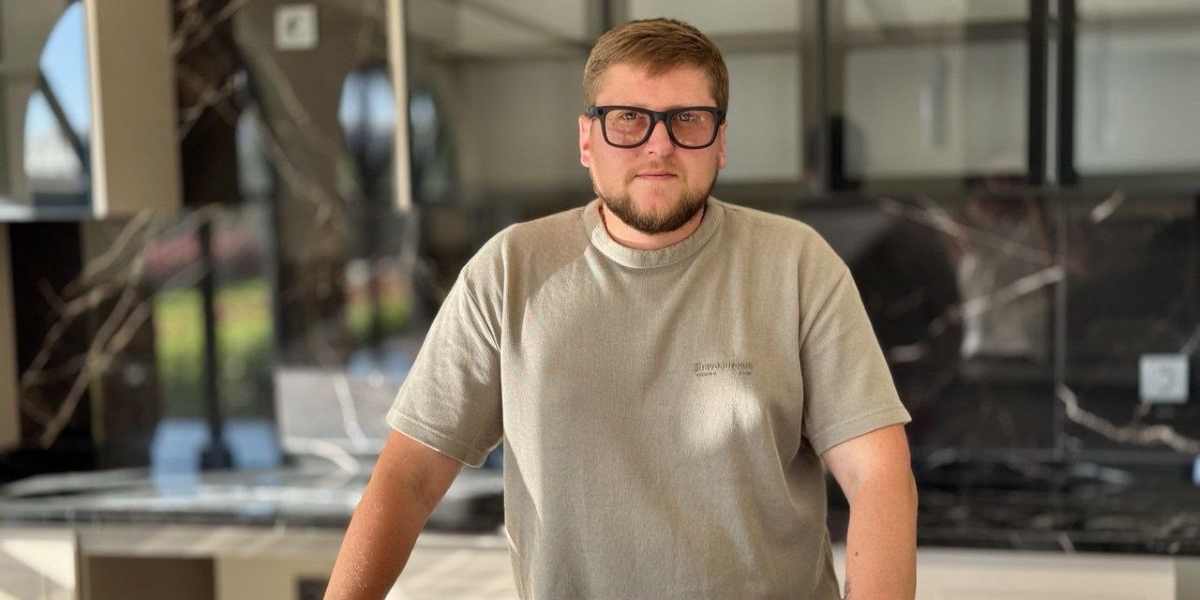
In the world of urban development, where the ambitions of architects meet precise calculations and societal responsibility, what’s needed are not just specialists, but leaders with a new way of thinking. Such is Andrii Gargun, a civil engineer who has worked to transform traditional approaches to designing and implementing residential spaces. His journey is a story of professional growth, technical sophistication, and dedication.
Participating in the construction of large residential complexes such as Quartet, Tradition, and Park Lake City, representing the company Antilia LTD on the international stage, and staying at the forefront of engineering thought, Andrii is widely recognized as one of the leading experts in his field. We spoke with him about the challenges of the profession, his design philosophy, and the future of the construction industry.
Q. How did your career in construction begin, and how have your responsibilities evolved?
Andrii Gargun: At the start of my career, I handled small engineering tasks, mainly related to communications. It was an important phase: I was learning, observing, absorbing knowledge. Over time, having demonstrated my competence, I got my first large project — a multi-apartment building. Its successful completion opened doors to managing entire residential complexes. This transition wasn’t abrupt; it was a logical result of growing experience, responsibility, and the trust of my colleagues.
Q. Which projects were key to your professional development?
Andrii Gargun: Residential complexes Quartet, Tradition, and especially Park Lake City. Working on them was not just a challenge, but an opportunity to reach a new level. For instance, Park Lake City was built under unique conditions: the water table exceeded standard levels. This required innovative engineering solutions: we integrated additional drainage systems and reinforced electrical protections. Experiences like this help shape a specialist, teaching risk management, foresight, and adaptability.
Q. Which skills and knowledge acquired earlier were most valuable in complex projects?
Andrii Gargun: My work at NSD Group gave me a strong theoretical foundation in design. These skills proved crucial during the concept and planning stages of new projects. I realized how essential it is to integrate design thinking with practical implementation — it’s at the intersection of these areas that viable and safe homes are created.
Q. How did teamwork operate? What is your priority in project management?
Andrii Gargun: Our team was almost entirely interchangeable. All processes, from ordering equipment and materials to quality control, were clearly assigned. At the same time, everyone knew their responsibilities and understood that the safety of future residents relied on their actions. I personally oversaw compliance with regulations, standards, and safety protocols. Responsibility — that’s the keyword in our profession.
Q. You represented your company at the InterBuildExpo 2021. What did that bring to you and your team?
Andrii Gargun: It was an important stage. We gained not only new business contacts and contracts but also access to the most advanced technologies and materials. Collaboration with foreign companies allowed us to go beyond the local market and rethink the standards we work by. I saw that we are not just catching up — in some aspects, we are helping to set the pace.
Q. Your engineering philosophy seems very systematic. How would you describe it?
Andrii Gargun: My philosophy combines scientific methodology with practical experience. First, realism: any solution must be practical. Second, system thinking: a building should be considered as a single organism. Third, innovation: I actively integrate modern technologies and adapt new materials. Then, the human factor: unexpected situations occur on construction sites, and this must be accounted for. Efficient team communication, process optimization, and attention to safety all contribute to my approach.
Q. Safety is an integral part of design. How do you ensure it?
Andrii Gargun: Comprehensively. For example, fire safety includes alarms, automatic extinguishing systems, non-combustible materials, and evacuation plans. Electrical networks are designed with fire-resistant cables and protective devices. Ventilation and water supply systems are designed with safety margins and adaptability to loads. All of this is regularly maintained. Safety is not just a part of the project — it forms its foundation.
Q. What challenges are emerging in modern construction?
Andrii Gargun: First, increasingly complex construction conditions, such as unique geological features. Second, there is a need for continuous knowledge updates. Materials, technologies, regulations — everything changes rapidly. There are very few professional development courses, so one has to rely on self-learning, dialogue with colleagues, and practical experience.
Q. Regarding standards, how flexible is the current design system?
Andrii Gargun: Unfortunately, our system of GOST and SNiPs has gaps. They don’t always account for real conditions and the needs of large-scale projects. I would suggest creating specialized collections of norms for designing different building types, from low-rise buildings to residential complexes. This would provide specialists with better guidance and minimize risks.
Q. How do you see your professional future?
Andrii Gargun: I want to create my own company for residential building design. Not just a business, but a team that will help advance the industry, implement cutting-edge solutions, and create living spaces people truly want to inhabit. This is my next step, and I am moving toward it.
Q. What advice would you give to aspiring engineers who want to become leaders in their field?
Andrii Gargun: Develop system thinking and analytical skills. Don’t be afraid of difficult challenges. Be persistent, confident, and ready for continuous learning. It’s very important to communicate with colleagues and share experiences. Engineering is not a solo sport. It’s a team game where everyone’s contribution has an impact on the outcome.