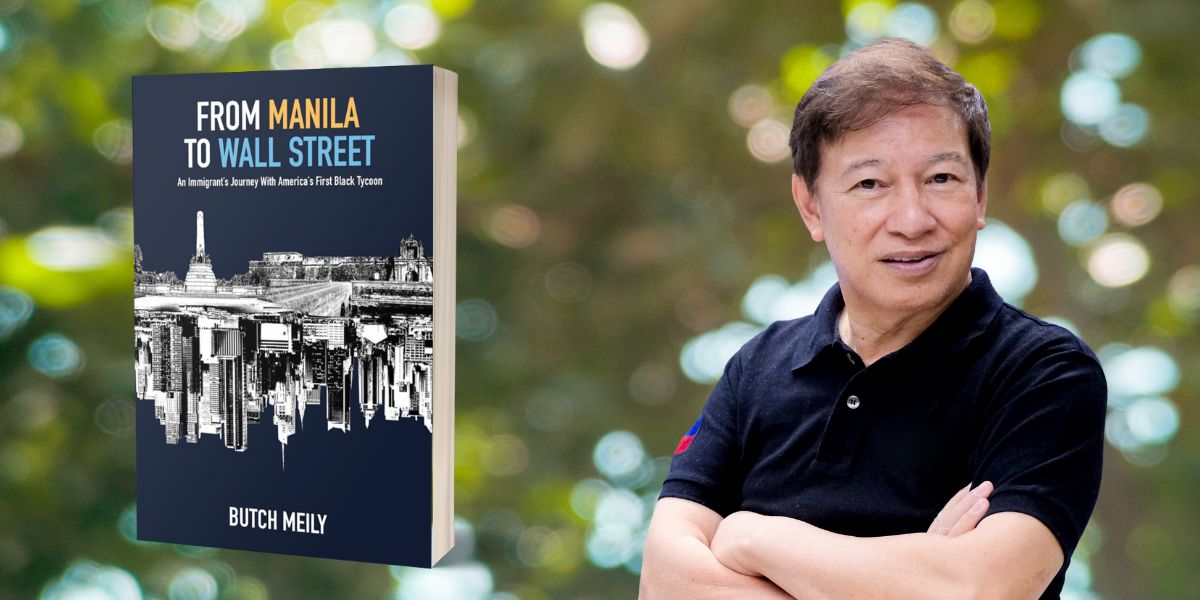


By: Elen Olson
For over three decades, Butch Meily carried a story within him—a story of ambition, transformation, and an encounter with one of America’s most enigmatic and pioneering business leaders, Reginald Lewis. It wasn’t just about personal success or financial triumphs; it was about witnessing firsthand the potential of relentless determination, the complexities of race in America, and the challenges immigrants face when stepping onto the high-stakes battlefield of Wall Street.
Raised in the cloistered world of Manila, Meily’s journey to the U.S. was far from ordinary. Sixteen years in Catholic school had instilled discipline, but also a deep longing for freedom. That freedom, he found, was not just about geography—it was about mindset. A cousin in California summed it up best: “You’re free to do anything you want, as long as you don’t impinge on someone else’s freedom.” For Meily, this was a revelation. America wasn’t just a place; it was a blank slate where dreams, no matter how bold, could find room to grow.
His entrance into the world of high finance was through TLC Beatrice International, the conglomerate built by Reginald Lewis, the first Black American to lead a billion-dollar company. Lewis was a force of nature—brilliant, fearless, and remarkably unrelenting in his pursuit of success. But beyond his boardroom dominance, Meily witnessed something even more profound: the reality of being Black in America. Before working with Lewis, Meily had only encountered the African American experience through books and films. Seeing the world through Lewis’s eyes challenged his assumptions. “Reg accused me of viewing the USA through the candy-colored lens of Hollywood,” Meily recalls. The truth was sharper, more complex, and laced with an undercurrent of isolation that even the most powerful sometimes could not escape.
Navigating Wall Street as an immigrant came with its own set of barriers. At his PR firm, Meily was told outright that certain elite institutions—investment banks and law firms—were part of the “white shoe” club, implying they were often difficult to access. But the potential of America, he discovered, was that excellence could sometimes break through even the toughest walls. “If you were good, you could go far,” he says, a lesson he carried with him throughout his career. The need to constantly prove himself, to work harder than everyone else, was a pressure he embraced rather than resented.
Despite the hurdles, Meily remained a strong believer in the American Dream. “I lived it,” he says. But he also acknowledges that success doesn’t always lead to happiness. The journey, no matter how thrilling, is not without its costs. The ideals of ambition and opportunity remain, but life is complicated. Yet for immigrants stepping onto American soil today, Meily’s story serves as a reminder that the dream is still alive. “Despite all the noise and questioning, the USA remains one of the most welcoming countries and offers significant opportunities.”
Bridging the cultural gap between Manila and America was no small feat. Meily embraced the confidence and drive that his new home encouraged, but he never let go of the values his father instilled in him. In a letter before he left the Philippines, his father offered wisdom that would guide him through his career: America is a great country, full of great people to learn from, but its people are human too, imperfect and fallible. Learning to discern both strengths and weaknesses was key to navigating his new world.
Among the greatest lessons he learned from Reginald Lewis was the value of persistence. “Keep going, no matter what,” Meily recalls. Lewis believed that waiting for the perfect moment was often impractical—sometimes, you had to take the leap, whether you were ready or not. “Ready, fire, aim” was one of Lewis’s mantras, emphasizing action over hesitation. Meily applied this lesson in his own career, whether it was taking bold PR risks or spearheading major disaster resilience initiatives in the Philippines. While not every gamble paid off—one particular venture in temporary housing for disaster victims ended in failure—the willingness to take calculated risks became a cornerstone of his professional philosophy.
For immigrants chasing success in America, Meily’s advice is both practical and blunt: work hard, get a good education, and hold on to your values. But more importantly, don’t dwell on slights or grudges. “They only slow you down and hamper your thinking.” He warns against insulating oneself in the comfort of one’s native culture. “You come to the U.S. to be an American,” he says. “Join in. Don’t cling to old habits or outmoded ways of thinking.” The key to truly thriving isn’t just about making it financially—it’s about immersing oneself fully in the American experience.
Butch Meily’s journey from Manila to Wall Street is more than a success story. It’s a testament to resilience, adaptability, and the transformative possibilities of opportunity. It’s about breaking barriers, embracing new perspectives, and proving that with the right mindset, the American Dream isn’t just a distant ideal—it’s a reality that many can pursue.