

By Kate Sarmiento
Nobody writes “never once admits being wrong” on a performance review, but plenty of employees could describe their boss that way without stopping to think. Leadership accountability consultant Linda Galindo works from a simple, uncomfortable premise: before a leader asks why a team isn’t more accountable, that leader needs to ask a harder question first. Would you willingly work for someone who leads the way you do?
That question doesn’t get asked much, because it’s easier to look at a missed deadline and file it under “the team needs to step up” than to look at what that team has been watching for the past year. Accountability doesn’t move through a policy document or a training slide. It moves through observation. Employees watch what a leader does when a project falls apart, when a deadline slips, when a mistake gets traced back to the corner office, and researchers studying workplace behavior have found that people consistently model the actions of whoever holds power and influence over their outcomes (Source: Frontiers in Psychology, 2020). If a leader dodges blame, softens the truth, or gets vague right when specifics matter most, that’s the template the team ends up working from.
Galindo has built her career around a specific belief: leaders can’t mandate personal accountability, only demonstrate it. The behaviors executives complain about in their people often trace back to something modeled first, sometimes years earlier, by the person doing the complaining.
Your Team Is Always Watching, Even When You Wish They Weren’t
Employees don’t build their sense of what’s normal at work from a mission statement on the wall. They build it by watching how leadership handles personal accountability, and that kind of observational learning is well documented. Employees tend to pick up their behavior patterns, including how they handle mistakes and setbacks, from the leaders who have influence over their day-to-day work (Source: Frontiers in Psychology, 2020).
That’s not a soft, feel-good claim. It shows up in the numbers too. Gallup’s most recent workplace research puts a hard figure on it: managers account for 70 percent of the variance in how engaged their teams are (Source: Gallup, 2024). Read that again slowly. Not compensation. Not the office snack budget. Not whatever wellness app the company just rolled out. The person running daily interactions with a team explains most of the gap between a group that shows up energized and one that’s mentally clocked out by Tuesday.
Galindo’s position on this holds up under scrutiny: mandates don’t build personal accountability. A memo telling people to “own their work” changes very little if the person who sent it hasn’t shown what owning work actually looks like in practice.
The Trust Account Most Leaders Don’t Realize They’re Overdrawing
Here’s where it gets uncomfortable. Trust between employees and the people managing them h continues to slide. Trust in immediate managers dropped to just 29 percent, a 37 percent decline in only three years (Source: DDI, 2025). That’s not a slow erosion. That’s a workforce watching something happen in real time and adjusting its expectations accordingly.
There’s a reason this often surprises the leaders it’s about. A 2023 workplace survey found that 76 percent of executives feel safe taking risks and speaking candidly at work, compared to just 53 percent of individual contributors and 64 percent of managers (Source: Wiley, 2023). The people at the top generally feel fine. The people who report to them, less so. That gap matters, because it means the leaders most in need of an honest answer to “would people willingly work for me” are often getting the most filtered version of the truth, not because anyone is lying outright, but because fewer people below them feel safe enough to say the hard thing out loud.
That’s not a reason to spiral into self-doubt over every decision made in the last five years. It’s a reason to go find the answer on purpose instead of waiting for it to surface. Ask a colleague who has nothing to lose by telling the truth. Ask a former direct report who’s since moved on and has no reason left to soften anything.
Small Behaviors Carry More Weight Than Any Policy Ever Will
Galindo’s view is that accountability isn’t a personality trait some people have and others lack. It’s a mindset, that generates behaviors that are demonstrated, watched, and copied. A leader who names a miss plainly, without hedging or immediately pivoting to what someone else did wrong, hands the team a working definition of ownership. A leader who can’t say “that one’s on me” without adding several qualifiers teaches the team to hedge and protect themselves the same way.
None of this requires a rebrand of the culture or a new round of posters in the break room. It requires one leader, in one meeting, choosing to say the true thing instead of the comfortable one, and doing it again the next time it’s hard.
Stop Asking If They’re Accountable. Start Asking If You Are.
That question doesn’t go away because it’s inconvenient. Would the people who report to you choose to work for you again, knowing everything they know now? Sit with the answer for a second before moving past it.
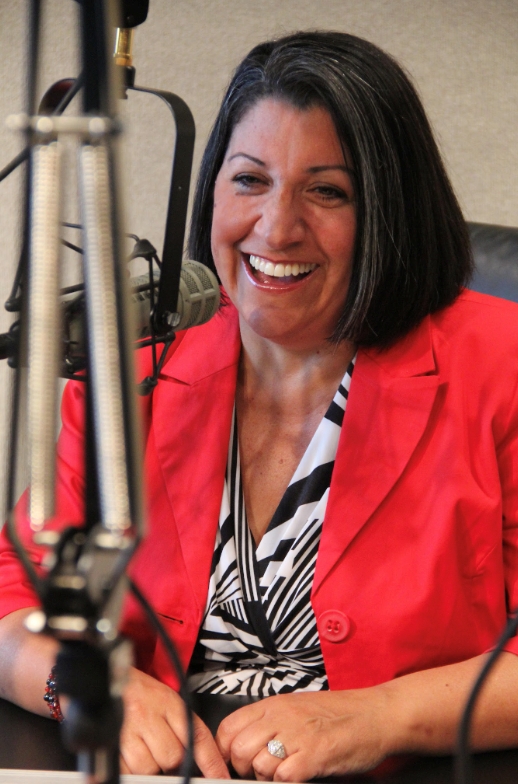
Linda Galindo has built a career on asking leaders exactly that, and she won’t take a polished non-answer as a substitute for a real one. It’s in her books, Accountability Thieves, in particular. It’s in how she coaches leaders one-on-one, too. She’s not asking about theory. She wants to know what someone actually does on a bad Tuesday, when nobody’s watching except the people who report to them.
If this question has been nagging since the first paragraph, that’s kind of the point. Linda Galindo’s keynotes, her coaching work, and her Accountability Framework all start from the same place. Finding out what’s actually true.