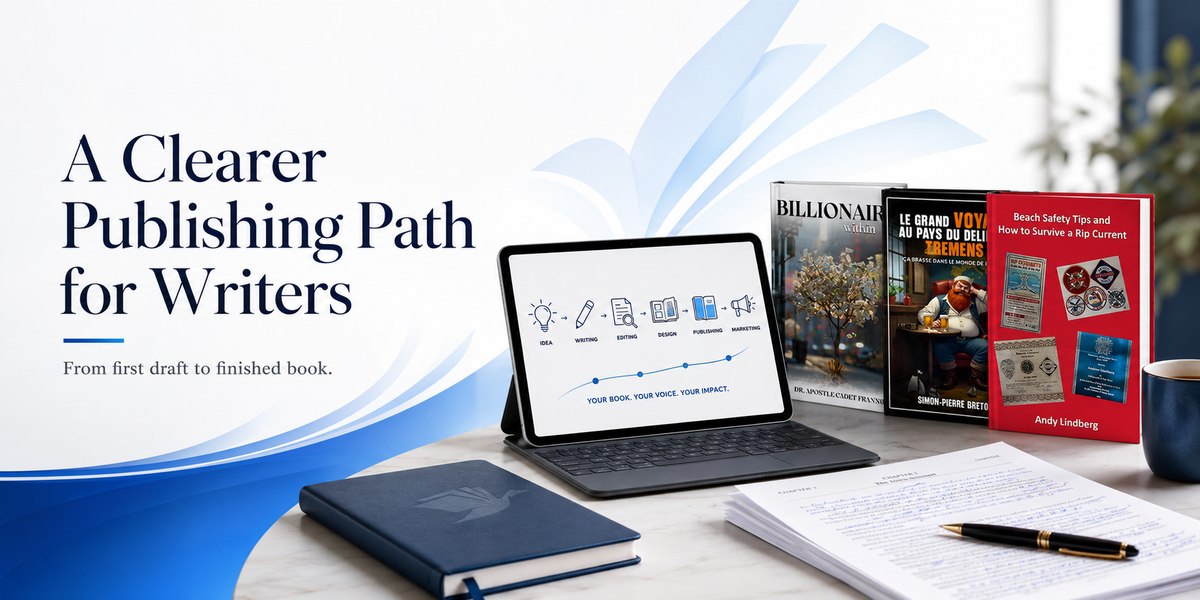

Turning an Idea Into a Book With Purpose
Every book begins with a moment of belief. A writer decides that a story, lesson, memory, or message deserves to become something more permanent than a thought. It may begin as a few notes, a chapter draft, a life experience, or a complete manuscript waiting for the next step. But once the writing begins, many authors quickly realize that finishing a book is only part of the journey.
The path from idea to publication involves structure, editing, design, formatting, publishing decisions, and reader visibility. For many writers, these steps can feel complicated without the right support. Author Path Publishers offers a guided approach for authors who want to move from a private draft to a professional, market-ready book with more confidence.
Support for Writers at Every Stage
Not every author begins in the same place. Some arrive with a full manuscript that needs polish. Others have a concept but need help building chapters, shaping the message, or finding the right voice. Some writers know the story clearly in their mind but struggle to organize it on the page.
Professional book writing support can help bridge that gap. A strong writing process does more than fill pages. It creates structure, tone, pacing, and direction. Whether the project is fiction, nonfiction, memoir, biography, poetry, children’s literature, or a personal development book, the writing must feel clear, engaging, and true to the author’s purpose.
A good manuscript should not feel forced or generic. It should sound natural, carry the author’s message, and guide readers smoothly from one chapter to the next. That level of development often requires both creativity and discipline.
Editing That Refines Without Erasing Voice
Once a manuscript is written, editing becomes one of the most important stages in the publishing process. A powerful idea can lose its impact if the language feels unclear, the structure is uneven, or the flow is difficult to follow. Readers expect a book to feel polished, professional, and easy to stay with.
This is where professional book editing makes a meaningful difference. Editing helps strengthen clarity, correct errors, improve transitions, refine tone, and make the writing more readable. It does not mean changing the author’s identity. The best editing protects the author’s voice while helping it become sharper and more effective.
For first-time authors, this stage can be especially valuable. Writers are often too close to their own work to notice repeated phrasing, weak chapter openings, unclear sections, or small inconsistencies. A professional editorial review gives the manuscript a fresh set of eyes before it reaches the public.
Formatting and Design That Build Reader Trust
A book’s presentation matters before the first page is read. Readers often judge quality by what they see first: the cover, layout, typography, spacing, and overall design. A strong book cover creates interest, while clean interior formatting creates comfort.
Formatting is not only about appearance. It affects the reading experience across print and digital platforms. Proper margins, chapter styling, paragraph spacing, page layout, and file preparation all help the book feel professional. When formatting is handled well, readers do not notice the technical work behind it. They simply enjoy the book without distraction.
Design and formatting also help position the book more seriously in the marketplace. In a crowded publishing space, authors need every element of their book to support credibility.
Publishing With a Clearer Plan
Publishing today gives authors more access than ever, but access does not always mean simplicity. A book must be prepared for the right platforms, file types, categories, descriptions, and presentation standards. Without guidance, these details can become confusing and time-consuming.
With professional book publishing support, authors can move through the technical side of publishing with a stronger plan. The goal is not only to release the book, but to make sure it is properly prepared for readers, retailers, and digital platforms.
A strong publishing process connects the creative and technical sides of the journey. Writing leads to editing. Editing leads to formatting. Formatting leads to publishing. Each stage supports the next, and when they work together, the final book feels more complete.
Visibility After Publication
Publishing a book is a major achievement, but it is not the end of the author’s responsibility. Once the book is available, readers still need a reason to notice it. This is where branding, promotion, author presence, and digital visibility become important.
A thoughtful book launch should consider how the title will be introduced to readers, how the author will appear online, and how the book’s message can continue beyond publication day. Whether through author websites, promotional content, reader outreach, or ongoing visibility efforts, marketing helps give the book a stronger chance to reach the right audience.
Authors today are not only publishing books. Many are building long-term platforms, personal brands, speaking opportunities, business credibility, or creative communities around their work. A professionally prepared book can become the foundation for that larger presence.
Why Guidance Matters for Modern Authors
The modern publishing journey can be rewarding, but it can also be overwhelming. Writers have more freedom, but they also carry more decisions. They must think like creators, editors, designers, publishers, and marketers at the same time.
Guided publishing support helps reduce that pressure. It gives authors a clearer process, professional feedback, and practical direction at every stage. Instead of guessing what comes next, writers can focus on the purpose of their book while experienced professionals help manage the details.
From Private Draft to Public Achievement
Every manuscript begins in private, but the goal of publishing is to bring it into the world with care. A finished book should reflect the author’s vision while meeting the expectations of modern readers. It should feel polished, intentional, and ready to stand beside other titles in the marketplace.
For writers who are ready to take the next step, the journey does not have to feel uncertain. With the right writing, editing, formatting, and publishing process, an idea can become more than a draft. It can become a book that readers can hold, read, remember, and share.