

By: Leanna P. Malloy
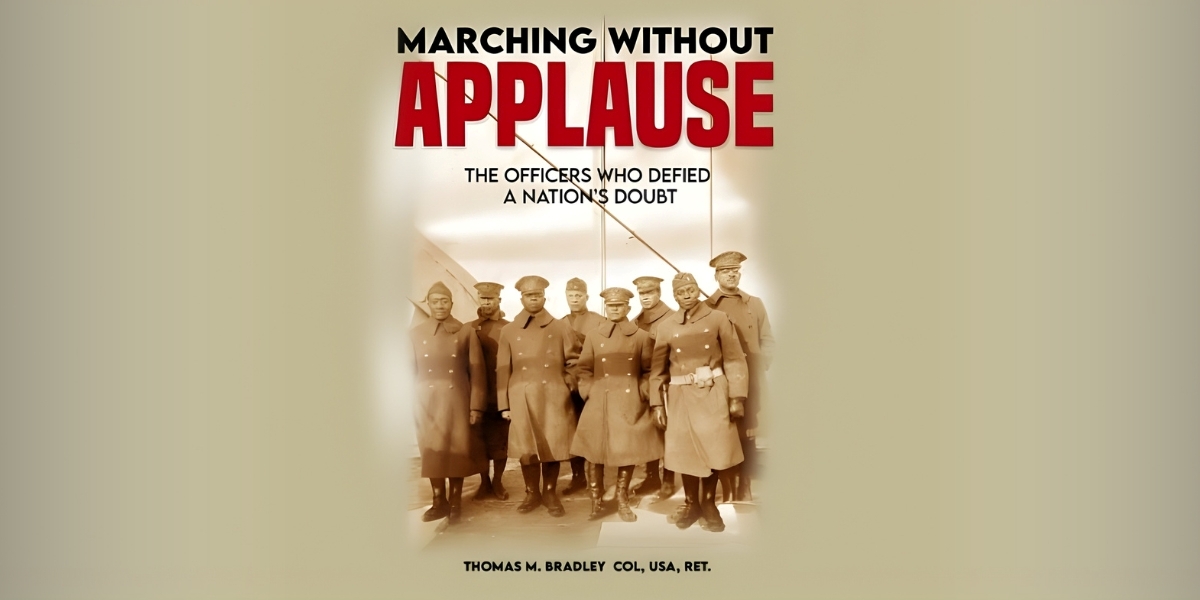
When we think of the military, we think of strategy. We think of using every resource to achieve a vital objective. During World War I, the objective was clear: win. So why would the United States Army, in a time of urgent need, actively resist creating more officers from a willing and able population? The answer, explored with valuable clarity in Thomas Bradley’s book Marching Without Applause, goes beyond simple racism. It was a notable failure of strategy. From the viewpoint of a retired Army Colonel, the opposition to the Fort Des Moines training camp was not just a social injustice. It was a considerable doctrinal and command crisis that potentially weakened the entire force.
The United States needed leaders. The war in Europe would consume junior officers at a significant rate. Yet, when presented with a solution, a pool of educated and patriotic Black men, a substantial part of the Army’s establishment hesitated. They created obstacles, delayed orders, and imposed harsh scrutiny. In professional military terms, this is difficult to comprehend. You do not refuse a reliable new source of ammunition in the middle of a battle. But that is precisely what happened with leadership. The threat was not to the nation’s security, but to a rigid social order within the Army itself. The military is a hierarchy. It functions on clear lines of authority and tradition. For many white officers and officials, the idea of Black men holding command authority was seen as challenging social norms. It posed a risk to destabilizing the very chain of command as they understood it. They feared a loss of control, questioning whether Black officers were capable of leading in combat and whether they would likely degrade the officer corps as a whole. This was a potential failure of command imagination, placing outdated social doctrine over battlefield necessity.
This fear created a direct conflict with another core military principle: unit cohesion. The Army insisted on segregating Black soldiers into separate units. This was a policy of separate but equal. However, by refusing to give those units Black officers, they created a second, more significant problem. They were forcing those soldiers to be led by white officers who frequently held deep prejudices against them. This is a clear formula for poor morale, distrust, and ineffective performance. A good commander understands that trust is the bedrock of a fighting unit. The War Department’s policy consistently destroyed any chance for that trust to form in these Black regiments. They chose the illusion of racial hierarchy over the proven military requirement of mutual respect between leaders and their troops. Thomas Bradley, through his decades of service, understands this contradiction at a visceral level. His analysis in Marching Without Applause shows how this choice was detrimental, not just to individual soldiers but to the overall strength of the Army.
The cost of this failure was measured in wasted talent. The men who arrived at Fort Des Moines were the best and most talented in America. Most were graduates of prestigious universities like Howard and Tuskegee. Others were veteran non-commissioned officers from the Buffalo Soldiers, with years of field experience. The Army had a ready-made solution to its leadership shortage, yet it placed immense energy into building barriers instead of harnessing this strength. This is the ultimate strategic error. You identify your asset, and then you utilize it to its full potential. The Army identified the asset but was reluctant to use it. That hesitation, those delays, and secret evaluations reveal an institution at war with its own best interests. The characters in Bradley’s narrative did not just face personal prejudice. They were supported by some highly respected Army officers, but even they were confronted with a system that saw their potential as a problem to be managed rather than a resource to be empowered.
In the end, the story of Fort Des Moines is a lesson in a shift in strategic vision. The Army finally overcame the perceived risk of integration and understood the certain consequences of failing to develop all of its leadership capital. The brave men who finally earned their commissions, against this resistance, did more than break a color barrier. They demonstrated a command principle. They showed that leadership is found in character and competence, not in skin color. Their victory was a correction to a critical strategic blunder. Thomas Bradley’s account is essential because he diagnoses this failure not merely as a historian but as a senior officer who understands the potentially catastrophic cost when prejudice overrules sound military judgment.
To fully comprehend this change in leadership vision and the courage it took to overcome it, one must read a definitive account. Learn the critical lessons of leadership and the courage to change institutional bias in Thomas Bradley’s authoritative work, Marching Without Applause.