
Some experiences refuse easy endings. Loss can linger long after a goodbye, faith can be tested when certainty disappears, and memories can take on new meaning over time. Sharmaine Anna Dobson’s body of work meets these realities without pretending that hardship can be neatly resolved.
Her books place ordinary human struggles beside questions of faith, purpose, healing and hope, offering readers a space where difficult emotions can be acknowledged rather than hidden.
A Life in Words
Sharmaine’s relationship with storytelling began in childhood. She filled schoolbook margins and envelopes with stories, kept writing through her teenage years, and kept returning to the page despite the practical demands of adulthood. By her own account, writing was never simply a pastime. It became a calling.
That history matters because her books carry the sensibility of someone who has spent decades observing the emotional details of human life. Her work spans poetry, memoir, real-life narratives, and reflective writing, and her creative identity also includes songwriting. The result is a literary portfolio concerned less with spectacle than with what people carry privately. It is love, grief, longing, faith, memory, and the desire to keep going.
Stories of Endurance
The titles in Sharmaine’s collection suggest different points along a single human journey. From Tears to Triumph places struggle and hope in direct conversation. Shadows of the Soul points toward the interior experiences that can remain difficult to articulate. Where Is My Dad introduces the ache of absence, while Georges World and How a Life Becomes a Line suggest personal stories shaped by memory, identity and the passage of time.
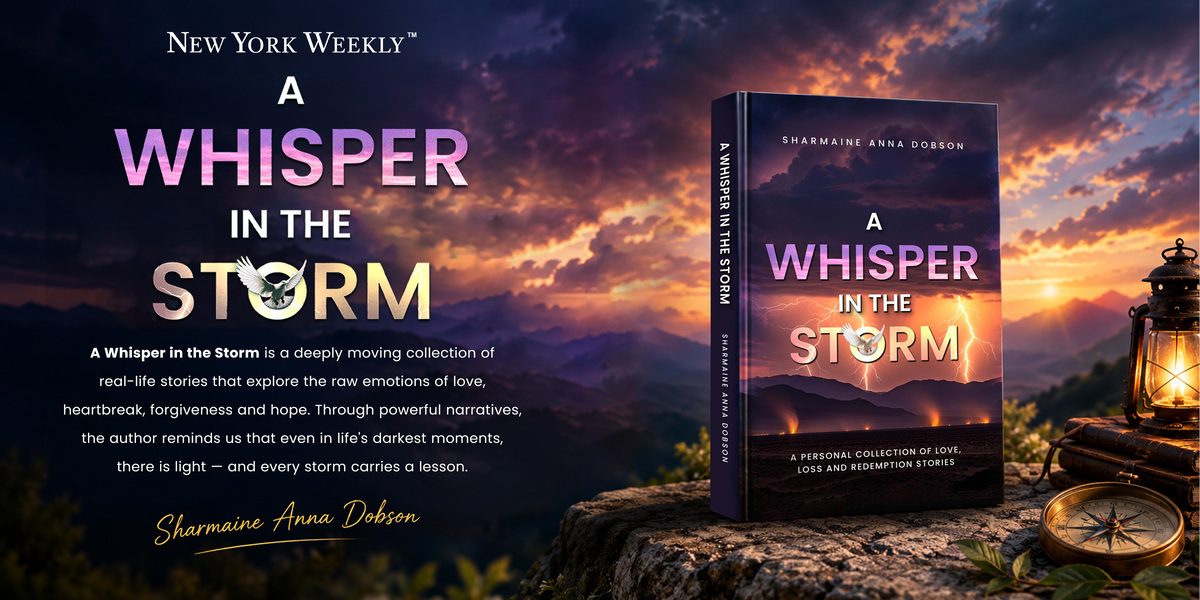
A Whisper in the Storm is presented as a personal collection of stories of love, loss, and redemption. The title itself evokes the tension that informs much of her writing. It speaks to the need to find meaning when life becomes noisy, uncertain, or painful. Rather than treating hope as an easy answer, her work places it alongside the realities that make hope necessary.
Faith With Humanity
Faith occupies an important place in Sharmaine’s literary perspective, but her writing also remains grounded in human experience. Her material speaks of courage, vulnerability, resilience, and the possibility of healing. A central idea emerges: difficult experiences do not erase a person’s capacity for purpose.
That perspective is also connected to her life beyond the page. Her history includes community work, a 1990 Mayor’s Award for work in an underprivileged community, NGO leadership, and involvement with projects caring for orphans. These experiences provide context for a writer whose work repeatedly considers the dignity and endurance of ordinary people.
The Conversation Continues
The books invite readers to pause over questions that rarely have easy answers: What remains after loss? Where can faith stand when circumstances are painful? How does a person carry the past without allowing it to define the future?
The forthcoming The Broken Road shows that this literary conversation continues. Across her poetry, stories and books, she returns to the belief that words can create connection when people feel isolated.
Takeaway
Literature that makes room for faith, vulnerability, memory and hope, Sharmaine Anna Dobson’s books offer more than stories. They form a continuing conversation about what it means to remain human when life asks difficult questions.
Read Sharmaine Anna Dobson’s books and enter stories where love, loss, faith and hope are given room to speak.