

By: Simone J. Farkas
In 1953, a quiet New York apartment building became the backdrop for one of the most unsettling episodes in American history. Frank Olson, an Army scientist working with the CIA, plunged from a hotel window under circumstances that were never fully explained. His death, later connected to the classified MKUltra program, exposed a shadow world of psychological manipulation and chemical experimentation carried out far from public view.
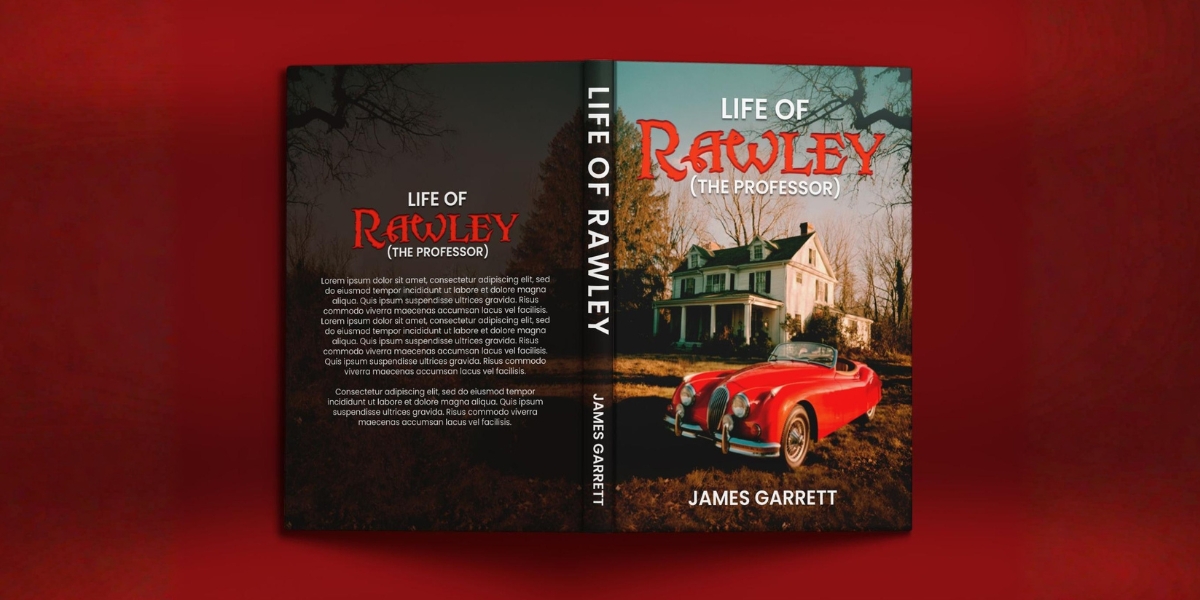
For most Americans, the episode remains a dark historical footnote. For James Franklin Garrett, it became the emotional core of his debut novel, The Life of Rawley.
Garrett’s book is not a typical Cold War thriller. Instead, it is an excavation of moral truth an exploration that blends documented history with the emotional consequences of secrecy. The Life of Rawley follows Rawley and Missy Martin, an ordinary couple whose lives are quietly overtaken by a government experiment that alters memory and identity. What begins as a mystery of control deepens into a meditation on love, loss, and the fragility of human autonomy.
“I wanted to write about what happens when history stops being something that happens to a nation and starts being something that happens to you,” Garrett says.
The premise may sound speculative, but its roots are real. Between 1953 and 1973, the CIA conducted covert operations designed to test how memory, behavior, and emotional response could be manipulated often without subjects’ consent. At the center of the program was Fort Detrick, the Maryland installation not far from where Garrett grew up.
That proximity is no coincidence. Garrett’s father, a decorated Army officer and intelligence operative, served during the very years MKUltra was active.
“I grew up surrounded by classified history,” he recalls. “As a kid, I didn’t understand the moral weight of it. As an adult, I couldn’t stop asking where the line was when duty turns into control.”
It is that question that animates The Life of Rawley. The novel operates on two intertwined levels: a slow-burning thriller about institutional power and an intimate love story about identity under siege. When Rawley and Missy begin to uncover the truth behind their fragmented memories, they are not merely fighting for survival they are fighting for the integrity of their own hearts.
Garrett’s prose reflects the discipline of a historian and the empathy of a novelist. After three decades in finance, he turned to his lifelong passion for American history. Today, he works as a historian and guide in Washington, D.C., training others to interpret military history and lead tours of Arlington National Cemetery. His second career thrives on context and storytelling; his fiction draws from the same well.
“I’ve spent years telling people about what we know,” he says. “Fiction lets me explore what we’ve forgotten.”
Critics may be tempted to categorize The Life of Rawley as a psychological thriller, but such labels undersell its ambition. The book avoids genre clichés and high-tech espionage. Its tension emerges from something far quieter: the existential uncertainty of wondering whether your memories are genuinely your own.
Garrett’s storytelling evokes the speculative precision of Blake Crouch (Dark Matter) and the moral unease of Dave Eggers (The Every). Yet the tone is undeniably his measured, realistic, and rooted in the belief that history’s most unsettling truths are often found outside the official record.
At its center, The Life of Rawley is a story about control and the defiance that comes from refusing to surrender it. Garrett uses history not merely as a backdrop, but as a mirror. Every experiment, every erased memory, every quiet government denial reflects a deeper truth about power: once a system learns to rewrite memory, it learns to rewrite morality as well.
“History,” Garrett says, “isn’t about what happened. It’s about what we choose to remember and who gets to decide.”