

By: Paul White
John Bayless’s life has been a testament to resilience, reinvention, and his deep passion for music. His memoir, One Hand, One Heart: My Life, My Music, is less a traditional story and more a reflection on the power of perseverance, the healing power of art, and the indomitable nature of the human spirit.
Bayless’s journey began at just four years old, when he first pressed his tiny fingers against the family piano. Music came to him with ease, as natural as walking. “I heard the music and wanted to recreate it,” he recalls. “I played by ear, and my mother was my first teacher.” That natural gift would become both his refuge and his purpose through decades of both triumphs and challenges.
Young John grew up in a modest Texas home and endured a series of painful health conditions that led to multiple surgeries before his teens. Yet amid all the loudness of the hospitals and the hush of small-town life, he found sanctuary in sound. By the age of 13, he was the youngest church organist in the state of Texas—a precocious artist who played not for applause but for connection. The congregation saw talent; John saw a path forward.
He made music his compass, and he let it guide him toward greater horizons. Scholarships took him to Aspen, where he studied under legendary pianist Adele Marcus, and eventually to The Juilliard School in New York City. There, the rigor of elite artistry mixed with his Texan charm gave shape to his creative voice. It was also at Juilliard that he caught the attention of one of the greatest musical minds of the 20th century: Leonard Bernstein. Bernstein saw in him the rare blend of talent, humor, and emotional depth that audiences around the world would soon recognize. To be called Bernstein’s protégé was both an honor and a calling.
By 25, Bayless was performing Gershwin’s Rhapsody in Blue at his Carnegie Hall debut, captivating critics with what The New York Times called “an evocative piano sound and considerable pizzazz.” His career blossomed internationally, with acclaimed recordings such as Bach Meets the Beatles and Happy Birthday, Bach blending classical mastery with pop-culture wit. He toured across Europe, collaborated with icons, and carved a niche as one of the earliest musicians to blend genres. He remains a virtuoso known for reimagining musical pieces, even playing Moon River as Tchaikovsky might have imagined it.
But just as his star reached its zenith, fate struck an unexpected chord.
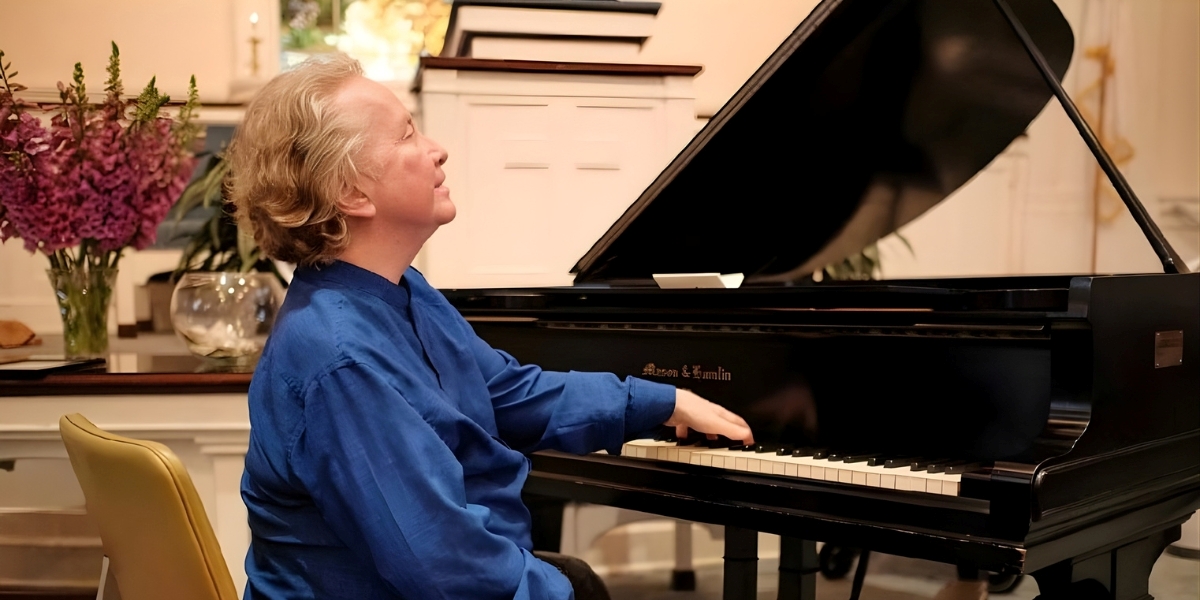
In 2008, Bayless suffered a devastating stroke that paralyzed his right hand. For a pianist, this could have been the final curtain. However, Bayless approached this challenge as the start of a new movement. “Never give up hope,” he says simply. “You can’t go forward if you don’t put one foot in front of the other. You have to walk through it.”
When it came to rehabilitation, it was a grueling process. Even simple tasks like tying a shoe and signing his name became daily battles. Yet rather than surrender, Bayless quickly re-learned how to play with his left hand. This was a truly humbling yet transformative process. “Playing with one hand brought a new simplicity and sincerity to my music,” he writes. “Stripped of the need to impress, I could finally feel every note.”
This transformation was the heart of his documentary, Left Alone Rhapsody: The Musical Memoir of John Bayless, which was directed by Stewart Schulman. The film talks about the resurrection and tells a story of how art can transcend physical limitations. One of its most awe-inspiring moments captures Bayless performing Rhapsody in Blue with one hand, a feat of discipline and imagination that moved audiences to tears. “He started rewriting and orchestrating Rhapsody in Blue with six hands,” Schulman recalled, “and then he played it with one. That gave me the title Left Alone Rhapsody.”
For Bayless, the performance was emotional catharsis as much as it was a technical triumph. He discovered, through love and loss, what he calls “the truest form of music; when the notes come not from your fingers, but from your heart.”
One Hand, One Heart brilliantly weaves together these experiences with warmth, humor, and honesty. This book touches on his early struggles with illness, personal identity, his decades-long partnership with Emmy-winning producer Bruce Franchini, and his courageous approach to life after the stroke. The prose sings with rhythm and reflection, alternating between the intimacy of confession and the grandeur of a concerto. His anecdotes remind readers that genius is made of both perfection and perseverance.
Today, Bayless’s take on teaching and artistry remains grounded in compassion. “Learning the notes is one thing,” he tells young pianists, “but after all is said and done, throw that away and just play from your heart and your soul.” He embodies that same philosophy while dazzling audiences and mentoring aspiring musicians. As Artistic Director, he helped launch the competition’s Junior Division, offering young artists the same opportunity he once received: a stage, a chance, a belief.
When you look behind the concert lights, you’ll see that Bayless’s story is also deeply human. He writes candidly about love and loss, particularly the passing of his beloved husband Bruce after 26 years together. “It was as if the light had been turned out,” he admits. “But even in darkness, music found me again.” That resilience, grace in grief, and strength in vulnerability are what make his memoir so profoundly moving.
Today, John Bayless continues to compose, perform, and inspire. His life’s story stands as a testament to the idea that art is perseverance in action. With every note he plays, he makes a prayer. He reminds us that no matter how broken the instrument, the melody of the soul endures.
The readers of One Hand, One Heart are sure to be enthralled by the elegance of his writing as well as the moral clarity of his message. It’s a book that invites reflection on courage and on faith. It forces one to ponder the mysterious ways creativity can transform suffering into a symphony. In every chapter, Bayless reminds us that even when life takes something away, it opens up a door to create something new.
As one reviewer put it, “John Bayless’s journey back to the concert stage represents the highest form of human strength.” His brave life proves that art not only flows from hands but also from the heart.
Get Your Copy Now
One Hand, One Heart: My Life, My Music is a memoir and a masterclass in resilience. This book teaches us that beauty can be born from limitation, and melody can rise from silence. For anyone who has ever faced a challenge, John Bayless offers the message: “Never give up hope. Persevere. Because the music never really stops, it just changes hands.”