

By: Marissa Hale
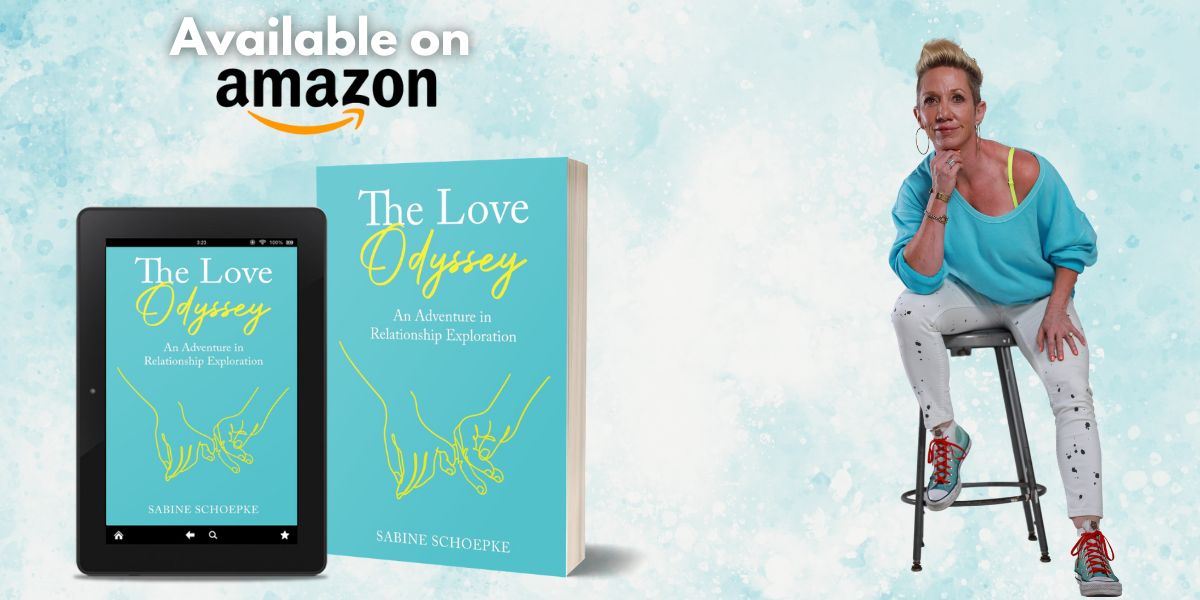
In a world where everyone is searching for answers about love, identity, and the possibility of starting over, Sabine Schoepke has emerged as a powerful and compassionate voice. Her book The Love Odyssey blends memoir and self-help in a way that feels both intimate and universal. It is not simply the story of one woman’s journey. It is a companion for anyone who finds themselves standing in the middle of life and wondering how to begin again.
Schoepke explains that she wrote the book after recognizing that her struggles were echoing through the lives of countless women around her. Clients, friends, and even late-night messages from strangers all reflected the same questions. Who am I now? What do I deserve? Is it too late to start over? She began to understand that her story was not an isolated experience but part of a shared emotional landscape. She had lived through numerous cycles of reinvention. She had been homeless at nineteen. She had rebuilt her life after losing her home in a fire. She had walked away from a long relationship and faced the quiet but devastating realization that she no longer recognized herself.
These experiences were not simply difficult moments. They became turning points that gradually revealed lost parts of her identity. Writing the book became an act of responsibility rather than a creative choice. She felt compelled to take everything she had learned and offer it back to others. She wanted the book to feel like a lighthouse and a steady presence. She wanted her readers to feel seen and held. Her message is simple yet powerful. You are not broken. You are becoming. You are not alone. I am right here with you.
A central idea of The Love Odyssey is the concept of love as a journey. Schoepke intentionally chose the word odyssey to describe the emotional terrain we navigate in relationships. For her, love is never a destination and never something that can be solved like a puzzle. It is not a prize that one discovers fully formed and ready to be claimed. It is a long and unpredictable path filled with moments of beauty, difficulty, growth, and surprise. An odyssey carries storms and setbacks. It presents challenges that reveal who we are and what we fear. Yet an odyssey also includes breathtaking scenes that remind us why the journey matters.
By framing love as an evolving voyage, she invites readers to release the idea that they must achieve perfection. Instead, she encourages them to understand that real love requires expansion and transformation. It is something we learn, unlearn, and learn again. Love is a practice and a promise. It is never something we finally master. It is something we continually grow into.
The book itself was born from a quiet and deeply personal moment that Schoepke describes with clarity and honesty. After a painful breakup, she sat alone at her kitchen table and realized she had lost herself. It was not a dramatic collapse but a soft and devastating truth. She no longer recognized the woman she had become. This moment cracked something open. She began to write in order to find herself again. What started as personal journaling slowly grew into chapters. Those chapters evolved into a manuscript. Eventually, the manuscript became the guide she wished she had during her most difficult seasons.
One of the themes that resonates strongly with readers is her emphasis on rediscovering self-love in midlife. She rejects the idea that self-love is made of indulgent rituals or pretty affirmations. For her, it began with grief and honesty. It required her to confront the ways she had neglected herself while trying to be endlessly strong and endlessly understanding. Reclaiming self-love meant building her identity from the ground up. It meant choosing her own joy. It meant honoring her needs without apology. It meant trusting her own voice after years of quieting it to accommodate the expectations of others. Eventually, this process became a rebirth. Not into a new woman, but into the truest version of the woman she had always been.
Schoepke also speaks candidly about how our approach to relationships evolves as we move through the different stages of life. In our twenties, she says, many of us chase connection out of curiosity and desire. In our thirties, we focus on stability and structure. But in midlife, something shifts in a powerful way. We begin to crave meaning, authenticity, and alignment. We become unwilling to shrink for the comfort of others. We want a partnership rather than dependency. We want intimacy rather than performance. Midlife removes the noise and exposes the truth. Who are you without the roles you play? And who do you want beside you for the next chapter?
The Love Odyssey is ultimately a call to courage. It invites the reader to imagine that life can open again even after loss. It reminds them that identity is not a fixed shape but a living story. Schoepke writes with the humility of someone who has walked through fire and with the generosity of someone who wants to help others avoid unnecessary suffering. Her experiences become a roadmap for anyone who is ready to step back into their own life with clarity and hope.
For every woman who has felt lost, unseen, or unsure of her next step, The Love Odyssey offers a gentle but powerful truth. You are not starting over. You are unfolding into who you were always meant to be.