

By: Edward K. Thompson
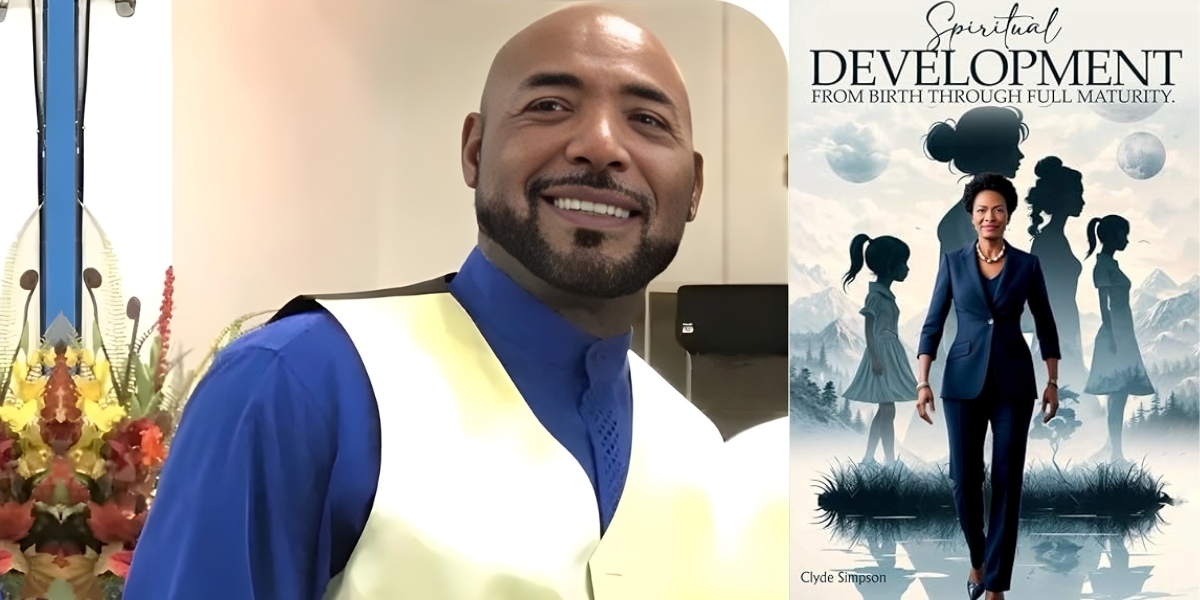
Many believers today share a quiet frustration. They love God, they read their Bibles, and they pray. Yet they feel stuck in their spiritual walk. They yearn for deeper maturity, for a faith that is strong and steady. They ask themselves, “How do I grow?” and “Where do I even start?” This feeling of being lost is common, but it is not necessary. What if the Bible itself contained a clear growth plan, a kind of spiritual map, that we have simply overlooked? This is the profound discovery presented by Dr. Clyde Simpson in his important book, Spiritual Growth & Development: From Babe Through Full Maturity.
Dr. Clyde Simpson can be described as a spiritual cartographer. He did not invent a new method or a trendy self-help strategy. Instead, he carefully traced the lines of a map that has been within the Scriptures all along. His work points believers back to a structured, intentional pathway woven directly into the New Testament letters of the Apostle Paul. For centuries, many have read these epistles as separate pieces of advice. Simpson reveals they are actually a coordinated sequence, a divine curriculum for spiritual development.
The core of this discovery is a powerful three-part pattern: doctrine, reproof, and correction. This pattern is drawn directly from the words of Second Timothy 3:16, which states that all Scripture is useful for teaching, for rebuking, for correcting, and for training. Dr. Simpson shows how Paul’s letters to the early churches follow this exact progression. The journey begins with the book of Romans, which establishes foundational doctrine. It moves next to Corinthians, which offers loving reproof for practical errors. Then comes Galatians, which provides firm correction for doctrinal drift. This sequence repeats, building the believer from the ground up.
This is not a dry academic theory. It is a practical guide for any person seeking a deeper life in Christ. The book Spiritual Growth & Development carefully walks the reader through each stage. It explains why you must understand the grace in Romans before you can correctly apply the corrections in Galatians. It shows why the high calling of Ephesians is meant for those who have first mastered the basics of Romans. This order is intentional. Skipping steps leads to confusion, while following the map leads to clarity and strength.
Dr. Simpson writes with a rare combination of precision and compassion. His insights showcase both exegetical skill and a pastoral heart. He makes complex biblical concepts accessible. “The problem is not a lack of desire,” Simpson explains, “but a lack of direction. God in His wisdom did not leave us to guess. He gave us a pathway in His Word.” This statement captures the essence of his work. He is a guide who points to the text itself, restoring confidence in God’s perfect plan for growth.
In a time when many feel spiritually disjointed, Dr. Clyde Simpson emerges as a restorative voice. His book cuts through the confusion and offers a return to biblical simplicity. He provides the map that many have been searching for, not by adding to Scripture, but by highlighting the beautiful structure already present within it. Spiritual Growth & Development: From Babe Through Full Maturity is more than a book. It is a revelation of a system for discipleship that is as old as the epistles themselves, yet perfectly relevant for today.
For any believer ready to move from frustration to fruitful growth, this work is essential. To embark on the journey and follow the Bible’s own path to maturity, find Dr. Clyde Simpson’s definitive guide, Spiritual Growth & Development, wherever books are sold.
Disclaimer: The views and opinions expressed in this article are those of the author and do not necessarily reflect the official stance or beliefs of any organization, denomination, or group. This article is intended for informational purposes only and is not a substitute for professional advice or counseling.