

Why do children love animal stories so much? From the moment a child first hears a tale about a wise owl, a brave mouse, or a loyal dog, something inside them clicks. They lean closer, their eyes widen, and they find themselves listening not just for the fun of the story but for something deeper, something that teaches them about courage, kindness, and connection. Animal stories hold a gentle power. They simplify big lessons in ways children can understand, wrapping them in warmth, humour, and imagination.
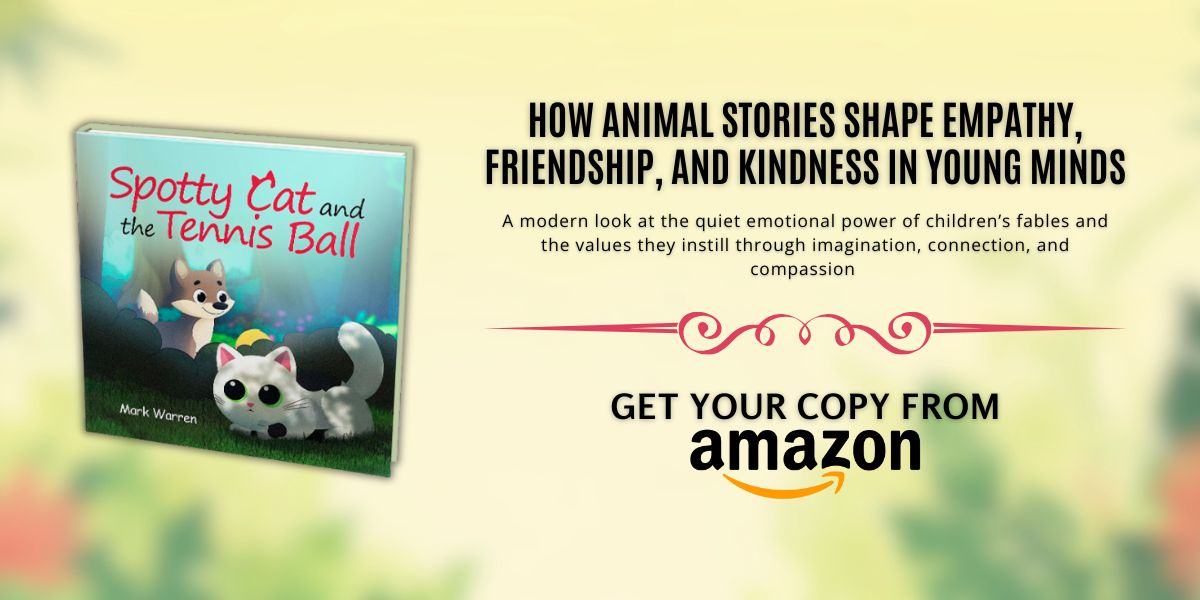
Mark Warren’s Spotty Cat and the Tennis Ball carries on this timeless tradition. At first, it appears to be a simple bedtime tale about a curious cat exploring the forest. But like all good fables, it reveals a bigger truth. Spotty Cat stumbles upon Wolfie, a young wolf, and Budgeri, a round little yellow bird. In the natural world, these animals should be enemies. But instead of following those roles, they do something extraordinary. They choose friendship. In this moment, young readers learn that who we are does not have to define what we can become.
Animal-centred tales have been told for centuries. Aesop’s fables, Beatrix Potter’s stories, and even modern classics like Charlotte’s Web all use animals to show children how to navigate life’s complexities. Children naturally project their feelings onto animal characters, making it easier to grasp ideas like fairness, empathy, or bravery without the weight of real-world judgments.
When Wolfie admits he is lonely in Spotty Cat and the Tennis Ball, children see a side of a wolf they might never imagine. A creature often portrayed as scary becomes relatable. They understand what it means to want a friend. When Budgeri, the tiny bird, bravely offers her friendship, young readers see the value of compassion and courage, even from the smallest among us.
These characters gently nudge children toward empathy, showing them that everyone, no matter how different, has feelings and needs. In a world where children are constantly learning how to interact with others, these lessons are more than stories. They are blueprints for kindness.
Another reason animal stories hold such power is their role in bedtime routines. Parents reading aloud create a safe, calming environment where values are taught in whispers and soft voices. The setting is as important as the story itself. With Spotty Cat and the Tennis Ball, the closing image of Spotty and his family curled up together in their cosy bed leaves children with a sense of safety and belonging.
This comfort is not just emotional. Research shows that bedtime stories strengthen parent–child bonds, encourage early literacy, and help establish healthy sleep habits. Animal tales, with their universal appeal and gentle tone, are perfectly suited to these routines. They balance entertainment with quiet reflection, easing the transition from the busyness of the day to the stillness of night.
The impact of animal stories goes beyond childhood. Adults still recall the morals of fables they heard years earlier. Slow and steady wins the race, Don’t cry wolf, or Never judge a book by its cover, remain in memory long after the specific tales fade. Stories like Spotty Cat and the Tennis Ball add to this tradition, planting seeds of empathy and inclusion that can influence how children approach relationships as they grow.
In Spotty Cat’s world, a wolf, a bird, and a cat can share lunch despite their differences. It’s a simple image, but one with lasting meaning. For children, it encourages the belief that friendships can cross boundaries and that kindness often starts with giving others a chance.
Mark Warren’s book joins a long line of animal-centred literature that entertains while shaping values. What sets it apart is its balance of playfulness and moral depth. The humour of Budgeri bouncing through the forest, the nervous charm of Spotty Cat introducing himself, and the gentle acceptance of Mummy and Daddy Cat all combine to deliver a message without ever feeling heavy-handed.
Parents and educators looking for stories that do more than pass the time will find Spotty Cat and the Tennis Ball a valuable addition to their shelves. It reflects the timeless power of animal fables while offering fresh characters that today’s children can love and learn from.
Animal stories will always hold a special place in children’s hearts. They are guides, companions, and gentle teachers. And in books like Spotty Cat and the Tennis Ball, they continue to show us that even the most unlikely friendships can change the way we see the world.
If you are searching for a bedtime story that entertains, teaches, and comforts all at once, Spotty Cat and the Tennis Ball is a delightful choice to bring into your home.
Availability:
Read this book now, available on Amazon: https://www.amazon.com/dp/1968296298
About the Author:
Mark Warren creates imaginative and heartwarming books for children aged three to eight years old. He is passionate about fostering curiosity, values, and kindness in children through stories that blend entertainment with valuable life lessons. His books also aim to create a cozy environment — calming children before bed. When not writing, he enjoys sharing the outdoor life with his young family, who inspire many of his memorable characters.
Book Details:
Book Name: Spotty Cat and the Tennis Ball
Author Name: Mark Warren
ISBN Number: 978-1968296292
Ebook Version: Click Here
Paperback Version: Click Here