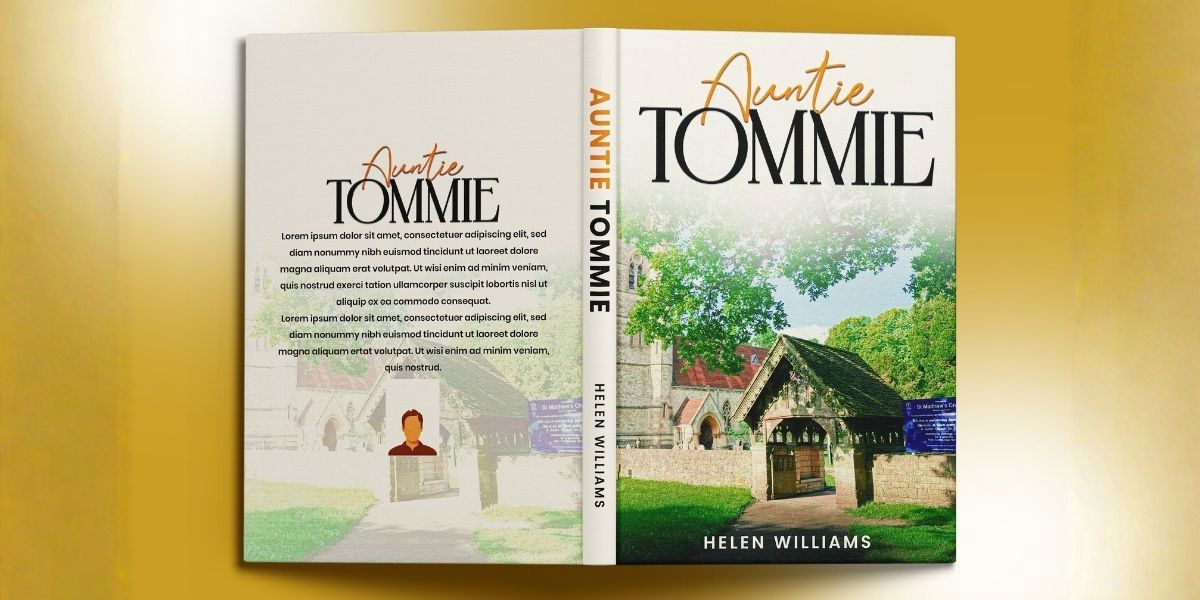


Tommie turns a simple instruction into a psychological thriller of conscience.
There is a particular kind of sentence that looks harmless until it attaches itself to your life.
Not a confession. Not a threat. Not even a promise. Just a directive, delivered quietly, as if it were common sense. The kind of phrase people say when they want the messy parts of existence to stay tidy. The kind of phrase you think you understand right up until the moment you realize it has no stable meaning at all.
In Tommie by Teresa, that sentence arrives like a sealed envelope slid across the table. It is personal, intimate, oddly tender, and also devastatingly non-specific. It contains the moral equivalent of a blank check. It asks the protagonist, and by extension the reader, to decide what goodness means when nobody is grading you, and when the “right” outcome is not posted anywhere.
This is the novel’s first seduction: it creates suspense not by asking “what happened?” but by asking “what do you do now?” That question is far more dangerous, because it does not let you remain a spectator. It forces you to audit your instincts.
Most of us like to believe we are decent. We like to imagine our ethics are practical, portable, ready on demand. We tell ourselves that if we were ever presented with a clear moral test, we would pass it without hesitation. Tommie is written for the darker, truer suspicion: that the hardest tests do not arrive labeled. They arrive disguised as opportunity. They arrive wrapped in gift paper. They arrive with enough ambiguity to let you rationalize almost anything.
The book’s voice is one of its sharpest instruments. It is intimate without being confessional, witty without being cute. It can make you laugh and then, a paragraph later, make you uncomfortable about why you laughed.
The humor is not decoration. It is a pressure valve for a mind watching itself behave badly, behave nobly, behave selfishly, behave sincerely, sometimes in the same hour. That tonal intelligence is what makes the book feel not only entertaining, but true.
And entertaining it is. Tommie has the snap and forward pull of a story that understands narrative appetite. Pages turn because questions accumulate. Small details refuse to stay small. A seemingly manageable situation begins to radiate implications. The protagonist’s choices become a kind of live wire. Each decision changes what the next decision will cost.
But the novel’s deeper pleasure is the way it depicts moral thinking as a physical experience. You can feel the protagonist’s mind flinch, reach, bargain, and recalibrate. The book is fascinated by the gap between the person you think you are and the person you become when circumstances shift. Not in a melodramatic way. In a recognizably human one.
That human scale is part of what makes Tommie so addictive. The story does not rely on spectacular villainy or cartoonish heroism. It relies on the subtler terror of ordinary life suddenly refusing to be ordinary. It relies on a question that cannot be answered once, cleanly, and then shelved. The question keeps returning in different clothes: responsibility, fairness, loyalty, silence, disclosure, repair. You read expecting a plot. You keep reading because you are watching a conscience form in real time.
There is also a quietly radical undercurrent to the book’s premise. Tommie is interested in what happens when goodness is not performative. When no one is clapping. When you could do something easy and nobody would blame you for doing it. When you could keep quiet, live comfortably, and tell yourself you were not harming anyone. The novel understands how often “the right thing” is not an act of generosity, but an act of courage. Not just courage in public, but courage in the private courtroom of your own mind.
The result is a rare kind of page-turner: one that feels morally suspenseful. You are not only curious about outcomes. You are curious about character. You want to know what the protagonist will do, yes, but also what kind of person she will allow herself to become. The book makes that transformation feel both surprising and inevitable, the way real change does.
If you have ever been haunted by a sentence you wished you could forget, if you have ever realized too late that your life was asking you to choose, Tommie will get under your skin. It sells intrigue. It delivers something more lasting: the sensation that you have been pulled into a story that is also, uncomfortably, a mirror.